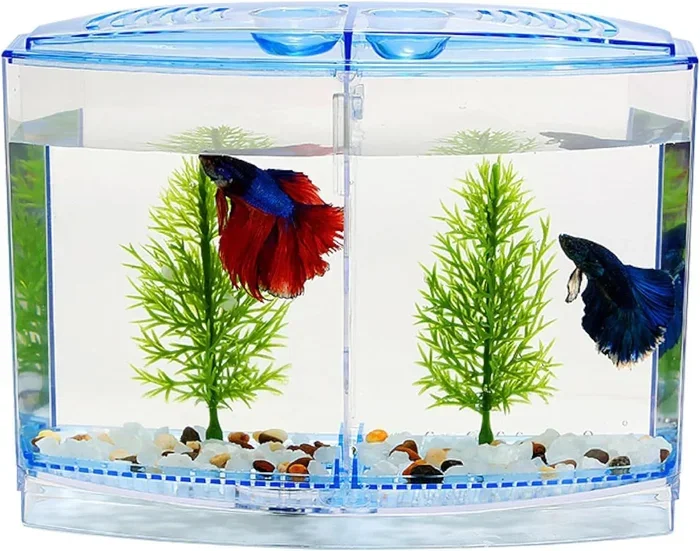
Can More Than One Betta Fish Be in a Tank
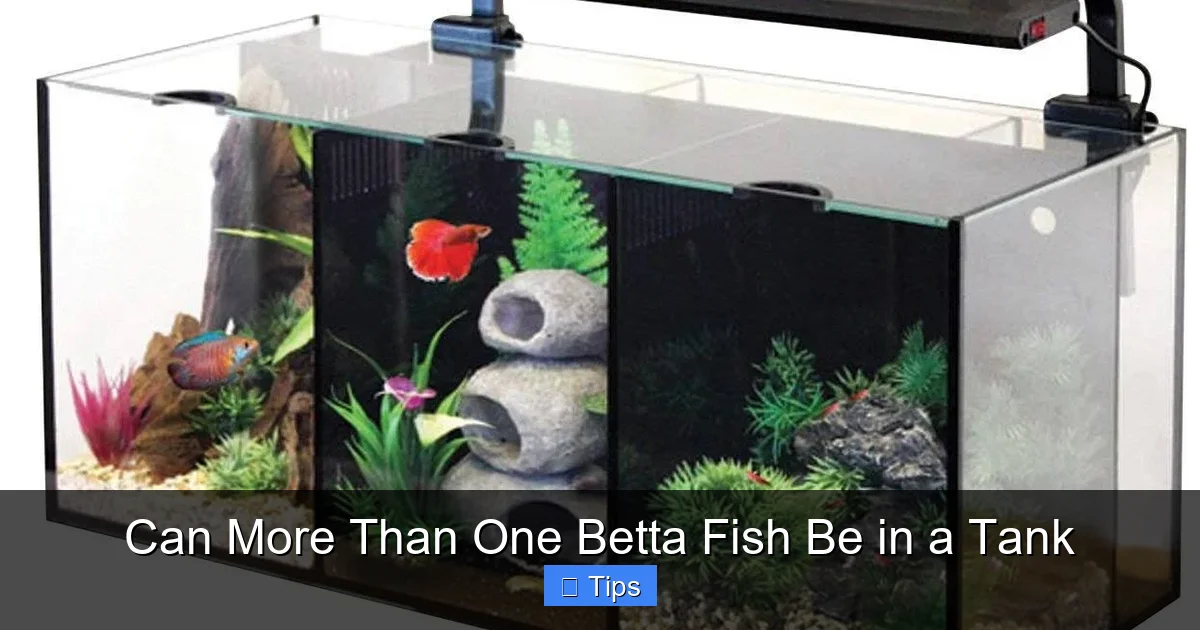
Keeping more than one betta fish together is possible but fraught with risk and requires meticulous planning. Male bettas are almost always solitary and will fight to the death. Female bettas *can* sometimes be kept in carefully managed groups called sororities. Success depends entirely on tank size (minimum 20+ gallons), abundant hiding spots, and intense observation. For most beginners, a single betta in a properly sized, enriched tank is the only safe and humane choice.
So you’ve fallen in love with the flowing fins and vibrant colors of the betta fish (Betta splendens). You’ve set up a beautiful tank, and your new aquatic roommate is settling in nicely. But then you think: “Can I get him a friend? Can more than one betta fish be in a tank?” This is one of the most common and critical questions in the aquarium hobby, and the answer is a firm “it depends,” followed by a long list of strict conditions. The short, life-saving answer for 95% of new betta owners is no. But for experienced aquarists willing to do extensive research and provide a specialized environment, certain multi-betta setups can exist. Let’s dive deep into the complex world of betta social dynamics.
Key Takeaways
- Male bettas are virtually always solitary: Their aggressive, territorial nature makes cohabitation with other males or flashy, long-finned fish extremely dangerous and often fatal.
- Female betta sororities are a high-risk, advanced endeavor: They require a very large, heavily planted tank (20+ gallons), a group of 4-6 females introduced simultaneously, and constant monitoring for bullying.
- Tank size is non-negotiable: For any community or sorority tank, a 20-gallon (75L) long or larger is the absolute starting point. Smaller tanks guarantee conflict.
- Hiding places and visual barriers are essential: Dense planting, driftwood, rocks, and ornaments must break lines of sight to reduce territorial disputes and provide escape routes.
- Not all females are suitable for sororities: Some females are inherently more aggressive (“queen” personalities) and must be removed immediately if they persistently harass others.
- Safe tank mates are calm, fast, and non-flashy: Species like neon tetras, harlequin rasboras, or corydoras catfish can work in a betta’s tank if it’s large enough and the betta’s temperament is known to be peaceful.
- Always have a backup plan: A separate, cycled “hospital” or quarantine tank must be ready to instantly remove any fish showing signs of injury or extreme stress.
📑 Table of Contents
- Understanding the Betta Temperament: The Siamese Fighting Fish Legacy
- The Female Betta Sorority: A High-Stakes Experiment
- The Male Betta and the “Community Tank” Conundrum
- Tank Setup, Water Quality, and the Foundation of Peace
- Common Mistakes That Lead to Betta Bloodshed
- Conclusion: The Safe and Happy Path
Understanding the Betta Temperament: The Siamese Fighting Fish Legacy
To understand why bettas are so tricky, we must look at their history. Betta splendens, native to the shallow rice paddies and slow-moving streams of Thailand, were selectively bred for centuries for fighting. This created a fiercely territorial and aggressive fish, particularly the males. In the wild, a male would claim a small patch of vegetation, a leaf, or a bubble nest and defend it vigorously from rival males. This instinct is hardwired.
The Myth of the “Easy” Community Fish
Many pet stores display bettas in small, solitary cups, which incorrectly frames them as low-maintenance loners. Conversely, the beautiful, flowing fins that make them so popular are also a liability. In a community tank, long, flowing fins are seen as challenges or targets by other fish, including other bettas. A common misconception is that a “community” tank with a betta is always a good idea. While possible, it’s a calculated risk based on the individual betta’s personality and the tank’s design.
Sex Matters: Males vs. Females
The first and most important distinction is between males and females.
- Male Bettas: Almost universally solitary. They will flare (puff out their gills and fins) at their own reflection, any other male betta, and often any fish with similar body shapes or long fins. Keeping two males together, even in a large tank, is a guaranteed fight that can result in severe injury or death. The term “betta” is often synonymous with the male due to its extreme ornamentation.
- Female Bettas: While they also possess aggression, it is typically less pronounced and more hierarchical. They can, under very specific conditions, be kept in groups. This is known as a “sorority.” However, they are not peaceful by nature; they establish a pecking order through displays and sometimes sparring. The key is providing an environment where subordinates can escape dominant individuals.
The Female Betta Sorority: A High-Stakes Experiment
The concept of a female betta sorority is where most multi-betta hopes lie. It is not a beginner setup. It is an advanced, observation-heavy endeavor that can still fail spectacularly.
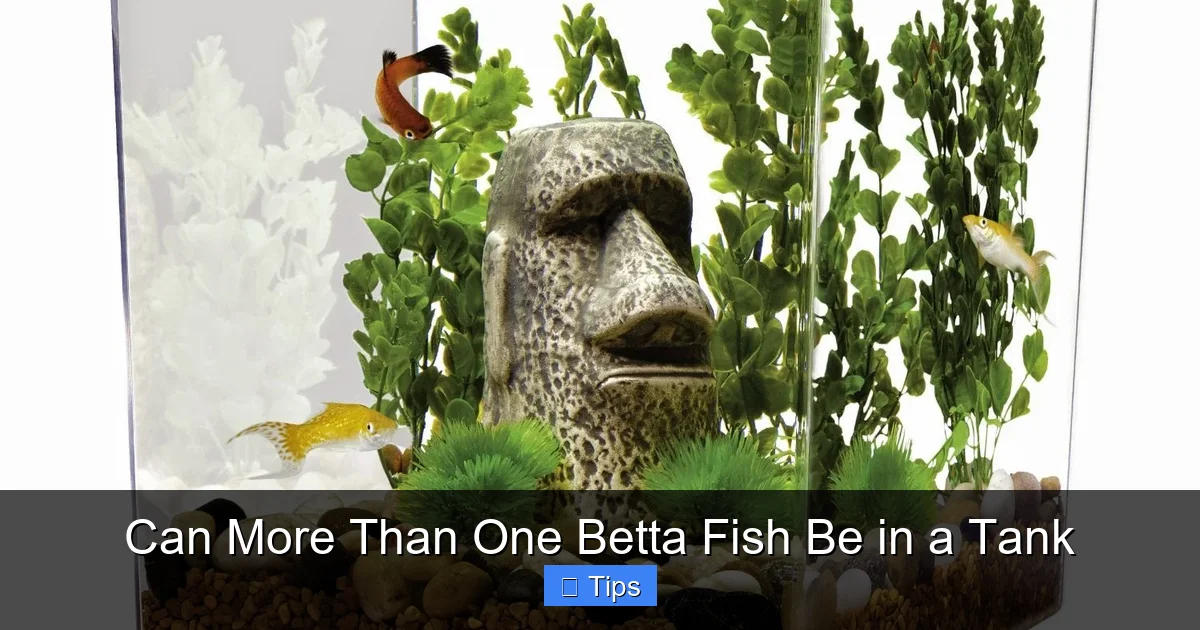
Visual guide about Can More Than One Betta Fish Be in a Tank
Image source: 3.bp.blogspot.com
Tank Requirements: Bigger is Mandatory
The absolute minimum tank size for a sorority is 20 gallons (75 liters), and many experienced keepers recommend 29 gallons (110 liters) or more. Why so big? In a small tank, there is no room to escape. A dominant female can harass a subordinate to death in a 10-gallon tank simply because the subordinate has nowhere to go. A large footprint (a “long” tank is better than a “tall” one) provides more horizontal territory and visual breaks.
The Perfect Setup: Environment is Everything
The tank must be meticulously aquascaped to minimize aggression.
- Heavy Planting: Use a mix of tall background plants (like Amazon swords or Vallisneria), mid-ground plants (Bacopa, Rotala), and dense foreground carpets (Dwarf Hairgrass, Monte Carlo). Live plants are ideal as they improve water quality and provide organic complexity. Silk or plastic plants are a backup, but live is superior.
- Hardscape for Barriers: Driftwood, large river stones, and clay pots must be used to create caves, tunnels, and partitions. These break the line of sight, preventing a betta from seeing another as a constant threat across the tank.
- Multiple Hiding Spots: Every betta needs at least 2-3 distinct “home bases” where she can retreat. Ensure these are distributed throughout the tank, not all clustered in one corner.
Introduction Protocol: The Critical First Steps
How you introduce the females is as important as the tank itself.
- Group Introduction: All females (a minimum of 4, ideally 6) should be added to the fully set-up tank at the same time. Introducing a new betta to an established sorority is a recipe for disaster, as the newcomers will be seen as intruders by the entire group.
- Simultaneous Acclimation: Use drip acclimation for each fish to equalize water parameters.
- Initial Flaring is Normal: Expect the first few hours to a couple of days to involve a lot of flaring, chasing, and brief tussles. This is the pecking order being established.
Signs of Success vs. Signs of Failure
You must watch constantly, especially in the first week.
- Healthy Pecking Order: Brief chases, flaring from a distance, and one or two fish consistently claiming the best spots. After 48-72 hours, chasing should significantly decrease. Fish will have defined territories.
- Failed Sorority (Immediate Action Needed):strong> Persistent chasing that doesn’t stop, one fish being cornered and unable to feed, torn fins, missing scales, or a fish hiding constantly and not coming out to eat. The aggressive fish must be removed immediately to a separate hospital tank. This is not a “wait and see” situation.
The Male Betta and the “Community Tank” Conundrum
This is where hope often meets harsh reality. Can a male betta live with other fish? Yes, but it’s a gamble on his individual personality, and the tank must be set up for his benefit first.
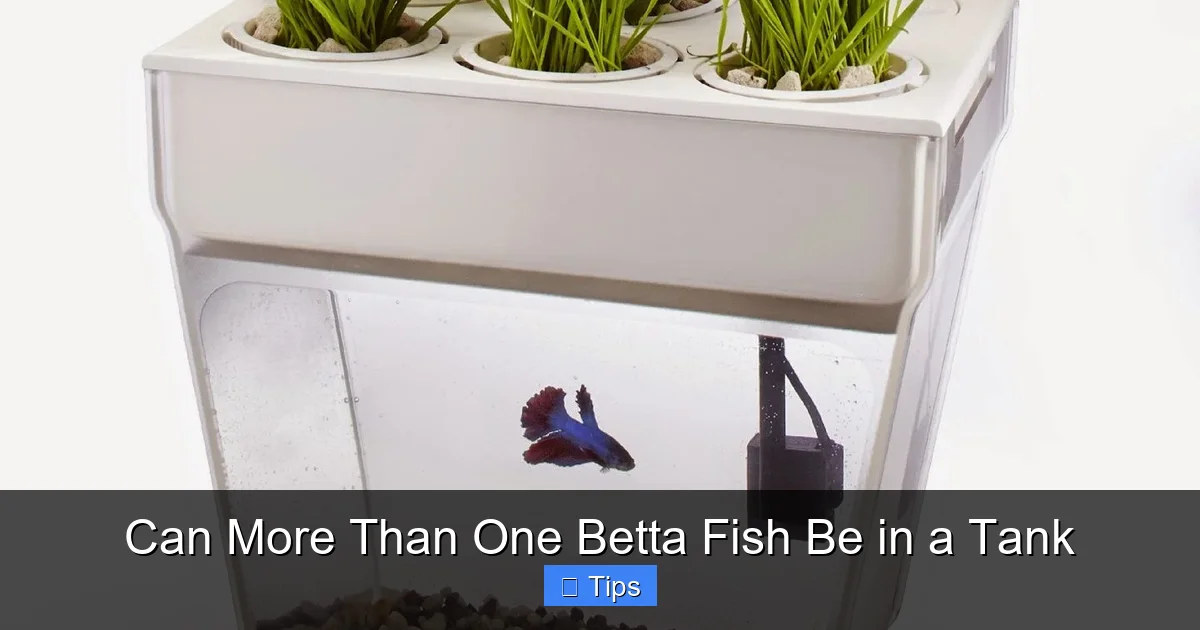
Visual guide about Can More Than One Betta Fish Be in a Tank
Image source: 2.bp.blogspot.com
The Ideal Tank Mate Profile
If you want to try, the potential tank mates must meet these criteria:
- Calm and Non-Territorial: Avoid any fish known for fin-nipping (like tiger barbs) or that are themselves aggressive.
- Fast and Nimble: They need to be able to dart away if the betta gets curious or aggressive.
- Dull and Short-Finned: They should not resemble a betta. No guppies (long fins), fancy guppies, or other anabantoids like gouramis. They are seen as direct competitors.
- Prefers Different Water Layers: Good tank mates occupy the mid to top levels but are fast. Bottom-dwellers are excellent as they are rarely in the betta’s direct line of sight.
Proven (But Not Guaranteed) Tank Mate Candidates
Based on thousands of community tank reports, these species have the highest success rate with a *peaceful, well-adjusted* male betta in a properly sized tank:
- Schooling Tetras & Rasboras: Neon Tetras, Cardinal Tetras, Ember Tetras, and Harlequin Rasboras. They are fast, stay in schools (which makes them less likely to be singled out), and are small and dull. A school of 8-10 is recommended.
- Bottom-Dwelling Catfish: Corydoras catfish (Pygmy, Bronze, Peppered) are fantastic. They are social, peaceful, and spend all day on the substrate, completely ignoring the betta. A group of 6 is ideal.
- Snails & Shrimp: Nerite snails, Mystery snails (though large ones can sometimes be nipped), and certain shrimp like ghost shrimp or Amano shrimp can work. Cherry shrimp are often seen as food. Success varies wildly.
The “Betta-First” Tank Setup
When building a community with a betta, you design for the betta’s needs first.
- Minimum 20 Gallons: This is the rule. A 10-gallon is too small for a reliable community with a betta. It provides enough space for territories.
- Plant Heavily: Again, dense planting along the back and sides provides cover and breaks sightlines. Floating plants (like Frogbit or Salvinia) are excellent for creating a canopy that makes the betta feel secure.
- Introduce Tank Mates First: A smart trick is to add the community fish (the school of tetras or corydoras) and let them establish their territories for 1-2 weeks. Then, introduce the betta last. He will be the “newcomer” to an established community, which can sometimes reduce his instinct to defend a territory he didn’t stake claim to.
- Feed the Betta Separately: Use a feeding ring or target the betta with a pipette to ensure he gets his food and doesn’t become frustrated by faster tank mates eating his pellets.
Tank Setup, Water Quality, and the Foundation of Peace
No social arrangement will succeed in a poorly maintained tank. Stress from poor water quality is the single biggest trigger for unexpected aggression in any fish.
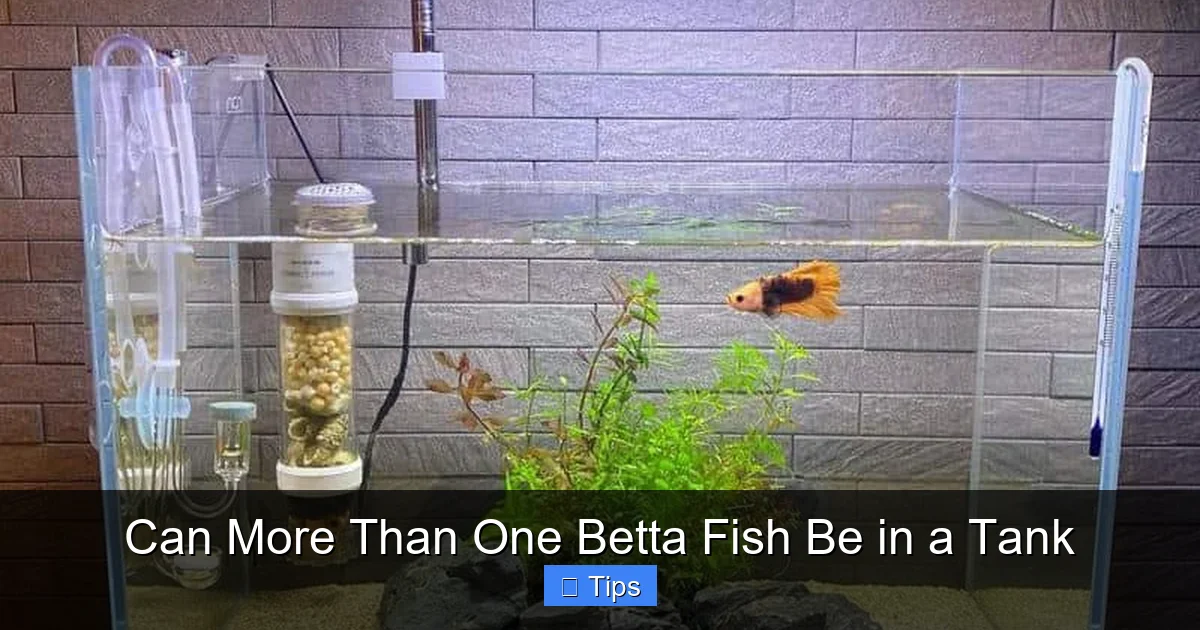
Visual guide about Can More Than One Betta Fish Be in a Tank
Image source: acaquarium.com
The Nitrogen Cycle is Non-Negotiable
The tank must be fully cycled before any fish is added. A cycled tank has beneficial bacteria that convert toxic ammonia (from fish waste) into nitrite and then into less toxic nitrate. Adding fish to an uncycled tank causes ammonia poisoning, which irritates gills and makes every fish irritable and sick. Test your water with a liquid test kit. Ammonia and nitrite must be at 0 ppm.
Filtration and Water Changes
Use a filter with an adjustable flow. Bettas hate strong currents as they are weak swimmers with large fins. A gentle sponge filter or a hang-on-back filter with a flow diffuser is perfect. Perform weekly water changes of 25-30% to keep nitrate levels low (under 20 ppm) and remove waste.
The Role of Temperature
Bettas are tropical fish requiring a stable temperature between 78°F and 80°F (25.5°C – 26.5°C). A reliable aquarium heater is essential. Cold water slows their metabolism, makes them lethargic, and suppresses their immune system, making them more prone to disease and stress-induced aggression.
Common Mistakes That Lead to Betta Bloodshed
Even with the best intentions, these errors are the top reasons multi-betta attempts fail.
“He Looks Lonely”
This is an anthropomorphic (human) emotion projected onto fish. Bettas are not social creatures that get “lonely.” A lone betta in a spacious, enriched tank is a content betta. Adding a tank mate to “fix” loneliness usually creates stress and conflict.
Underestimating Tank Size
The #1 mistake. A 5-gallon “community” tank with a betta is a torture chamber. There is zero room for escape. The betta will either become a bully or be bullied to death. Always overestimate the space you need.
Ignoring Individual Personality
Some bettas are naturally docile “gentlemen.” Others are absolute “jerkwads” who will flare at anything that moves, including their own reflection. You must observe your specific betta’s behavior before even considering tank mates. A betta that constantly flares at you through the glass is a poor candidate for community life.
Poor Introduction and No Escape Plan
Just dropping a new fish into the tank is a guaranteed disaster. Always use a divider or a clear acrylic box inside the tank for a “slow introduction” over 1-2 weeks, allowing the fish to see but not touch each other. And you must have a fully cycled backup tank ready to remove any fish the moment aggression becomes severe.
Conclusion: The Safe and Happy Path
So, can more than one betta fish be in a tank? The technically correct answer is yes, but with so many asterisks, warnings, and prerequisites that for the vast majority of hobbyists, the answer should be treated as a practical no. A single, male or female, betta in a properly sized (5+ gallons for a single, 20+ for any group), heavily planted, warm, and clean tank is the blueprint for a healthy, vibrant, and long-lived pet.
If you are set on a community, start with a single, peaceful betta in a 20-gallon long tank with a school of neon tetras and a group of corydoras. Observe for months. If that goes perfectly, and only then, could a seasoned aquarist consider the immense challenge of a female sorority in a 29-gallon tank. Always prioritize the betta’s innate instincts over our desire for a “friend” for it. A stressed, injured, or dead fish is the ultimate failure. A thriving, solitary betta, flaring proudly at its own reflection in a spacious, plant-filled kingdom, is a success.
Frequently Asked Questions
Can I keep two male betta fish together if the tank is huge?
No. Even in a 100-gallon tank, two male bettas will perceive each other as territorial rivals and will fight, often to the death. Their aggression is not solely a product of space; it’s an innate drive. There is no safe, humane way to house two males together.
What is the minimum tank size for a female betta sorority?
The absolute minimum is a 20-gallon long (75-liter) tank, but a 29-gallon (110-liter) or larger is strongly recommended. This provides enough horizontal space and allows for enough visual barriers and hiding spots to reduce constant harassment.
How do I know if my betta is aggressive enough to have tank mates?
Observe your betta in its own tank for a week. If it constantly flares at your finger, its reflection, or any movement outside the tank, it has a high-strung, aggressive temperament and is a poor candidate for a community. A betta that is generally curious but calm is a better, though still not guaranteed, prospect.
What are the first signs of a failing sorority or community?
Immediate red flags include: one fish being relentlessly chased and cornered all day, torn or frayed fins on a specific fish, a fish that is constantly hiding and not coming out to eat, or visible bite marks. The aggressor must be removed to a separate tank immediately.
Can I add a betta to an already established community tank?
It is risky but can be done with extreme caution. The existing community must be fully established and peaceful. The tank must be large (20+ gallons) and heavily planted. Use a divider in the tank for a week so the betta and community fish can see but not interact. Monitor closely for 72 hours after full introduction for any signs of chasing or stress.
Are there any fish that are completely safe with all bettas?
No. There is no such thing as a universally “safe” tank mate for every betta. Compatibility depends entirely on the individual betta’s personality. While species like harlequin rasboras or corydoras have a high success rate, a particularly aggressive betta may still see them as threats or food. There are no guarantees in betta community setups.