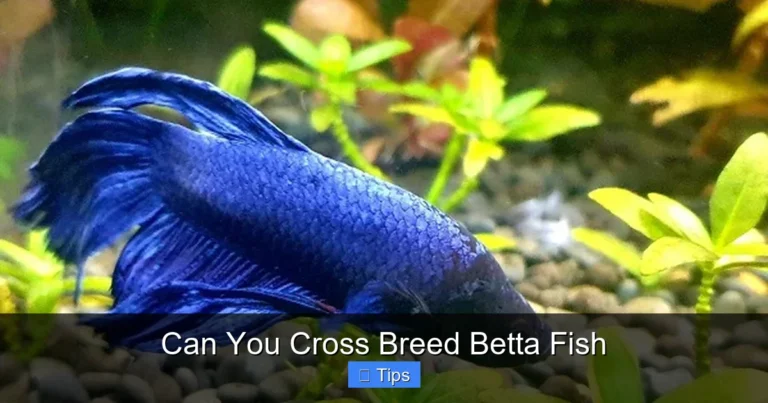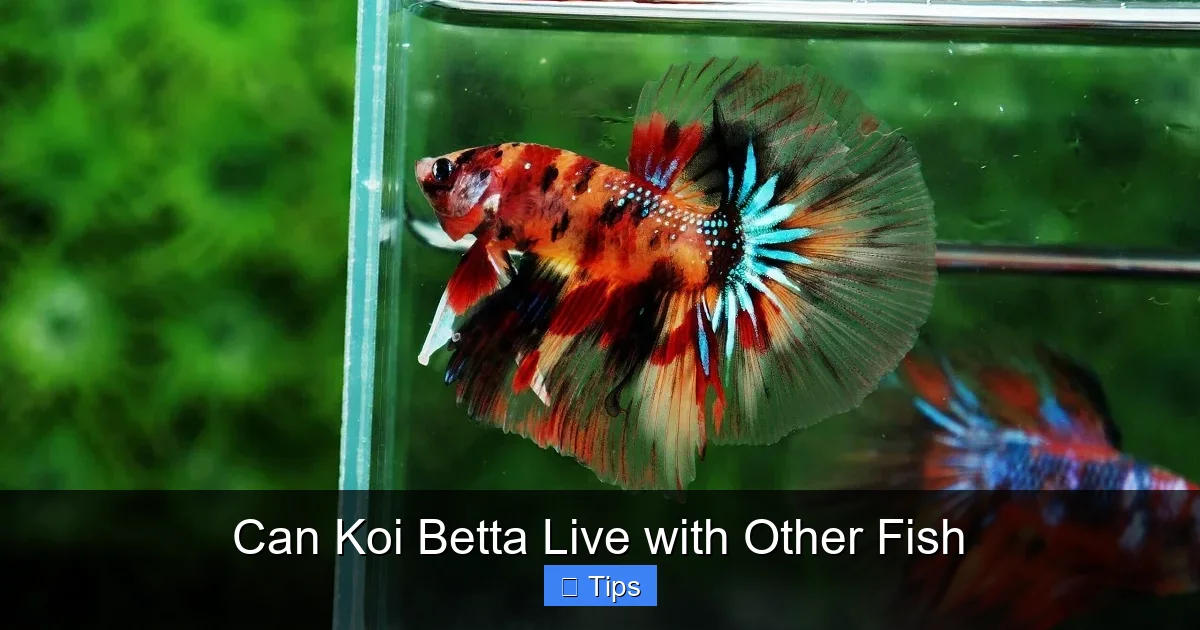
Can Koi Betta Live with Other Fish
Koi bettas, with their vibrant colors and flowing fins, are famously aggressive and territorial. While it’s possible for a koi betta to live with other fish under very specific, carefully controlled conditions, it is never guaranteed and carries significant risk. Success depends entirely on the individual betta’s temperament, a suitably large and complex tank, and choosing the right, non-threatening tank mates. For most hobbyists, keeping a koi betta as a solitary centerpiece is the safest and most responsible choice.
Key Takeaways
- Koi bettas are highly individualistic: Their aggression levels vary, but they are genetically predisposed to be territorial, especially towards fish with similar body types or long fins.
- Tank size is non-negotiable: A minimum of 20 gallons is strongly recommended for any community attempt, providing space to establish territories and escape.
- Tank environment is critical: Dense planting, solid dividers, and abundant hiding spots are essential to break line-of-sight and reduce stress for all fish.
- Not all fish are equal as tank mates: Ideal candidates are fast-moving, schooling, bottom-dwelling fish that occupy different tank levels and lack flashy fins.
- The introduction process is a careful experiment: It must be done slowly with a backup plan (a separate “hospital” tank) ready to remove any fish at the first sign of chronic stress or aggression.
- Constant observation is required: Even after a peaceful initial period, betta aggression can flare up unexpectedly, requiring daily monitoring.
- Solitary housing is often the best welfare choice: A well-decorated, properly sized solo tank for your koi betta frequently provides a higher quality of life than a risky community setup.
📑 Table of Contents
- Understanding the Koi Betta Temperament: Beauty with a Bite
- Tank Setup Essentials: The Foundation for a Potential Peace
- Ideal Tank Mates: Choosing the Right Neighbors
- Recognizing Aggression: The Warning Signs You Can’t Ignore
- The Step-by-Step Introduction Process: Patience is Everything
- Long-Term Care and When to Call It Quits
- Conclusion: A Rewarding Challenge, Not a Guarantee
Understanding the Koi Betta Temperament: Beauty with a Bite
Let’s be honest. The primary reason so many of us are drawn to koi bettas is their stunning appearance. They look like living jewels, with their metallic scales shimmering in shades of orange, red, white, and black, reminiscent of the famous Japanese koi carp. Their large, flowing fins add an elegance that is hard to resist. But behind that breathtaking beauty lies a fiercely territorial and predatory instinct. This is the core paradox of the koi betta: a creature of immense visual splendor that often prefers to be a lone ruler of its aquatic domain.
The question “Can koi betta live with other fish?” doesn’t have a simple yes or no answer. It’s more accurate to ask, “Under what extremely specific and controlled circumstances might a koi betta *tolerate* other fish?” The keyword here is “tolerate.” Coexistence is rarely a warm friendship; it’s a tense, negotiated armistice that can collapse at any moment. Understanding this mindset is the first and most crucial step. Your koi betta is not a community fish by nature. It is a labyrinth fish that, in the wild, defends a small patch of vegetation or surface debris from rivals and predators.
The “Fight or Flight” Instinct Hardwired
Bettas, including the koi variety, belong to the Macropodus genus. Their common name, “Siamese fighting fish,” isn’t a misnomer. Males were historically bred for aggression in staged fights. While modern ornamental breeds like the koi have been selected for color and finnage, that aggressive genetic backbone remains. They view any fish that enters their perceived territory—especially one that looks like a competitor (bright colors, long, flowing fins)—as an intruder to be chased, nipped, and potentially killed.
This instinct is triggered by several visual cues:
- Flaring: The iconic behavior where a betta extends its gill covers, puffs its body, and flares its fins. This is a clear threat display.
- Mirror Image: They often flare at their own reflection, seeing it as a rival. This shows how potent the territorial trigger is.
- Movement: Quick, darting movements at the water’s surface can trigger a predatory response, as bettas are surface feeders.
- Color & Fins: Bright reds, blues, and especially long, flowing fins (like those of guppies, fancy goldfish, or other betta splendens) are seen as the ultimate challenge.
Females are generally less aggressive than males but can still be territorial, especially in cramped spaces. A “koi” pattern is simply a color morph and does not inherently change the fish’s temperament. A koi male is still a betta male.
Tank Setup Essentials: The Foundation for a Potential Peace
If you are going to attempt a community tank with a koi betta, the setup is everything. You are not just creating a home; you are engineering a complex environment designed to minimize conflict. Think of it as building diplomatic zones and neutral territories. A poor setup is a guaranteed path to disaster, stress, injury, or death.
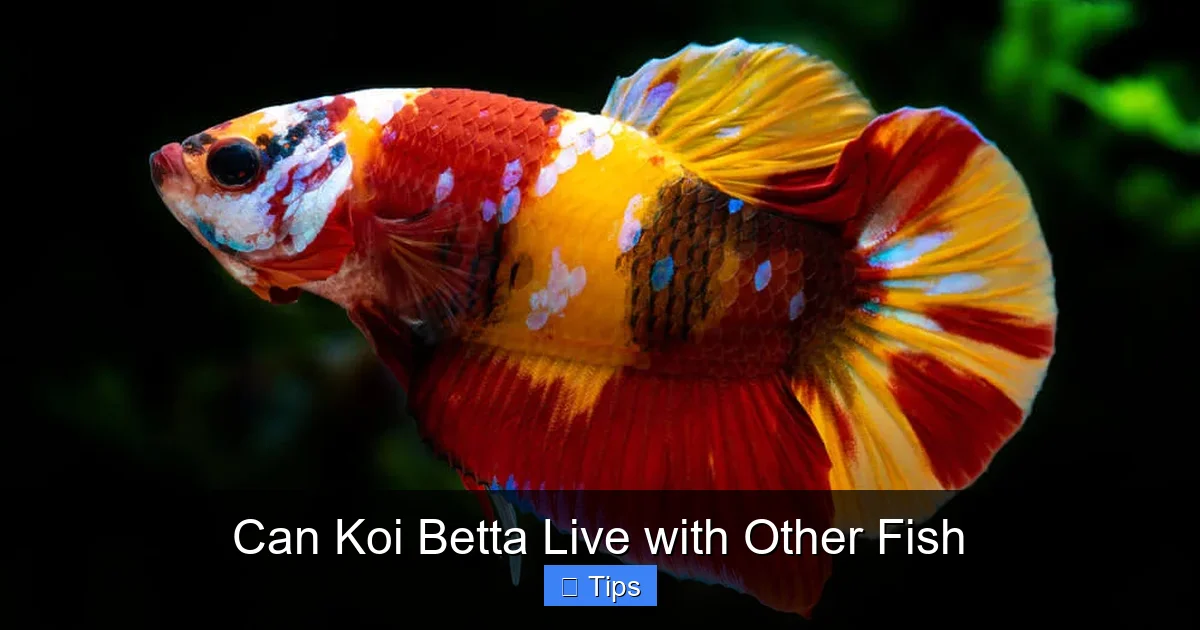
Visual guide about Can Koi Betta Live with Other Fish
Image source: light.fish
Size Matters: The 20-Gallon Minimum Rule
This is the single most important rule. A 5-gallon or even a 10-gallon tank is far too small. In a confined space, your betta has no escape route. It will see every inch as its personal property and will relentlessly harass any intruder. A 20-gallon long tank provides a critical buffer. It offers horizontal swimming space, allows for distinct territories to be established at opposite ends, and gives smaller, faster fish a genuine chance to evade a chasing betta. Larger is always better. A 29-gallon or 40-gallon breeder tank provides even more security and layout options.
Creating a Complex, Divided Landscape
The goal is to break the line of sight. A betta that can see a potential rival from across the tank will be in a constant state of stress and readiness to fight. You must create visual barriers.
- Dense Planting: Use live plants (like Java fern, Anubias, Cryptocoryne, floating plants like frogbit or water lettuce) or high-quality silk plants. Create thick “forests” at the water’s surface and along the back and sides. Plants provide hiding spots, reduce stress, and absorb nitrates.
- Hardscape & Driftwood: Large pieces of driftwood, rock formations, and ceramic decorations can create caves and overhangs. Place them strategically to section the tank into different zones.
- Solid Divider (Optional but Highly Effective):strong> For a truly safe approach, consider installing a solid, watertight divider (like those used in breeder tanks). This allows you to house the betta on one side and a small school of compatible fish on the other, with no visual contact. Water still circulates, but the territorial dispute is physically impossible.
Lighting: Use subdued lighting. Bright lights can increase stress and make the betta more visible and alert to movement. Dappled light through floating plants is ideal.
Filtration and Water Quality
A robust, gentle filter is essential for a community tank. A sponge filter is an excellent choice as it provides surface agitation for oxygenation without creating a strong current that stresses bettas (who prefer calm water). A hang-on-back (HOB) or canister filter with a spray bar to diffuse flow also works well. Clean water is paramount; poor water quality weakens immune systems and exacerbates aggression. A cycled, stable tank is non-negotiable.
Ideal Tank Mates: Choosing the Right Neighbors
Selecting tank mates is where most beginners fail. The rule of thumb is to choose fish that are the complete opposite of your betta. You want fish that are:
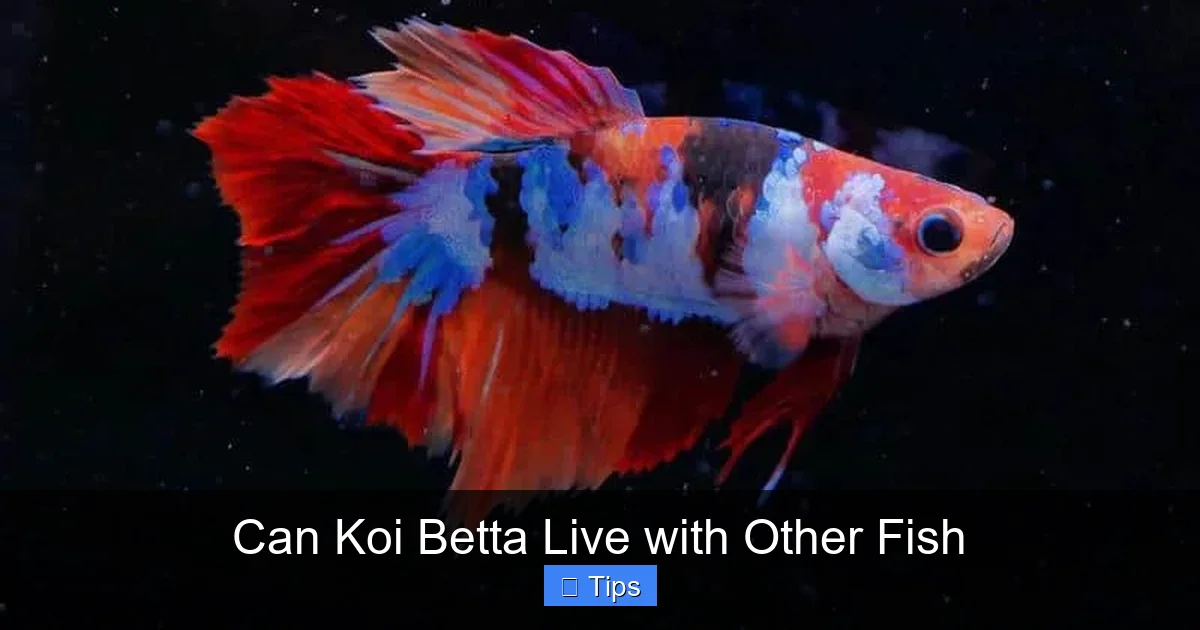
Visual guide about Can Koi Betta Live with Other Fish
Image source: acaquarium.com
- Fast and agile swimmers
- Schooling or shoaling (they stay in groups, distracting the betta)
- Bottom or mid-level dwellers (betatas are top/mid-level)
- Dull in color (no bright reds or blues)
- Without long, flowing fins (no fancy guppies, no other bettas)
- Not overly aggressive themselves
Here are the most commonly successful categories, with specific examples.
Peaceful Schooling Fish (The Best Bet)
These fish thrive in groups of 6-10+. Their constant, darting motion in a pack makes it impossible for a betta to single one out. They occupy the middle and upper water columns but move too quickly to be caught.
- Harlequin Rasboras (Trigonostigma heteromorpha): Perhaps the gold standard. They are active, peaceful, have a subtle orange/red patch (but not betta-like), and school beautifully. Their speed and group behavior make them excellent.
- Chili Rasboras (Boraras brigittae): Tiny, vibrant red fish, but their size (<1 inch) and hyperactive schooling make them too small to be seen as a threat and too fast to catch. A school of 8+ is mesmerizing.
- Ember Tetras (Hyphessobrycon amandae): Another tiny, fiery fish that is a fantastic contrast to a koi betta. Their small size and tight schooling behavior are perfect.
- Neon/Cardinal Tetras: Classic community fish. Their blue/red stripe is a concern for some, but their speed and schooling in large numbers (10+) usually override the betta’s aggression. Cardinal tetras are larger and a bit hardier.
- Black Skirt Tetras: Dull gray/black color, long “skirt” fins that are not flowing like a betta’s. Very active schoolers.
Bottom Dwellers: The Perfect Distraction
These fish occupy a completely different niche. They scoot along the substrate, sifting through sand or gravel, completely ignoring what’s happening above. They are invisible to a betta focused on the surface and mid-levels.
- Corydoras Catfish: The ultimate peaceful bottom feeder. These adorable, armored catfish are social and must be kept in groups of 5+. They are hardy, fun to watch, and utterly ignore bettas. Popular species include Pygmy Corydoras, Bronze Corydoras, and Panda Corydoras.
- Kuhli Loaches: Eel-like, shy, and nocturnal. They burrow and hide during the day, emerging at night. They are fascinating and pose zero threat.
- Otocinclus Catfish: The dedicated algae eater. They are very small, school, and cling to glass and plants. A group of 6+ is recommended as they can be shy.
Other “Maybe” Candidates (Proceed with Extreme Caution)
These can work but have higher failure rates. Always have a backup plan.
- Snails: Ramshorn, Nerite, Mystery, and Apple snails are generally safe. A betta may peck at a snail’s tentacle once or twice, but the snail’s hard shell provides ultimate protection. They are great cleanup crew.
- Shrimp: This is a gamble. Ghost shrimp and Amano shrimp are large, fast, and mostly ignored, though a particularly aggressive betta might hunt them. Cherry shrimp, however, are colorful and slow-moving—they will likely be eaten. Neocaridina shrimp (like Cherry or Blue Velvet) can sometimes breed and establish a population in a heavily planted tank if the betta is very mellow, but don’t count on it.
- African Dwarf Frogs: Can cohabit with bettas, but it’s a delicate balance. Both need easy access to the surface. The frog can be outcompeted for food, and a betta might nip at the frog’s limbs. Requires expert-level care and observation.
Absolute “NO” List: Any fish with long, flowing fins (Fancy Guppies, Siamese Algae Eaters that grow large and aggressive, other Bettas), large, slow, or aggressive fish (Tiger Barbs, Cichlids, Goldfish), and any fish that resembles a betta in color or shape.
Recognizing Aggression: The Warning Signs You Can’t Ignore
Before you even consider adding tank mates, you must know your betta’s baseline behavior. Spend weeks just observing your koi betta in its solitary tank. What is its normal activity level? How does it react to you? Then, when you introduce a potential mate, you must become a detective of fish behavior. There are degrees of aggression, and not all require immediate separation.
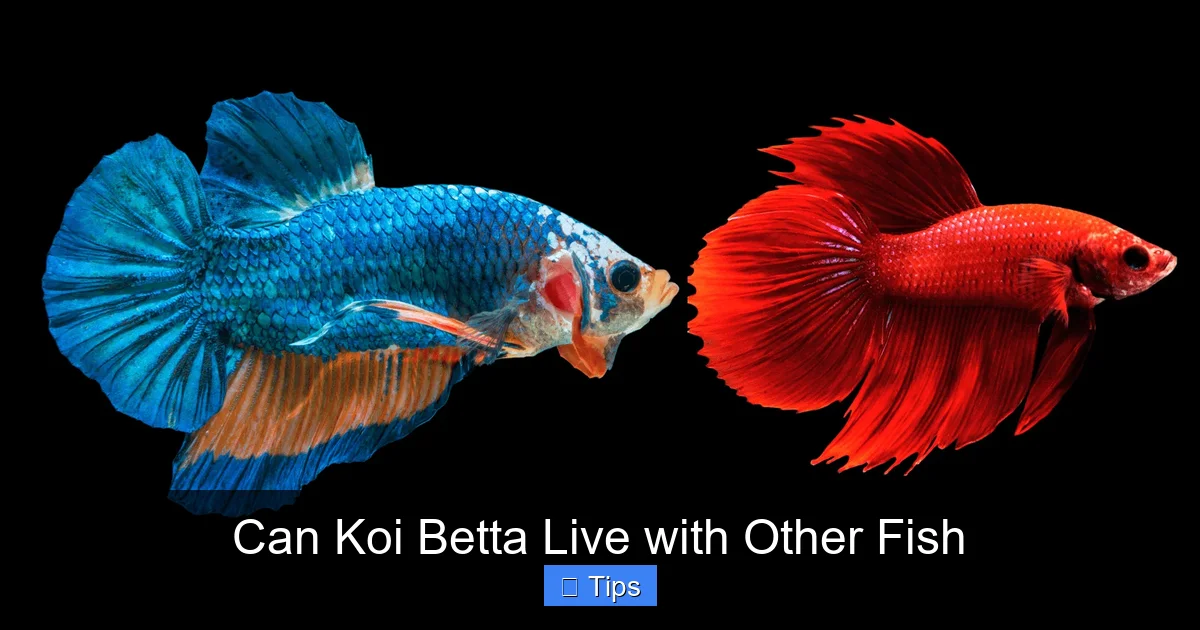
Visual guide about Can Koi Betta Live with Other Fish
Image source: aniimad.com
The Spectrum of Betta Behavior
1. Curiosity & Investigation: The betta will slowly approach the new fish, perhaps flaring slightly, but not chase relentlessly. This is normal and may subside after a few days. The new fish should be able to hold its ground or retreat without being pursued.
2. Chasing & Nipping (The Red Flag): This is the most common problematic behavior. The betta actively pursues another fish, often making physical contact. You may see the chased fish with torn fins or stress marks (dark lines on its body). This is unacceptable long-term behavior. If the chasing is constant (more than a few minutes at a time, repeatedly throughout the day), the betta is establishing dominance through harassment. This causes severe stress, suppresses the immune system of the victim, and will eventually lead to injury or death.
3. Locked-Jaw Fights (Emergency): The betta and another fish lock jaws and grapple. This is a fight to the death. Immediate separation is required.
4. Fin Nipping & Plant Destruction: Sometimes, a frustrated betta will redirect its aggression towards its environment, shredding plants or decorations. This is a sign of high stress and indicates the community setup is failing.
Reading the Victim’s Body Language
Don’t just watch the betta. Watch the fish it’s targeting. Signs of extreme stress in the potential tank mate are just as critical:
- Hiding constantly and refusing to come out, even for food.
- Rapid, frantic breathing (gasping at the surface can also indicate poor water quality).
- Loss of color (fading or darkening).
- Faded or torn fins.
- Refusal to eat.
- Erratic, panicked swimming (dashing into walls).
If you see these signs in the non-betta fish, it is suffering and must be removed immediately, regardless of whether the betta seems “calm.” The victim’s welfare is your priority.
The Step-by-Step Introduction Process: Patience is Everything
Rushing this process is the number one reason community tanks with bettas fail. You must treat it like a scientific experiment with clear protocols and a fail-safe. Your backup tank (a cycled 5-10 gallon hospital tank) must be ready and filtered before you even begin.
Phase 1: The Solo Baseline (1-2 Weeks)
Your koi betta should be the sole inhabitant of its future community tank. Use this time to:
- Ensure the tank is fully cycled (ammonia and nitrite at 0ppm, nitrates under 20ppm).
- Arrange all your plants, hardscape, and hiding spots. Create a dense environment.
- Feed your betta a high-quality diet and get it on a routine.
- Observe its behavior. Is it generally calm? Does it flare at your hand or its reflection constantly? A hyper-reactive, constantly flaring betta is a poor candidate for community life.
Phase 2: The “Mirror Test” & Dummy Introduction
This is a temperament check.
- Hold a small mirror to the tank glass. A strong, persistent flare response that lasts more than a minute or two indicates high aggression.
- Float a clear, sealed cup with a hardy, disposable fish (like a white cloud mountain minnow) inside it in the tank for 30 minutes. Observe the betta’s reaction. Does it immediately posture and try to attack the cup? Or does it largely ignore it after a brief inspection? The latter is a better sign.
Phase 3: The Actual Introduction (The 48-Hour Clock)
1. Acclimate Your New Fish: Properly drip-acclimate the new fish (your chosen school of rasboras or corydoras) to the community tank water parameters in a separate container.
2. Use a Breeding Box/Divider First: Place the new fish in a clear, perforated breeding box or use a tank divider inside the main tank. This allows visual contact but prevents physical interaction. Observe for 24-48 hours.
- Does the betta constantly hover near the divider, flaring, and trying to get through?
- Does it largely ignore the new fish after an initial check?
- Are the new fish stressed in the confined box?
3. Release at Night: If the divider test shows only mild, non-persistent interest, release the new fish into the main tank after lights out. This reduces the immediate confrontation.
4. The 48-Hour Critical Window: For the next two days, you must be a vigilant observer. Sit by the tank for periods of 15-20 minutes, several times a day. Look for the chasing/nipping behavior described earlier. If constant chasing occurs, you must remove the betta or the new fish immediately. Do not hope they will “work it out.” They won’t.
5. First Feeding: When you feed, ensure the new fish get their share. Drop food near their hiding spots. A betta might try to eat all the food, further stressing the others.
Phase 4: Long-Term Monitoring (The First 2 Weeks)
Even if the first 48 hours are peaceful, continue intense observation for two weeks. Betta aggression can be delayed. Watch for any new establishment of pecking order. Ensure all fish are eating, swimming actively, and not hiding 24/7. Maintain impeccable water quality during this stressful period.
Long-Term Care and When to Call It Quits
If you’ve passed the initial month and your tank is a relatively peaceful scene—your koi betta patrolling its top-level territory, a school of rasboras darting in the mid-water, and a group of corydoras busying the bottom—you’ve achieved a rare success. But the work isn’t over.
Maintaining the Peace
Consistency is key. Sudden changes disrupt the established order.
- Maintain Water Quality: Perform regular water changes (25-30% weekly). Stress from poor water is a major trigger for aggression flare-ups.
- Keep Tankmates in Proper Groups: Schooling fish must be in adequate numbers (6-10+). A lone rasbora is a stressed target. A proper school feels confident and moves as one unit.
- Feed a Varied Diet: Ensure your betta is well-fed with high-quality pellets, frozen or live foods (brine shrimp, daphnia). A hungry betta is an aggressive betta. Feed the community fish their appropriate food first, then target-feed the betta with a pipette or tweezers if necessary to ensure it gets enough without competing.
- Rearrange with Caution: Major redecorating can upset territories. If you must, do it gradually or be prepared for a temporary spike in aggression as boundaries are re-established.
The Inevitable: Recognizing When It’s Not Working
Sometimes, despite our best efforts, the betta’s nature prevails. You must be willing to make the tough call for the welfare of all your fish. Signs it’s time to separate:
- Any fish (betta or tank mate) showing persistent stress signs (hiding, fading, torn fins, not eating) for more than a week.
- Any physical injury, no matter how minor.
- The betta has “claimed” the entire tank, chasing all other fish relentlessly, leaving them no respite.
- The betta has begun destroying plants or decorations out of frustration.
Your backup tank is not a last resort; it is a planned part of the setup. If the community fails, you have a safe, cycled home ready for the betta or the displaced fish. Do not rehome a stressed or injured fish to a pet store; that passes your problem on. Your responsibility is to provide a stable home for each individual animal.
Conclusion: A Rewarding Challenge, Not a Guarantee
So, can a koi betta live with other fish? The honest, responsible answer is: it’s a calculated risk that often ends in separation. The stunning visual of a koi betta gliding amidst a peaceful school of rasboras is the dream of many aquarists, and it can be achieved. But it is the exception, not the rule. It demands a significant investment in a large, meticulously planned tank, a deep understanding of betta behavior, a careful selection of ultra-peaceful tank mates, and a willingness to intervene at the first sign of trouble.
For the vast majority of hobbyists, especially those new to the hobby, the recommendation must be to house your koi betta in a species-only, well-planted 5-gallon (minimum, but 10 is better) tank. This allows you to appreciate its beauty and personality without the constant stress of monitoring for conflict. A solitary, enriched life is a good life for a betta. If you do choose the community path, go in with your eyes wide open, your backup tank filled and ready, and a commitment to prioritize the well-being of every single fish in the tank over the aesthetic appeal of the setup. The most beautiful tank is a peaceful one.
Frequently Asked Questions
Can I keep two koi bettas together?
No, you should never house two male koi bettas together; they will fight to the death. A “sorority” tank with multiple female bettas is possible for advanced hobbyists in a very large, heavily planted tank (minimum 40 gallons) with 5+ females to distribute aggression, but it is still risky and not recommended for beginners. Koi bettas are best kept singly.
What about keeping a koi betta with shrimp like cherry shrimp?
It’s generally not recommended. Cherry shrimp are colorful and slow-moving, making them perfect targets for a betta’s predatory instincts. While a very mellow betta might ignore them, most will hunt and eat them. Larger, faster, dull-colored shrimp like Amano or Ghost shrimp have a better chance of survival.
My koi betta flares at me through the glass. Does that mean it’s too aggressive for tank mates?
Not necessarily. Flaring at your reflection or your hand is a common, often instinctual reaction and doesn’t directly correlate with aggression towards other fish species. What matters more is its reaction to a *real* fish in a divider test. A betta that flares constantly at a new fish behind a divider is a poor candidate.
Can I use a mirror to distract my betta from tank mates?
No. Using a mirror to “tire out” your betta is a myth and can actually increase its stress and aggression levels. The betta perceives its reflection as a relentless rival, which can make it more territorial and agitated. It does not teach it to tolerate real fish.
How long should I wait before deciding the community tank has failed?
Give it a minimum of 72 hours of close observation. If constant chasing, nipping, or signs of extreme stress in any fish persist beyond this initial period, it is time to separate them. Some mild initial curiosity is normal, but relentless harassment is not.
If my koi betta attacks a tank mate, can I ever try again with a different fish?
You can try, but it’s tricky. Once a betta has established a pattern of aggression, it’s more likely to repeat it. You would need to remove the victim, let the betta’s stress levels fully subside (a week or more in a separate tank), and then try a completely different, perhaps more robust species in a re-decorated tank to disrupt old territories. Success is not guaranteed. Often, the safest path forward is to keep the betta solitary.