Can Blue Velvet Shrimp Live with Betta Fish
Can blue velvet shrimp live with betta fish? It’s possible, but it depends heavily on your betta’s individual temperament. While some bettas ignore shrimp completely, others see them as expensive snacks. Success requires a heavily planted tank, plenty of hiding spots, and careful planning. This guide covers everything you need to know before attempting this popular aquarium pairing.
Key Takeaways
- It’s possible but not guaranteed: Blue velvet shrimp can live with betta fish, but success depends entirely on your betta’s individual personality and aggression level.
- Tank size matters: A minimum of 10 gallons is recommended to give shrimp enough space to hide and establish territories away from the betta.
- Heavy planting is essential: Dense plants like java moss, hornwort, and floating plants provide critical hiding spots that keep shrimp safe from curious or aggressive bettas.
- Introduce shrimp first: Adding shrimp to the tank before the betta helps them establish hiding spots and reduces the chance the betta sees them as invaders.
- Have a backup plan: Always be prepared to separate the shrimp if your betta shows persistent aggression, as even peaceful bettas can change their behavior over time.
- Feed your betta well: A well-fed betta is less likely to hunt shrimp out of hunger, so maintain a consistent and nutritious feeding schedule.
- Monitor behavior closely: Watch for signs of stress in both your betta and shrimp during the first few weeks to catch problems early before they escalate.
📑 Table of Contents
- Can Blue Velvet Shrimp Live with Betta Fish? The Complete Guide
- Understanding Blue Velvet Shrimp
- Understanding Betta Fish Temperament
- Setting Up a Successful Betta and Shrimp Tank
- How to Introduce Blue Velvet Shrimp to Your Betta Tank
- Tips for Maximizing Success
- What to Do If Your Betta Attacks the Shrimp
- Alternative Tank Mates for Bettas
- Frequently Asked Questions About Blue Velvet Shrimp and Bettas
- Final Thoughts: Is It Worth the Risk?
Can Blue Velvet Shrimp Live with Betta Fish? The Complete Guide
If you’ve ever gazed at a tank full of stunning blue velvet shrimp and thought about adding them to your betta’s home, you’re not alone. This is one of the most common questions in the aquarium hobby. The short answer is yes, blue velvet shrimp can live with betta fish — but the long answer comes with a lot of important caveats.
Blue velvet shrimp are gorgeous little creatures. Their vibrant blue coloration makes them a standout in any freshwater tank. Bettas, on the other hand, are known for their flowing fins and big personalities. Putting these two together sounds like a dream setup. But bettas are also territorial, predatory fish. And shrimp? Well, they look a lot like food to a hungry betta.
In this guide, we’ll break down everything you need to know about keeping blue velvet shrimp with your betta. We’ll cover tank requirements, betta temperament, how to set up your tank for success, and what to do if things go wrong. By the end, you’ll have a clear picture of whether this pairing is right for your aquarium.
Understanding Blue Velvet Shrimp
What Are Blue Velvet Shrimp?
Blue velvet shrimp are a color variant of Neocaridina davidi, the same species as cherry shrimp. They’re freshwater dwarf shrimp that typically grow to about 1 to 1.5 inches in length. Their striking blue color ranges from pale sky blue to deep cobalt, depending on their genetics and diet.
These shrimp are incredibly popular in the aquarium hobby for good reason. They’re peaceful, easy to care for, and excellent algae eaters. They spend most of their time grazing on surfaces, cleaning up leftover food, and adding a splash of color to your tank. They’re also prolific breeders under the right conditions, which means a small colony can grow into a thriving population over time.
Blue Velvet Shrimp Care Requirements
Before pairing any species with your betta, you need to understand what each animal needs. Blue velvet shrimp prefer water temperatures between 65°F and 80°F, with a pH range of 6.5 to 8.0. They’re fairly hardy, but they’re sensitive to ammonia, nitrites, and sudden water parameter changes.
One important thing to note is that blue velvet shrimp need calcium and minerals in their water to molt successfully. Without proper mineral content, they can have trouble shedding their old exoskeletons, which can be fatal. If your water is very soft, you may need to add mineral supplements.
They also need a cycled tank. Shrimp are more sensitive to poor water quality than bettas in many cases. Never add shrimp to a new, uncycled aquarium. Make sure your tank has been running for at least 4 to 6 weeks and that ammonia and nitrite levels are at zero.
Understanding Betta Fish Temperament
Why Bettas Can Be Problematic Tank Mates
Betta fish are labyrinth fish native to the shallow rice paddies and slow-moving waters of Southeast Asia. In the wild, they’re solitary and highly territorial. Male bettas, in particular, will fight other males to the death. This territorial instinct doesn’t disappear just because they’re in a home aquarium.
When it comes to shrimp, bettas face an internal conflict. On one hand, their hunting instinct tells them that small, moving creatures are prey. On the other hand, some bettas are simply too lazy or disinterested to bother chasing shrimp. The problem is that you won’t know which type of betta you have until you try.
Some bettas will completely ignore shrimp from day one. Others will hunt them relentlessly. And some will leave them alone for weeks and then suddenly decide shrimp are on the menu. This unpredictability is what makes the betta-shrimp pairing so tricky.
Factors That Influence Betta Aggression
Not all bettas are created equal when it comes to aggression. Several factors play a role in how your betta will react to shrimp tank mates:
- Individual personality: This is the biggest factor. Some bettas are naturally docile, while others are aggressive hunters. There’s no way to predict this just by looking at a betta.
- Age: Younger bettas tend to be more active and curious, which can mean more hunting behavior. Older bettas may be calmer and less interested in chasing shrimp.
- Tank size: A betta in a small tank is more likely to encounter and harass shrimp simply because there’s less space. Larger tanks give shrimp room to escape.
- Hunger: A betta that isn’t being fed enough is more likely to see shrimp as a food source. Consistent feeding reduces this risk.
- Previous experience: Bettas that have been kept with other fish or shrimp before may be more accepting of tank mates than those that have been kept alone.
If you’re exploring other options for community tanks, you might also want to read about can betta fish live with shrimp for a broader perspective on shrimp compatibility.
Setting Up a Successful Betta and Shrimp Tank
Tank Size and Shape
The single most important thing you can do to increase your chances of success is to choose the right tank size. While bettas can survive in small tanks, a betta-shrimp community needs more space. A minimum of 10 gallons is strongly recommended, with 20 gallons being even better.
Why does size matter so much? In a larger tank, shrimp can establish their own territories and find hiding spots far away from the betta. In a small 5-gallon tank, the betta will encounter shrimp constantly, which increases stress for both animals and makes predation much more likely.
Longer tanks are better than tall ones for this setup. Bettas prefer the top of the water column, while shrimp stay near the bottom. A long tank maximizes the distance between these two zones.
Plants and Hiding Spots
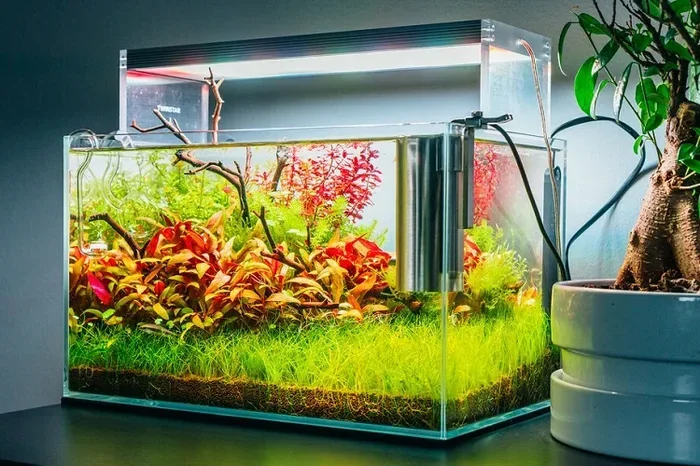
If there’s one non-negotiable requirement for keeping blue velvet shrimp with a betta, it’s heavy planting. Plants serve multiple purposes in this setup. They provide hiding spots for shrimp, break up sight lines so the betta can’t see every corner of the tank, and improve water quality.
Here are the best plants for a betta-shrimp tank:
- Java moss: This is the gold standard for shrimp tanks. Shrimp love to hide in dense moss, and it’s nearly impossible for a betta to reach them inside thick moss patches.
- Hornwort: A fast-growing plant that provides excellent cover. It can be left floating or planted in the substrate.
- Floating plants: Frogbit, water lettuce, and salvinia provide shade and cover at the surface. Bettas love resting near floating roots, and shrimp feel safer under the dim lighting they create.
- Java fern and anubias: These hardy plants attach to driftwood and rocks, creating additional hiding spots at different levels of the tank.
- Dwarf hair grass or carpeting plants: These create a dense floor cover that shrimp can retreat into when threatened.
In addition to plants, add decorations that create caves and crevices. Cholla wood, shrimp tubes, small caves, and rock formations all give shrimp places to escape. The more hiding spots available, the better your shrimp’s chances of survival.
Water Parameters
One of the advantages of pairing blue velvet shrimp with bettas is that their water parameter requirements overlap nicely. Both species thrive in similar conditions:
- Temperature: 76°F to 80°F is the sweet spot for both species
- pH: 6.5 to 7.5 works well for both
- Water hardness: Moderate hardness (4 to 8 dGH) supports both betta health and shrimp molting
- Ammonia and nitrite: Must be at 0 ppm at all times
- Nitrate: Keep below 20 ppm through regular water changes
Perform weekly water changes of about 20 to 25 percent. When doing water changes, make sure the new water is dechlorinated and matched to the tank temperature. Sudden temperature swings can stress both bettas and shrimp.
Be careful with water conditioners and medications. Some products contain copper, which is toxic to shrimp even in small amounts. Always check the ingredients of any additive before using it in a shrimp tank.
How to Introduce Blue Velvet Shrimp to Your Betta Tank
The Best Introduction Strategy
How you introduce shrimp to your betta’s tank can make or break the relationship. Here’s the step-by-step process that gives you the best chance of success:
Step 1: Add shrimp to an established tank. Your betta should already be living in the tank for at least a few weeks. The tank should be fully cycled and heavily planted. This way, the betta already considers the entire tank his territory, and the shrimp are the newcomers.
Step 2: Acclimate the shrimp properly. Float the bag or container in the tank for 15 to 20 minutes to match temperatures. Then slowly add small amounts of tank water to the container over 30 to 45 minutes. This gradual acclimation reduces shock.
Step 3: Release shrimp at night. Adding shrimp in the evening or with the lights off gives them several hours to find hiding spots before the betta becomes active in the morning. This head start can be crucial.
Step 4: Start with a larger group. Don’t add just two or three shrimp. A group of at least 10 to 15 gives the colony a better chance of establishing itself. Even if the betta catches a few, the population can recover if enough shrimp survive to breed.
Step 5: Feed the betta before releasing shrimp. A well-fed betta is less likely to go on a hunting spree. Give your betta a good meal right before adding the shrimp.
What to Watch For in the First Week
The first seven days are critical. During this time, observe your tank closely for these signs:
- Betta flaring at shrimp: Some initial curiosity and flaring is normal. But if your betta is actively chasing shrimp across the tank, that’s a bad sign.
- Shrimp hiding constantly: Shrimp always hide a little, but if they never come out even when the betta is on the other side of the tank, they may be too stressed.
- Missing shrimp: Count your shrimp daily. If numbers are dropping, your betta is likely hunting them.
- Damaged shrimp: If you find shrimp with missing legs or antennae, the betta may be nipping at them.
If you notice persistent aggression, you may need to remove the shrimp to a separate tank. It’s always better to be safe than sorry. For more ideas on compatible tank inhabitants, check out our guide on what other fish can live with betta fish.
Tips for Maximizing Success
Feed Your Betta Consistently
Hunting behavior in bettas is often driven by hunger or boredom. A betta that’s fed a varied, nutritious diet on a consistent schedule is less likely to view shrimp as a food source. Feed your betta high-quality pellets as a staple, supplemented with frozen or live foods like bloodworms, brine shrimp, and daphnia.
Feed once or twice daily, only as much as your betta can eat in about two minutes. Overfeeding leads to water quality problems, but underfeeding leads to a hungry betta with shrimp in his sights.
Create a Shrimp-Friendly Environment
The more shrimp-friendly your tank is, the better their chances. Beyond heavy planting, consider these additions:
- Leaf litter: Indian almond leaves and other botanicals release tannins that shrimp love. They also provide surfaces for biofilm to grow, which is a primary food source for shrimp.
- Shrimp-specific food: While shrimp will eat algae and leftover betta food, supplementing with shrimp pellets, blanched vegetables, and mineral foods keeps them healthy and well-fed.
- Sponge filter: A sponge filter is ideal for a shrimp tank because it provides filtration without creating strong currents that stress shrimp. It also won’t suck up baby shrimp like a hang-on-back filter might.
Consider the Shrimp-to-Betta Ratio
Starting with a larger colony of shrimp gives you a buffer. If your betta catches a few shrimp, a colony of 15 to 20 can still sustain itself and breed. Starting with just a few shrimp means that even one or two losses can devastate the population.
Blue velvet shrimp breed readily in good conditions. If your tank is well-planted and water parameters are stable, you may find yourself with a growing shrimp population within a few months. This is actually a good sign — it means the shrimp feel safe enough to reproduce.
What to Do If Your Betta Attacks the Shrimp
Recognizing a Failed Pairing
Sometimes, despite your best efforts, a betta simply won’t coexist with shrimp. Here are the signs that the pairing isn’t working:
- Your betta actively hunts shrimp every time he sees them
- Shrimp numbers are consistently declining
- Shrimp never come out of hiding, even during feeding time
- Your betta has killed multiple shrimp within the first few days
If you’re seeing these signs, it’s time to make a decision. Keeping shrimp in a tank with an aggressive betta will only result in dead shrimp and wasted money.
Your Options When Things Go Wrong
If the pairing fails, you have several options:
Option 1: Move the shrimp. Set up a separate shrimp-only tank. A simple 5 or 10-gallon tank with a sponge filter and some plants is all you need for a thriving shrimp colony. This is often the best solution.
Option 2: Move the betta. If you’d rather keep the shrimp community, you could move the betta to his own tank and let the shrimp have the planted aquarium to themselves.
Option 3: Use a tank divider. In larger tanks, a divider can separate the betta from the shrimp while still sharing the same water. However, bettas can sometimes jump over dividers, so this isn’t foolproof.
Option 4: Try a different betta. If you’re determined to have both species in one tank, you could try with a different betta. Some bettas are simply more shrimp-friendly than others. Female bettas are generally less aggressive than males, though this isn’t a guarantee.
It’s also worth noting that if you’re considering other invertebrate tank mates, can betta fish live with snails is another popular pairing that tends to have a higher success rate than shrimp.
Alternative Tank Mates for Bettas
If the blue velvet shrimp experiment doesn’t work out, don’t despair. There are several other tank mate options that tend to be more compatible with bettas. Snails like nerite snails and mystery snails are excellent choices because their hard shells protect them from betta attacks. Small, peaceful bottom dwellers like corydoras catfish can also work in larger tanks.
African dwarf frogs are another option, though they come with their own set of challenges. The key is always to research each species individually and understand that every betta is different. What works for one betta owner might not work for another.
When choosing tank mates, always prioritize the safety and well-being of all animals involved. A community tank should reduce stress, not increase it. If a pairing isn’t working, there’s no shame in separating the animals and trying a different approach.
Frequently Asked Questions About Blue Velvet Shrimp and Bettas
Will my betta definitely eat my shrimp?
Not necessarily. Many betta owners successfully keep shrimp with their bettas for years. However, there’s always a risk. Your betta’s individual temperament is the biggest factor. Some bettas couldn’t care less about shrimp, while others will hunt them relentlessly.
How many blue velvet shrimp should I start with?
Start with at least 10 to 15 shrimp. A larger starting group gives the colony a better chance of surviving and breeding, even if your betta picks off a few. A small group of three or four shrimp is too vulnerable.
Do blue velvet shrimp need a heater?
If you’re keeping them with a betta, the heater you use for your betta will work perfectly. Both species thrive in the 76°F to 80°F range. Just make sure the heater is reliable and the temperature stays stable.
Can baby shrimp survive with a betta?
Baby shrimp are extremely small and vulnerable. In a heavily planted tank with lots of moss, some babies will survive by hiding. However, don’t expect a high survival rate for baby shrimp in a betta tank. If you want to grow your shrimp population, a separate breeding tank is more effective.
Final Thoughts: Is It Worth the Risk?
So, can blue velvet shrimp live with betta fish? The answer is a cautious yes — with the right setup, the right betta, and a healthy dose of luck. Many aquarium hobbyists have created beautiful, thriving tanks that house both species together. The sight of a betta gliding through a forest of blue-green plants while bright blue shrimp graze below is truly stunning.
But you need to go into this with realistic expectations. There’s a real chance your betta will eat some or all of your shrimp. That’s just the nature of keeping a predatory fish with small invertebrates. If you’re emotionally or financially invested in your shrimp colony, think carefully before adding them to a betta tank.
The best approach is to prepare for the worst and hope for the best. Set up a heavily planted tank, start with a large shrimp colony, feed your betta well, and monitor the situation closely. Have a backup plan ready in case things don’t work out. And remember — even if this particular pairing doesn’t work, there are plenty of other ways to create a beautiful and harmonious aquarium community.
At the end of the day, the health and happiness of your animals should always come first. Whether your betta ends up being a shrimp-friendly gentleman or a relentless hunter, you’ll learn something valuable about your fish’s personality. And that knowledge will help you make better decisions about tank mates in the future.
Frequently Asked Questions
Can blue velvet shrimp live with betta fish in a 5-gallon tank?
A 5-gallon tank is too small for this pairing to work reliably. In such a confined space, the betta will constantly encounter the shrimp, leading to stress and predation. A minimum of 10 gallons is strongly recommended, with 20 gallons being ideal for giving shrimp enough room to hide and establish their own space away from the betta.
What should I do if my betta kills my shrimp?
If your betta is actively hunting and killing shrimp, remove the remaining shrimp immediately to prevent further losses. You can set up a separate shrimp-only tank or rehome them. Not all bettas are compatible with shrimp, and it’s important to accept this rather than continuing to lose shrimp to an aggressive betta.
Do blue velvet shrimp need special water conditions when kept with bettas?
Blue velvet shrimp and bettas have very similar water parameter requirements, which makes them compatible in this regard. Both thrive in temperatures between 76°F and 80°F with a pH of 6.5 to 7.5. The main thing to watch is mineral content — shrimp need adequate calcium and magnesium for healthy molting, so moderately hard water is beneficial for both species.
Will blue velvet shrimp breed in a betta tank?
Blue velvet shrimp can breed in a betta tank if conditions are right, but baby shrimp survival rates tend to be low. The dense planting required for this setup does provide some protection for shrimplets, and in heavily mossed tanks, enough babies may survive to sustain the colony. However, don’t expect the same breeding success as you would in a shrimp-only tank.
Are female bettas more likely to accept shrimp than males?
Female bettas are generally considered less aggressive than males, which may give shrimp a slightly better chance of survival. However, female bettas can still be territorial and predatory toward shrimp. There’s no guarantee that a female betta will be more shrimp-friendly — it still comes down to the individual fish’s personality.
What are the best hiding spots for shrimp in a betta tank?
Java moss is the single best hiding spot for shrimp because its dense structure makes it nearly impossible for bettas to reach shrimp hiding inside. Other excellent options include hornwort, cholla wood, shrimp tubes, small rock caves, and dense carpeting plants. The more hiding spots you provide, the better your shrimp’s chances of avoiding an aggressive betta.