Will Betta Fish Tail Grow Back

Betta tails can often regrow, but success depends on the cause, water quality, and proper care. Understanding the healing process and taking quick action gives your fish the best chance to sport a full, vibrant tail again.
Key Takeaways
- Regeneration is possible: Most betta tails can grow back if the damage isn’t too severe.
- Root cause matters: Injury, disease, or poor water conditions each require a different response.
- Water quality is critical: Clean, stable water speeds healing and prevents further loss.
- Nutrition supports regrowth: High‑protein foods and supplements give fins the building blocks they need.
- Patience and observation: Tail regrowth can take weeks to months; monitor progress daily.
- Prevent future loss: Reduce stressors, avoid aggressive tank mates, and maintain proper temperature.
- Seek professional help when needed: Persistent decay or infection may need medication or a vet.
📑 Table of Contents
- Introduction: Why a Missing Tail Is More Than Just a Cosmetic Issue
- Understanding Betta Tail Anatomy and Healing Ability
- Common Reasons a Betta’s Tail Might Be Damaged
- Will Betta Fish Tail Grow Back? Factors That Influence Regeneration
- Step‑by‑Step Guide to Help Your Betta’s Tail Regrow
- Preventing Future Tail Loss
- When to Seek Professional Help
- Conclusion: Hope for a Happy, Flowing Tail
Introduction: Why a Missing Tail Is More Than Just a Cosmetic Issue
Betta fish are famous for their flowing, rainbow‑like tails. When a tail starts to fray, curl, or disappear, many owners panic. They wonder, will betta fish tail grow back and what they can do to help. The answer isn’t a simple yes or no—it depends on the reason behind the loss and how quickly you act.
In this friendly, step‑by‑step guide we’ll explore the biology of betta fins, the common culprits behind tail damage, and practical tips to encourage healthy regrowth. Think of it as a conversation over coffee with a fellow hobbyist who’s been there, fixed that, and now wants to share the know‑how.
Understanding Betta Tail Anatomy and Healing Ability
What Makes a Betta Tail So Special?
Betta tails are made of delicate fin rays (lepidotrichia) supported by a thin membrane. Unlike scales, these rays are flexible and can regenerate if the damage is limited to the outer layers. The blood supply runs through tiny capillaries, delivering oxygen and nutrients essential for repair.

Visual guide about Will Betta Fish Tail Grow Back
Image source: m.media-amazon.com
Natural Regeneration Process
When a fin is torn, the betta’s body initiates a wound‑healing cascade:
- Inflammation: Blood clotting seals the wound and immune cells clean debris.
- Cell proliferation: New fibroblast cells multiply to rebuild the fin matrix.
- Remodeling: The new tissue hardens, and the fin regains its shape.
This process can take anywhere from a few days to several weeks, depending on the severity of the injury and the environment.
Common Reasons a Betta’s Tail Might Be Damaged
Physical Injuries
Sharp ornaments, aggressive tank mates, or a sudden splash can tear the tail. Even a careless hand when transferring the fish can cause a nick.
Visual guide about Will Betta Fish Tail Grow Back
Image source: i.ytimg.com
Fin Rot and Bacterial Infections
Fin rot starts as a small white spot that spreads, turning the tail ragged. Poor water quality fuels bacterial growth, making rot a frequent cause of tail loss.
Genetic and Developmental Issues
Some bettas are born with shorter or split tails, especially “half‑moon” varieties. While these aren’t true losses, owners sometimes mistake them for damage.
Stress and Poor Water Conditions
High ammonia, nitrite spikes, or temperature swings stress the fish, weakening its immune system and making the tail more vulnerable.
Parasites and Fungal Infections
Protozoan parasites like Ich or fungal growth can cause fraying and discoloration, leading to tail loss if untreated.
Will Betta Fish Tail Grow Back? Factors That Influence Regeneration
Severity of Damage
If only the outer membrane is torn, the tail usually regrows fully. Deep cuts that remove the fin rays often result in a shorter, sometimes misshapen tail.

Visual guide about Will Betta Fish Tail Grow Back
Image source: m.media-amazon.com
Water Quality
Clean, stable water is the single most important factor. Ammonia levels above 0.25 ppm, nitrite spikes, or pH swings slow healing and can cause further decay.
Nutrition
Protein‑rich foods (bloodworms, brine shrimp) and vitamin supplements (especially vitamin C) provide the building blocks for new tissue.
Age and Overall Health
Young, healthy bettas heal faster. Older fish or those already battling disease may never fully recover.
Prompt Treatment
Addressing the root cause within 24‑48 hours dramatically improves the odds of regrowth.
Step‑by‑Step Guide to Help Your Betta’s Tail Regrow
1. Diagnose the Problem
First, look closely at the tail. Is it ragged, white, or blackened? Check for:
- White edges (early fin rot)
- Black spots (possible necrosis)
- Visible parasites
If you’re unsure, read our article on Why Did My Betta Fish Lose Its Tail for a deeper dive.
2. Improve Water Conditions Immediately
- Perform a 25‑30 % water change using dechlorinated water at the same temperature.
- Test ammonia, nitrite, nitrate, and pH; keep ammonia < 0.25 ppm, nitrite < 0.5 ppm, nitrate < 20 ppm.
- Consider adding a gentle bio‑filter or increasing filtration flow (but avoid strong currents).
3. Treat Infections Promptly
If fin rot is suspected, dip the fish in a mild Melafix or API Betta Health solution for 30 seconds daily. For bacterial infections, a short course of aquarium‑safe antibiotics (e.g., Maracyn) may be needed. Always follow the label instructions.
4. Upgrade the Diet
- Feed high‑protein live or frozen foods 3‑4 times a week.
- Add a vitamin‑C supplement to boost collagen formation.
- Avoid over‑feeding; excess waste worsens water quality.
5. Provide a Stress‑Free Environment
- Maintain temperature between 76‑80 °F (24‑27 °C).
- Use a gentle heater and a reliable thermostat.
- Limit bright lights to 10‑12 hours a day.
- Remove aggressive tank mates; a single betta or peaceful community works best.
6. Monitor Progress
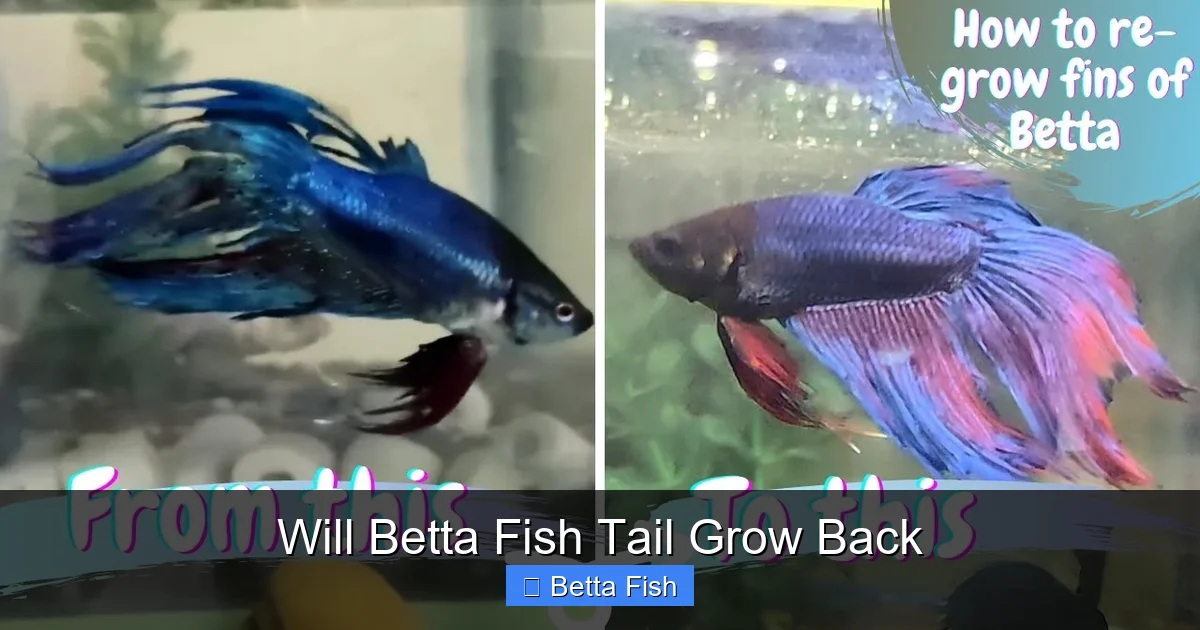
Check the tail daily. New growth appears as tiny, transparent filaments that gradually darken. Full regrowth may take 2‑6 weeks. If the tail continues to deteriorate, revisit water tests and consider a vet visit.
Preventing Future Tail Loss
Tank Setup Tips
- Choose a tank at least 5 gallons with a lid to prevent jumps.
- Use smooth decorations—no sharp edges.
- Provide live plants (e.g., Java fern) for hiding spots and better water quality.
Routine Maintenance
- Weekly 20‑30 % water changes.
- Monthly filter media cleaning (rinse in tank water, not tap water).
- Regular water testing—keep a log.
Health Checks
Weekly visual inspections help catch early signs of fin rot or parasites. Early action is the key to a full tail comeback.
When to Seek Professional Help
If you notice:
- Rapid blackening of the tail.
- Swollen, ulcerated areas.
- Constant lethargy or loss of appetite.
These could signal severe infection or systemic disease. A tropical fish‑savvy veterinarian can prescribe stronger meds or advise on humane euthanasia if the prognosis is poor.
Conclusion: Hope for a Happy, Flowing Tail
So, will betta fish tail grow back? In most cases, yes—provided you act quickly, maintain pristine water, and give your fish the nutrition it needs. Remember, the journey from a ragged fin to a full, flowing tail takes patience, observation, and a bit of trial and error. By following the steps above, you’re giving your betta the best possible chance to bounce back and show off those spectacular colors once again.
Happy fish‑keeping!
Frequently Asked Questions
Can a betta’s tail fully regrow after a severe tear?
It can, but the new tail may be slightly shorter or thinner. Success depends on water quality, nutrition, and how quickly you treat the injury.
How long does it usually take for a betta tail to grow back?
Small tears may heal in 1‑2 weeks, while larger losses can take 4‑6 weeks or more. Patience is essential.
Is fin rot the same as tail loss?
Fin rot is an infection that causes the tail to deteriorate. Treating the infection and improving water conditions can stop further loss and allow regrowth.
Should I use medication for every tail injury?
No. Only use medication if you see signs of infection (white spots, blackening, foul smell). Simple injuries often heal with clean water and good care.
Can diet alone fix a damaged tail?
Diet supports healing but won’t replace the need for clean water and infection control. Combine high‑protein foods with proper tank maintenance.
Do bettas need special lighting to help fin regrowth?
Standard aquarium lighting is fine. Avoid excessive UV or very bright lights, as they can stress the fish. A regular 10‑12 hour light cycle works best.