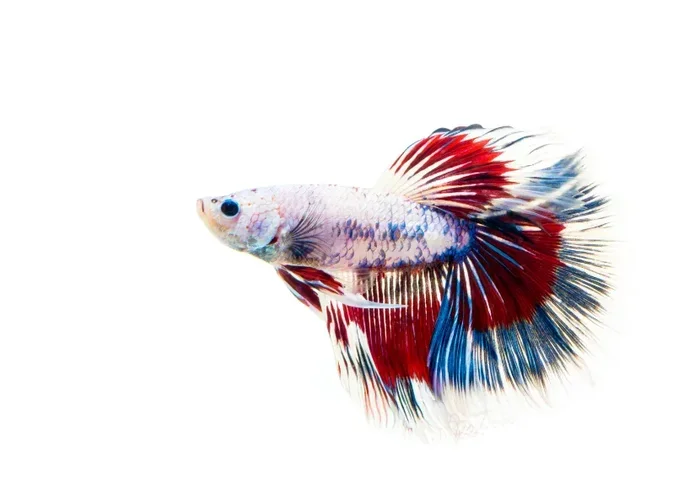
Can Betta Fish Swim in Distilled Water

Betta fish should not be kept in pure distilled water. While they can technically swim in it briefly, distilled water lacks the essential minerals and has an unstable pH that can harm your fish over time. You must remineralize distilled water before adding your betta to keep it healthy and thriving.
- Pure distilled water is not safe for betta fish. It lacks essential minerals like calcium and magnesium that bettas need for osmoregulation and overall health.
- Distilled water has an unstable pH. Without buffering minerals, the pH can swing rapidly, causing dangerous stress to your betta fish.
- Osmotic shock is a real danger. Pure distilled water can cause water to rush into your betta’s cells, leading to organ stress and even death.
- You can use distilled water if you remineralize it. Adding a quality water conditioner or mineral supplement makes distilled water safe and ideal for bettas.
- Proper water parameters matter most. Betta fish thrive in water with a pH of 6.5–7.5, GH of 3–4 dGH, and KH of 3–5 dKH.
- Tap water is often a better default choice. Dechlorinated tap water naturally contains minerals that support your betta’s health.
- Regular water testing is essential. Whether you use distilled, tap, or bottled water, always test pH, GH, and KH levels before adding your betta.
📑 Table of Contents
- Can Betta Fish Swim in Distilled Water? Everything You Need to Know
- What Is Distilled Water, Exactly?
- Why Pure Distilled Water Is Dangerous for Betta Fish
- Can Betta Fish Technically Survive in Distilled Water?
- How to Make Distilled Water Safe for Betta Fish
- Comparing Distilled Water to Other Water Sources
- Common Mistakes to Avoid When Using Distilled Water
- Signs Your Betta Fish Is Suffering from Poor Water Quality
- Final Thoughts: Should You Use Distilled Water for Your Betta?
Can Betta Fish Swim in Distilled Water? Everything You Need to Know
If you’ve ever stood in the water aisle at the store, staring at bottles of distilled water, you’ve probably wondered — can betta fish swim in distilled water? It seems like it should be the purest, safest option, right? After all, distilled water has been stripped of all impurities, chemicals, and contaminants. It sounds like the cleanest water you could possibly offer your betta fish.
But here’s the thing — what seems pure and clean to us isn’t necessarily what’s best for our aquatic friends. Water quality for betta fish is about much more more than just being “clean.” It’s about having the right balance of minerals, a stable pH, and the proper chemical composition that mimics their natural habitat. In this article, we’re going to break down exactly what happens when you put a betta fish in distilled water, why it can be dangerous, and how to use distilled water safely if you choose to go that route.
What Is Distilled Water, Exactly?
The Distillation Process
Distilled water is created through a process called distillation. Water is heated until it turns into steam, and then that steam is collected and cooled back into liquid form. This process removes virtually everything from the water — minerals, chemicals, bacteria, and other impurities. What you’re left with is water in its most “pure” form, consisting almost entirely of H2O molecules.
Distilled water is commonly used in medical settings, laboratory experiments, steam irons, and car batteries. It’s prized precisely because of its lack of mineral content. But that same quality that makes it useful for appliances and science is exactly what makes it problematic for living creatures like betta fish.
How Distilled Water Differs from Other Water Types
To understand why distilled water is different, let’s compare it to other common water types. Tap water contains dissolved minerals like calcium, magnesium, and sodium, along with added chemicals like chlorine or chloramine. Bottled spring water also contains natural minerals picked up from underground sources. Reverse osmosis (RO) water is similar to distilled water — it’s been filtered to remove most minerals and impurities, though the process is slightly different.
Distilled water sits at the extreme end of the purity spectrum. It has essentially zero mineral content, a neutral or slightly acidic pH, and no buffering capacity. For betta fish, which evolved in mineral-rich waters in Southeast Asia, this is a significant problem.
Why Pure Distilled Water Is Dangerous for Betta Fish
The Osmotic Shock Problem
The biggest danger of putting betta fish in distilled water is something called osmotic shock. Here’s how it works. Fish bodies contain dissolved salts and minerals in their blood and tissues. In normal water, there’s a balanced exchange of water and minerals through their gills and skin via a process called osmoregulation.
When you place a betta in pure distilled water, the mineral concentration outside the fish is dramatically lower than inside. Nature always tries to balance things out, so water rushes INTO the fish’s cells to equalize the concentration. This causes cells to swell, puts enormous stress on the fish’s organs, and can lead to a condition called hyponatremia — essentially, the fish’s body becomes dangerously diluted.
Symptoms of osmotic stress in betta fish include lethargy, loss of appetite, clamped fins, rapid gilling, and in severe cases, organ failure and death. Even if your betta doesn’t die immediately, prolonged exposure to mineral-free water weakens its immune system and makes it vulnerable to disease.
Unstable pH Levels
Another major issue with distilled water is its unstable pH. Natural water sources contain carbonate and bicarbonate ions that act as buffers — they help keep the pH steady even when acids or bases are introduced. Distilled water has no such buffering capacity.
What does this mean in practice? The pH of distilled water can swing wildly based on very small changes. Carbon dioxide from the air dissolves into the water and makes it more acidic. Waste products from your betta fish can cause rapid pH shifts. Even the materials in your tank — substrate, decorations, plants — can cause unpredictable pH changes in unbuffered water.
For betta fish, which prefer a stable pH between 6.5 and 7.5, these fluctuations are extremely stressful. Rapid pH changes can burn their gills, damage their slime coat, and cause chronic stress that shortens their lifespan significantly.
Missing Essential Minerals
Bettas need certain minerals to function properly. Calcium is essential for bone health and muscle function. Magnesium supports enzyme function and metabolism. Potassium helps with nerve function and osmoregulation. These minerals are naturally present in their native habitats — the warm, slow-moving waters of Thailand, Cambodia, Vietnam, and Laos.
Distilled water contains none of these minerals. Without them, your betta fish can develop health problems over time, including weakened bones, poor muscle function, and a compromised immune system. Think of it like drinking only distilled water yourself — over time, you’d become mineral deficient too.
Can Betta Fish Technically Survive in Distilled Water?
Short-Term vs. Long-Term Exposure
Let’s be honest — if you accidentally put your betta fish in distilled water for a few hours, it probably won’t die. A short exposure isn’t immediately lethal for most healthy betta fish. They can technically swim in it, and you might not notice any immediate problems.
But “not immediately lethal” is a far cry from “safe.” The damage from distilled water exposure is cumulative. Even a day or two in pure distilled water can start to cause osmotic stress and pH instability. Over weeks or months, the effects become severe — chronic stress, weakened immunity, organ damage, and eventually death.
So when someone asks “can betta fish swim in distilled water,” the honest answer is: yes, they can physically swim in it for a short time. But no, they should not live in it. The distinction between surviving and thriving is enormous when it comes to betta fish care.
What the Experts Say
Aquarium scientists and experienced betta fish keepers are unanimous on this topic. Pure distilled water is not suitable for any freshwater fish, including bettas. The American Betta Congress, veterinary aquatic specialists, and experienced hobbyists all recommend against using distilled water without modification.
If you’re looking for safe alternatives, you might want to read about whether betta fish can live in tap water, which covers how to properly treat tap water for your betta’s tank.
How to Make Distilled Water Safe for Betta Fish
Remineralizing Distilled Water
Here’s the good news — if you only have access to distilled water, or if you prefer using it as a base, you absolutely can use it for your betta fish. You just need to remineralize it first. This means adding back the essential minerals that were removed during distillation.
The easiest way to do this is by using a commercial remineralizer. Products like Seachem Equilibrium, API Proper pH, or Salty Shrimp GH/KH+ are designed specifically for this purpose. You add a measured amount to your distilled water, and it restores the calcium, magnesium, and carbonate levels your betta needs.
Here’s a basic remineralization process:
- Fill your tank or container with distilled water
- Add the recommended amount of remineralizer according to the product instructions
- Stir or circulate the water to ensure even distribution
- Test the water parameters using a liquid test kit
- Adjust if needed — add more remineralizer or dilute with more distilled water
- Add a water conditioner to neutralize any potential contaminants
- Let the water sit for 24 hours to stabilize before adding your betta
Mixing Distilled Water with Tap Water
Another popular approach is mixing distilled water with tap water. This naturally reintroduces minerals while diluting any chlorine, chloramine, or heavy metals present in the tap water. A common ratio is 50/50 — half distilled, half dechlorinated tap water.
This method works well because it gives you control over the mineral content. If your tap water is very hard (high mineral content), mixing it with distilled water softens it to a level that’s more comfortable for betta fish. If your tap water has chemical concerns, the dilution reduces those risks.
Just remember — you still need to treat the tap water portion with a dechlorinator before mixing. Check out our guide on using distilled water for betta fish for more detailed instructions on ratios and preparation.
Target Water Parameters for Betta Fish
Whether you’re using remineralized distilled water or a distilled-tap mix, you want to hit these target parameters:
- pH: 6.5–7.5 (stable, not fluctuating)
- General Hardness (GH): 3–12 dGH
- Carbonate Hardness (KH): 3–5 dKH
- Temperature: 76–82°F (24–28°C)
- Ammonia: 0 ppm
- Nitrite: 0 ppm
- Nitrate: Below 20 ppm
Invest in a reliable liquid test kit — API makes an excellent freshwater master test kit. Test strips are convenient but less accurate. When you’re working with distilled water, precision matters because you’re building the mineral content from scratch.
Comparing Distilled Water to Other Water Sources
Distilled Water vs. Tap Water
Tap water is the most common choice for betta fish keepers, and for good reason. It naturally contains minerals, it’s readily available, and it’s inexpensive. The main concern with tap water is the presence of chlorine, chloramine, and sometimes heavy metals like copper.
These issues are easily solved with a quality water conditioner. Products like Seachem Prime neutralize chlorine, chloramine, and heavy metals within minutes. Once conditioned, tap water is generally safe and suitable for betta fish.
Distilled water has the advantage of being free of contaminants, but it requires the extra step of remineralization. For most betta keepers, properly conditioned tap water is simpler and equally effective. However, if your tap water quality is poor — very hard, high in metals, or inconsistently treated — distilled water with remineralization gives you more control.
Learn more about using bottled water for betta fish if you’re exploring all your water source options.
Distilled Water vs. Reverse Osmosis (RO) Water
RO water is very similar to distilled water. Both have been stripped of minerals and impurities. The main difference is the purification method — RO uses a semi-permeable membrane rather than evaporation. RO water may retain trace amounts of minerals depending on the system, but it generally requires the same remineralization process as distilled water.
Many serious aquarium hobbyists prefer RO water because it’s more cost-effective for larger tanks. RO systems can produce large volumes of purified water on demand, whereas buying distilled water in bulk can get expensive. The remineralization process is identical for both.
Distilled Water vs. Bottled Spring Water
Bottled spring water contains natural minerals and is generally safe for betta fish without remineralization. However, mineral content varies significantly between brands. Some spring water is quite soft, while others are relatively hard.
If you choose bottled spring water, always check the mineral content on the label and test the water before use. It’s a good middle-ground option if your tap water is problematic and you don’t want to deal with remineralization.
Common Mistakes to Avoid When Using Distilled Water
Mistake #1: Using Pure Distilled Water Without Remineralization
This is the most common and most dangerous mistake. People assume that because distilled water is “pure,” it must be safe. As we’ve discussed, the opposite is true for fish. Never put your betta directly into pure distilled water without adding minerals back in.
Mistake #2: Not Testing Water Parameters
Even after remineralizing, you need to test your water. Guessing at mineral amounts leads to inconsistent water quality. Your betta fish depends on stable conditions, and the only way to ensure stability is through regular testing with a reliable kit.
Mistake #3: Inconsistent Water Changes
When you use distilled water, you need to be consistent with your water change routine. Each time you do a partial water change, the new water should be remineralized to the same parameters as the existing tank water. Adding untreated distilled water during a water change can cause sudden parameter shifts that stress your betta.
For proper water change procedures, see our guide on how to change water in a betta fish tank.
Mistake #4: Over-Remineralizing
More minerals isn’t always better. Adding too much remineralizer can make the water too hard, which is just as problematic as water that’s too soft. Bettas prefer moderately soft to slightly hard water. Always follow product instructions and verify with a test kit.
Mistake #5: Ignoring Temperature
Don’t forget about temperature when preparing distilled water for your betta. Water straight from the distillation process or store-bought bottles is usually room temperature, which may be too cold for tropical betta fish. Always adjust the temperature to 76–82°F before adding it to your tank.
Signs Your Betta Fish Is Suffering from Poor Water Quality
Whether you’re using distilled water or any other source, it’s important to recognize the signs that your betta fish is in distress. Here are the key symptoms to watch for:
- Lethargy: Your betta is hanging at the surface or sitting at the bottom more than usual
- Loss of appetite: Refusing food or spitting it out
- Clamped fins: Fins held tight against the body instead of flowing freely
- Rapid breathing: Gills moving faster than normal, gasping at the surface
- Color fading: Vibrant colors becoming dull or washed out
- Erratic swimming: Darting around, swimming sideways, or struggling to maintain balance
- White spots or fuzzy patches: Signs of parasitic or fungal infections, often triggered by stress from poor water
If you notice any of these symptoms, test your water immediately. Check pH, ammonia, nitrite, nitrate, GH, and KH. If you’ve been using pure distilled water, this is likely the culprit. Perform a partial water change with properly remineralized water and monitor your betta closely.
Swimming problems in particular can sometimes indicate swim bladder issues in betta fish, which can be exacerbated by poor water conditions.
Final Thoughts: Should You Use Distilled Water for Your Betta?
So, can betta fish swim in distilled water? Technically, yes — they can physically move through it. But should they live in it? Absolutely not, at least not in its pure form. Distilled water lacks the essential minerals, buffering capacity, and stable pH that betta fish need to survive and thrive.
If distilled water is your only option, or if you prefer it for the control it gives you over water chemistry, that’s perfectly fine. Just make sure you remineralize it properly, test your parameters regularly, and maintain consistent water conditions. A well-prepared distilled water setup can actually produce excellent results — many professional breeders use RO or distilled water with custom mineral blends.
For most casual betta keepers, properly dechlorinated tap water is the simplest and most practical choice. It naturally contains the minerals your betta needs, and a good water conditioner handles the chemical concerns. Whatever water source you choose, the key is consistency, proper preparation, and regular testing.
Your betta fish depends entirely on you for its environment. Taking the time to understand water quality and provide the right conditions is one of the most important things you can do as a betta owner. Your fish will reward you with vibrant colors, active behavior, and a longer, healthier life.
Frequently Asked Questions
Can betta fish live in distilled water long-term?
No, betta fish cannot live in pure distilled water long-term. Distilled water lacks essential minerals and has an unstable pH, which causes osmotic stress, organ damage, and a weakened immune system. If you want to use distilled water, you must remineralize it with a commercial mineral supplement before adding your betta.
What happens if I accidentally put my betta in distilled water?
A short exposure of a few hours is unlikely to kill a healthy betta, but it can still cause stress. If this happens, gradually transition your betta to properly conditioned water by doing small water changes over several hours. Monitor your fish closely for signs of distress like lethargy, clamped fins, or rapid breathing.
How do I remineralize distilled water for my betta fish?
Add a commercial remineralizer like Seachem Equilibrium or Salty Shrimp GH/KH+ to your distilled water following the product instructions. Stir well, then test the GH, KH, and pH with a liquid test kit. Adjust as needed until you reach a GH of 3–12 dGH, KH of 3–5 dKH, and a pH between 6.5 and 7.5.
Is distilled water better than tap water for betta fish?
Not necessarily. While distilled water is free of contaminants, it requires remineralization to be safe. Properly dechlorinated tap water naturally contains beneficial minerals and is simpler to use. Distilled water is a good option if your tap water quality is poor or inconsistent.
Can I mix distilled water with tap water for my betta?
Yes, mixing distilled water with dechlorinated tap water is an excellent approach. A 50/50 ratio is common and helps balance mineral content while reducing any chemical concerns from tap water. Always treat the tap water with a dechlorinator before mixing, and test the final parameters.
How often should I test water parameters when using distilled water?
Test your water at least once a week when using distilled water, and always test newly prepared water before adding it to your tank. Because distilled water starts with zero minerals, it’s especially important to verify that your remineralization process is consistent with each batch you prepare.