Do Betta Fish Need a Heater
Yes, betta fish absolutely require a heater. As tropical fish from warm, shallow waters in Southeast Asia, they need a consistent water temperature between 78-80°F (25.5-26.5°C) to thrive. A stable temperature is crucial for their immune system, digestion, and overall activity. Without a heater, bettas become lethargic, prone to fatal diseases like dropsy, and have significantly shortened lifespans. Choosing an adjustable, submersible heater with a guard and pairing it with an accurate thermometer is essential for their long-term health and vibrancy.
So, you’ve brought home a beautiful betta fish, with its flowing fins and vibrant colors. You’ve set up a lovely tank, picked out some plants, and chosen a nutritious food. But there’s one piece of equipment that often sparks debate, confusion, or even gets skipped entirely: the heater. The question “do betta fish need a heater?” is one of the most common—and most critical—in the betta-keeping world. The short, unequivocal answer is yes. But to understand why and to do it correctly, we need to dive deeper than a simple yes or no. This isn’t about creating a fancy setup; it’s about meeting a fundamental biological need that, if ignored, will directly lead to a sickly, stressed, and short-lived fish.
Many new betta owners are sold the myth of the “easy, low-maintenance fish that can live in a small bowl on a desk.” This outdated idea is the primary reason so many bettas perish prematurely. Bettas, often called Siamese fighting fish, are not hardy, cold-water survivors. They are sophisticated, tropical animals with specific requirements. The heater is not an optional accessory; it is as essential as clean water and food. In this comprehensive guide, we will dismantle the myths, explore the science of betta thermoregulation, and provide you with everything you need to know to select, set up, and maintain a heater that will allow your betta to thrive for 5, 7, or even 10 years.
Key Takeaways
- Bettas are tropical fish: Native to warm climates, their biology requires stable temperatures between 78-80°F (25.5-26.5°C) for optimal metabolic function.
- Cold water is a silent killer: Temperatures below 75°F suppress the immune system, slow digestion, and make bettas susceptible to deadly illnesses like fin rot and dropsy.
- Stability is as important as temperature: Rapid fluctuations of even 2-3 degrees are more dangerous than a consistently slightly low temperature. A heater with a thermostat provides this stability.
- Not all heaters are equal: Choose an adjustable, fully submersible heater with a protective guard. Size it correctly (5 watts per gallon) and place it for proper water circulation.
- You must use a thermometer: Never rely on a heater’s dial alone. An independent, stick-on or digital thermometer is non-negotiable for accurate monitoring.
- Acclimation is key: After installing the heater, adjust the temperature slowly (by 1-2 degrees per hour) to avoid shocking your betta.
- There are no safe long-term alternatives: While room heat or tank placement can help, they cannot provide the precise, stable control a dedicated heater offers.
📑 Table of Contents
- The Tropical Truth: Understanding Betta Biology & Native Habitat
- The Thermoregulation Myth: Why “They’ll Be Fine” Is Dead Wrong
- Heater Selection Guide: Finding the Right Tool for the Job
- Setup & Placement: From Box to Tank
- Alternatives & Emergencies: What If I Don’t Have a Heater?
- The Long-Term Payoff: A Healthier, More Vibrant Betta
- Conclusion: The Heater is Not Optional, It’s Fundamental
The Tropical Truth: Understanding Betta Biology & Native Habitat
To grasp why a heater is mandatory, we must first look at the betta’s origins. Betta splendens are native to the shallow, slow-moving waters of Thailand, Cambodia, Vietnam, and parts of Malaysia. Think of the rice paddies, shallow ponds, and sluggish backwaters of the Mekong basin. These environments are not cool mountain streams; they are warm, often reaching temperatures of 80°F (27°C) or higher under the tropical sun. The water is shallow, meaning it heats up quickly and cools down quickly, but the average temperature remains consistently within a tropical range. Bettas evolved in this specific thermal environment. Their entire physiology—from their metabolism to their immune response—is fine-tuned for these warm conditions.
Metabolism and the Temperature Connection
Fish are ectotherms, or “cold-blooded” animals. This means their body temperature is the same as their surrounding environment, and they rely on external sources to regulate their internal heat. Their metabolic rate—the speed at which their body processes food, fights infection, and carries out all life functions—is directly controlled by water temperature. In cold water, everything slows down. Digestion grinds to a halt, making food sit in their gut and potentially cause constipation or bloating. White blood cell production, vital for fighting off pathogens, plummets. Their energy levels drop, leading to listlessness and clamped fins. In optimally warm water (78-80°F), their metabolism hums along efficiently. They digest food properly, their immune system is robust, and they display their natural active, curious, and sometimes territorial behaviors. A heater provides the consistent warmth that mimics their natural habitat and keeps this metabolic engine running smoothly.
The Immune System: A Fragile Defense
Perhaps the most critical reason for a heater is immune function. The betta’s immune system is notoriously sensitive to temperature stress. When water temperatures dip below the optimal range, the production and activity of immune cells are severely compromised. This creates a window of vulnerability where opportunistic bacteria and fungi that are always present in the tank can take hold. The classic betta diseases—fin rot, velvet, ich, and the devastating dropsy—are often the direct result of a weakened immune system due to chronic cold stress. You might not see any immediate visible signs when the temperature is just a few degrees too low, but internally, your betta is fighting a losing battle. A stable, warm environment provided by a reliable heater is the single best preventative medicine you can provide.
The Thermoregulation Myth: Why “They’ll Be Fine” Is Dead Wrong
This is the section where we tackle the pushback. You’ll hear it from pet store employees, well-meaning friends, or outdated online forums: “Bettas are from Thailand; they live in puddles. They can handle room temperature.” This argument is flawed on multiple levels and is the root cause of countless betta deaths.
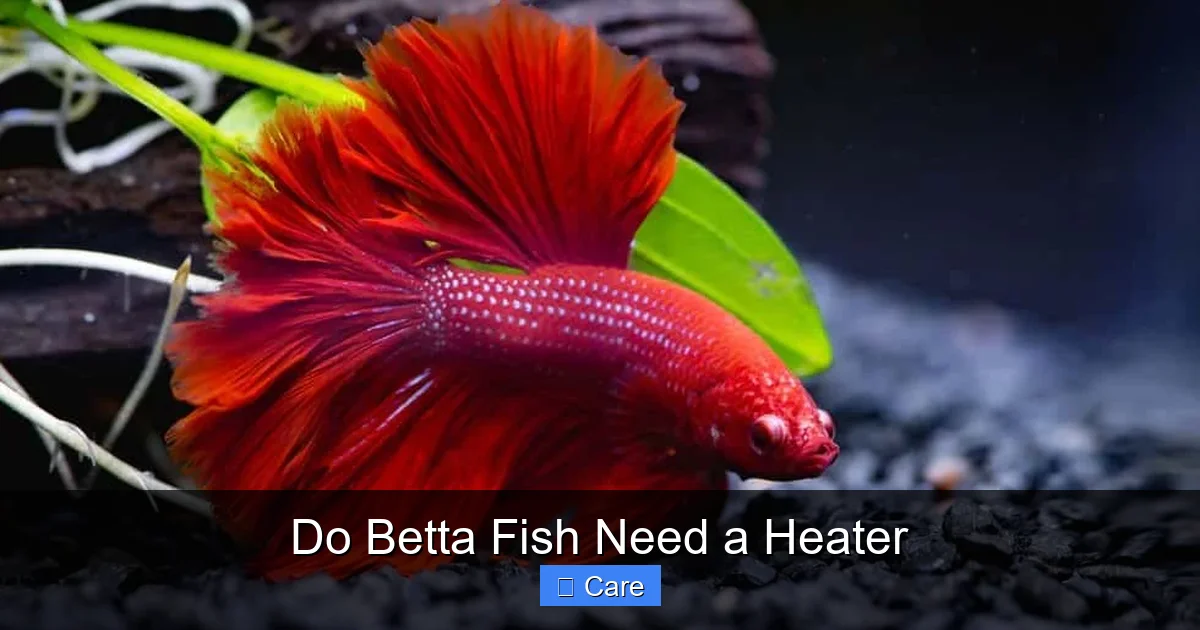
Visual guide about Do Betta Fish Need a Heater
Image source: thewittyfish.com
Puddle vs. Climate: A Critical Distinction
Yes, bettas are sometimes found in small, isolated puddles during the dry season. But these puddles are in the tropics, under a blazing sun. The water temperature in these puddles can and does reach tropical levels. Furthermore, these are survival situations, not ideal habitats. A betta in a tiny, heating-cooling puddle is stressed, vulnerable, and living on borrowed time until the rains return. Keeping a betta in an unheated tank in a climate-controlled room is a different scenario entirely. Most homes are kept at a comfortable human temperature of 68-72°F (20-22°C). This is a full 6-10 degrees colder than the betta’s ideal range. A human sitting in a 70°F room might be comfortable in a sweater, but for a tropical fish evolved for 80°F water, it’s like asking a human to live in a constant, chilly 50°F (10°C) environment—miserable and unhealthy.
The “But My Grandparents’ Betta Lived in a Bowl” Fallacy
This is an anecdotal fallacy. A betta surviving in poor conditions does not mean it was thriving. Bettas are notoriously resilient and can withstand abuse that would kill other fish. They may live for a year or two in a cold, dirty bowl, but that is a life of chronic stress, suppressed immune function, and likely constant low-grade illness. It is a life far shorter than their potential 5-10 year lifespan. Our goal as responsible keepers is not to provide the bare minimum for survival but to create an environment where they can flourish, display their full personality, and live a long, healthy life. That environment must include a stable, warm temperature.
Temperature Fluctuations: The Silent Stressor
Even if your room stays at a steady 72°F, that is still too cold. But what about a room where the temperature drops at night or varies with the seasons? This fluctuation is highly dangerous. A betta’s body struggles to adapt to rapid changes. A swing from 75°F during the day to 68°F at night is a massive shock to its system, repeatedly weakening its immune response. The heater’s job is not just to add heat, but to stabilize. It turns on and off automatically to maintain a precise set point, insulating your fish from the vagaries of your home’s thermostat, drafts from windows, or seasonal changes. This consistency is arguably more important than the exact degree.
Heater Selection Guide: Finding the Right Tool for the Job
Okay, you’re convinced a heater is necessary. Now, which one? The aquarium aisle can be overwhelming with different types, wattages, and styles. Choosing the wrong heater can be as bad as having none at all. Let’s break it down.
Visual guide about Do Betta Fish Need a Heater
Image source: bettacarefishguide.com
Types of Aquarium Heaters: Adjustable vs. Preset
You will primarily see two types: fully submersible heaters and preset (or “hang-on”) heaters.
- Fully Submersible Heaters: These are the gold standard for betta tanks (and most small aquariums). They are designed to be completely underwater, usually with a protective plastic or metal cage around the heating element. They have an external dial for precise temperature adjustment and a built-in thermostat. They are more efficient, provide better heat distribution, and are safer for small tanks. This is the type you should choose.
- Preset/Hang-On Heaters: These are often smaller, clip onto the side of the tank, and have a fixed temperature setting (usually around 78°F). They are less accurate, can be difficult to calibrate, and their heating element is exposed, posing a burn risk to a curious betta. They are generally not recommended for dedicated betta tanks where precise control is needed.
Additionally, you may see “in-line” or “filter-mounted” heaters. These are excellent for larger, advanced setups but are overkill and unnecessarily complex for a standard betta tank.
Sizing Your Heater: Wattage Matters
The rule of thumb for heater wattage is 5 watts per gallon of tank volume. However, for betta tanks, which are often smaller (2.5 to 10 gallons), this needs a slight adjustment.
- 2.5 – 5 gallon tank: A 25-watt adjustable submersible heater is perfect.
- 5 – 10 gallon tank: A 50-watt heater is appropriate.
- Important: Never use a heater that is too large for your tank. A 100-watt heater in a 5-gallon tank will cycle on and off too rapidly, causing dangerous temperature spikes and drastically shortening the heater’s life. It’s better to be slightly underpowered than overpowered, as the heater will simply run longer cycles to maintain temperature.
Essential Safety Features: The Guard and the Thermostat
Two features are non-negotiable:
- A Protective Guard/Cage: The heating element must be encased in a plastic or metal mesh. Bettas are curious and may rest on or even try to bite the element. An exposed element can cause severe burns or electrocution. The guard prevents direct contact.
- An Accurate, Independent Thermostat: The heater’s own dial is a guide, not a gospel. You must verify its accuracy with a separate aquarium thermometer. Stick-on liquid crystal strip thermometers (affixed to the outside glass) or a digital thermometer with a probe are inexpensive and essential. Set the heater dial to a temperature that the thermometer reads as 78-80°F.
Look for reputable brands known for reliability (e.g., Eheim, Fluval, Aqueon, Hygger). Read reviews specifically mentioning longevity and accuracy.
Setup & Placement: From Box to Tank
You have your heater. Now, how do you install it correctly to ensure even heating and safety?
Visual guide about Do Betta Fish Need a Heater
Image source: fishtankmaster.com
The Golden Rules of Placement
Where you put the heater drastically affects its performance and your betta’s comfort.
- Near Water Flow: Place the heater near a filter outlet or a powerhead. This ensures the warm water it creates is immediately circulated throughout the tank, preventing dangerous “hot spots” directly around the heater and cold pockets elsewhere. Never tuck it in a dead corner with no movement.
- Fully Submerged: The entire heater body, including the water line markings, must be underwater at all times. Running a submersible heater out of the water will cause it to overheat and fail, potentially cracking the glass tube.
- Clear of Decor & Betta: Leave a few inches of space around the heater. Do not bury it in substrate or hide it behind dense plants where it can overheat or where your betta might constantly rest on it. While a betta might enjoy the warmth, constant contact can lead to burns.
- Vertical Orientation: Most heaters are designed to work vertically. Follow the manufacturer’s instructions. If your tank is very shallow, look for a “mini” or “flat” heater designed for low-water environments.
The Critical Step: Temperature Acclimation
You cannot just plug the heater in and set it to 79°F if your room temperature water is at 70°F. This would create a massive, rapid temperature increase that shocks the fish. You must acclimate your betta to the new temperature slowly.
- Set up the heater and filter in the tank but do not add the betta yet.
- Plug in the heater and set it to your target (e.g., 79°F).
- Let the tank heat up slowly. This may take several hours. Monitor with your thermometer.
- Once the tank reaches the target temperature, you can then float your betta’s bag or cup in the tank to acclimate them to the water temperature (as you normally would). The water in their shipping bag is now the same temperature as your tank, so the drip acclimation for water parameters is all that’s needed.
If adding a heater to an established tank with a fish already inside, increase the temperature by only 1-2 degrees per day until you reach the target. This slow adjustment allows the betta’s body to adapt without stress.
Alternatives & Emergencies: What If I Don’t Have a Heater?
There are a few scenarios where you might be without a heater temporarily—a power outage, a broken heater, or a new tank cycling. Understanding these is important, but they must be treated as temporary emergencies, not permanent solutions.
Short-Term Strategies (Days, Not Weeks)
- Room Heat & Insulation: If your home is generally warm (consistently above 75°F), you might get away without a heater for a short period. However, you must monitor the temperature constantly with a thermometer. You can also wrap the tank in blankets or styrofoam (leaving the top open for gas exchange) to retain heat, especially at night.
- Heat Mats (Use with EXTREME Caution): A reptile heat mat designed for glass aquariums can be used underneath a small tank. This is risky because it heats from the bottom unevenly and can crack glass if not used with a controller. It is not a recommended primary method for a betta tank.
The “Betta in a Bowl” Reality Check
If you have a betta in a tiny, unheated “desk bowl,” the water temperature will rapidly match the room air temperature. In a typical office or bedroom, this is far too cold. The betta will become lethargic, lose its color, and eventually succumb to disease. The only humane solution is to upgrade to a filtered, heated tank of at least 2.5 gallons.
What to Do During a Power Outage
If you lose heat for more than a few hours in a cold climate:
- Insulate the tank immediately with blankets, foam, or towels, covering the top completely except for a small air hole.
- Use bottled water that has been warmed to room temperature (not hot!) to replace about 25% of the tank water, which will slightly raise the overall temperature.
- Do not attempt to use hot water from the tap, as it can be scalding and contain contaminants.
- Once power returns, monitor the temperature closely as it stabilizes.
These are stopgaps. A battery-powered air pump can help with gas exchange but does not provide heat. For long-term reliability, consider a small UPS (uninterruptible power supply) that can run a heater for an hour or two—enough to get through most short outages.
The Long-Term Payoff: A Healthier, More Vibrant Betta
When you provide a stable, warm environment with a properly sized and placed heater, the transformation in your betta is remarkable and serves as the ultimate proof of this necessity.
Observing the Difference
A betta at the correct temperature will:
- Be Active and Curious: It will swim throughout the entire tank, explore decorations, and watch you from the front glass.
- Have Vibrant, Lustrous Colors: Optimal health is reflected in deep, rich coloration. Stress and cold dull their colors significantly.
- Build Bubb nests Regularly: While not a guarantee of health, frequent bubble nesting is a strong sign of a content, healthy male betta in prime conditions.
- Eat Heartily and Digest Well: Food is consumed quickly and efficiently, with no regurgitation or constipation.
- Have Flowing, Undamaged Fins: A strong immune system constantly repairs minor damage, keeping fins long and flowing, free of the ragged edges of fin rot.
You are not just preventing disease; you are actively promoting a state of flourishing. Your betta will live longer, exhibit more of its fascinating personality, and be a true centerpiece of your aquarium.
Part of a Holistic Care System
The heater does not work in isolation. It is one pillar of the three foundational needs of a betta: Clean Water, Warm Temperature, and Proper Nutrition. A cycled filter provides clean water. A high-quality, varied diet provides nutrition. The heater provides the stable, tropical warmth that allows the betta to utilize that clean water and food effectively. Remove any one pillar, and the entire system becomes unstable, leading to poor health. Investing in a good heater is the same as investing in a good filter—it’s a non-negotiable component of responsible fishkeeping.
Conclusion: The Heater is Not Optional, It’s Fundamental
So, do betta fish need a heater? The evidence from their biology, their native habitat, and the observable outcomes of their health is overwhelming and unequivocal: yes, they do. A heater is not a luxury or a “nice-to-have” for the dedicated hobbyist. It is a fundamental piece of equipment required to meet the basic physiological needs of a tropical fish. It provides the consistent, warm environment that fuels their metabolism, empowers their immune system, and allows them to express their natural behaviors.
Skipping the heater is choosing to give your betta a life of chronic stress and compromised health. It is the single most common—and easily preventable—cause of premature death in pet bettas. By selecting an appropriate adjustable submersible heater with a guard, sizing it correctly for your tank, placing it near water flow, and always verifying the temperature with a separate thermometer, you take the most critical step toward ensuring your betta not only survives but truly thrives. You are not just buying a piece of equipment; you are purchasing stability, health, and longevity for a living creature that depends entirely on you. In the world of betta care, the heater is the cornerstone.
Frequently Asked Questions
Can a betta fish survive without a heater?
A betta may survive for a time in cold water, but it will be stressed, lethargic, and highly susceptible to disease. Survival does not equal thriving. Without a heater, its lifespan will be significantly shortened, and its quality of life will be poor.
What is the ideal water temperature for a betta fish?
The ideal and safe temperature range for a betta is 78-80°F (25.5-26.5°C). This range keeps their metabolism active and their immune system strong. Temperatures consistently above 82°F can also cause stress and should be avoided.
What size heater do I need for my betta tank?
The general rule is 5 watts per gallon. For a standard 5-gallon betta tank, a 25-watt heater is perfect. For a 10-gallon tank, use a 50-watt heater. Always choose an adjustable, fully submersible heater with a protective guard.
How do I know if my betta is too cold?
Signs include lethargy (clamped fins, resting at the bottom), loss of vibrant color, lack of appetite, and frequent hiding. If you observe these, immediately check your water temperature with a thermometer. Cold water is a common cause of these symptoms.
Is a preset heater (with no dial) okay for a betta?
It’s not recommended. Preset heaters are often less accurate and cannot be adjusted if your room temperature varies. For a betta’s sensitive temperature needs, an adjustable heater allows you to fine-tune the temperature and compensate for seasonal changes.
Can I use my room’s heat instead of an aquarium heater?
No. Room temperature is designed for human comfort (68-72°F), which is 6-10 degrees too cold for a betta. It also fluctuates with day/night cycles and seasons. Only a dedicated aquarium heater can provide the consistent, stable tropical temperature a betta requires.