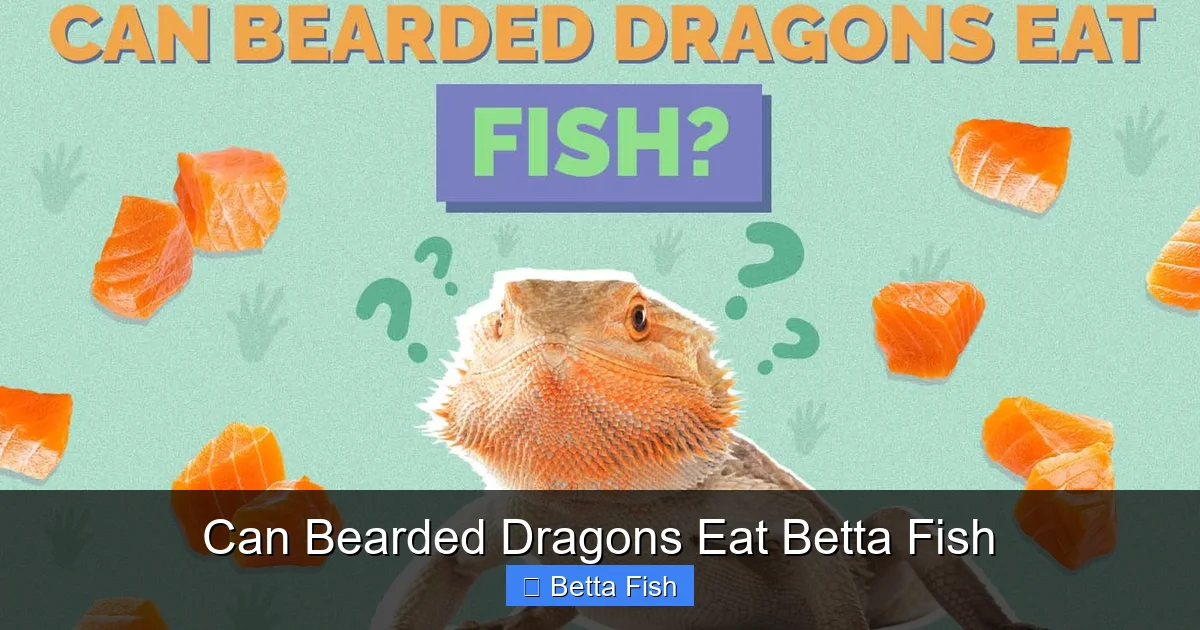
Bearded dragons can technically swallow a betta fish, but it’s not a recommended snack. The fish’s tiny size, delicate bones, and potential parasites make it a risky treat. Learn safer protein alternatives and how to protect both pets.
Key Takeaways
- Risk of choking: Betta fish are small and can slip into a dragon’s throat, causing obstruction.
- Parasite danger: Live or dead bettas may carry parasites harmful to reptiles.
- Nutritional mismatch: Betta fish lack the calcium and fiber bearded dragons need.
- Better alternatives: Offer crickets, mealworms, and specially formulated reptile foods for balanced nutrition.
- Feeding method matters: If you ever try fish, it must be fully thawed, de‑boned, and given in tiny pieces.
- Observe your dragon: Watch for signs of stress or digestive upset after any new food.
- Consult a vet: Always get professional advice before adding exotic foods to your dragon’s diet.
📑 Table of Contents
- Introduction: Why the Question Pops Up
- Understanding Bearded Dragon Diet Basics
- Betta Fish: Size, Structure, and Nutrition
- Risks of Feeding Betta Fish to Bearded Dragons
- Safer Alternatives: Protein Sources That Work
- How to Properly Prepare a Betta Fish (If You Still Want To)
- Practical Tips for Co‑habiting Betta Fish and Bearded Dragons
- Conclusion: Play It Safe
Introduction: Why the Question Pops Up
If you keep both a bearded dragon and a betta fish, it’s natural to wonder whether one can become a snack for the other. After all, many pet owners love to share treats or think a tiny fish might be a fun “protein boost.” The short answer is that feeding a betta fish to a bearded dragon is generally a bad idea. This article breaks down the why, the how, and the safer routes you can take to keep both pets happy and healthy.
We’ll explore the anatomy of both animals, the nutritional profile of betta fish, and the potential health risks. By the end, you’ll have a clear picture of what’s safe, what to avoid, and which alternative foods work best for your scaly friend.
Understanding Bearded Dragon Diet Basics
What a Healthy Diet Looks Like
Bearded dragons are omnivores. In the wild they eat insects, small rodents, and a variety of leafy greens and fruits. A balanced captive diet usually includes:
Visual guide about Can Bearded Dragons Eat Betta Fish
Image source: articles.hepper.com
- Live insects (crickets, dubia roaches, mealworms)
- Fresh vegetables (collard greens, mustard greens, squash)
- Occasional fruit treats (berries, mango)
- Calcium and vitamin supplements
These foods provide the protein, calcium, and fiber bearded dragons need for strong bones, proper digestion, and vibrant colors.
How Much Protein Is Too Much?
Young dragons (under 6 months) need more protein—about 50‑60% of their diet—from insects. Adults should get 30‑40% protein, with the rest coming from plants. Over‑loading on protein can cause kidney strain and metabolic bone disease, especially if calcium is low.
Betta Fish: Size, Structure, and Nutrition
Physical Characteristics of Betta Fish
Betta fish are small, typically 1‑2 inches long, with delicate, semi‑transparent fins. Their skeleton is made of tiny, soft bones that can easily break apart when chewed. This makes them a choking hazard for larger predators.

Visual guide about Can Bearded Dragons Eat Betta Fish
Image source: i.pinimg.com
What Betta Fish Contain
Betta fish are high in protein but low in calcium and fiber—nutrients that bearded dragons rely on heavily. They also contain fatty acids that are fine for fish but not ideal for reptiles. For a full nutrient breakdown, see What Does Betta Fish Eat, which details their natural diet and how it translates to their body composition.
Potential Parasites and Diseases
Betta fish can carry parasites like Ich or bacterial infections that survive in water. If a dragon ingests a live or even a freshly dead fish, these pathogens can transfer, leading to gastrointestinal upset or more serious illness.
Risks of Feeding Betta Fish to Bearded Dragons
Choking and Mechanical Injuries
Because bettas are small and slippery, they can become lodged in a dragon’s throat. Even a tiny bone fragment can cause internal scratches or blockages, which may require veterinary intervention.

Visual guide about Can Bearded Dragons Eat Betta Fish
Image source: inpetcare.com
Nutritional Imbalance
Feeding a betta fish does not provide the calcium‑phosphorus ratio bearded dragons need. Without proper supplementation, repeated fish meals can contribute to metabolic bone disease.
Parasite Transmission
Even a freshly frozen betta can harbor parasites if not properly gutted and cleaned. These can cause digestive issues, lethargy, or loss of appetite in your dragon.
Behavioral Concerns
Bearded dragons are visual hunters. Introducing a moving fish can trigger a predatory response, leading to stress for both animals if they share the same enclosure. It’s best to keep them in separate habitats.
Safer Alternatives: Protein Sources That Work
Live Insects
Crickets, dubia roaches, and black soldier fly larvae are excellent choices. They are easy to digest, high in protein, and can be gut‑loaded with nutrients before feeding.
Pre‑Killed Insects
If you’re worried about live prey, you can buy frozen insects. Thaw them completely, then dust with calcium powder. This method reduces the risk of injury to your dragon.
Commercial Reptile Foods
High‑quality pellet diets are formulated to meet a bearded dragon’s exact nutritional needs. Pair them with fresh veggies for a complete meal.
Occasional Treats
Small pieces of cooked chicken breast (no seasoning) or scrambled eggs can be offered once a week for variety. Always cut into bite‑size pieces to avoid choking.
How to Properly Prepare a Betta Fish (If You Still Want To)
Step‑by‑Step Preparation
- Freeze the fish: Place the betta in a sealed bag and freeze for at least 24 hours to kill parasites.
- Thaw completely: Let it sit at room temperature until fully softened.
- Remove fins and bones: Use tweezers to pull out delicate fins and any visible bone fragments.
- Blend into a puree: For very young dragons, blend the fish with a bit of water to a smooth texture.
- Supplement: Add a calcium powder drop (about 1/8 tsp per serving) to balance the nutrient profile.
Even with these steps, feeding betta fish should remain a rare, occasional treat—not a staple.
When to Say No
If your dragon shows any signs of digestive distress—vomiting, diarrhea, or loss of appetite—stop feeding fish immediately and consult a reptile‑savvy veterinarian.
Practical Tips for Co‑habiting Betta Fish and Bearded Dragons
Separate Enclosures
Never house a betta fish in the same tank as a bearded dragon. The dragon’s heat and humidity can stress the fish, and the fish could become a stress trigger for the dragon.
Observation and Monitoring
Whenever you introduce a new food, watch your dragon for at least 24‑48 hours. Look for changes in behavior, stool consistency, and appetite.
Veterinary Check‑ups
Regular vet visits (at least once a year) help catch any hidden health issues early. Bring a sample of any new food you plan to feed, so the vet can advise on safety.
Conclusion: Play It Safe
While a bearded dragon can physically swallow a betta fish, the risks far outweigh any fleeting novelty. Choking, nutritional gaps, and parasite transmission are real concerns that can lead to serious health problems. Stick to tried‑and‑true protein sources like live insects, frozen prey, and high‑quality reptile pellets. If you ever decide to give a betta fish as a rare treat, follow the strict preparation steps and keep it truly occasional.
Remember, the best diet keeps your dragon strong, active, and vibrant—no risky fish required. When in doubt, always reach out to a reptile‑specialized veterinarian for personalized guidance.
Frequently Asked Questions
Can a bearded dragon eat live betta fish?
Technically yes, but it’s unsafe. Live bettas can stress the dragon, pose choking hazards, and may carry parasites.
Is frozen betta fish safer than fresh?
Freezing kills most parasites, but you still need to remove fins and bones and supplement with calcium before feeding.
What are the best protein alternatives for bearded dragons?
Live crickets, dubia roaches, and frozen feeder insects are ideal. Small pieces of cooked chicken or reptile pellets also work well.
How often can I give a betta fish as a treat?
Only once every few months, and only after thorough preparation. It should never replace a balanced diet.
Will feeding betta fish cause my dragon to become aggressive?
Introducing moving prey can trigger a predatory response, leading to stress. It’s best to keep the dragon’s diet consistent and predictable.
Should I consult a vet before feeding any new food?
Yes. A reptile‑savvy veterinarian can advise on safety, proper preparation, and any necessary supplements.

