Will Betta Fish Fight Each Other

Betta fish are naturally territorial, so they often fight when placed together. Understanding their aggression triggers, gender differences, and proper tank arrangements can help you avoid painful battles and keep your fish thriving.
Key Takeaways
- Territorial nature: Betta fish defend their space and will attack any intruder that threatens it.
- Gender matters: Males are far more aggressive toward each other than females, though females can still clash.
- Tank size & layout: A larger, well‑decorated tank with plenty of hiding spots reduces conflict.
- Visual barriers: Using plants, caves, or dividers can stop fish from seeing each other and prevent fights.
- Monitoring health: Injuries from fights can lead to infection; early detection is crucial.
- Alternative setups: Community tanks, sorority groups, or single‑male tanks are safer options.
- Know the signs: Flared fins, rapid gill movement, and sudden darting indicate impending aggression.
📑 Table of Contents
- Introduction: The Age‑Old Question
- 1. Why Betta Fish Are Prone to Fighting
- 2. Male vs. Female: Does Gender Change the Outcome?
- 3. Tank Size, Layout, and Visual Barriers
- 4. Recognizing the Early Signs of Aggression
- 5. Safe Community Setups: Can Betta Fish Live With Others?
- 6. When Fights Turn Fatal: Will Betta Fish Kill Each Other?
- Conclusion: Keeping the Peace
Introduction: The Age‑Old Question
If you’ve ever wondered will betta fish fight each other, you’re not alone. New hobbyists often imagine two gorgeous Siamese fighting fish sharing a tank like friendly roommates. The reality, however, is far more dramatic. Betta fish (Betta splendens) are famed for their vivid colors and flowing fins, but they also carry a fierce instinct to guard their territory.
In this guide we’ll walk through the science behind betta aggression, explore which pairings are most likely to clash, and give you concrete steps to create a peaceful environment—whether you keep a single champion or a whole community tank.
1. Why Betta Fish Are Prone to Fighting
Natural history and wild behavior
In the shallow rice paddies and slow‑moving streams of Thailand, bettas live in small, overlapping territories. Males build bubble nests and defend them fiercely during breeding season. This ancestral need to protect a nest and a mating area translates into the modern aquarium as a readiness to attack any “intruder.”
Hormones and visual cues
Male bettas produce higher levels of testosterone, which spikes when they see another male’s bright colors or flowing fins. The sight alone can trigger a flare of the gills and a full‑blown battle. Even a reflective surface or a mirror can set off the same response.
Link to deeper insight
For a more detailed look at the reasons behind these clashes, read our article on why betta fish fight each other.
2. Male vs. Female: Does Gender Change the Outcome?
Male‑male aggression
Two male bettas placed together in a single tank will almost always fight. Their primary goal is to claim the whole space as their own. Even a brief glance can spark a full‑scale duel that ends with torn fins, stress, and sometimes death.
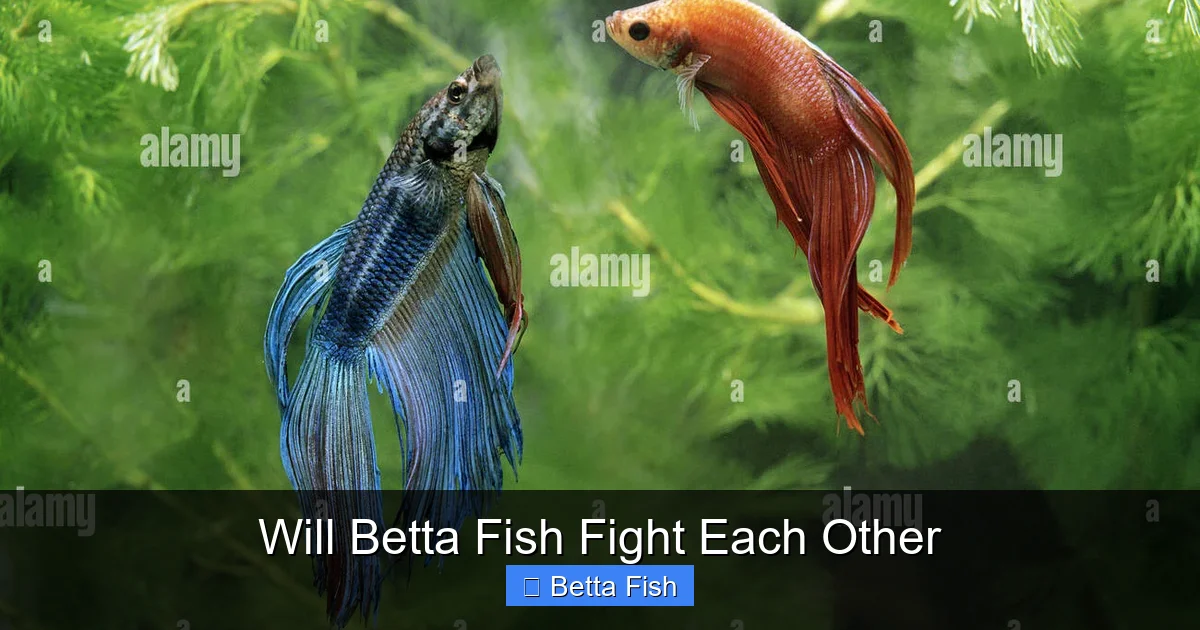
Visual guide about Will Betta Fish Fight Each Other
Image source: c8.alamy.com
Female‑female dynamics
Female bettas are less aggressive than males, but they are not passive. In a “sorority” tank (a group of several females), dominant individuals may still nip at weaker fish, especially if the tank is overcrowded or lacks hiding places.
Mixed‑gender pairings
Putting a male with a female can work if the tank is large enough and the male’s bubble nest is not yet established. However, once the male starts building a nest, the female may become a target, leading to serious injuries. For guidance on mixed‑gender setups, see will a male and female betta fish fight.
3. Tank Size, Layout, and Visual Barriers
How big is big enough?
A single male betta can be comfortably housed in a 5‑gallon tank, but when you want to keep more than one, you need at least 10‑gallon per fish. The extra space dilutes territorial claims and gives each fish its own “personal bubble.”
Plants, caves, and dividers
Live plants, silk or resin decorations, and sturdy caves create visual blocks. When bettas can’t see each other’s full silhouette, the likelihood of a flare drops dramatically. Arrange these items so that each fish has its own corner and a clear escape route.
Water flow and temperature
Consistent temperature (78‑80°F) and gentle water flow reduce stress. Sudden temperature changes can make a calm fish suddenly defensive, increasing the chance of a fight.
4. Recognizing the Early Signs of Aggression
Physical cues
- Fin flaring: The fish spreads its dorsal and caudal fins to look larger.
- Gasping gills: Rapid gill movement shows heightened arousal.
- Color intensification: Brightening of the body indicates a “battle mode.”
Behavioral cues
Watch for sudden darting toward a neighbor, hovering near the surface, or repeated lunges at the glass. These are warning signs that a fight may soon erupt.
What to do when you see the signs
Quickly turn off any reflective surfaces, add a temporary divider, or relocate one of the fish to a separate quarantine tank. Early intervention can prevent torn fins and lingering stress.
5. Safe Community Setups: Can Betta Fish Live With Others?
Choosing compatible tank mates
Peaceful, mid‑water species that stay below the betta’s level are best. Examples include small tetras, rasboras, and certain catfish. Avoid fin‑nipping species such as guppies or other bettas.
Link to compatible species guide
For an exhaustive list, see what other fish can live with betta fish.
Setting up the community tank
- Start with a fully cycled 20‑gallon tank.
- Place dense plants or moss on the top half.
- Introduce the betta first, let it claim a spot, then add the other fish slowly over several days.
6. When Fights Turn Fatal: Will Betta Fish Kill Each Other?
Potential outcomes of a serious bout
Severe fights can result in torn fins, loss of scales, and open wounds. In the worst cases, a betta may die from blood loss or secondary infection. The stress hormones released during a fight also suppress the immune system, making the fish vulnerable to disease.
Healing and recovery
If a fish survives a fight, isolate it in a hospital tank with clean, warm water. Add a small dose of aquarium salt (1 g per 5 L) to reduce bacterial growth, and monitor daily for signs of infection.
Further reading on mortality
Explore more about lethal encounters in our piece will betta fish kill each other.
Conclusion: Keeping the Peace
So, will betta fish fight each other? The short answer is yes—especially males—because their wild instincts drive them to guard territory fiercely. However, with the right tank size, plenty of visual barriers, careful gender selection, and compatible tank mates, you can dramatically reduce the chances of a showdown.
Remember to watch for early warning signs, act quickly if aggression spikes, and always provide a clean, stable environment. By respecting each betta’s natural behavior, you’ll enjoy their dazzling colors without the drama of constant battles.
Frequently Asked Questions
Do betta fish always fight when placed together?
No. While males almost always clash, females can coexist in a well‑planted sorority tank, and a male can live peacefully with a female if the tank is large and the male isn’t breeding.
Can I keep two male bettas in the same tank using a divider?
Yes, a solid, non‑transparent divider that prevents visual contact can allow two males to share a single aquarium safely.
How long does a typical betta fight last?
Fights can range from a few seconds to several minutes. The worst injuries usually happen within the first minute of a full‑scale attack.
What should I do if my betta’s fins are torn?
Move the fish to a quarantine tank, keep the water clean and slightly warm, and consider adding a small amount of aquarium salt to prevent infection.
Is it safe to keep bettas with shrimp?
Many bettas ignore shrimp, but some will nip at slow‑moving ones. If you choose to add shrimp, use fast‑moving or hardy species and provide plenty of hiding places.
Can betta fish be kept with other tropical fish?
Yes, if the tank is large enough and you select peaceful, non‑fin‑nipping species that occupy different water levels. Always monitor interactions closely during the first few weeks.