Seeing a betta drag itself or wobble in the water can be scary, but the problem is often fixable. This guide explains the top reasons a betta struggles to swim, from water quality to swim‑bladder issues, and offers simple, step‑by‑step solutions you can start today.
Key Takeaways
- Water quality matters: Poor parameters are the #1 cause of swimming problems.
- Swim‑bladder disease is common: Over‑feeding and constipation often trigger it.
- Temperature stress hurts: Betta’s ideal range is 76‑82°F (24‑28°C).
- Tank size and décor: Too small or crowded tanks limit movement.
- Health signs overlap: Look for loss of color, floating sideways, or loss of appetite.
- Quick fixes work: Fasting, water changes, and proper feeding can restore normal swimming.
- Prevention is key: Regular testing and a balanced diet keep your betta strong.
📑 Table of Contents
- Introduction: When Your Betta Can’t Swim Like It Used To
- 1. Water Quality – The Silent Saboteur
- 2. Swim‑Bladder Disease – The Most Common Swimming Problem
- 3. Temperature Stress – Too Hot, Too Cold, or Fluctuating
- 4. Tank Size, Layout, and Overcrowding
- 5. Illness and Infections – When Swimming Is a Symptom
- 6. Common Missteps That Worsen the Problem
- Conclusion: A Happy Betta Is a Healthy Swimmer
Introduction: When Your Betta Can’t Swim Like It Used To
Imagine watching your beautiful betta glide through the water, its fins flashing like tiny rainbows. Now picture that same fish drifting at the surface, wobbling, or even sinking to the bottom. If you’ve ever asked yourself, “why is my betta fish struggling to swim?” you’re not alone. Many hobbyists notice a change in swimming behavior and panic, fearing the worst.
The good news is that most swimming issues have a clear cause and a practical solution. In this article we’ll break down the most common reasons a betta can’t swim properly, show you how to diagnose the problem, and give you easy, actionable steps to get your finned friend back to its graceful self.
1. Water Quality – The Silent Saboteur
Betta fish are surprisingly sensitive to the chemistry of their environment. Even a small spike in ammonia or a drop in pH can make a betta feel disoriented and weak, leading to swimming problems.

Visual guide about Why Is My Betta Fish Struggling to Swim
Image source: imgv2-1-f.scribdassets.com
Ammonia and Nitrite Buildup
Ammonia (NH₃) is produced from fish waste, uneaten food, and decaying plant matter. In a properly cycled tank, beneficial bacteria convert ammonia to nitrite, then to nitrate. If the cycle is incomplete or the tank is over‑stocked, ammonia can linger. High ammonia irritates the gills, reduces oxygen uptake, and makes the fish feel “heavy.”
pH and Hardness Fluctuations
Betta’s natural habitat is slightly acidic to neutral (pH 6.5‑7.5). Sudden shifts can stress the fish, causing erratic swimming. Use a reliable test kit and aim for stable values.
Practical Water Test Routine
- Test weekly for ammonia, nitrite, nitrate, and pH.
- Perform a 25‑30% water change if ammonia >0 ppm or nitrite >0 ppm.
- Use a water conditioner to neutralize chlorine and chloramine.
Keeping the water pristine often solves the swimming issue within a few days.
2. Swim‑Bladder Disease – The Most Common Swimming Problem
The swim‑bladder is a tiny, gas‑filled organ that lets the betta control its buoyancy. When it malfunctions, the fish may float upside down, sink, or drift sideways.
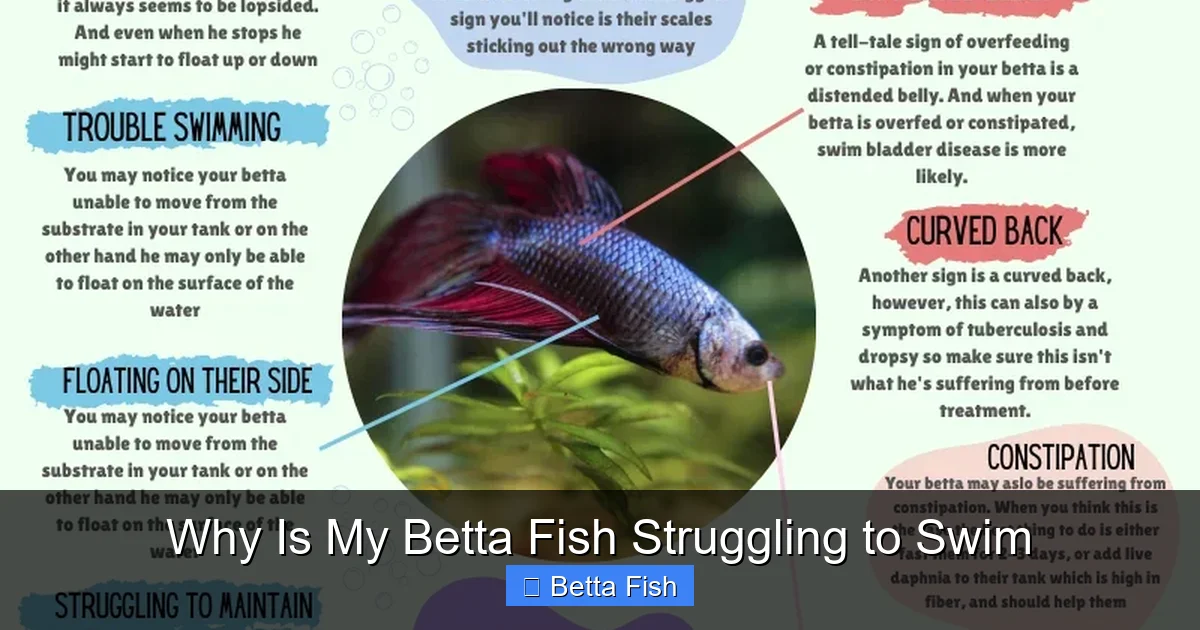
Visual guide about Why Is My Betta Fish Struggling to Swim
Image source: bettacarefishguide.com
What Triggers Swim‑Bladder Issues?
- Over‑feeding: Excess food can cause constipation, pressing on the bladder.
- Low‑fiber diet: Betta pellets are often low in fiber; adding peas helps.
- Ingestion of air: Fast surface feeding can lead to a “popped” bladder.
How to Treat It Fast
- Fast for 24‑48 hours: Stop feeding to clear the gut.
- Offer a peeled, cooked pea: The fiber acts as a mild laxative.
- Adjust feeding schedule: Small portions 2‑3 times a day.
For a deeper dive on swim‑bladder care, see our guide on how to cure my betta fish swim bladder disease.
3. Temperature Stress – Too Hot, Too Cold, or Fluctuating
Betta fish are tropical and thrive at 76‑82°F (24‑28°C). Temperatures outside this range slow metabolism, weaken muscles, and affect buoyancy.

Visual guide about Why Is My Betta Fish Struggling to Swim
Image source: img.pconline.com.cn
Signs of Temperature Trouble
- Slow, sluggish movement.
- Clamped fins and loss of color.
- Frequent surfacing or staying at the bottom.
Maintaining a Stable Temperature
- Use an aquarium heater with a reliable thermostat.
- Check the temperature twice daily with a digital probe.
- Avoid placing the tank near windows, radiators, or air‑conditioners.
4. Tank Size, Layout, and Overcrowding
While bettas can survive in small bowls, they need enough space to swim freely. A cramped environment can cause stress, reduced muscle tone, and abnormal swimming.
Ideal Tank Dimensions
A minimum of 5 gallons (19 L) is recommended. Larger tanks provide more stable water parameters and room for exercise.
Decor and Flow
- Provide open swimming areas; avoid too many tall plants or decorations that block movement.
- Gentle water flow is fine, but strong currents can exhaust a betta.
When to Rehome
If you keep multiple bettas together, they may stress each other, leading to swimming problems. Learn why betta fish need to be alone for optimal health.
5. Illness and Infections – When Swimming Is a Symptom
Several diseases present with poor swimming as a secondary symptom. Recognizing the primary issue helps you treat the root cause.
Fin Rot and External Parasites
Damaged fins make it harder for the betta to maneuver. Look for ragged edges, white spots, or fuzzy growths.
Internal Infections
Bacterial or fungal infections can weaken muscles. Other signs include loss of appetite, cloudy eyes, or discoloration.
When to Seek Veterinary Help
If swimming does not improve after correcting water and diet, or if you notice additional symptoms like white patches, consult a vet who treats fish.
6. Common Missteps That Worsen the Problem
Sometimes well‑meaning actions make things worse. Here are a few pitfalls to avoid.
Over‑Cleaning the Tank
Changing 100% of the water at once can shock the fish and strip beneficial bacteria, causing ammonia spikes.
Feeding Live Foods Too Often
Live foods are nutritious but can introduce parasites. Use them sparingly and always quarantine.
Ignoring Early Warning Signs
Early signs include a slight wobble, loss of color, or reduced appetite. Address them quickly.
Helpful Resources
- To understand why a betta might be floating sideways, read why is my betta fish floating sideways.
- If you suspect your fish is dying, check how to tell if my betta fish is dying for key indicators.
- For more on abnormal swimming behavior, see why is my betta fish swimming sideways.
Conclusion: A Happy Betta Is a Healthy Swimmer
Answering the question “why is my betta fish struggling to swim?” often leads you straight to the solution. Start by testing the water, adjusting temperature, and checking for swim‑bladder issues. Make incremental changes, observe your fish, and you’ll likely see improvement within a few days.
Remember, a betta’s swimming ability is a window into its overall well‑being. By keeping the environment clean, feeding a balanced diet, and providing enough space, you give your betta the best chance to thrive. Keep an eye on any new symptoms, act quickly, and enjoy watching your vibrant swimmer glide with confidence once again.
Frequently Asked Questions
Why is my betta fish swimming upside down?
This is usually a sign of swim‑bladder disease, often caused by constipation or over‑feeding. Try fasting for 24‑48 hours and give a peeled pea.
Can water temperature cause my betta to struggle to swim?
Yes. Temperatures below 76°F or above 82°F stress the fish and can affect buoyancy. Use a heater and monitor with a reliable thermometer.
Is a cloudy tank related to swimming problems?
Cloudy water often indicates high ammonia or bacterial bloom, both of which can make a betta feel weak and swim poorly. Perform a partial water change and test parameters.
How do I know if my betta’s poor swimming is due to illness?
Look for additional signs such as loss of color, fin rot, or loss of appetite. If multiple symptoms appear, treat the underlying disease or consult a fish‑vet.
Will adding more plants help my betta swim better?
Live plants improve water quality and give the fish places to rest, but they won’t fix a swim‑bladder issue. Ensure the tank isn’t overcrowded with décor that restricts movement.
Can I use medication to fix a swim‑bladder problem?
Most swim‑bladder issues are dietary. Medication is rarely needed unless an infection is present. Always follow the product instructions and isolate the fish if using antibiotics.

