Contrary to popular belief, betta fish can often thrive in community tanks with the right companions. The key is selecting peaceful, non-flashy fish that won’t trigger the betta’s territorial instincts and providing a spacious, well-decorated tank. Focus on bottom-dwellers like Kuhli loaches or small, schooling fish like harlequin rasboras, and always have a backup plan. Success depends on your individual betta’s personality and a careful, patient introduction process.
Key Takeaways
- Your Betta’s Personality is Paramount: A peaceful, curious betta has more options than a highly aggressive one. Always observe your specific fish first.
- Tank Size is Non-Negotiable: A minimum of 20 gallons is strongly recommended for a community tank with a betta to provide enough space and reduce territorial disputes.
- Avoid Flashy, Long-Finned Fish: Fish with bright colors or flowing fins (like fancy guppies) are often mistaken for rival bettas and will be attacked.
- Bottom-Dwellers are Often Your Best Bet: Fish like corydoras catfish or Kuhli loaches occupy different tank levels, ignore the betta, and help clean the substrate.
- Dense Planting & Hiding Spots are Essential: Live or silk plants, caves, and driftwood break lines of sight and give the betta and its tankmates places to retreat and claim as their own.
- Never Introduce Tankmates to a Small, Uncycled Tank: A stressed betta in a poor environment is a recipe for disaster. Ensure the tank is fully cycled and stable before adding any other fish.
- Always Have a Plan B: Be prepared to separate fish immediately if aggression occurs. Have a second cycled tank or a reliable method to rehome incompatible tankmates.
📑 Table of Contents
- Understanding the Betta: More Than Just a “Fighting Fish”
- The Foundation: Creating the Perfect Tank Environment
- Top Tankmate Candidates: The Most Compatible Fish for Bettas
- The “No” List: Fish That Should Never Be with Bettas
- The Introduction Process: How to Add Tankmates Safely
- Troubleshooting and Long-Term Monitoring
- Conclusion: Patience, Observation, and a Well-Planned Tank
Understanding the Betta: More Than Just a “Fighting Fish”
When you think of a betta fish (Betta splendens), the image that often comes to mind is a solitary, flaring creature in a tiny vase. This reputation, born from their history of selective breeding for combat, has led to a persistent myth: that bettas must always live alone. But this isn’t the whole story. In the right environment, many bettas can coexist with other aquatic life, transforming your tank from a simple showcase into a vibrant, dynamic community. The central question “which fish can be with bettas” doesn’t have a single list for an answer. Instead, it requires understanding the betta’s instincts, your tank’s capabilities, and the personalities of all involved.
Bettas are labyrinth fish, meaning they breathe atmospheric air from the surface. This adaptation makes them surface-oriented and often territorial about that top layer of water. Their aggression is primarily directed towards other male bettas (hence why you should never house two males together) and anything they perceive as a rival—typically fish with long, flowing fins or bright, bold colors that resemble another male betta. However, they are also curious and intelligent. With adequate space and visual barriers, a betta’s energy can be channeled into exploring its environment rather than patrolling for intruders. The goal is to curate a neighborhood where the betta is the “resident” but not a constant bully, and its neighbors are interesting but not threatening.
The Foundation: Creating the Perfect Tank Environment
Before you even consider which fish can be with bettas, you must build a suitable home. The tank itself is your most powerful tool for managing behavior. A common mistake is starting with a small “community” tank, like a 5 or 10-gallon. This simply doesn’t provide enough space for a betta to establish a territory without constantly clashing with neighbors. The space must be generous enough that a fish can swim away and be out of sight.
Visual guide about Which Fish Can Be with Bettas
Image source: aqueon.com
Tank Size: The Golden Rule
We strongly recommend a minimum of 20 gallons (75 liters) for a betta community. This volume offers a stable ecosystem, dilutes waste, and provides horizontal swimming space that is crucial. A long, shallow tank (like a 30-gallon breeder) is often better than a tall, narrow one of the same volume, as it gives more surface area and swimming territory at the levels bettas and their potential mates occupy. Larger is always better. A 29-gallon or 40-gallon breeder tank opens up a wonderful world of possibilities for compatible tankmates.
The Importance of Décor and Layout
Your tank’s layout is a strategic map for peace. The primary goal is to break lines of sight. A betta that can see a potential tankmate from across the tank at all times will feel perpetually challenged. Use this to your advantage:
- Plants are Your Best Friend: Dense clusters of live plants (like Java moss, Anubias, Cryptocorynes) or high-quality silk plants create lush forests. Floating plants (like Frogbit or Salvinia) are fantastic for covering the surface, which reduces the betta’s instinct to guard it aggressively and provides a sense of security.
- Caves and Tunnels: Provide multiple hiding spots—ceramic caves, bamboo tubes, or even PVC pipes. This gives shy fish places to sleep and escape if the betta gets overly curious.
- Driftwood and Rocks: Arrange these to create nooks, crannies, and vertical obstacles. A piece of driftwood that reaches from the bottom to mid-water column can partition the tank visually.
- Open Swimming Space: While decoration is key, leave a clear area in the center for active fish to swim without constantly brushing against plants or the betta’s territory.
Think of it as designing an apartment complex with soundproof walls and plenty of private balconies.
Top Tankmate Candidates: The Most Compatible Fish for Bettas
Now we get to the heart of the matter: which fish can be with bettas. The most successful candidates share a few key traits: they are peaceful, occupy different tank levels (especially the bottom), have subdued colors and short fins, and are not fin-nippers. Here are the top categories and specific examples.
Visual guide about Which Fish Can Be with Bettas
Image source: pawtracks.com
The Champions: Peaceful Bottom-Dwellers
These fish are often the safest and most recommended choices because they literally live in a different world from the surface-dwelling betta. They are active on the substrate, sifting through sand or grazing on surfaces, and generally ignore fish swimming above them.
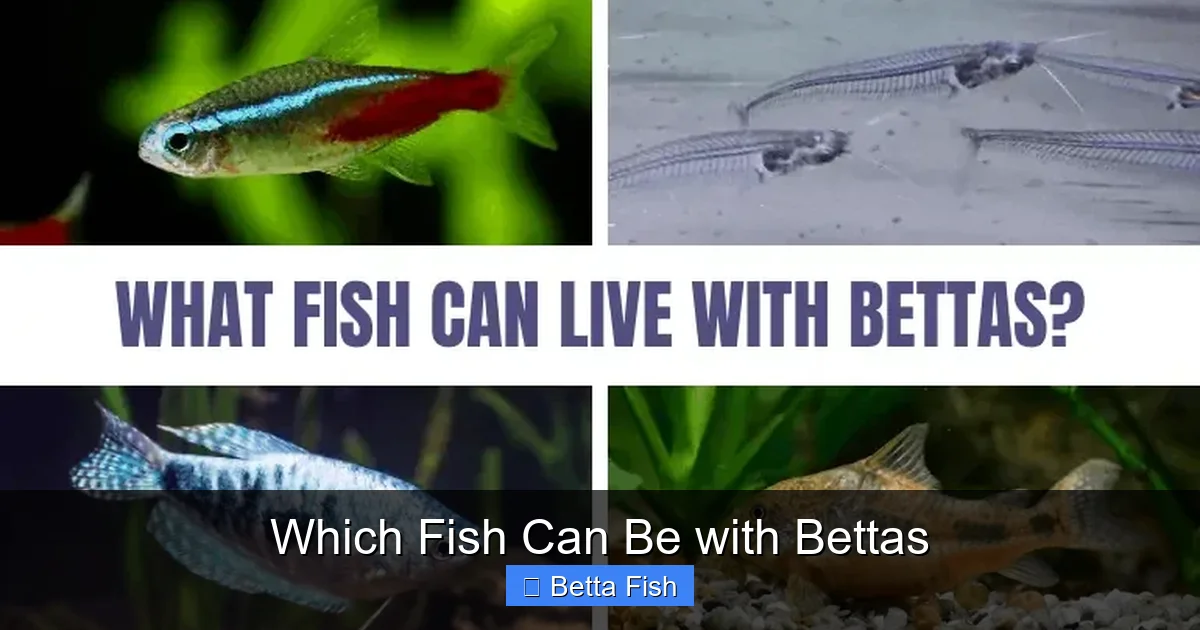
- Corydoras Catfish (Cory Cats): The quintessential betta companion. These small, armored catfish are social and should be kept in groups of 6+. They are utterly harmless, comical, and help clean up leftover food. Popular species like the Bronze Cory (Corydoras aeneus) or Pygmy Cory (Corydoras pygmaeus) are excellent choices. Their whiskered faces and busy foraging provide endless entertainment without bothering the betta.
- Kuhli Loaches (Pangio kuhlii): These fascinating, eel-like loaches are a高级 choice. They are nocturnal, shy, and spend their days burrowed in the substrate or hiding under decorations. Their worm-like appearance and behavior are completely uninteresting to a betta. They must be kept in groups of 5+ to feel secure and are a joy to watch on their midnight explorations.
- Bristlenose Plecos (Ancistrus sp.): If you have algae concerns and a large enough tank (20+ gallons), a single Bristlenose Pleco can be a great addition. They are mottled brown, have armored plates, and are algae grazers. Their size (4-5 inches) and tough skin make them unappealing as prey or rivals to a betta. Ensure you have plenty of driftwood for them to rasp on.
Small, Peaceful Schooling Fish
For the middle and upper levels of the tank, you need fish that are fast, numerous, and non-aggressive. The “schooling” aspect is critical—a single fish can become a target, but a tight school moves as one confusing entity, making it harder for a betta to single one out.
- Harlequin Rasboras (Trigonostigma heteromorpha): A classic, beautiful choice. They have a subtle, triangular marking and peaceful demeanor. Keep them in groups of 8+ in a 20+ gallon tank. Their active, shimmering schooling adds dynamic movement to the tank without resembling a betta.
- Celestial Pearl Danios (Danio margaritatus): Also known as Galaxy Rasboras, these tiny, sparkling fish are a stunning addition. They are hardy, peaceful, and prefer to school in the upper mid-water. Their small size (1 inch) and quick movements make them difficult for a betta to catch.
- Ember Tetras (Hyphessobrycon amandae): As their name suggests, they glow with a fiery orange color. This is a safe color—it’s uniform, not patterned like a betta’s fins. They are very peaceful, tiny (0.8 inches), and create a beautiful, moving cloud of orange in a planted tank. A school of 10+ is ideal.
- White Cloud Mountain Minnows (Tanichthys albonubes): Another hardy, cold-water tolerant option (a plus if your room is cooler). They are active, silvery with a red tail, and school peacefully. Their body shape and fin length are very different from a betta’s.
The Invertebrate Option: Shrimp and Snails
Don’t forget about invertebrates! They can add fantastic cleanup crew and visual interest.
- Amano Shrimp (Caridina multidentata): The largest common aquarium shrimp (2-3 inches). They are primarily algae eaters and are too big to be seen as a snack by most bettas. Their quick, darting movements can sometimes startle a betta, but they are generally ignored.
- Ghost Shrimp / Glass Shrimp: These are inexpensive, transparent shrimp. They can be a good “test” invertebrate. Some bettas will hunt them relentlessly, while others completely ignore them. They are great at cleaning and reproducing.
- Nerite Snails: The best snail choice. They come in beautiful patterned varieties (zebra, olive, horned), are excellent algae grazers, and cannot reproduce in freshwater (they require brackish water to lay eggs that hatch). This means you won’t have a snail population explosion. Their hard shell protects them from curious bettas.
- Ramshorn Snails or Mystery Snails: These can work, but be aware that some bettas will peck at their antennae. Mystery snails are large and often too much trouble to bother with. Ramshorn snails reproduce quickly, so be prepared for potential overpopulation if your betta doesn’t keep them in check.
The “No” List: Fish That Should Never Be with Bettas
Understanding what to avoid is just as crucial as knowing what to include. The following are almost universally poor choices for a betta community.
Visual guide about Which Fish Can Be with Bettas
Image source: japanesefightingfish.org
Other Bettas & Gouramis
This is the absolute rule. Never house two male bettas together. Female bettas can sometimes be kept in sororities (groups of 4-5+) in a large, heavily planted tank, but this is advanced and risky. Avoid all other Anabantoid family members like Gouramis (Dwarf, Pearl, Kissing). They are closely related, have similar body shapes and labyrinth organs, and will almost certainly fight with a betta over territory and air space at the surface.
Fish with Long, Flowing Fins or Bright Colors
These are visual triggers for a betta’s aggression. They will see the fish as a rival male betta.
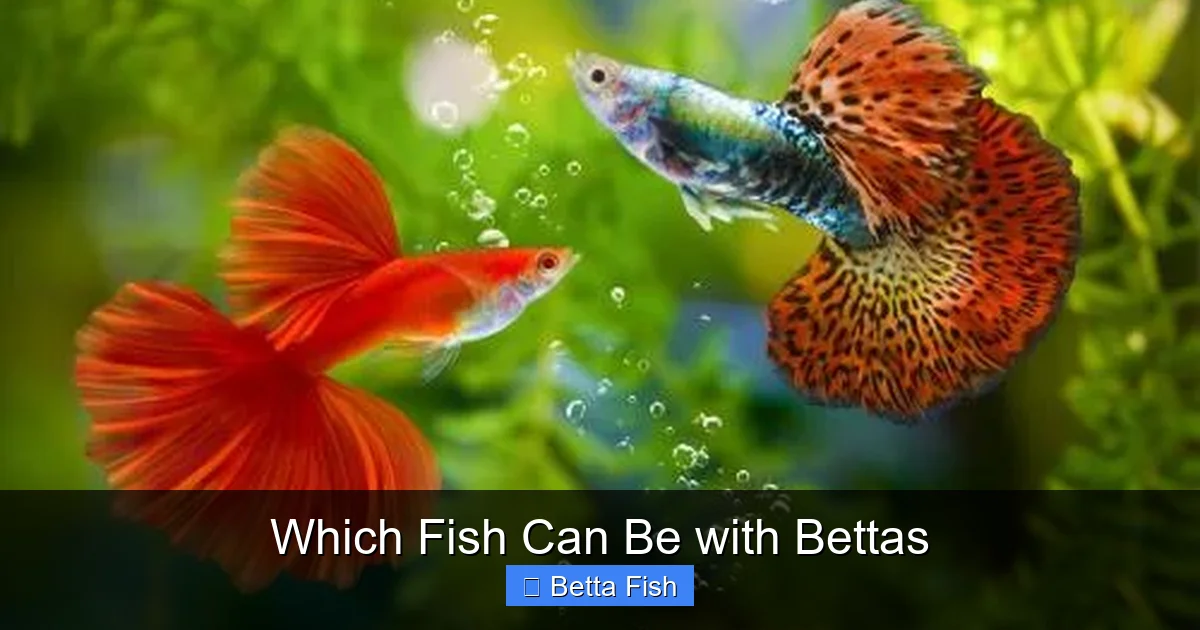
- Fancy Guppies: The #1 mistake. Their long, colorful caudal fins are a perfect target.
- Male Siamese Fighting Fish (obviously): Just don’t.
- Some Swordtails and Platies: The males of these species can develop a sword-like extension on their caudal fin, which is a major trigger.
- Fancy Goldfish: Their flowing fins and different temperature requirements make them a bad match.
Fin-Nippers and Aggressive Fish
Some fish have a habit of nipping at the long, flowing fins of bettas, causing stress and infection.
- Tiger Barbs: Notorious fin-nippers. They are also active and may harass a slower betta.
- Some Tetra Species: While many tetras (like Ember or Neon) are peaceful, some larger or more boisterous species like Black Skirt Tetras or Serpae Tetras are known to nip fins.
- Aggressive Cichlids: Most cichlids (like convicts, Oscars) are far too aggressive and will either kill the betta or be severely stressed by its presence.
The Introduction Process: How to Add Tankmates Safely
You’ve chosen your candidate fish, built a perfect 20+ gallon planted tank, and cycled it for weeks. Now, the moment of truth. Rushing this process is the most common reason for community tank failures with bettas. Patience is your most important tool.
Step 1: The Betta’s Solo Establishment
The betta must be the first and sole inhabitant of the tank for at least 4-6 weeks. This allows it to claim its territory, learn the layout, and feel secure. A betta added to a tank with already-established fish is immediately on the defensive. During this time, observe its behavior. Does it flare at its reflection? At your finger? This is normal, but excessive aggression is a warning sign.
Step 2: The “Rearrangement” Trick
Before introducing the new fish, do a major tank rearrangement. Move all rocks, plants, and decorations. This disrupts the betta’s established territory. Then, add the new fish (in their bag, floated for temperature acclimation first). When the betta wakes up or returns to a tank that looks “new,” it is less likely to immediately defend a specific spot. It will re-explore and re-establish a new territory, often overlooking the new arrivals who are also getting settled.
Step 3: The Acclimation and Observation Period
Use a drip acclimation method for the new fish to adjust to your tank’s water parameters slowly. Once they are in, the clock starts. For the first 48 hours, you must be a vigilant observer. Watch for:
- Flaring: The betta flaring its gills and fins at a specific fish.
- Chasing: The betta relentlessly pursuing a tankmate around the tank.
- Nipping: The betta (or another fish) biting at fins.
- Hiding: Any fish spending all day tucked away, not coming out to eat.
Some initial curiosity (following at a distance, brief flaring) can be normal as boundaries are set. But constant, high-stress chasing is a red flag. Be prepared to separate fish immediately using a tank divider or by re-homing one of the parties if needed.
Troubleshooting and Long-Term Monitoring
Even with the best planning, things don’t always go smoothly. Your betta is an individual, and its personality can change with mood, health, or age.
Recognizing Stress and Aggression
A stressed betta may show faded colors, clamped fins, lethargy, or loss of appetite. A betta that is establishing dominance will flare, chase, and may even lock jaws with another fish. The key is to determine if it’s a brief, establishing interaction or a relentless campaign. If a tankmate is injured (torn fins, missing scales) or hiding 24/7, intervention is required.
When to Intervene and Separate
If aggression persists beyond the first 72 hours and results in physical harm or extreme stress to any fish, it’s time to act. Your options are:
- Rehome the Newcomer: Often the easiest solution. Find a friend with a suitable tank or a reputable local fish store that will take it back.
- Rehome the Betta: If your betta is consistently aggressive and cannot live with others, it may simply be a solitary personality. That’s okay! Return it to a species-only tank, which is still a loving home.
- Use a Tank Divider: A solid divider (not mesh) can physically separate the betta from the problem fish while allowing water flow. This is a good temporary fix or long-term solution for a tank with one particularly incompatible resident.
Never introduce a new tankmate as a “distraction” for an already-aggressive betta. This will only increase stress and likely result in two injured or dead fish.
Seasonal and Life Changes
A betta’s tolerance can change. A young betta may be more curious, while an older one may become more territorial. Breeding behavior (even without a female present) can spike aggression. Water parameter swings (like during a cycling event) can make any fish irritable. Continuous observation is key to a harmonious community.
Conclusion: Patience, Observation, and a Well-Planned Tank
So, which fish can be with bettas? The answer is a curated list of peaceful, appropriately-sized, non-flashy fish and invertebrates, housed in a spacious, heavily planted tank of 20 gallons or more. The most successful combinations almost always involve bottom-dwelling catfish like corydoras or loaches, or small, fast-shoaling fish like harlequin rasboras or ember tetras. Shrimp and nerite snails make excellent additions for cleanup and diversity.
Ultimately, a successful betta community is not about finding a magic bullet fish, but about creating an environment that respects the betta’s natural instincts while providing enrichment for all inhabitants. It starts with the tank itself—space and hiding places are your primary tools. It continues with careful selection, prioritizing the betta’s personality over a wish list. And it is maintained through a slow, methodical introduction process and a commitment to daily observation. A betta community tank can be one of the most beautiful and rewarding setups in the aquarium hobby, bursting with color and activity. But it demands respect for the betta’s heritage as a territorial fish. By following these guidelines, you can move beyond the myth of the lonely betta and provide your magnificent fish with a thriving, peaceful neighborhood.
Frequently Asked Questions
Can betta fish live with neon tetras?
It’s a mixed bag. Neon tetras are peaceful, schooling fish, which is good. However, their bright blue and red coloration can sometimes trigger a betta’s aggression, as it resembles another betta. They also prefer slightly cooler water. In a large, heavily planted 20+ gallon tank with a calm betta, it might work, but it’s considered a higher-risk pairing than the fish listed in the main article.
What about bettas with shrimp?
Many bettas will eat small shrimp like Cherry Shrimp, especially if they are hungry or the betta has a high prey drive. Larger shrimp like Amano Shrimp (2-3 inches) have a much better chance of coexistence. Ghost shrimp are a good, inexpensive test—you’ll quickly see if your betta views them as food or tankmates. Always provide dense planting for shrimp to hide in.
Can I put a betta with a goldfish?
Absolutely not. This is a terrible pairing for several reasons. Goldfish are cold-water fish (preferring 68-74°F), while bettas are tropical (78-80°F). Their temperature needs are incompatible. Goldfish also produce massive amounts of waste, requiring powerful filtration and frequent water changes, which is stressful for a betta. Finally, goldfish are not shy and will root up substrate, potentially damaging plants and disturbing the betta.
My betta flared at the new fish but didn’t chase them. Is that okay?
Yes, initial flaring is very common and often just a “hey, this is my spot” warning. Watch the context. If the betta flares once or twice when a fish wanders near its favorite plant and then goes back to exploring, that’s likely boundary-setting. If it sits in one spot, flaring constantly at a fish that is simply minding its own business in another part of the tank, that’s problematic aggression.
How long should I wait before introducing tankmates to a new betta?
You should wait at least 4-6 weeks after bringing the betta home to a new, empty tank. This “quarantine and settling-in” period is crucial. It lets the betta recover from any transport stress, establish its territory, and lets you confirm the tank is fully cycled and stable. Rushing this step is a primary cause of failure.
What is the single best fish to put with a betta?
There is no single “best” fish, as it depends on your betta’s personality. However, the most consistently successful and recommended choice is a group of corydoras catfish. They are peaceful, occupy the bottom (a different zone), are hardy, and are fascinating to watch. For a 20+ gallon tank, a school of 6+ Pygmy or Bronze Corydoras is an almost fail-safe starting point for a betta community.


