Which Fish Can Bettas Live With
Betta fish, known for their aggression, can live with certain peaceful species in a properly sized, decorated tank. Ideal companions include small, non-colorful schooling fish like neon tetras (in groups), peaceful bottom dwellers like corydoras, and cleanup crew like nerite snails. Success depends on your betta’s individual personality, a minimum 20-gallon tank, and abundant hiding spots to break line-of-sight and reduce stress.
Key Takeaways
- Tank Size is Non-Negotiable: A minimum of 20 gallons is required for any community tank with a betta to provide enough space and territorial separation.
- Your Betta’s Personality Rules: Some bettas are inherently more aggressive; you must observe your specific fish’s behavior before and after introducing any tank mate.
- Avoid Fin-Nippers and Colorful Rivals: Never house bettas with fish known to nip long fins (like tiger barbs) or fish with bright colors and flowing fins that trigger betta aggression.
- Hiding Spots are Essential: Use plants, driftwood, and caves to break the line-of-sight and give both the betta and its tank mates places to retreat and feel secure.
- Introduce the Betta Last: Add all potential tank mates first and allow them to establish their territory for 2-3 weeks before introducing the betta to the peaceful community.
- Group Size Matters for Schoolers: Fish like neon tetras or harlequin rasboras must be kept in proper groups of 6+ to feel safe and divert attention from the betta.
- Shrimp and Snails Carry Risk: While many are good cleanup crew, cherry shrimp may be seen as food. Larger, fast-moving shrimp like amano or ghost shrimp, and snails with operculums (like nerites) have better survival odds.
📑 Table of Contents
- The Betta Tank Mate Conundrum: It’s All About the Setup
- The Golden Rules: Prerequisites Before You Even Think About Tank Mates
- Top Tier Tank Mates: The Proven, Peaceful Contenders
- The “Maybe” and “High Risk” Categories: Proceed with Extreme Caution
- The Absolute “No” List: Never, Ever Combine With a Betta
- The Introduction Protocol & Long-Term Monitoring
- Conclusion: Patience and Observation Are Your Best Tools
The Betta Tank Mate Conundrum: It’s All About the Setup
So, you’ve got a beautiful, flaring betta in a solo tank, and you’re dreaming of a vibrant, bustling community aquarium. The question “Which fish can bettas live with?” is one of the most common—and complex—in the fishkeeping world. The short, frustrating answer is: it depends. But don’t worry, that “depends” is actually a roadmap to success if you know the principles. Betta fish, or Siamese fighting fish, earned their name for a reason. Males are famously territorial and aggressive towards other bettas and anything they perceive as a rival—which often means anything with bright colors or long, flowing fins. However, in the wild, they share their slow-moving, plant-dense waters with many other species. Replicating that environment is the key to harmony.
The single most important factor is space. A betta in a 5-gallon desktop tank is a king in a small castle—any intruder is a direct threat. But a betta in a 20+ gallon well-planted tank is a monarch in a vast kingdom. That space, combined with visual barriers, allows other fish to have their own territories, breaking the constant line-of-sight that fuels a betta’s aggression. Your betta’s unique personality is the second biggest factor. Some are laid-back “zen masters,” while others will attack their own reflection. You must be a keen observer. This guide will walk you through the proven, compatible species and the critical setup rules that make peaceful cohabitation possible.
The Golden Rules: Prerequisites Before You Even Think About Tank Mates
Before you even consider which fish to buy, you must accept and implement these foundational rules. Skipping them is the #1 reason betta community tanks fail. Think of these as the contract you sign with your betta to provide a stress-free life.

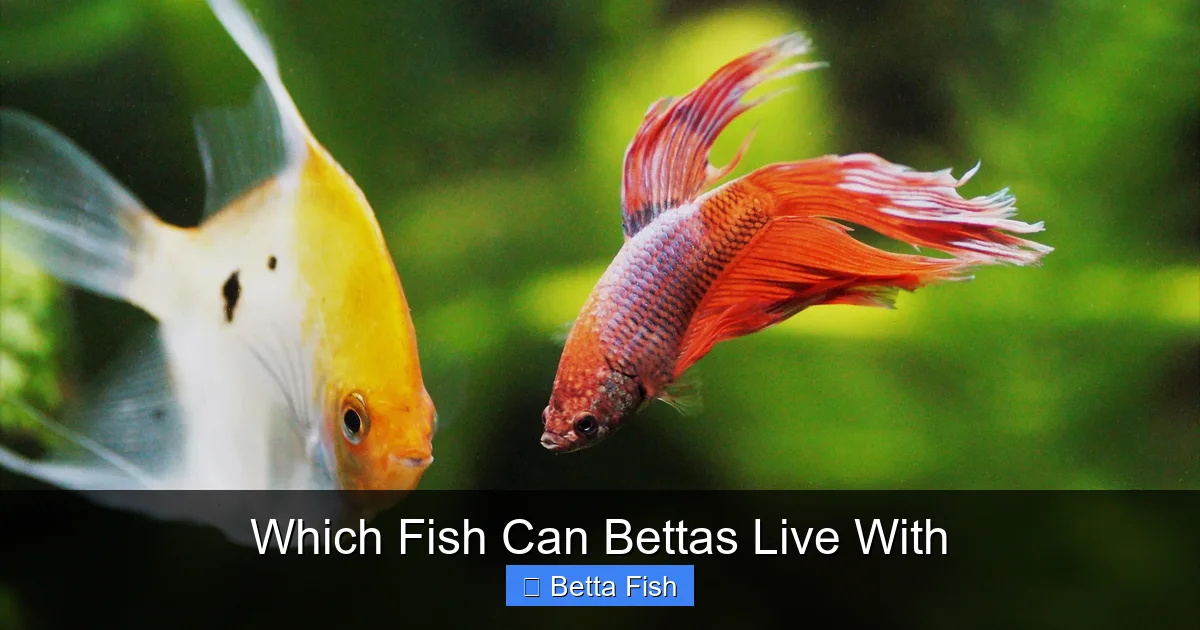
Visual guide about Which Fish Can Bettas Live With
Image source: fishtankexpert.com
Rule #1: The 20-Gallon Minimum (Seriously, Not 10)
Let’s be clear: a 10-gallon tank is not a community tank; it’s a betta tank with an unwelcome roommate. It’s simply too small to establish separate territories. The water parameters will also fluctuate more, adding stress. A 20-gallon long (30” x 12” footprint) is the absolute smallest acceptable size. Ideally, aim for 29 gallons or more. The extra length provides crucial horizontal swimming space and makes it easier to create distinct zones with decorations.
Rule #2: The Tank Must Be Heavily Planted and Decorated
You are not building an aquarium; you are building a underwater jungle. The goal is to eliminate as much open water as possible. Use live plants like java fern, anubias, and cryptocorynes, or high-quality silk plants. Driftwood, stone caves, and ceramic pots are vital. These decorations do three things: they break the betta’s line-of-sight to other fish, they provide hiding places for shy tank mates to escape a patrolling betta, and they mimic the complex natural habitat that calms all fish. A bare tank is a recipe for disaster.
Rule #3: The Betta is ALWAYS the Last Inhabitant
This is a critical procedural rule. You must fully cycle the tank and establish the peaceful community fish first. Let them live together for at least 2-3 weeks. They will claim their spots, establish their food territories, and become comfortable. Then, and only then, do you introduce the betta. The betta, as the new arrival, will be the one that has to adapt to the existing social structure, not the other way around. This massively reduces the chance of the betta immediately viewing every other fish as an intruder in *its* home.
Top Tier Tank Mates: The Proven, Peaceful Contenders
Assuming you’ve met the golden rules, here are the species with the highest success rates. They share common traits: they are hardy, peaceful, occupy different tank levels (top/middle/bottom), and are not visually provocative.
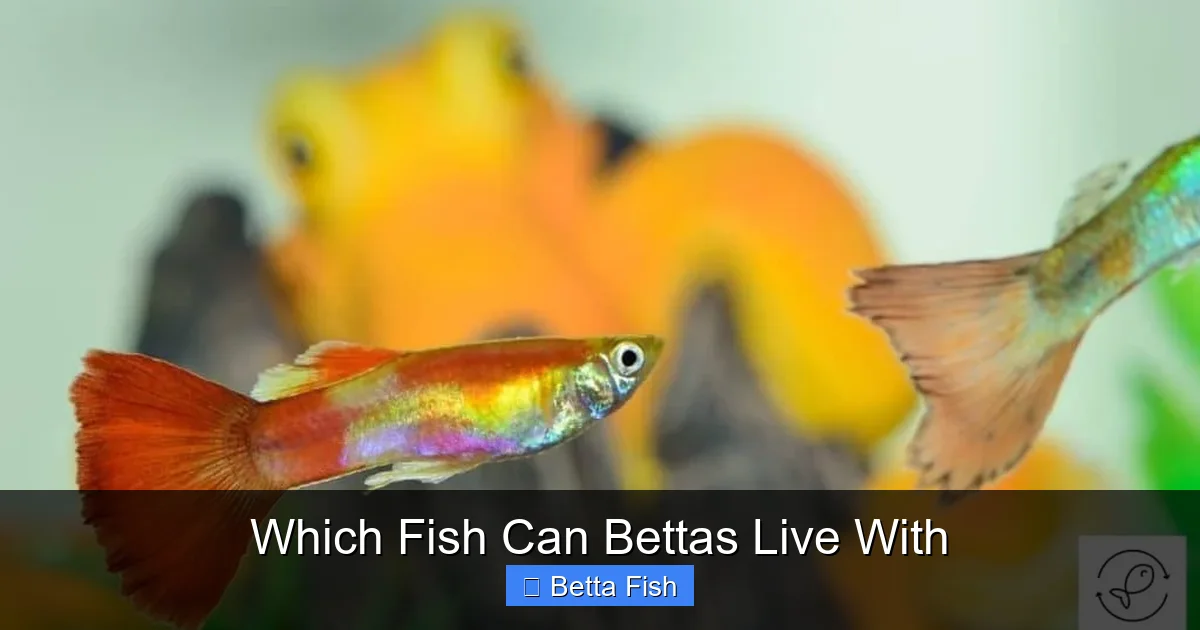
Visual guide about Which Fish Can Bettas Live With
Image source: jaljeev.com
For the Top/Mid-Level: The Right Schoolers
Small, peaceful schooling fish are excellent choices because they focus on each other, not the betta. They must be kept in proper groups to feel secure.
- Neon Tetras (Paracheirodon innesi): The classic choice. They stay small (1.5 inches), are peaceful, and their blue/red stripe is actually less provocative to bettas than solid, bright colors. They school in the middle levels. Key: Get a group of 10 or more. A small school of 6 is the absolute minimum and will be more stressed, drawing the betta’s attention.
- Harlequin Rasboras (Trigonostigma heteromorpha): Slightly larger (2 inches) and more robust than neons. Their orange coloration and black patch are generally well-tolerated. They are active, beautiful swimmers. Keep in groups of 8+.
- Ember Tetras (Hyphessobrycon amandae): A fantastic, smaller alternative. Their tiny size (0.8 inches) and fiery orange color often blend into a planted tank. They are very peaceful and stay in the mid-upper levels. A group of 10+ creates a stunning, shimmering cloud that distracts from the betta.
- Celestial Pearl Danios (Danio margaritatus): Also known as Galaxy Rasboras. These tiny, stunning fish with star-like spots are peaceful and prefer to hover in the upper middle. They are a bit more shy, so a heavily planted tank is perfect. Groups of 6-8.
For the Bottom: The Busy Cleanup Crew
These fish occupy a completely different space than the betta, who swims in the upper half. They are essential for a balanced tank.
- Corydoras Catfish (Corydoras spp.): The undisputed champions. These armored, whiskered catfish are adorable, peaceful, and spend all day sifting the substrate for food. They are social and must be in groups of 5 or more (8+ is ideal). Popular, hardy species include the Pygmy Cory (for smaller tanks), Bronze Cory, and Peppered Cory. They pose zero threat and are ignored by most bettas.
- Kuhli Loaches (Pangio kuhlii): For a truly unique bottom dweller. These eel-like, orange-striped loaches are peaceful, nocturnal, and burrow into the substrate. They are social and should be kept in groups of 5+. Their odd shape and behavior usually make them invisible to a betta.
The Invertebrate Squad: Shrimp & Snails
Invertebrates add movement and function without triggering the same territorial instincts as fish. However, there is always a risk they may be seen as food.
- Nerite Snails (Neritina spp.): The best snail choice. They have a heavy, iridescent shell with a tight operculum (trapdoor) that a betta cannot pry open. They are excellent algae eaters, do not reproduce in freshwater, and are largely ignored. Start with 2-3 for a 20-gallon.
- Mystery Snails (Pomacea bridgesii): Also have an operculum and are larger. They are peaceful and come in many colors. They can reproduce if a male and female are present, but they lay eggs above the waterline, making population control easy. Their size can sometimes attract a curious betta nip, but the operculum usually protects them.
- Amano Shrimp (Caridina multidentata): The gold standard for shrimp. They are large (2+ inches), fast, and have a translucent, speckled body that makes them hard to target. They are phenomenal algae and detritus eaters. Their size and speed give them a high survival rate.
- Ghost Shrimp (Palaemonetes spp.): A good, cheap, and hardy option. They are nearly invisible when hiding. They are prolific breeders, providing a potential live food source, which can be a pro or con. Some bettas will hunt them relentlessly; others ignore them.
- Cherry Shrimp (Neocaridina davidi): High Risk. Their brilliant red color is exactly what triggers a betta’s aggression. They are also small and slow. Only attempt with a very peaceful, well-fed betta in a heavily planted large tank, and even then, expect some losses. They are more likely to be a snack than a tank mate.
The “Maybe” and “High Risk” Categories: Proceed with Extreme Caution
Some species can work under perfect, specific conditions but carry significant risks. These are not for beginners or first-time community setups with a betta.
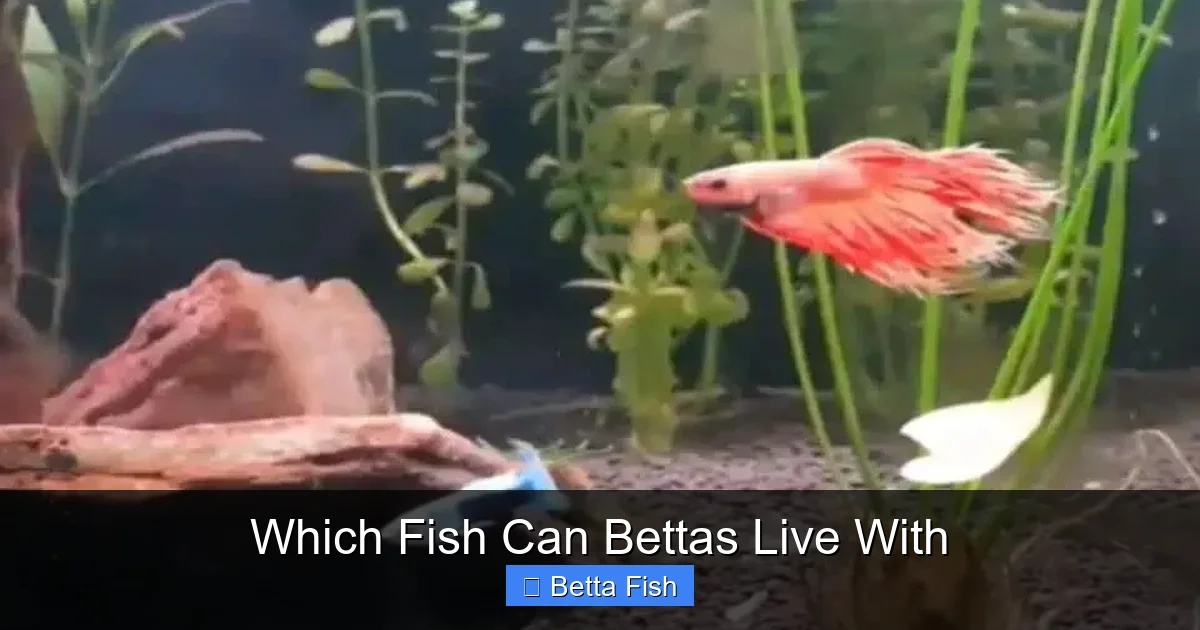
Visual guide about Which Fish Can Bettas Live With
Image source: japanesefightingfish.org
Fish That Require Perfect Personalities
These fish have traits that can trigger a betta but are sometimes successful with a exceptionally docile betta.
- Otocinclus Catfish (Otocinclus spp.): These tiny, algae-munching catfish are peaceful and occupy the top/mid-level. However, they are very sensitive to water quality and can be stressed easily by a patrolling betta. They also need a tank covered in algae and biofilm to start. A risky but rewarding choice for an expert.
- Dwarf Gouramis (Trichogaster lalius): This is the most controversial. They are in the same family as bettas (Osphronemidae) and have a similar body shape. Some bettas ignore them; others will fight to the death. Never try this in a tank under 30 gallons. The risk of tragedy is extremely high.
- Snakeskin Guppies (Poecilia reticulata): Guppies are generally peaceful, but their long, colorful fins are a red flag to a betta. If you must try, choose a male guppy with very short, plain fins (like a “snakeskin” pattern) and keep a large group (all males) to diffuse attention. Female guppies are plainer and sometimes a better, but still risky, option.
The Absolute “No” List: Never, Ever Combine With a Betta
These species are guaranteed to cause severe stress, injury, or death to either the betta or the other fish. Do not attempt.
- Other Bettas: This includes male/female pairs (unless for supervised breeding, which is a separate, complex process) and any multiple males. They will fight to the death.
- Fin-Nippers: Tiger Barbs, Serpae Tetras, and some Danios are notorious for nipping the long, flowing fins of a betta, causing infections and immense stress.
- Aggressive or Large Fish: Cichlids (like Oscars or Angelfish), large catfish (like Plecos that can grow huge), and any known aggressive fish (like some gouramis or wolf fish) will bully or eat a betta.
- Fish with Bright Colors/Flowing Fins: Fancy Guppies, male Swordtails, and many other livebearers with large tails will be seen as direct rivals.
- Other Anabantoids: This family includes Gouramis (Honey, Pearl, etc.) and Paradise Fish. They have the same labyrinth organ and similar body language, leading to almost constant conflict.
The Introduction Protocol & Long-Term Monitoring
You’ve chosen your compatible species, built your jungle, and waited patiently. Now, the moment of truth. The introduction process is a delicate dance.
The Acclimation Process
When you bring your new fish home, do not just dump them in. Float the bag in the tank for 15-20 minutes to equalize temperature. Then, use a drip acclimation method (slowly adding tank water to the bag over an hour) to equalize water chemistry (pH, hardness). This is crucial for sensitive species like cories. Once acclimated, use a net to gently transfer the fish into the tank, never pouring bag water into your aquarium.
The First 72 Hours: Observation Mode
For the first three days, you must be a silent observer. Do not interfere unless a fish is clearly injured or being cornered to death. Watch the betta’s initial patrol. A flared gill and brief chases are normal as it establishes its space. Concern signs: relentless chasing that doesn’t stop after 10-15 minutes, biting, the betta cornering another fish against the glass, or the betta locking jaws with another fish. If this happens, you need a backup plan—a separate hospital tank to remove the aggressor or the victim.
Feeding Strategies to Prevent Competition
Feed your betta its high-quality pellet first, in a specific corner, to satiate it. Then, scatter sinking foods (like algae wafers or bug bites) for your cories and loaches at the other end of the tank. Finally, sprinkle floating or mid-water foods for your schoolers. This ensures everyone gets enough to eat and prevents the betta from seeing the other fish as competition for food. Feed small amounts 1-2 times daily.
Conclusion: Patience and Observation Are Your Best Tools
Creating a successful community tank with a betta is a rewarding challenge that blends science, art, and a deep understanding of animal behavior. It is not about forcing coexistence, but about designing an environment so rich and spacious that conflict becomes unnecessary. Remember the hierarchy: Tank Size > Hiding Spots > Tank Mate Selection > Betta’s Personality. Start with the most proven, peaceful species like corydoras and neons in a heavily planted 20+ gallon tank. Introduce the betta last. Be prepared for your specific betta to defy the odds—either by being surprisingly peaceful or unexpectedly aggressive. Have a separate “quarantine” or “hospital” tank ready at all times. The goal is not just to put fish together, but to foster a dynamic, stress-free ecosystem where your betta can be the magnificent centerpiece of a thriving aquatic world, not its lonely prisoner. With patience, observation, and adherence to these principles, you can absolutely achieve it.
Frequently Asked Questions
Can betta fish live with shrimp?
Yes, but with caution. Large, fast shrimp like Amano or Ghost shrimp have a good chance of survival. Smaller, colorful shrimp like Cherry shrimp are often treated as food by bettas, especially in smaller tanks. A heavily planted, large tank (20+ gallons) gives shrimp the best odds.
Can a betta live with a snail?
Absolutely. Snails are often the safest and most beneficial tank mates. Nerite snails are the top recommendation because they have a tight operculum a betta cannot open, they don’t reproduce in freshwater, and they clean algae. Mystery snails are also good but can be larger targets for curious bettas.
Can bettas live with guppies?
It is high-risk and generally not recommended. Male guppies have bright colors and long fins that trigger a betta’s aggression. If you attempt it, only try with a plain, short-finned male guppy in a very large, heavily planted tank (29+ gallons) with a known peaceful betta. Expect possible losses.
How big of a tank do betta fish need with tank mates?
The absolute minimum is a 20-gallon long tank. This provides enough horizontal space to create distinct territories with plants and decorations. For best results, especially with active schoolers like tetras, a 29-gallon or larger tank is strongly recommended.
My betta is flaring at the new fish. What do I do?
Initial flaring and brief chasing for the first 24-48 hours is normal as the betta establishes its territory. Monitor closely. If the chasing is relentless, the betta is biting, or it corners another fish, you have an aggression problem. You may need to remove the betta to a separate tank for the safety of the other fish. Some bettas simply will not tolerate tank mates.
Can female bettas live with other fish?
Yes, female bettas are generally less aggressive than males and can often be kept in sororities (groups of 4-5) or with peaceful community fish. However, they still require a minimum 20-gallon heavily planted tank and have individual personalities. The same rules about avoiding fin-nippers and colorful rivals apply. Start with a single, known peaceful female in a community before attempting a sorority.