How to Tell If a Betta Fish Is Egg Bound

Knowing how to tell if a betta fish is egg bound can save your fish’s life. Egg binding happens when a female betta cannot release her eggs, causing a swollen belly, lethargy, and appetite loss. This guide covers the top signs, causes, treatments, and simple prevention tips you can use today.
If you own a female betta fish, there is one health issue you need to know about. It is called egg binding, and it can turn serious fast. How to tell if a betta fish is egg bound is a question many fish owners ask too late. The good news is that catching the signs early makes a huge difference. In this guide, we will walk you through every symptom, cause, treatment, and prevention tip you need.
Egg binding happens when a female betta fish produces eggs but cannot release them. The eggs stay trapped inside her body. This causes discomfort, swelling, and eventually serious health problems. Betta fish egg binding is not rare, especially in fish kept in small bowls or tanks with poor conditions. The sooner you spot the problem, the easier it is to fix.
Whether you are a new betta owner or have kept fish for years, this guide will give you the knowledge to act fast. We will cover simple checks you can do at home, treatments that work, and steps to prevent this from happening again. Let us dive right in.
Key Takeaways
- Swollen abdomen and white stringy feces are the most common signs of egg binding in female bettas.
- Poor water quality and diet are the leading causes of egg binding in betta fish.
- Epsom salt baths and warm water are simple home treatments that can help release trapped eggs.
- Early detection is key — the faster you act, the better your betta’s chances of recovery.
- Prevention through proper tank care, diet, and stress reduction keeps your betta healthy long-term.
- Seek a vet if home treatments do not work within 24 to 48 hours.
📑 Table of Contents
What Is Egg Binding in Betta Fish?
Egg binding means a female betta fish has eggs ready to release but her body cannot push them out. Think of it like constipation, but with eggs. The eggs build up inside her abdomen and create pressure. This is different from betta fish pregnancy, which is a normal and healthy process when a male and female breed.
A healthy female betta carries eggs as part of her natural cycle. She does not need a male to produce eggs. However, when the eggs are not released properly, they become trapped. This is when the problem starts. Egg retention is another term you might hear. It means the same thing — the eggs are being held inside the body instead of being released.
Why Egg Binding Matters
When eggs stay trapped too long, they can cause infections. The pressure on internal organs can lead to organ failure. In severe cases, egg binding can be fatal. This is why learning how to spot the early signs is so important. A quick response can mean the difference between a full recovery and a tragic outcome.
Many people confuse egg binding with other conditions like dropsy or constipation. That is why we will go through each symptom carefully below. You will learn exactly what to look for and how to tell the difference.
Signs and Symptoms That Your Betta Is Egg Bound
Knowing the betta fish symptoms of egg binding helps you act fast. Some signs are easy to spot. Others are more subtle. Here are the most common ones to watch for.
Swollen or Bloated Belly
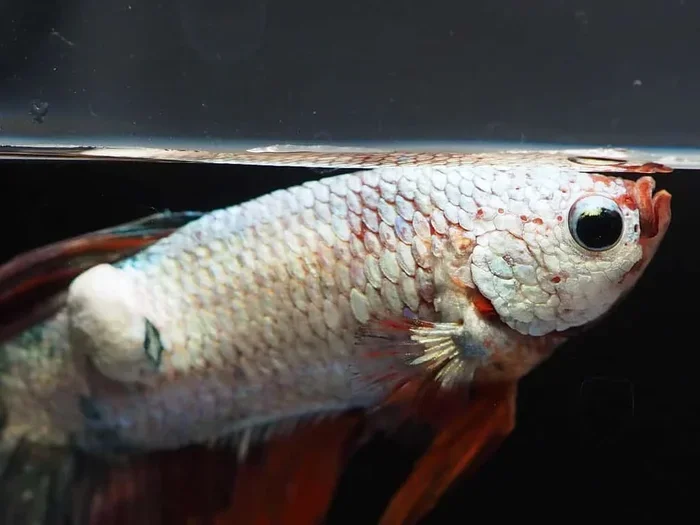
The most obvious sign is a swollen abdomen. Your betta’s belly will look much bigger than normal. It may appear round and tight. Unlike regular bloating from overeating, an egg-bound belly stays swollen even after fasting. The belly may also look slightly pointed or angular rather than round.
Loss of Appetite
A healthy betta fish loves food. If your fish suddenly stops eating or shows no interest in pellets or live food, something is wrong. A loss of appetite is one of the earliest warning signs. Your betta may approach food and then swim away. She might nibble once and refuse more.
Lethargy and Low Energy
Betta fish are naturally active and curious. If your fish is spending most of her time sitting at the bottom of the tank or hiding, she may be lethargic. Egg binding causes discomfort and pain. This makes your fish tired and uninterested in swimming or exploring.
White Stringy Feces
This is a telltale sign. Healthy betta feces are brown and solid. If you see white stringy feces, it often means the digestive tract is blocked by trapped eggs. The strings may look like mucus or clear threads. This symptom is a strong indicator that something is stuck inside your fish.
Difficulty Swimming
An egg-bound betta may struggle to swim normally. She might float at the top or sink to the bottom and have trouble staying upright. The extra weight from trapped eggs affects her buoyancy. You may notice her fins clamped close to her body.
Rapid Breathing
If your betta is breathing fast or gasping at the surface, this could signal pain or stress. Trapped eggs put pressure on the swim bladder and internal organs. This makes it harder for your fish to breathe comfortably.
Color Fading
A healthy betta has vibrant colors. When she is egg bound, her colors may fade or look dull. The stripes or horizontal lines on her body might become more visible. This is a stress response and often appears alongside other symptoms.
How to Tell the Difference from Other Conditions
It is easy to mistake egg binding for other issues. Constipation causes similar bloating but usually resolves after a day of fasting. Dropsy causes pinecone-like scales and is more severe. If you are unsure, check our article on how can you tell if your betta fish is sick for a broader look at common betta illnesses.
Common Causes of Egg Binding
Understanding what causes egg binding helps you prevent it. Several factors play a role. Here are the most common ones.
Poor Water Quality
Dirty water is the number one enemy of betta fish. High levels of ammonia and nitrite stress the body and disrupt the reproductive cycle. When water parameters are off, a female betta may struggle to release her eggs. How to take care of a betta fish water is essential for every owner. Regular water changes and proper filtration make a big difference.
Improper Diet
Betta fish need a protein-rich diet. If your fish eats mostly flakes or gets too many treats, her body may not function properly. A poor diet can lead to digestive issues that mimic or worsen egg binding. Feed your betta a mix of high-quality pellets, frozen bloodworms, and live brine shrimp for the best results.
Stress
Stress weakens the immune system and disrupts normal body functions. Common stressors include bright lights, aggressive tank mates, loud noises, and small tanks. A stressed betta is more likely to experience egg retention and other health problems. Learn more about reducing stress in our guide on how to treat a stressed betta fish.
Lack of Swimming Space
Betta fish need room to swim. Tanks smaller than 5 gallons can cause physical stress. The confined space affects muscle tone and digestion. Without proper movement, the body struggles to push eggs out naturally.
Age and Health Factors
Older female bettas are more prone to egg binding. Young fish that breed too frequently can also develop the condition. Any underlying health issue, especially one affecting the digestive or reproductive system, increases the risk.
Sudden Temperature Changes
Betta fish are tropical and need warm, stable water. Sudden drops in temperature can shock the body and slow down internal processes. This includes the release of eggs. Keeping a consistent water temperature between 78 and 80 degrees Fahrenheit is ideal.
How to Treat an Egg Bound Betta Fish
If you have confirmed that your betta is egg bound, do not panic. There are several steps you can take at home. Start with the simplest methods and move to stronger options if needed.
Step 1: Fast Your Betta
Stop feeding your betta for 24 to 48 hours. Fasting gives the digestive system a chance to reset. Sometimes a simple blockage from undigested food can make egg binding worse. After the fast, offer a small amount of high-quality food and watch how your fish responds.
Step 2: Give an Epsom Salt Bath
An Epsom salt bath is one of the most effective home treatments for egg binding. Epsom salt helps relax the muscles and draw out excess fluid. Here is how to do it:
- Fill a small container with tank water at the same temperature.
- Add 1 tablespoon of Epsom salt per gallon of water.
- Stir until the salt dissolves completely.
- Place your betta in the container for 10 to 15 minutes.
- Watch for signs of relaxation or egg release.
- Return your betta to the main tank afterward.
You can repeat this once a day for up to three days. Many fish owners see improvement within the first session.
Step 3: Raise the Water Temperature Slightly
Warm water helps boost your betta’s metabolism. This can encourage the body to release trapped eggs. Raise the temperature by 1 to 2 degrees Fahrenheit. Do not go above 82 degrees, as this can cause stress. If you do not have a heater, check out our guide on how to keep my betta fish warm without a heater for safe warming tips.
Step 4: Offer a High-Fiber Food
After fasting, offer a small piece of blanched pea or a high-fiber betta pellet. Fiber helps push things through the digestive tract. This can assist in releasing eggs naturally. Just be sure to remove any uneaten food after a few minutes.
Step 5: Improve Water Conditions
Do a 25 to 30 percent water change. Use treated water at the correct temperature. Check ammonia, nitrite, and nitrate levels. Clean water reduces stress and supports the body’s natural healing processes. For detailed water care tips, visit our guide on how to take care of a betta fish water.
When Home Treatments Are Not Enough
If your betta does not improve after 24 to 48 hours of home treatment, it is time to seek professional help. A veterinarian experienced with fish can provide medication or more advanced treatments. Do not wait too long. Prolonged egg binding can cause permanent damage.
Also, if you are not sure whether your betta is egg bound or simply how to tell if your betta fish is sick in general, it is always better to consult an expert. Early intervention saves lives.
How to Prevent Egg Binding in the Future
The best way to deal with egg binding is to prevent it from happening in the first place. These simple steps go a long way.
Keep the Tank Clean
Perform regular water changes every week or two. Use a gravel vacuum to remove waste. Clean filters according to the manufacturer’s instructions. A clean tank is the foundation of good betta fish care.
Feed a Balanced Diet
Offer a variety of high-quality foods. Mix pellets with frozen or live foods like bloodworms and brine shrimp. Avoid overfeeding. Feed only what your betta can eat in 2 to 3 minutes, once or twice a day.
Provide Adequate Tank Size
A minimum 5-gallon tank is recommended for a single betta. Larger tanks give your fish more room to swim and stay active. This supports overall health and reduces the risk of egg binding.
Maintain Stable Water Parameters
Keep the temperature between 78 and 80 degrees Fahrenheit. Maintain a pH between 6.5 and 7.5. Test the water regularly with a liquid test kit. Stable parameters reduce stress and keep your betta’s body functioning properly.
Reduce Stress
Keep the tank in a quiet area away from loud noises and direct sunlight. Avoid aggressive tank mates. Provide hiding spots with plants or caves. A calm environment helps your betta stay healthy and balanced.
Know Your Fish’s Gender
If you are not sure whether your betta is female, learn how to tell. Egg binding only affects female bettas. Check our article on how to tell the gender of a betta fish for a complete guide on identifying male and female bettas.
When to See a Veterinarian
Home treatments work well for mild cases. But some situations require professional care. Contact a fish vet if you notice any of the following:
- Your betta does not improve after 48 hours of treatment.
- The swelling gets worse instead of better.
- Your fish stops moving entirely or lies on its side.
- You see signs of infection like red patches or open sores.
- Your betta has trouble breathing even after water changes.
A vet can provide medications, perform gentle physical manipulation to release eggs, or recommend other treatments. Do not feel embarrassed about calling a professional. Fish health is a valid concern, and getting expert advice is always a smart move.
Remember, how to tell if a betta fish is egg bound becomes much easier once you know what to look for. Trust your instincts. If something seems off with your fish, act quickly. Your fast response could save your betta’s life.
Final Thoughts on Egg Binding
Egg binding is a serious but treatable condition. The key is catching it early and responding with the right care. Now that you know the signs, causes, and treatments, you are better equipped to protect your betta. Keep your tank clean, feed a proper diet, and watch your fish closely every day.
A healthy betta is a happy betta. With the right knowledge and a little attention, you can help your female fish live a long, vibrant life. Stay proactive, stay informed, and never hesitate to reach out to a vet when you need help. Your betta deserves the best care you can give.
Frequently Asked Questions
How long can a betta fish be egg bound before it becomes dangerous?
Egg binding can become dangerous within 2 to 3 days if left untreated. The longer eggs stay trapped, the more pressure builds on internal organs. Early treatment within the first 24 hours gives the best chance of a full recovery.
Can a male betta fish be egg bound?
No, only female betta fish produce and carry eggs. Males cannot be egg bound. If you are unsure whether your betta is male or female, check our guide on how to tell the gender of a betta fish to confirm.
Is egg binding the same as dropsy?
No, they are different conditions. Dropsy causes the scales to stick out like a pinecone and is often fatal. Egg binding causes a swollen belly but the scales usually remain flat. The treatments are also different, so proper identification matters.
Can I use table salt instead of Epsom salt for my betta?
No, always use pure Epsom salt, which is magnesium sulfate. Table salt contains additives like iodine and anti-caking agents that can harm your fish. Make sure the product contains no added ingredients.
How often do female betta fish get egg bound?
It is not extremely common but does happen regularly, especially in fish kept in poor conditions. Females that breed frequently or live in tanks smaller than 5 gallons are at higher risk. Proper care greatly reduces the chance of egg binding.
What should I do if my betta releases eggs but still looks swollen?
Some swelling may remain for a day or two after egg release. Continue monitoring your fish closely. If the swelling does not go down within 48 hours or your betta shows other symptoms like lethargy or loss of appetite, treat it as a potential ongoing issue and consider consulting a vet.
=== END FAQS ===