Can Betta Fish Eat Freeze Dried Bloodworms
Yes, betta fish can eat freeze dried bloodworms. They are a safe, protein-rich treat that most bettas love. However, they should only be fed in small amounts as a supplement to a balanced betta diet, not as a staple food.
If you own a betta fish, you have probably wondered about the best food options out there. Freeze dried bloodworms are one of the most popular betta treats on the market. But can betta fish eat freeze dried bloodworms safely and regularly?
The short answer is yes. Freeze dried bloodworms are a perfectly fine supplement for betta fish. They are packed with protein and most bettas go crazy for them. But there is more to know than just “yes” or “no.” This guide covers everything you need to make the best decision for your fish.
In this article, you will learn about the nutritional value of freeze dried bloodworms, how often to feed them, and the common mistakes aquarists make. We will also compare them to other food options like freeze dried brine shrimp and live alternatives. By the end, you will feel confident about your betta feeding routine.
Key Takeaways
- Safe to feed: Freeze dried bloodworms are a healthy occasional treat for betta fish.
- High in protein: They offer essential nutrients that support betta health and color.
- Feed in moderation: Overfeeding can cause digestive issues and bloating.
- Not a staple food: Betta pellets and flakes should remain the main part of their diet.
- Soak before feeding: Always soak freeze dried bloodworms to prevent swim bladder issues.
- Watch for allergies: Some bettas may reject bloodworms or have sensitivities.
- Use as a training tool: Freeze dried bloodworms work great for tempting picky eaters.
📑 Table of Contents
- What Are Freeze Dried Bloodworms?
- Can Betta Fish Eat Freeze Dried Bloodworms?
- How to Feed Freeze Dried Bloodworms to Your Betta
- Freeze Dried vs. Other Bloodworm Options
- Common Mistakes When Feeding Bloodworms
- Expert Insights on Feeding Freeze Dried Bloodworms
- When to Avoid Feeding Bloodworms
- How to Choose Quality Freeze Dried Bloodworms
- Can Betta Fish Eat Freeze Dried Bloodworms? Final Verdict
What Are Freeze Dried Bloodworms?
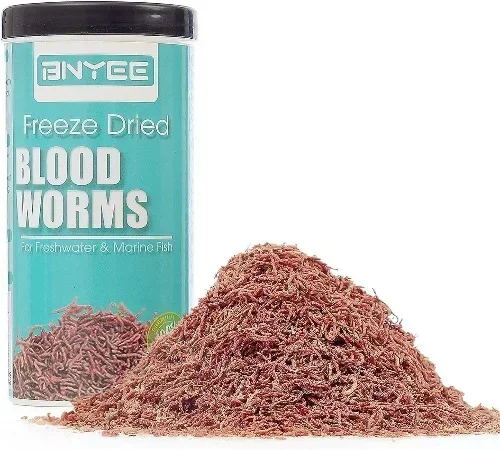
Freeze dried bloodworms are exactly what they sound like. Real bloodworms are frozen and then dried using a special process that removes all moisture. This preserves the nutrients and gives them a long shelf life. They come in small cubes or sheets that you can break apart easily.
These worms are a type of midge larvae. They are red in color and very rich in protein. The freeze drying process keeps them safe for your fish without needing refrigeration. Many betta owners keep them as a go-to treat because they are convenient and easy to store.
How Are They Made?
Bloodworms are harvested and then flash frozen. After freezing, they go through a lyophilization process. This removes the water content while keeping the protein and nutrients intact. The result is a lightweight, dry product that lasts for months in your pantry.
The freeze drying process does not use harmful chemicals. It is a natural preservation method. This is why many fish keepers trust freeze dried options over some heavily processed alternatives.
Nutritional Profile
Freeze dried bloodworms are primarily protein. They typically contain around 60 to 70 percent protein depending on the brand. They also contain some fat and trace minerals. Here is a quick breakdown of what you can expect:
- Protein: 60-70%
- Fat: 5-10%
- Fiber: Low
- Moisture: Less than 5%
This makes them a great protein boost for bettas. However, they lack some vitamins and minerals that bettas need for full health. That is why they should never replace a complete betta pellet or flake food.
Can Betta Fish Eat Freeze Dried Bloodworms?
Absolutely. Betta fish can eat freeze dried bloodworms without any problem. In fact, most bettas find them highly palatable. The strong smell and bright red color attract bettas immediately. If your betta is a picky eater, freeze dried bloodworms are often the solution.
These treats are safe for both adult and juvenile bettas. Just remember that they are a supplement, not a main meal. A healthy betta diet is built around high-quality pellets or flakes. Treats like bloodworms should make up no more than 10 to 15 percent of their total food intake.
Why Bettas Love Them
Betta fish are natural hunters. They crave live or meaty foods in the wild. Freeze dried bloodworms mimic that natural diet. The strong smell triggers their hunting instincts and gets them excited during feeding time.
If you have a betta that ignores pellets, try offering a small piece of freeze dried bloodworm. You will likely see an immediate reaction. This makes them a great tool for encouraging eating in stubborn or stressed fish.
Are They Nutritious Enough for Bettas?
While freeze dried bloodworms are protein-rich, they do not offer complete nutrition on their own. Bettas need a balanced mix of protein, fats, vitamins, and minerals. Pellets designed for bettas are formulated to meet all of these needs.
Think of freeze dried bloodworms like a candy bar for your fish. They love it, but it should not replace their regular meals. Use them as an occasional reward or a nutritional boost when your fish needs extra energy.
How to Feed Freeze Dried Bloodworms to Your Betta
Feeding freeze dried bloodworms is simple, but there is a right way and a wrong way. Follow these steps to keep your betta healthy and happy.
Step-by-Step Feeding Guide
- Take one small cube or a tiny piece from the package.
- Place it in a small container of tank water or a separate bowl.
- Let it soak for 2 to 3 minutes until it softens.
- Use tweezers or your fingers to drop it into the aquarium.
- Watch your betta eat it within seconds.
- Remove any uneaten pieces after 5 minutes.
Soaking the bloodworms is important. Dry bloodworms can expand inside your betta’s stomach, which may cause bloating or constipation. Always give them a chance to absorb water before they reach your fish.
How Much and How Often
Less is more when it comes to feeding treats. A single small cube or a tiny pinch is enough for one betta. Feed freeze dried bloodworms no more than two to three times per week. This keeps the treat special and prevents overfeeding.
Overfeeding is one of the biggest problems betta owners face. If you notice your fish looking bloated or not eating its regular food, cut back on treats immediately. A healthy betta should have a rounded but not swollen belly.
Quick Tips for Feeding
- Always soak before feeding: This prevents stomach issues.
- Use small portions: One cube is enough per feeding.
- Feed in the evening: Bettas are more active and hungry at night.
- Remove leftovers: Uneaten food can foul the water.
- Variety is key: Rotate with other treats like frozen bloodworms or brine shrimp.
Freeze Dried vs. Other Bloodworm Options
Freeze dried bloodworms are not the only option. You will find several types at your local fish store. Let us compare the most common ones so you can decide what works best.
| Type | Pros | Cons |
|---|---|---|
| Freeze Dried | Long shelf life, no refrigeration needed, convenient | Less moisture, can expand in stomach if not soaked |
| Frozen | High moisture content, closer to live food | Requires refrigeration, shorter shelf life |
| Live | Most natural, great for hunting instinct | Short shelf life, may carry parasites |
| Gel Capsules | Easy to portion, sinks well | May contain fillers or preservatives |
Each option has its place. Freeze dried bloodworms are the most convenient for most hobbyists. If you want something closer to a natural live food experience, frozen or live bloodworms are great alternatives. You can even mix and match to keep your betta’s diet interesting.
For more information on frozen options, check out our guide on can betta fish eat frozen bloodworms. And if you are curious about whether bettas can survive on bloodworms alone, read can betta fish live off bloodworms.
Common Mistakes When Feeding Bloodworms
Even experienced fish keepers make mistakes. Here are the most common ones to avoid when feeding freeze dried bloodworms to your betta.
Overfeeding
This is the number one mistake. Bloodworms are tempting because bettas love them so much. It is easy to overdo it. But too many bloodworms can lead to obesity, constipation, and poor water quality from uneaten food.
Remember that treats should never exceed 10 to 15 percent of your betta’s total diet. Stick to a strict feeding schedule and your fish will stay healthy.
Skipping the Soak Step
Feeding dry bloodworms directly into the tank is a bad idea. They will float on the surface and absorb water inside your betta’s stomach. This can cause serious bloating and even swim bladder problems.
Always soak them first. It takes only a couple of minutes and it makes a big difference for your fish’s digestive health.
Using Bloodworms as a Staple Food
Some beginners think bloodworms are a complete food. They are not. Betta fish need a varied diet with balanced nutrition. Pellets and flakes formulated for bettas should always be the foundation of their meals.
Bloodworms are a supplement, not a substitute. Use them wisely and your betta will thrive.
Ignoring Water Quality After Feeding
Uneaten bloodworms decompose quickly and can spike ammonia levels in your tank. Always remove any food your betta does not eat within five minutes. Clean water is just as important as good food for your fish’s health.
Expert Insights on Feeding Freeze Dried Bloodworms
Many experienced aquarists and fish veterinarians agree on a few key points about feeding freeze dried bloodworms. Here is what the experts recommend.
Dr. Jessie Sanders, DVM, a veterinary aquatic specialist, emphasizes that variety is essential for betta health. She recommends rotating between pellets, frozen foods, and occasional treats like bloodworms to ensure complete nutrition.
Other experts suggest that freeze dried foods are a safe middle ground between live and frozen options. They offer the nutritional benefits of real bloodworms without the risk of parasites or the hassle of refrigeration. For betta owners who want convenience without sacrificing quality, freeze dried bloodworms are an excellent choice.
One expert tip is to use bloodworms as a training tool. If your betta is hesitant to eat new pellets or foods, offering a tiny piece of bloodworm alongside can encourage them to try new things. This works especially well with newly acquired bettas that may be stressed or picky.
When to Avoid Feeding Bloodworms
There are times when you should skip the bloodworms entirely. Understanding these situations will help you keep your betta safe and healthy.
- If your betta is constipated: Bloodworms can make constipation worse. Stick to easily digestible foods like soaked pellets.
- If your betta refuses to eat: A loss of appetite can signal illness. Bloodworms will not fix the underlying problem. Consult a vet instead.
- If you are trying to breed bettas: Breeding bettas need specific nutrition. Bloodworms can be part of their diet but should not be the only food offered.
- If your tank has snails or other cleanup crew: Uneaten bloodworms will be snatched up by snails, potentially overfeeding them and fouling the water.
Always observe your betta after introducing any new food. If you notice unusual behavior, swelling, or refusal to eat, stop feeding that item and monitor your fish closely.
How to Choose Quality Freeze Dried Bloodworms
Not all freeze dried bloodworms are created equal. Here is what to look for when shopping for the best product for your betta.
- Ingredient list: Look for pure bloodworms with no fillers or artificial preservatives.
- Brand reputation: Choose trusted brands that specialize in fish food.
- Packaging: Make sure the package is sealed tightly to prevent moisture exposure.
- Expiration date: Check the date to ensure freshness.
- Reviews: Read other aquarist reviews for real-world feedback.
High quality freeze dried bloodworms will be bright red and have a strong natural smell. If the product looks pale or has no smell, it may be old or low quality. Investing in a good brand pays off in better health for your betta.
Can Betta Fish Eat Freeze Dried Bloodworms? Final Verdict
So, can betta fish eat freeze dried bloodworms? The answer is a clear yes. They are a safe, protein-rich treat that most bettas absolutely love. The key is to feed them in moderation, always soak them before offering, and never let them replace a balanced staple diet.
Freeze dried bloodworms are a great addition to any betta feeding routine. They provide variety, nutrition, and enrichment. Just remember that a healthy betta needs more than just treats. High quality pellets or flakes should always be the foundation of their meals.
Follow the tips in this guide, avoid common mistakes, and your betta will enjoy a happy, varied diet. Your fish will thank you with vibrant colors, active behavior, and a healthy appetite every feeding time.
Frequently Asked Questions
Can betta fish eat freeze dried bloodworms every day?
No, you should not feed freeze dried bloodworms every day. They are a treat and should only be given two to three times per week. Daily feeding can lead to overnutrition, bloating, and poor water quality from uneaten food.
Do freeze dried bloodworms need to be soaked before feeding?
Yes, always soak freeze dried bloodworms for 2 to 3 minutes before feeding. Soaking prevents them from expanding inside your betta’s stomach, which can cause bloating and digestive issues.
Are freeze dried bloodworms better than frozen bloodworms?
Neither is strictly better. Freeze dried bloodworms are more convenient and have a longer shelf life. Frozen bloodworms have higher moisture content and are closer to live food. Both are excellent options for bettas when fed in moderation.
Can baby betta fish eat freeze dried bloodworms?
Yes, but you should crush the bloodworms into very small pieces for baby bettas. Their mouths are tiny and they cannot handle large chunks. Soaking them first also makes them easier to eat for young fish.
Why does my betta ignore freeze dried bloodworms?
Some bettas may ignore bloodworms if they are full from their regular meal, if the bloodworms are old or low quality, or if the fish is stressed or sick. Try offering a small amount and make sure the product is fresh.
Can freeze dried bloodworms cause constipation in bettas?
Yes, if fed in excess or without soaking, freeze dried bloodworms can cause constipation. The dry worms expand in the stomach, which can block the digestive tract. Always soak them and feed in small portions to avoid this problem.
=== CONCLUSION ===
Can betta fish eat freeze dried bloodworms? Yes, they can, and they usually love them. Freeze dried bloodworms are a convenient, protein-rich treat that adds variety to your betta’s diet. They are safe, easy to store, and simple to prepare.
Just remember to feed them in moderation, always soak them first, and keep them as a supplement to a quality pellet or flake diet. Avoid the common mistakes of overfeeding and skipping the soak step. With the right approach, freeze dried bloodworms can be a wonderful part of your betta care routine.
Your betta fish deserves a healthy and exciting diet. Freeze dried bloodworms are a great way to make mealtime fun and nutritious. Start today and watch your fish thrive.