Are Betta Fish Okay in the Dark

Betta fish are generally okay in the dark, but they need a balance of light and darkness to thrive. Your betta needs darkness to sleep and rest properly, just like you do. However, keeping them in total darkness all the time can cause stress and health problems. Understanding how betta fish handle dark environments helps you create a happier, healthier tank.
Many betta fish owners wonder about the role darkness plays in their pet’s life. You might ask yourself, are betta fish okay in the dark? The answer is more nuanced than a simple yes or no. Your betta needs both light and darkness to stay healthy, happy, and vibrant. Too much of either can cause real problems. Let us dive deep into what happens when your betta fish is in the dark.
Betta fish originated in the warm, shallow waters of Southeast Asia. In their natural habitat, they experience regular cycles of daylight and darkness. These cycles regulate their sleep, feeding, and overall well-being. When you keep a betta in a home aquarium, you become responsible for recreating that natural rhythm. Understanding how betta fish respond to darkness is one of the simplest yet most important parts of betta care.
Whether you keep your betta in a bowl or a full tank, the light-dark balance matters. A lot of new fish owners make the mistake of leaving lights on 24/7 or keeping the tank in complete darkness. Both extremes harm your fish. This guide walks you through everything you need to know about betta fish and dark environments. By the end, you will know exactly how to set up the perfect lighting schedule for your betta.
Key Takeaways
- Betta fish need darkness to sleep: A regular day-night cycle keeps their internal clock healthy and stress-free.
- Total darkness all the time is harmful: Your betta needs light during the day to maintain energy and color.
- Betta fish can see in low light: Their eyes adapt to dim conditions, but they are not built for total darkness.
- Too much light causes stress: Overlighting leads to anxiety, poor sleep, and weakened immunity in bettas.
- A consistent light schedule is key: Aim for 8-12 hours of light followed by 12-16 hours of darkness daily.
- Night lights are unnecessary: Bettas do just fine without any light at night and prefer it that way.
📑 Table of Contents
- How Betta Fish React to Darkness
- Can Betta Fish See in the Dark?
- The Right Light and Dark Cycle for Betta Fish
- Do Betta Fish Need Light at Night?
- Common Mistakes Bettas Owners Make With Lighting
- How Darkness Affects Betta Fish Health
- Expert Tips for Managing Your Betta’s Light Environment
- Final Thoughts
How Betta Fish React to Darkness
Betta fish are not nocturnal creatures. They are most active during daylight hours. When the light fades, your betta starts winding down for the night. But what exactly happens when your betta is in the dark?
Sleep and Rest Patterns
Just like humans, betta fish need sleep. Darkness signals their body that it is time to rest. During sleep, your betta’s metabolism slows down. Their immune system gets a boost. Their colors may appear slightly duller, which is completely normal.
Without proper darkness, your betta will not get quality rest. This leads to a weakened immune system over time. A sleep-deprived betta becomes more susceptible to diseases like fin rot and ich. Giving your betta regular dark periods is one of the easiest ways to support their health.
Behavior Changes in the Dark
You might notice some interesting behaviors when the lights go out. Your betta may become less active and find a spot to rest. Some bettas like to hide behind plants or decorations when it gets dark. This is natural behavior and nothing to worry about.
If your betta seems restless or swims erratically at night, the lighting schedule might be off. Can betta fish see in the dark? They have limited night vision. Their eyes can adjust to low light, but they cannot see well in pitch black. That is why a consistent dark period helps them feel safe and secure.
Can Betta Fish See in the Dark?
This is one of the most common questions among betta owners. The short answer is yes, but with limitations. Betta fish have eyes that work reasonably well in dim light. However, they are not designed for total darkness.
How Betta Eyes Work
A betta’s eye structure is different from a human’s. They have a layer called the tapetum lucidum, which helps them see in low-light conditions. This is similar to how cats see in the dark. However, bettas do not have the same level of night vision that nocturnal animals possess.
In a dimly lit tank, your betta can navigate just fine. They will find their food, explore their environment, and interact with tank mates. But in complete darkness, they rely on other senses like their lateral line to detect movement and changes in water pressure.
What This Means for Your Tank Setup
You do not need to install a night light in your betta tank. In fact, keeping the tank dark at night is better for your fish. A night light can disrupt their sleep cycle and cause unnecessary stress. Your betta will be perfectly comfortable in a dark room at night.
If you are concerned about checking on your fish after dark, use a small flashlight sparingly. Bright light suddenly shining into the tank can startle your betta. A gentle dim light is fine if you must look, but total darkness is what they prefer for sleeping.
The Right Light and Dark Cycle for Betta Fish
Setting up the proper light schedule is one of the most impactful things you can do for your betta. A consistent routine mimics their natural environment and keeps them healthy.
Recommended Lighting Schedule
Here is a simple lighting schedule that works well for most betta fish:
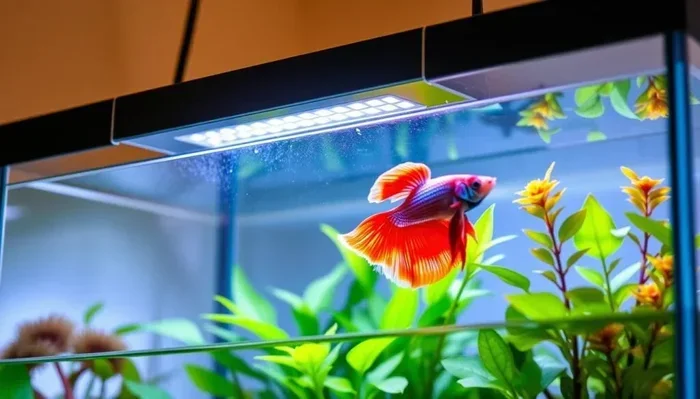
- Morning: Turn on the tank light for 1-2 hours to simulate sunrise.
- Daytime: Keep the light on for 8-10 hours total.
- Evening: Dim the lights or turn them off gradually over 30 minutes.
- Night: Keep the tank completely dark for 12-16 hours.
This cycle gives your betta enough light to stay active and feed during the day. It also provides ample darkness for restful sleep at night. A timer plug works great for automating this schedule. You set it and forget it, and your betta stays on a healthy rhythm.
What Happens With Too Much Light
Leaving the aquarium light on 24/7 is a common mistake. Too much light causes algae to bloom in the tank. It also stresses your betta fish out. A constantly lit environment tricks your betta into thinking it is always daytime, which disrupts their sleep.
Stressed bettas are more prone to health issues. You might notice clamped fins, loss of appetite, or faded colors. Too much light is just as harmful as too little. Balance is the key to a thriving betta.
What Happens With Too Little Light
On the flip side, keeping your betta in a dark room all the time is not good either. Your betta needs light to maintain its vibrant colors. Light also supports the growth of beneficial plants if you have any in the tank.
A lack of light can make your betta lethargic and depressed. They may stop eating or become less interested in their surroundings. If your tank is in a dark corner of the room, consider adding a basic aquarium light on a timer. Your betta will thank you with brighter colors and more energy.
Do Betta Fish Need Light at Night?
The short answer is no. Betta fish do not need any light at night. In fact, they prefer darkness when they sleep. Adding a night light to the tank serves no real benefit for your fish.
Some owners worry that total darkness makes their betta feel unsafe. But remember, bettas in the wild experience natural darkness every single night. They have evolved to handle it just fine. Your tank should mirror those natural conditions as closely as possible.
If you have live plants in your tank, some low-light plants can survive without extra illumination at night. However, most aquarium plants do not need light 24/7 either. A dark period actually benefits the overall tank ecosystem by allowing plants to rest and reset.
Common Mistakes Bettas Owners Make With Lighting
Even well-meaning betta owners make lighting mistakes. Here are some of the most common ones and how to avoid them.
Using Room Lighting as Tank Lighting
Placing your betta tank near a window might seem like a good idea. Natural light does look nice. But direct sunlight causes temperature swings and algae explosions. Room lighting is not a substitute for proper aquarium lighting. Use a dedicated tank light that you can control.
Ignoring the Dark Period
Some owners get so excited about their betta that they forget to turn the lights off. They want to watch their fish all the time. But your betta needs that dark period to recharge. Make it a habit to turn off the lights at the same time every evening. Your betta will develop a healthy routine.
Overthinking Darkness
It is easy to worry that your betta is uncomfortable in the dark. You might feel tempted to leave a small lamp on. Resist that urge. Your betta is perfectly fine in a dark room at night. Trust their natural instincts. They have survived in dim, dark waters for thousands of years.
How Darkness Affects Betta Fish Health
Darkness plays a bigger role in your betta’s health than you might think. It is not just about sleep. The right amount of darkness affects nearly every aspect of your fish’s well-being.
Stress Reduction
A dark, quiet environment helps reduce stress in betta fish. Stress is the number one killer of pet bettas. When your betta feels safe and secure, their immune system stays strong. They are less likely to get sick, eat better, and display natural behaviors.
If you have a busy household, consider where you place the tank. A spot with natural light during the day but full darkness at night is ideal. Avoid high-traffic areas where lights are on all the time or where noise and vibration are constant.
Color Enhancement
You might not expect it, but darkness actually helps bring out your betta’s colors. During the day, light makes colors pop. At night, darkness allows the pigments in your betta’s scales to recover and reset. This cycle of light and dark keeps your betta looking its best.
Bettas kept in constant light often look washed out over time. Their colors fade because the pigments never get a chance to rest. A proper dark period is like a beauty sleep for your betta and it shows in their appearance.
Disease Prevention
A well-rested betta fights off illness better than a sleep-deprived one. Darkness allows your fish’s body to repair cells and strengthen its defenses. This is especially important during colder months when betta fish eat less in the winter and their metabolism slows down further.
If your betta is recovering from an illness, maintaining a strict light-dark cycle becomes even more important. Rest and darkness give your fish the best chance to bounce back quickly and fully.
Expert Tips for Managing Your Betta’s Light Environment
Want to take your betta’s lighting setup to the next level? Here are some expert-backed tips that make a real difference.
- Use a timer: An inexpensive outlet timer automates your light schedule perfectly. Set it and never worry about forgetting to turn the lights on or off.
- Choose full-spectrum LED lights: These mimic natural sunlight and bring out your betta’s colors beautifully. They also run cool and save energy.
- Dim the lights gradually: Abrupt light changes startle bettas. Use a dimmer or slowly adjust the light over 20-30 minutes at the start and end of the day.
- Observe your betta’s behavior: If your betta hides a lot during the day, the light might be too bright. If they stay awake at night, the dark period might not be long enough.
- Consider live plants: Plants like java moss and anubias thrive in low light and create natural shaded areas where your betta can rest during the day.
Remember, every betta is a little different. Some are more active during the day, while others seem more lively at dusk. Pay attention to your individual fish and adjust the schedule as needed. The goal is a happy, healthy betta that shows off its full colors and natural behaviors.
Final Thoughts
So, are betta fish okay in the dark? Yes, they absolutely are. Darkness is a natural and essential part of your betta’s daily routine. It supports their sleep, reduces stress, enhances their colors, and boosts their overall health. The key is balance. Your betta needs both light and dark periods to truly thrive.
Are betta fish okay in the dark at night? Without a doubt. They are designed to rest in darkness. But keeping them in total darkness 24 hours a day is a different story. That is where the problems start. Aim for a consistent 8-12 hours of light and 12-16 hours of darkness, and your betta will live a long, healthy, and colorful life.
Take a moment today to check your tank’s lighting setup. Make sure you have a reliable schedule in place. Your betta fish will reward you with vibrant colors, active behavior, and a strong appetite. A little attention to lighting goes a long way in keeping your betta happy and healthy for years to come.
Frequently Asked Questions
Are betta fish okay in the dark at night?
Yes, betta fish are perfectly fine in the dark at night. In fact, they need darkness to sleep and rest properly. A dark tank at night mimics their natural habitat and supports their overall health and well-being.
Can betta fish see in the dark?
Betta fish have limited night vision and can see somewhat in low light. However, they cannot see well in complete darkness. They rely on their other senses, like their lateral line, to navigate when it is fully dark.
Do betta fish need light at night?
No, betta fish do not need any light at night. They prefer complete darkness for sleeping. Adding a night light can actually disrupt their sleep cycle and cause unnecessary stress. Keep the tank dark at night for the best results.
What happens if you leave a betta fish in the dark too long?
Prolonged darkness without any light can make a betta fish lethargic and dull in color. They need light during the day to maintain their vibrant colors and energy levels. A balanced light-dark cycle is essential for their health.
Can betta fish be kept in a dark room?
Betta fish can live in a dark room as long as they still get a proper light-dark cycle. A dark room with no light source at all is not ideal. Use a basic aquarium light on a timer to give your betta the right amount of light each day.
Are betta fish afraid of the dark?
No, betta fish are not afraid of the dark. They are naturally adapted to low-light environments and feel safe in darkness at night. If your betta seems stressed at night, it is likely due to sudden changes in lighting or noise rather than the darkness itself.