Are Betta Fish Happy in a Small Tank

Are betta fish happy in a small tank? The answer is more nuanced than you think. While bettas can survive in small tanks, true happiness requires proper setup, regular maintenance, and enough space to swim. This guide covers everything you need to know about keeping your betta content in a small aquarium.
You love your betta fish. You want the best for them. But let us be honest, not everyone has space or budget for a huge aquarium. So the real question is, are betta fish happy in a small tank?
This is a question many betta owners ask, especially beginners. Maybe you live in a dorm room. Or maybe you just want a simple setup on your desk. Whatever the reason, the answer matters. Because a happy fish is a healthy fish. And a stressed fish leads to problems you do not want to deal with.
The truth is, betta fish are more adaptable than most people think. They are often sold in tiny cups at pet stores, which makes it seem like they need almost nothing. But surviving and thriving are two very different things. In this guide, we will break down exactly what makes a small tank work for your betta, what signs to watch for, and how to avoid the mistakes that leave fish unhappy.
Key Takeaways
- Betta fish can live in small tanks: But happiness depends on tank setup, water quality, and enrichment.
- A 2.5-gallon tank is the minimum: Smaller tanks are harder to maintain and can cause stress.
- Watch for behavioral signs: A happy betta swims actively, builds bubble nests, and shows vibrant colors.
- Regular water changes are critical: Small tanks accumulate toxins faster, so consistent maintenance is a must.
- Enrichment matters: Plants, hides, and gentle filtration make a small tank feel like a natural habitat.
- Avoid common mistakes: Overcrowding, skipping filter maintenance, and poor water quality ruin small tank setups.
📑 Table of Contents
What Does It Mean for a Betta Fish to Be Happy?
Before we dive into tank sizes, let us talk about what happiness actually looks like for a betta fish. These are not just colorful decorations swimming around. They are living creatures with needs, behaviors, and personalities.
A happy betta fish shows certain signs. Their colors are bright and vivid. They swim with energy and curiosity. A male betta might build a bubble nest, which is a great sign of comfort and readiness. They respond to you at the tank. They explore their space instead of hiding all the time.
Now think about the opposite. An unhappy betta might look pale. They may stay at the bottom of the tank or float listlessly. They might refuse food or show clamped fins, which means their fins are held close to their body. These are clear signals that something in their environment is not right.
So when we ask if are betta fish happy in a small tank, we really need to look at whether the tank setup supports natural behaviors. A tiny bowl with no filter and no plants is very different from a well-planned small aquarium.
The Role of Tank Size in Betta Happiness
Tank size plays a huge role. But it is not just about the numbers on the side of the tank. It is about water stability. A larger tank gives you more room for error because the water parameters change more slowly. In a small tank, even small mistakes can spike ammonia levels quickly. That creates a stressful environment for your fish.
Most experts agree that a minimum tank size for betta fish is 2.5 gallons. Some say 5 gallons is even better. And yes, can betta fish live in a small tank is a common question, and the answer is yes, but with important caveats. The tank must be filtered, heated, and cleaned regularly. A small aquarium that meets these needs can absolutely support a happy betta.
The Truth About Small Tanks for Betta Fish
Let us clear up some myths. Many people believe betta fish are lazy or simple creatures that do not need much space. This comes from the way they are sold in stores. You see them in tiny cups or small containers and assume that is all they need. That is a big misconception.
Betta fish in the wild live in rice paddies, slow-moving streams, and floodplains in Southeast Asia. These environments are not tiny. They have plenty of room to explore, hunt for food, and establish territory. So when we put a betta in a cramped bowl, we are not giving them their natural habitat.
That said, a properly maintained small tank can still work. The key is understanding the limitations and working within them. If you keep your tank under 5 gallons, you need to be extra diligent about water changes and quality checks. Can a betta fish live in a small tank long-term? Yes, but the setup has to be right.
Small Tank vs. Large Tank: What Changes?
Here is a quick comparison to help you understand the differences.
- Water Stability: Larger tanks hold stable parameters longer. Small tanks fluctuate faster, which stresses fish.
- Maintenance Frequency: A small tank needs more frequent water changes, sometimes weekly or even twice a week.
- Filtration Needs: A small tank still needs a gentle filter. Bettas do not like strong currents, but they do need clean water.
- Temperature Control: Small tanks lose heat faster, so a reliable heater is even more important in a small aquarium.
- Space for Enrichment: You can still add plants, caves, and hides in a small tank. But you have less room to work with.
The takeaway is clear. A small tank is not a free pass to skip care. It actually requires more attention in many ways. But with the right approach, your betta can absolutely thrive.
Signs Your Betta Fish Is Happy (or Unhappy)
How do you know if your fish is actually content? You watch closely. Bettas communicate through behavior, and once you learn the signs, it becomes much easier to read how they are feeling.
Signs of a Happy Betta
- Bright, vibrant colors: A happy betta displays rich reds, blues, and greens. Dull coloring often signals stress or illness.
- Active swimming: Your betta moves around the tank with purpose. They explore, hover, and glide gracefully.
- Bubble nest building: Male bettas build bubble nests when they feel safe and comfortable. This is one of the best signs.
- Healthy appetite: A happy betta gets excited at feeding time and eats readily.
- Relaxed fins: Fins are spread out and flowing, not clamped tight against the body.
Signs of an Unhappy Betta
- Hiding or staying in one spot: If your betta refuses to move around, something is wrong.
- Loss of color: Fading or pale colors are a red flag.
- Clamped fins: Fins held close to the body indicate stress or discomfort.
- Loss of appetite: Refusing food is a serious warning sign.
- Lethargy: Floating at the top or sitting at the bottom without movement is concerning.
If you notice unhappy signs, the first thing to check is your water quality. Ammonia and nitrite should always be at zero. Nitrate should stay below 20 ppm. In a small tank, these parameters can shift fast, so testing the water regularly is essential.
How to Set Up a Small Tank for Maximum Happiness
Now that you understand the basics, let us talk about how to actually set up a small tank so your betta is genuinely happy. This is where the real work comes in, and it is worth it.
Choose the Right Tank
Start with the largest tank you can realistically manage. A 2.5-gallon tank is the absolute minimum. A 5-gallon tank gives you much more breathing room. If you have space, go bigger. The extra space makes maintenance easier and gives your betta room to explore.
Make sure the tank has a lid. Bettas are jumpers, and they can escape through even small openings. A lid also helps maintain humidity and temperature.
Add Gentle Filtration
You might wonder, do betta fish have to be in a filtered tank. The short answer is yes. Filtration keeps the water clean and removes harmful toxins. But bettas are weak swimmers, so you need a gentle filter. Sponge filters work great for small tanks. They provide mechanical and biological filtration without creating a strong current.
Check if you can use a filter in a betta tank before buying one. Some hang-on-back filters are too powerful for small setups. Adjust the flow or baffle it with a sponge to keep the water moving gently.
Keep the Water Warm and Clean
Bettas are tropical fish. They need water temperatures between 76 and 82 degrees Fahrenheit. A small tank loses heat quickly, so a reliable submersible heater is non-negotiable. Pair it with a small thermometer to monitor the temperature daily.
For water changes, aim to replace 25 to 50 percent of the water every week in a small tank. Use a gravel vacuum to remove waste from the substrate. Always treat new water with a conditioner to remove chlorine and chloramine. Can you use tap water in a betta fish tank? Yes, but only after treating it properly.
Add Plants and Decorations
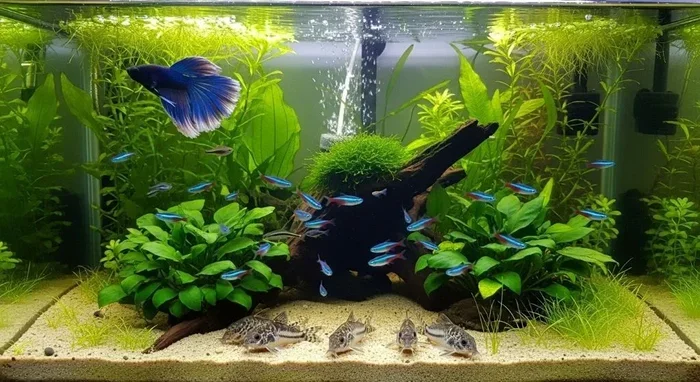
Enrichment is crucial for betta happiness. Live plants are the best option because they help absorb nitrates and produce oxygen. Java moss, Amazon sword, and anubias are great choices for small tanks. If live plants are not an option, silk plants work well too.
Add hiding spots like caves, driftwood, or coconut shells. Bettas like to claim territory and feel secure. A well-decorated tank reduces stress and encourages natural behavior. Just make sure there is enough open swimming space too.
You can also consider adding lucky bamboo or other safe plants. Just make sure whatever you add is non-toxic and does not alter the water chemistry in harmful ways.
Feed a Balanced Diet
Happiness starts with good nutrition. Feed your betta a varied diet of high-quality pellets, frozen bloodworms, and brine shrimp. Avoid overfeeding, which can pollute the water quickly in a small tank. A few pellets twice a day is usually enough.
Common Mistakes People Make with Small Tanks
Even well-meaning betta owners make mistakes. Here are the most common ones and how to avoid them.
Skipping Water Changes
This is the number one mistake. Small tanks accumulate waste fast. If you skip water changes, ammonia builds up quickly. This poisons your fish slowly over time. Set a schedule and stick to it. Your betta will be healthier and more active.
Overcrowding the Tank
A small tank is not the place for multiple fish. Bettas are territorial, and adding other fish can cause aggression and stress. Some people ask, can you have other fish in a betta tank. The answer is sometimes, but in a small tank, it is usually best to keep your betta alone.
Using the Wrong Substrate or Decorations
Avoid rough or sharp substrates that can damage your betta’s delicate fins. Also, stay away from decorations with small openings that your fish could get stuck in. Smooth gravel or sand is a safe choice for most setups.
Ignoring Water Temperature
Cold water slows down a betta’s metabolism and makes them sluggish. Room temperature is almost never warm enough. Always use a heater designed for the size of your tank.
Expert Tips for Keeping Betta Fish Happy in Small Spaces
Want to go the extra mile? Here are some expert-backed tips that make a real difference in your betta’s quality of life.
- Observe your fish daily: Spend a few minutes each day watching your betta. You will notice changes in behavior early, which helps you catch problems before they become serious.
- Do not skip filter maintenance: A clogged filter does nothing. Rinse filter media in old tank water (not tap water) once a month to preserve beneficial bacteria.
- Provide mental stimulation: Bettas get bored in plain tanks. Add variety with plants, caves, and even a mirror for short periods to encourage natural behaviors.
- Keep a consistent routine: Bettas thrive on predictability. Feed them at the same times, do water changes on schedule, and maintain stable parameters.
- Research before adding anything: Whether it is plants, substrate, or tank mates, always check if it is safe for bettas. Some items can release harmful chemicals or alter pH.
If you ever feel unsure, remember that are betta fish happy in a small tank depends mostly on how well you care for them. A 3-gallon tank with a sponge filter, heater, live plants, and regular maintenance can absolutely be a happy home. It is all about the effort you put in.
Also, keep in mind that betta fish in small tanks are more sensitive to changes in their environment. This means you need to be proactive, not reactive. Test your water weekly. Watch your fish every day. Make adjustments before problems arise. Prevention is always easier than treatment.
Many people also ask, can betta fish live in a tank without a filter. While bettas can technically survive in unfiltered tanks, it requires very frequent water changes and close monitoring. A filter makes life easier for both you and your fish. It also helps maintain the stable conditions that keep your betta stress-free.
Another common question is whether bettas get bored in a tank. The answer is yes, they can. A bare-bottom tank with nothing to explore will eventually bore a betta. That is why enrichment, even in a small setup, is so important. Plants, gentle flow, and visual variety all contribute to a more stimulating environment.
Conclusion
So, are betta fish happy in a small tank? The honest answer is yes, they can be. But happiness in a small tank is not automatic. It requires the right setup, consistent maintenance, and a genuine commitment to your fish’s well-being.
A small aquarium can be a beautiful, thriving home for your betta when done correctly. Choose a tank that is at least 2.5 gallons, add gentle filtration, keep the water warm and clean, and enrich the environment with plants and decorations. Watch for signs of happiness and unhappiness, and adjust as needed.
Your betta fish depends on you for everything. They cannot change their environment or escape poor conditions. That means you are their entire world. And when you put in the effort to create a happy, healthy space, even a small one, the reward is a vibrant, active, and content fish that brings joy to your home every single day.
Take what you have learned here and put it into action. Your betta will thank you with bright colors, energetic swimming, and maybe even a beautiful bubble nest. That is the real sign that you have done things right.
Frequently Asked Questions
Can betta fish be happy in a 2-gallon tank?
Yes, betta fish can be happy in a 2-gallon tank if it is properly set up with a filter, heater, and regular water changes. A 2-gallon tank is on the smaller side, so you will need to stay on top of maintenance to keep water quality stable and your betta comfortable.
What is the best small tank size for a betta fish?
The best small tank size for a betta is 5 gallons, but a 2.5-gallon tank works well too. Tanks under 2.5 gallons are very difficult to maintain and can cause stress. The larger the tank, the easier it is to keep parameters stable, which directly affects your betta’s happiness.
Do betta fish get bored in a small tank?
Yes, betta fish can get bored in a small tank if it lacks enrichment. Adding plants, caves, and gentle water flow helps keep them mentally stimulated. Without these elements, a betta may become lethargic or show signs of stress over time.
Can a betta fish live in a small tank without a filter?
A betta can survive in a small tank without a filter, but it is not ideal. Without filtration, you will need to perform water changes much more frequently, sometimes every few days. A gentle sponge filter makes maintenance easier and keeps the water cleaner for a happier fish.
How often should I clean a small betta tank?
You should do a 25 to 50 percent water change in a small betta tank every week. Smaller tanks accumulate waste faster, so consistency is key. Use a gravel vacuum during water changes and always treat new water with a conditioner before adding it to the tank.
Are betta fish happy in a bowl?
Most bettas are not truly happy in a bowl. Bowls are typically too small, lack filtration, and have poor temperature control. While a betta might survive in a bowl, they are much more likely to thrive in a properly equipped small tank with a filter, heater, and regular maintenance.