Are Betta Fish Better Alone

Are betta fish better alone? The short answer is yes. Betta fish thrive when kept solo because of their territorial nature and natural aggression toward other fish. This guide covers why bettas do better alone, how to set up the ideal solo betta tank, and what to do if you want to add tank mates safely.
Have you ever wondered if are betta fish better alone is actually true? Many new fish owners assume that bettas need company. After all, we are social creatures, and it feels kind to share a home. But the reality is quite different. Betta fish are solitary animals by nature, and forcing them into shared spaces can cause serious harm. This article breaks down everything you need to know about solo betta living, from behavior to tank setup and beyond.
If you are thinking about getting a betta or already have one, understanding their need for space is crucial. Betta fish do better alone not because they are unfriendly, but because their biology drives them to defend territory. The good news is that a well-set-up solo tank can be a beautiful, low-maintenance home where your betta truly thrives. Let us dive into why that is the case.
Key Takeaways
- Betta fish are naturally solitary creatures and do best when kept alone in their own tank.
- Keeping two male bettas together almost always leads to fighting, stress, and serious injury.
- A proper solo tank setup with the right size, decorations, and water conditions keeps your betta healthy and happy.
- Some peaceful tank mates can work in larger tanks, but caution and research are essential.
- Signs of stress in bettas include faded colors, clamped fins, and loss of appetite.
- Regular water changes and monitoring are critical for solo betta health and longevity.
📑 Table of Contents
Why Are Betta Fish Better Alone?
The question of are betta fish better alone comes up constantly among new fish keepers. The answer lies deep in the natural history of these stunning creatures. Bettas, also known as Siamese fighting fish, originate from the warm, shallow waters of Southeast Asia. In the wild, they live in rice paddies, flood plains, and slow-moving streams. These environments are spread out, and bettas claim small patches of territory for themselves.
Because of this background, bettas are hardwired to be solitary. They do not seek out companions. Instead, they guard their space against intruders. This territorial instinct is not something you can train out of them. It is built into their DNA. When you keep betta fish alone, you are respecting their natural way of life.
The Science Behind Solitary Living
Research on betta fish behavior shows that these fish release stress hormones when forced to share space. Cortisol levels rise, which weakens the immune system. Over time, a stressed betta becomes more prone to disease, loss of color, and lethargy. A solo betta in a proper tank shows calmer behavior, brighter colors, and a longer lifespan.
Many people also ask, are betta fish okay alone? Absolutely. In fact, most experts agree that a solo setup is the safest and healthiest option. A single betta in a well-maintained tank will display natural behaviors like exploring, building bubble nests, and interacting with decorations. These are signs of a happy, content fish.
Understanding Betta Fish Behavior
To truly appreciate why betta fish do better alone, you need to understand their behavior. Bettas are not just pretty fish with flowing fins. They are complex creatures with strong instincts. Let us look at what drives their actions and how you can read the signs they give you.
Territorial Nature and Aggression
Betta fish are famous for their aggression, especially males. The name “fighting fish” is not an exaggeration. In the wild, male bettas will fight other males to defend their territory. This is not playful behavior. It is a serious matter that can result in injury or death in confined spaces.
Even in a home aquarium, two male bettas will almost never coexist peacefully. The are betta fish meant to be alone question is closely tied to this territorial nature. When you house two males together, one will almost always dominate and bully the other. The subordinate fish suffers from chronic stress, which leads to health problems over time.
Signs of Stress in Group Settings
How do you know if your betta is stressed? Watch for these common signs:
- Faded or dull colors — a healthy betta should display vibrant hues.
- Clamped fins — fins held close to the body signal discomfort.
- Loss of appetite — refusing food is a major red flag.
- Hiding or lethargy — staying in one spot and avoiding activity.
- Rapid breathing — gasping at the surface more than usual.
If you notice any of these symptoms, your betta may be reacting to a stressful environment. In most cases, removing tank mates and giving your betta solo living space makes a dramatic difference within days.
The Ideal Solo Tank Setup
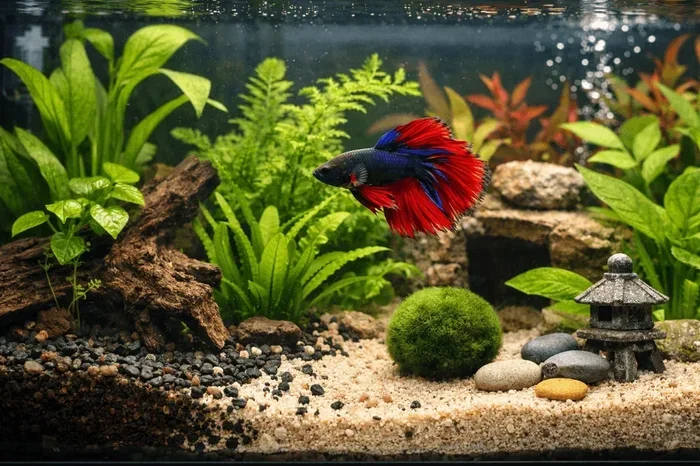
Now that you understand why betta fish are better alone, let us talk about how to create the perfect home. A solo tank is not just an empty bowl. It is a carefully designed habitat that meets all of your betta’s needs. The right setup promotes natural behavior and keeps your fish thriving for years.
Tank Size and Decor
Many beginners make the mistake of keeping a betta in a tiny bowl. While bettas can survive in small spaces, they do not thrive there. A tank of at least 5 gallons is the recommended minimum for a solo betta. This gives your fish room to swim, explore, and establish a comfortable territory.
When it comes to decor, less is more. Avoid sharp or rough objects that can tear delicate fins. Soft plants, smooth rocks, and gentle hiding spots work well. Live plants like java moss or anubias are excellent choices because they also help maintain water quality. Are spider plants safe for betta fish? That is a common question, and the answer is yes — spider plants can be a great addition to a betta tank.
Water Quality and Temperature
Bettas are tropical fish, so they need warm, clean water. The ideal temperature range is between 76 and 82 degrees Fahrenheit. A small heater designed for aquariums helps maintain a steady temperature. Sudden drops or spikes can shock your fish and lead to illness.
Water quality is just as important. Test the pH regularly — bettas prefer slightly acidic to neutral water, around 6.5 to 7.5. Weekly water changes of 25 to 30 percent keep toxins like ammonia and nitrite at safe levels. Are water filters necessary for betta fish? Yes, a gentle filter that does not create too much current is highly recommended. Bettas are weak swimmers and do not like strong flows.
| Parameter | Ideal Range |
|---|---|
| Temperature | 76–82°F |
| pH Level | 6.5–7.5 |
| Tank Size | 5+ gallons |
| Filter Flow | Low to moderate |
| Water Changes | 25–30% weekly |
Can Betta Fish Live With Other Fish?
While the answer to are betta fish better alone is a strong yes, some owners still want to try community tanks. The truth is that certain situations can work, but they require careful planning and a realistic understanding of risk.
Safe Tank Mates for Bettas
If you want to add companions to your betta tank, choose species that are peaceful and occupy different areas of the tank. Good options include:
- Snails — they stay at the bottom and do not bother bettas.
- Shrimp — ghost shrimp and cherry shrimp are generally safe.
- Small schooling fish — like ember tetras or corydoras in larger tanks.
Always monitor your betta closely when introducing any new tank mate. Signs of chasing or flaring mean the arrangement is not working, and you should separate the fish immediately.
Fish to Avoid
Some fish are a terrible match for bettas. Avoid these at all costs:
- Other male bettas — they will fight to the death in most cases.
- Brightly colored or long-finned fish — bettas may mistake them for rivals.
- Fin nippers — fish like tiger barbs can provoke and injure bettas.
- Large or aggressive species — these will intimidate or harm your betta.
Before adding any companion, research thoroughly. You can also explore are there other fish that can go with a betta for detailed recommendations on compatible species.
Common Mistakes When Keeping Bettas Together
Even well-meaning owners make mistakes when it comes to housing bettas together. Understanding these common errors helps you avoid them and keep your fish safe.
One of the biggest mistakes is assuming a divided tank is enough. Some pet stores sell double tanks with a divider. While this prevents direct contact, fish on both sides can still see and flare at each other. This constant stress affects both fish, even if they never touch.
Another mistake is underestimating how quickly aggression can escalate. Two bettas might seem calm at first, but a change in water conditions, a flash of color, or even a shadow can trigger a violent response. In a small or cramped tank, there is nowhere for the submissive fish to escape. This leads to exhaustion, injury, and sometimes death.
If you are unsure whether your setup is safe, remember this rule of thumb: when in doubt, go solo. A single betta in a properly maintained tank will live a longer, happier life than two stressed fish sharing a small space.
Expert Tips for a Happy Solo Betta
Keeping a single betta fish is simple once you know the basics. Here are some expert-backed tips that make a real difference in your fish’s quality of life.
- Give your betta a routine. Feed small amounts twice a day and maintain a consistent light schedule. Bettas thrive on predictability.
- Add enrichment. A mirror briefly placed near the tank can trigger natural flaring behavior, which provides mental stimulation. Just keep mirror sessions short.
- Watch for bubble nests. A male betta building a bubble nest is a sign of a happy, healthy fish. It shows he feels safe enough to prepare for spawning.
- Keep the tank clean but not sterile. A little natural algae growth is fine and even beneficial. You want a balanced ecosystem, not a completely sterile environment.
- Handle with care. Avoid tapping on the glass or making sudden loud noises near the tank. Bettas can become frightened by vibrations and sudden movements.
Following these tips ensures your solo betta stays active, colorful, and engaged with its environment. A happy betta is a joy to watch and a rewarding pet to care for.
The Bottom Line: Are Betta Fish Better Alone?
After exploring behavior, tank setup, and compatibility, the answer is clear. Are betta fish better alone? Yes, without a doubt. Betta fish are built to live solo. Their territorial instincts, stress responses, and natural habitat all point to solitary living as the healthiest choice.
A well-designed solo tank gives your betta everything it needs — space, warmth, clean water, and enrichment. You avoid the risks of aggression, disease, and chronic stress that come with shared housing. Whether you are a beginner or an experienced hobbyist, a solo betta setup is the most reliable path to a thriving, beautiful fish.
If you are curious about specific aspects of betta care, check out our guides on are betta fish okay alone and are you supposed to put betta fish with other fish for more in-depth information. Your betta will thank you with vibrant colors, energetic swimming, and a long, healthy life.
Frequently Asked Questions
Can two female betta fish live together?
Female bettas can sometimes live together in groups called sororities, but this setup requires a large tank of 10 gallons or more with plenty of hiding spots. Even then, there is no guarantee they will get along. Monitoring is essential, and you should be prepared to separate them if aggression occurs.
How long do solo betta fish live?
A well-cared-for solo betta can live between 3 and 5 years, and some even reach 7 years with excellent care. Providing a proper tank, balanced diet, and clean water are the key factors that contribute to a long and healthy lifespan.
Do betta fish get lonely?
No, betta fish do not experience loneliness the way humans do. They are solitary by nature and do not need companionship. In fact, forcing social interaction often causes more stress than comfort for your betta.
What is the best tank size for a solo betta?
A 5-gallon tank is the minimum recommended size for a single betta fish. Larger tanks, such as 10 gallons, provide even more swimming space and make it easier to maintain stable water conditions. Avoid tanks smaller than 3 gallons for long-term health.
Can a betta fish live with a goldfish?
No, bettas and goldfish should never be kept together. They require completely different water temperatures, and goldfish produce far more waste, which degrades water quality quickly. This combination almost always leads to health problems for both fish.
Why does my betta flare at its own reflection?
Betta fish flare at reflections because they perceive another male betta invading their territory. This is a natural territorial response. While occasional flaring can provide mental stimulation, prolonged exposure to a reflection causes stress and exhaustion. Use a timer or limit mirror sessions to a few minutes at a time.
=== CONCLUSION ===
Are betta fish better alone? The evidence is overwhelming. Keeping your betta fish solo is the best decision for its health, happiness, and longevity. By understanding their territorial nature, setting up a proper tank, and avoiding common mistakes, you create an ideal environment where your betta can truly flourish. Enjoy the journey of being a betta owner, and remember — your fish is happier on its own than you might think.