Can you put betta fish in a community tank safely
Yes, you can put betta fish in a community tank, but it requires careful planning and the right tank mates. Betta fish temperament varies by individual, so not every betta will thrive with other fish. Success depends on tank size, water quality, and choosing peaceful species that won’t trigger aggression.
Key Takeaways
- Betta personality matters: Some bettas are docile while others are highly aggressive, so observe your fish before adding tank mates.
- Tank size is critical: A minimum of 10 gallons reduces territorial behavior and gives fish space to establish boundaries.
- Choose peaceful companions: Tetras, rasboras, and Corydoras make good tank mates for bettas in a community setup.
- Avoid fin nippers: Tiger barbs and some tetras will nip betta fins, causing stress and injury.
- Setup matters: Live plants, hiding spots, and proper filtration create a calm environment for all fish.
- Monitor closely: Watch for signs of stress like clamped fins, hiding, or flaring after introducing new fish.
📑 Table of Contents
- Can You Put Betta Fish in a Community Tank Safely?
- Understanding Betta Fish Temperament
- Choosing the Right Tank Size
- Best Tank Mates for Betta Fish
- Setting Up a Community Tank
- Introducing Your Betta to the Tank
- Signs Your Betta Is Stressed
- Common Mistakes to Avoid
- Expert Insights on Betta Community Tanks
- Final Thoughts
Can You Put Betta Fish in a Community Tank Safely?
Many fish owners dream of a vibrant aquarium filled with colorful fish swimming together. The idea of adding a betta fish to a community tank sounds appealing, but it comes with real challenges. Betta fish, also known as Siamese fighting fish, have a reputation for being aggressive. This reputation makes many owners wonder if a community tank is even possible.
The short answer is yes, but with important caveats. Putting betta fish in a community tank works when you understand their needs and choose compatible tank mates. Some bettas live peacefully with other fish for years, while others attack anything that moves. This guide covers everything you need to know to make it work safely.
You will learn about betta temperament, tank setup requirements, the best tank mates, and warning signs to watch for. By the end, you will know whether your betta is a good candidate for community living. Let us dive into the details.
Understanding Betta Fish Temperament
Betta fish originate from the rice paddies and slow-moving streams of Southeast Asia. In the wild, they are territorial but not constantly fighting. They defend their space against rivals, especially males. This natural behavior shapes how they act in captivity.
Why Bettas Can Be Aggressive
Male bettas have long, flowing fins and bright colors. These traits make them targets for aggression from other males. In pet stores, bettas often live in small cups where they see their reflection constantly. This stresses them out and can make them more aggressive.
Female bettas tend to be less aggressive than males. A group of female bettas, called a sorority, can sometimes live together. However, this requires a large tank with many hiding spots. Even then, conflicts can break out.
Individual Personality Matters
Every betta has a unique personality. Some bettas are calm and ignore other fish. Others flare at everything and chase tank mates. You cannot judge a betta’s temperament by its color or fin type alone.
Watch your betta for a few days before adding tank mates. Does it flare at its own reflection? Does it chase food eagerly or hide constantly? A relaxed betta that eats well and explores the tank is a better candidate for community living.
Choosing the Right Tank Size
Tank size makes or breaks a community setup. A small tank amplifies aggression because fish cannot escape conflicts. A larger tank gives everyone space to establish territories without constant confrontation.
Minimum Tank Requirements
For a betta community tank, aim for at least 10 gallons. A 5-gallon tank is the bare minimum for a single betta, but adding other fish requires more room. Here is a simple breakdown:
- 10 gallons: One betta plus a few small peaceful fish
- 20 gallons: One betta plus a small school of tetras or rasboras
- 30+ gallons: More options for diverse tank mates
Larger tanks also stabilize water parameters better. Ammonia spikes happen faster in small tanks, which stresses all inhabitants. A stable environment reduces aggression and keeps fish healthy.
Why Bigger Is Better
A bigger tank gives you more flexibility. You can place decorations and plants to break sight lines. This helps reduce territorial disputes because fish cannot see each other constantly. Live plants also provide hiding spots for weaker fish to escape aggression.
Best Tank Mates for Betta Fish
Choosing the right tank mates is the most critical step. Some fish provoke bettas, while others ignore them completely. Focus on peaceful species that occupy different water levels.
Peaceful Community Fish
These fish generally coexist well with bettas:
- Neon tetras: Small, colorful, and stay in the middle water column
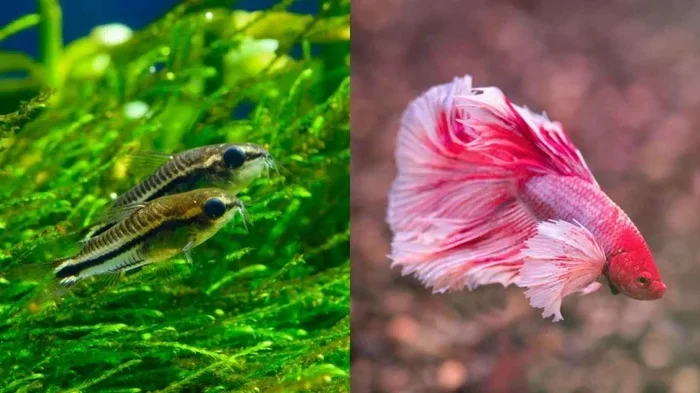
- Corydoras catfish: Bottom dwellers that clean up leftover food
- Mystery snails: Help with algae control and ignore bettas
- Amano shrimp: Excellent algae eaters, though bettas may hunt smaller shrimp
- Harlequin rasboras: Schooling fish that stay peaceful and active
Fish to Avoid
Some fish will trigger aggression or become victims. Avoid these species:
- Tiger barbs: Fin nippers that will tear betta fins
- Guppies: Long fins resemble rival bettas, triggering attacks
- Other male bettas: Never house two male bettas together
- Cichlids: Too aggressive and will bully bettas
- Goldfish: Different water temperature needs and messy eaters
Always research any new fish before adding it to your tank. Consider the adult size, temperament, and water parameter requirements.
Setting Up a Community Tank
A proper setup reduces stress and prevents conflicts. Your goal is to create a tank where every fish has its own space and resources.
Filtration and Water Quality
A good filter keeps water clean and reduces ammonia levels. Betta fish hate strong currents, so choose a filter with an adjustable flow. Sponge filters work well for community tanks because they provide mechanical and biological filtration without creating a strong current.
Test water parameters weekly. Bettas prefer temperatures between 78 and 80 degrees Fahrenheit. pH should stay between 6.5 and 7.5. Ammonia and nitrite must stay at zero. Nitrates should be below 20 ppm.
Plants and Hiding Spots
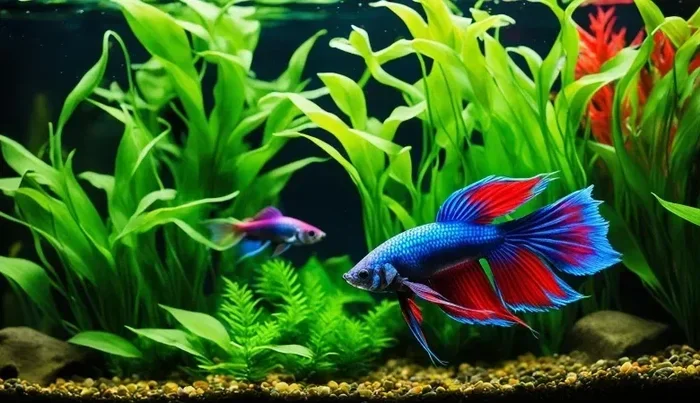
Live plants like java fern, anubias, and amazon sword create natural barriers. They break up sight lines and give fish places to retreat. Floating plants like duckweed or frogbit dim the light and make shy fish feel safer.
Add caves, driftwood, and clay pots as hiding spots. These decorations give territorial fish places to claim without fighting. A well-decorated tank with plenty of hiding spots leads to fewer conflicts.
Introducing Your Betta to the Tank
How you introduce your betta matters as much as which tank mates you choose. Rushing this process often leads to disaster.
Quarantine First
Keep new fish in a separate quarantine tank for two weeks. This prevents disease outbreaks and lets you observe the fish for signs of illness. Treat any health issues before adding the fish to the main tank.
Monitoring Behavior
When you first add tank mates, watch closely for the first few hours. Some flaring is normal, but constant chasing or nipping requires intervention. Separate aggressive fish immediately if injuries occur.
Feed bettas and tank mates separately at first. This reduces competition and ensures everyone gets enough food. Use a feeding ring or target feeding to give your betta its share without other fish stealing it.
Signs Your Betta Is Stressed
Even with the best planning, things can go wrong. Watch for these warning signs that your betta is not coping with community life.
Warning Signs to Watch For
- Clamped fins: Fins held close to the body indicate stress or illness
- Hiding constantly: A betta that hides all day may feel threatened
- Loss of color: Bettas fade when stressed or sick
- Refusing food: Stress can cause appetite loss
- Flaring at tank mates: Constant flaring wears down your betta
What To Do If Things Go Wrong
If aggression continues despite your efforts, separate the fish. A betta solo in a decorated tank is happier than a stressed betta in a community setup. Do not feel guilty about removing a fish. Sometimes a single-species tank is the best choice for that individual betta.
Common Mistakes to Avoid
Many owners make preventable errors when setting up a betta community tank. Avoid these pitfalls for better results.
- Too small a tank: Under 10 gallons increases aggression and water quality problems
- Adding too many fish at once: Introduce fish gradually to monitor interactions
- Ignoring water changes: Weekly partial water changes keep parameters stable
- Overcrowding: Follow the one inch of fish per gallon rule as a guideline
- Skipping quarantine: New fish can introduce diseases that spread quickly
Expert Insights on Betta Community Tanks
Experienced aquarists agree that success depends on the individual betta. Some bettas thrive in community tanks for years. Others do best alone. The key is observing your fish and adjusting accordingly.
Betta fish are intelligent and curious. They recognize their owners and respond to feeding routines. This intelligence means they need mental stimulation, which a well-planned community tank can provide. Live plants, varied terrain, and compatible tank mates create an enriching environment.
Remember that betta care does not end with adding tank mates. Regular maintenance, water testing, and observation remain essential. A community tank requires more effort than a single-species tank, but the rewards are worth it when everything works.
Final Thoughts
Putting betta fish in a community tank safely is achievable with the right approach. Choose a large enough tank, pick peaceful tank mates, and monitor behavior closely. Not every betta will enjoy community life, and that is okay.
Start with a well-established tank and introduce fish slowly. Watch for warning signs and be ready to adjust your plan. A successful community tank brings joy and creates a fascinating underwater landscape in your home.
Take your time, do your research, and trust your observations. Your betta will tell you if the arrangement works through its behavior and overall health. A happy, colorful betta swimming peacefully with tank mates is a beautiful sight worth the effort.
Frequently Asked Questions
Can all betta fish live in a community tank?
No, not all bettas can live with other fish. Some bettas are too aggressive and will attack tank mates. Observe your betta’s behavior before adding companions. A calm betta that does not flare constantly is a better candidate for community living.
What is the best tank size for a betta community?
A 10-gallon tank is the minimum for a betta community. Larger tanks, like 20 gallons, provide more stability and space. Bigger tanks reduce territorial disputes and make water maintenance easier.
How many tank mates can I add with one betta?
Start with 3 to 5 peaceful tank mates in a 10-gallon tank. Add fish gradually and watch for aggression. Overcrowding increases stress and territorial behavior, so keep numbers moderate.
Will betta fish eat shrimp in a community tank?
Betta fish may hunt small shrimp, especially cherry shrimp. Amano shrimp are too large for most bettas to eat. Provide plenty of hiding spots with plants and caves to protect shrimp.
How long does it take to introduce betta fish to a community tank?
The introduction process takes several hours to days. Use drip acclimation to match water parameters. Monitor behavior closely for the first week and be ready to separate fish if aggression occurs.
Can female bettas live together in a community tank?
Female bettas can live in a sorority of 5 or more in a 20-gallon tank. Provide plenty of hiding spots and live plants. Watch for bullying and remove aggressive individuals immediately.