Can Multiple Betta Fish Be in the Same Tank

No, you generally cannot keep multiple male betta fish together due to their extreme territorial aggression. However, carefully managed all-female groups (sororities) are possible with a very large, heavily planted tank. Even then, it’s risky and not recommended for beginners. For almost all keepers, a single male betta per tank is the only safe and humane choice.
So you’ve fallen in love with the brilliant colors and flowing fins of the betta fish, also known as the Siamese fighting fish. You’ve got a beautiful tank, and you can’t help but think: wouldn’t it be stunning to have a group of them together? It’s a common and understandable dream. But before you even consider putting a second betta in that water, you need to understand one fundamental, immutable truth: male betta fish are solitary and fiercely territorial. The short, blunt answer to “can multiple betta fish be in the same tank” is: for males, almost never. For females, maybe, but only under a very specific, demanding, and still risky set of conditions. This guide will dismantle the myths and give you the unvarnished facts about betta compatibility.
Let’s be clear from the start. The nickname “Siamese fighting fish” isn’t a cute moniker; it’s a biological imperative. Centuries of selective breeding for combat have hardwired male bettas to view other males as existential threats to their territory and mating rights. In the wild, they would have miles of space to avoid each other. In your aquarium, they have nowhere to run. This guide will walk you through the science, the practicalities of tank setup, the narrow exceptions, and why, for 99% of hobbyists, the best and kindest tank is a betta-only tank.
Key Takeaways
- Male bettas are solitary: Two or more male bettas in the same tank will almost certainly fight to the death due to their intense territorial nature.
- Female sororities are high-risk: While all-female groups can sometimes work, they require a massive, expertly planted tank (minimum 40+ gallons) and constant monitoring for bullying.
- Tank size is non-negotiable: For any chance of success with multiple bettas, the tank must be significantly larger than a standard 5-gallon setup—think 40 gallons or more.
- Planted tanks are essential: Dense, live or silk plants provide critical visual barriers and break lines of sight, reducing stress and aggression.
- Introductions must be simultaneous: Adding all female bettas to a new sorority tank at the exact same time prevents established territories from forming.
- Community tanks require extreme caution: Betta fish can sometimes live with certain peaceful, fast-moving tank mates, but the betta is always the deciding factor in compatibility.
- There are no guarantees: Even with perfect setup, betta personalities vary. You must be prepared to separate fish immediately at the first sign of persistent aggression.
📑 Table of Contents
- The Unshakeable Reality: Betta Temperament & Biology
- Why a Single Male Betta is the Gold Standard
- The Sorority Tank: A High-Stakes Experiment for Experts
- Male-Female Pairs & “Breeding Tanks”: A Dangerous Misconception
- Community Tank Possibilities: The Betta as a “Community Member”
- Critical Mistakes & How to Avoid Them
- The Verdict: What Should You Do?
The Unshakeable Reality: Betta Temperament & Biology
To understand why multiple bettas are such a challenge, you must first understand the animal itself. Betta splendens is a member of the gourami family, and like its relatives, it possesses a specialized breathing organ called a labyrinth. This allows them to gulp air from the surface, a trait that hints at their natural habitat: shallow, warm, often oxygen-poor waters like rice paddies and slow-moving streams in Southeast Asia. These environments are crowded with plants, debris, and complex boundaries.
The Warrior’s Instinct: Flaring and Fighting
The most obvious sign of a betta’s aggression is “flaring”—when they puff out their gill covers and fins to appear larger. This is a threat display. In the presence of another male betta, this display escalates rapidly. They will lock jaws, bite fins, and tear at each other’s scales. These fights can last for hours and often result in severe injury or death. Even if one fish retreats, the stress of constant harassment can lead to a compromised immune system and eventual death from disease. This behavior is not “play”; it’s a lethal instinct. Females also have a pecking order and can be quite aggressive, though typically less explosively violent than males.
Gender Matters: A World of Difference
The single most important distinction in betta compatibility is gender. Male bettas are almost universally incompatible with other males. Their aggression is immediate, intense, and directed. Female bettas, on the other hand, have a more complex social structure. In the wild, they may live in loose groups with a loose hierarchy. This is the biological basis for the “sorority” tank—an all-female group. However, this does not mean female bettas are peaceful. They will establish a dominance hierarchy, often through sparring. The “alpha” female may bully others, nipping fins and guarding prime spots. A sorority is not a peaceful community; it’s a managed hierarchy that can collapse at any time.
Why a Single Male Betta is the Gold Standard
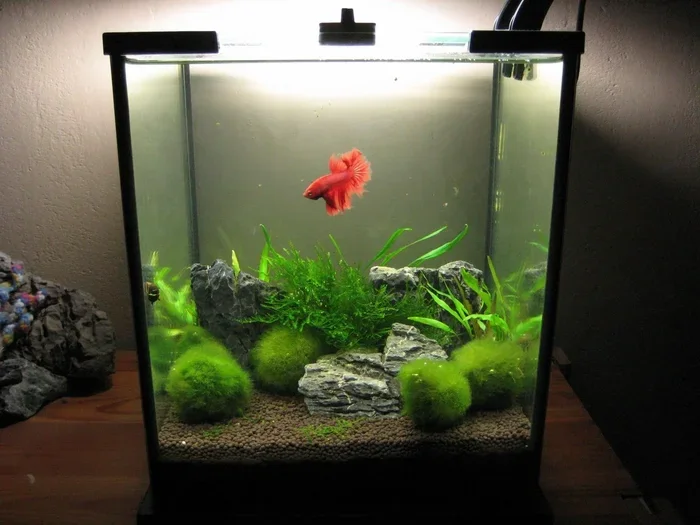
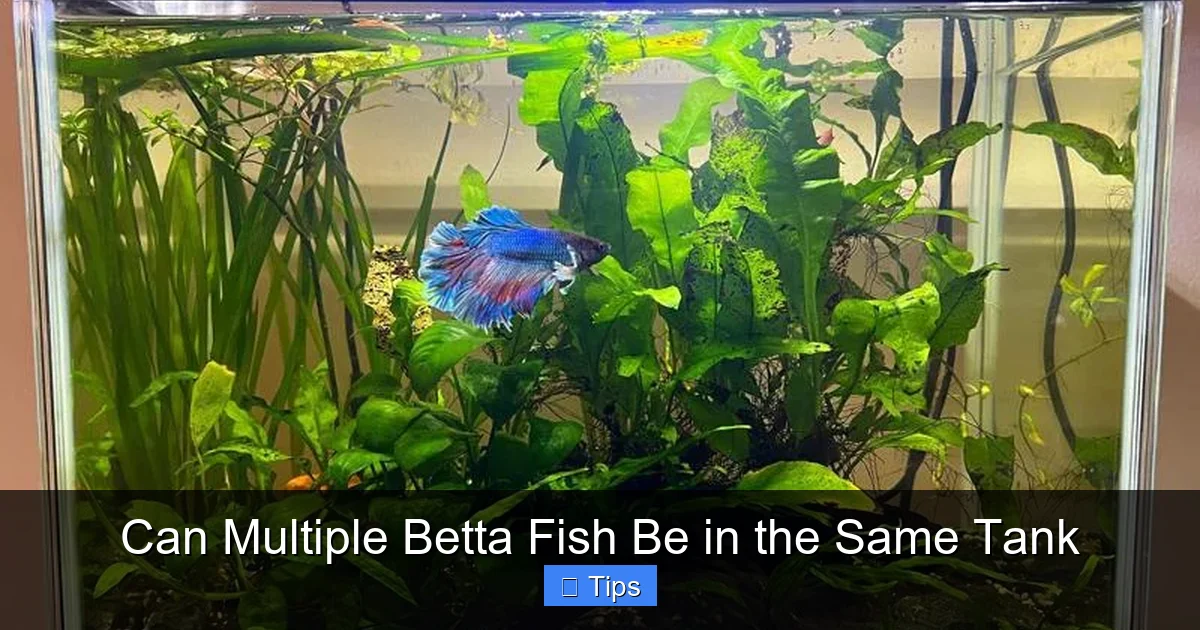
Given their nature, the single-male-in-a-solo-tank setup is not a compromise; it’s the ideal. It allows the betta to be the majestic, confident centerpiece he was bred to be, without the constant stress of a rival. A well-maintained 5-gallon tank (the absolute minimum) with a heater, filter, and hiding spots provides a perfect, stress-free life for a male betta. You will see his full personality—his curiosity, his response to you, his beautiful, relaxed displays. He will be healthy, vibrant, and live his full 3-5 year lifespan. Adding a tank mate, especially another male, guarantees a life of fear, injury, and likely an early death. It is simply inhumane.
Visual guide about Can Multiple Betta Fish Be in the Same Tank
Image source: sharksinfo.com
Debunking the “Divided Tank” Myth
A frequent question is: “Can I use a tank divider?” The technical answer is yes, you can install a solid divider that prevents visual and physical contact. However, this is a solution fraught with problems. Betta fish are incredibly perceptive. They will sense the other fish’s presence through water vibrations and chemical cues (pheromones). This alone can cause chronic stress, leading to faded colors, lethargy, and loss of appetite. Furthermore, dividers reduce the overall swimming space and filtration efficiency for each section. It’s a stressful band-aid, not a good home. If you want two bettas, you need two separate tanks.
The “Mirror” Test: A Warning Sign
Many betta owners use a mirror to stimulate their fish, watching him flare in what seems like a fun display. This is actually a highly stressful experience for the betta. He is seeing a rival and mounting a full-blown territorial defense response. If a mirror causes that much stress, imagine the chronic, 24/7 stress of a real rival in his space. This simple test underscores why isolation is best.
The Sorority Tank: A High-Stakes Experiment for Experts
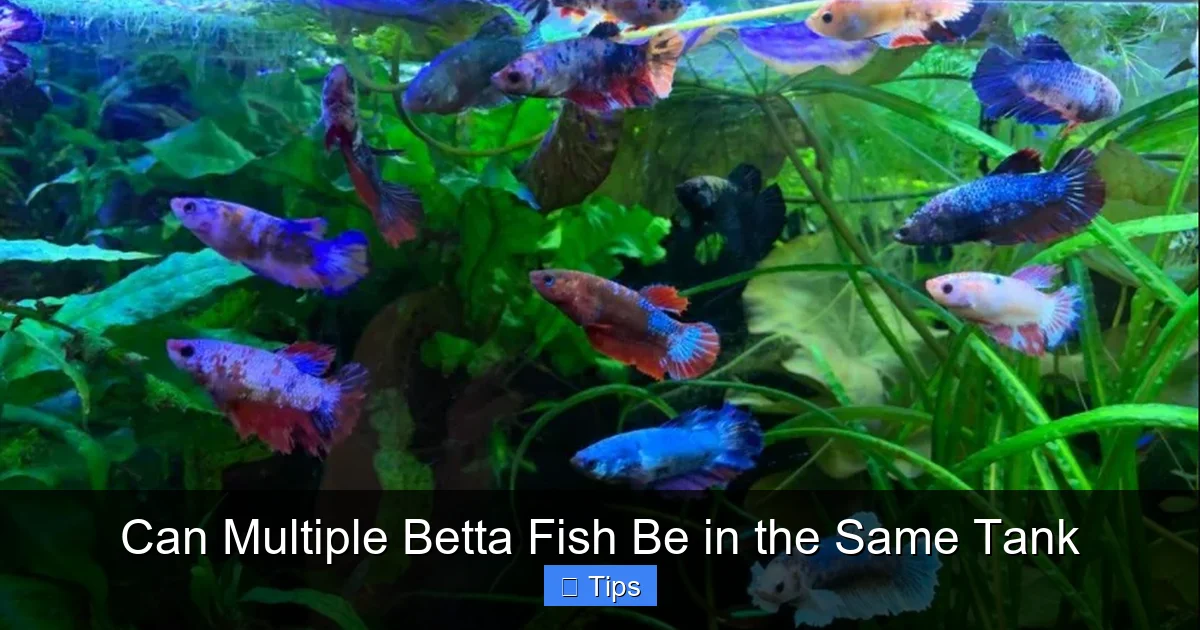
If you are determined to keep multiple bettas together, the only remotely viable path is an all-female sorority. But you must hear this clearly: a sorority is not a beginner setup. It is an advanced, high-maintenance endeavor with a high failure rate. Think of it less as a community and more as managing a delicate, often volatile, political system.
Visual guide about Can Multiple Betta Fish Be in the Same Tank
Image source: acaquarium.com
Tank Size & Setup: The Non-Negotiable Foundation
The single biggest mistake aspiring sorority keepers make is underestimating tank size. You cannot keep 5 female bettas in a 20-gallon tank. The widely accepted, absolute minimum for a stable sorority is a 40-gallon breeder tank (36″ x 18″ footprint). This provides a massive footprint—the most important dimension—to allow for distinct territories. The tank must be extravagantly planted. Use a combination of:
- Floating plants: Frogbit, duckweed, or water lettuce create a surface canopy, breaking the bettas’ line of sight from above (where they naturally patrol).
- Tall stem plants: Rotala, Ludwigia, or Hornwort placed densely along the back and sides create vertical barriers.
- Midground bushes: Cryptocoryne or Amazon swords provide solid, leafy hiding spots.
- Driftwood and rock caves: Offer additional visual breaks and establish distinct “rooms.”
The goal is to make it impossible for any one betta to see the entire tank at once. A sparse tank is a recipe for war.
The Simultaneous Introduction: A Precise Science
How you add the fish is as important as the tank itself. You must introduce all your chosen female bettas into the fully cycled, planted, and heated tank at the exact same time. If you add one fish first, she will claim the entire tank as her territory. Every subsequent addition will be seen as an invader, and she will attack them relentlessly. By adding them all together, no single betta has a pre-existing claim. They will all be equally disoriented and will begin establishing a pecking order through brief, ritualized sparring sessions. This initial 24-48 hours is the most critical. Watch constantly.
Reading the Signs: Hierarchy vs. Bullying
Some sparring and chasing is normal as the hierarchy forms. The “boss” fish will often claim the prime spots (under the filter outflow, a particular cave). This is acceptable. What is NOT acceptable is:
- Persistent chasing that doesn’t stop.
- Fin nipping that leads to torn, ragged fins (bettas regrow fin tissue poorly).
- One fish being constantly cornered, hiding, and refusing to come out for food.
- Any fish losing significant color or becoming lethargic.
If you see these signs, you have a bully. You must have a plan: a separate “hospital” or “quarantine” tank ready to remove the aggressor or the victim immediately. Often, the bully is the one that needs to be rehomed, as she will not change. A sorority is a constant management project, not a “set and forget” aquarium.
Male-Female Pairs & “Breeding Tanks”: A Dangerous Misconception
Another common question is about keeping a male and female betta together. The short answer is: do not do this. The only time a male and female are placed together is in a carefully controlled, temporary breeding tank. Even then, it’s a high-risk process that requires constant supervision. In a permanent community tank, the male will view the female as either a rival (if she’s not ready to spawn) or as an object to be constantly harassed to spawn. The female will be under immense, unrelenting stress. She may hide, lose color, and her health will deteriorate. There is no peaceful, permanent cohabitation scenario for a male and female betta.
Visual guide about Can Multiple Betta Fish Be in the Same Tank
Image source: aquariumcircle.com
The Bubble Nest is Not a Sign of Peace
Some owners see their male betta building a bubble nest and think, “He’s happy and wants a girlfriend!” This is a misinterpretation. A bubble nest is a sign of sexual readiness and good water conditions, but it is built in anticipation of finding a mate. It does not indicate a desire for a female’s permanent presence. In fact, a male guarding a bubble nest can become even more aggressive towards any intruder, including a female, if he perceives her as a threat to his future offspring.
What About a “Harem” Tank?
The idea of one male with multiple females is a fantasy that ends in disaster. In nature, a male’s territory contains the nests, and females come and go to spawn. The male does not cohabit with a group of females. In a confined tank, the male would relentlessly pursue all females, causing them extreme stress and physical harm. He would also likely kill any female that resisted his advances. This setup is not only impossible but deeply cruel.
Community Tank Possibilities: The Betta as a “Community Member”
This is where we explore the most common alternative: keeping a single male betta with other species. This is often the most successful and rewarding path, but it comes with a huge caveat: the betta’s personality is the ultimate deciding factor. Some bettas are docile and will ignore other fish. Some are little demons that will try to fight anything with fins, including their own reflection. You must be prepared for the possibility that your betta will need to be moved to a solo tank if he proves incompatible.
The Ideal Tank Mate Profile
When selecting potential tank mates, you are looking for fish that are: 1) Too large to be considered prey, 2) Too fast and skittish to be caught, 3) Not brightly colored or long-finned (which the betta may see as a rival), and 4) Not surface-dwelling (bettas are surface feeders and patrol the top). Excellent candidates include:
- schooling fish: Small, fast-moving tetras like Ember Tetras or Neon Tetras (in a proper school of 6+), or Rasboras (Harlequin, Chili). Their speed and group behavior make them difficult to target.
- Bottom dwellers: Kuhli Loaches, Corydoras Catfish. They occupy a completely different stratum of the tank and are armored.
- Algae eaters: Otocinclus Catfish (in groups) or the occasional Amano Shrimp (though shrimp can be risky—large bettas may eat them).
Never house a betta with other gouramis (they look too similar), guppies (long, flowing tails look like rivals), or goldfish (cold-water fish with different needs).
The Crucial Setup for a Community Tank
If you attempt a community, your tank must be larger. A 20-gallon long is the absolute minimum, but 29+ gallons is much safer. This provides ample space for the betta to have his own top-level territory and for other fish to have their own spaces. The tank must be heavily planted and decorated to provide endless hiding spots and break lines of sight. The betta needs his own “safe zone”—a clump of floating plants or a castle where he can retreat. Always add the betta last, after the other fish have been in the tank for a week or two. This allows the other fish to establish their own routines and territories, making the betta the “newcomer” and often reducing his inclination to patrol the entire tank as his own.
Critical Mistakes & How to Avoid Them
Even with the best intentions, many betta keepers stumble. Here are the most common, catastrophic errors.
Mistake 1: Starting with a “Nano” Tank
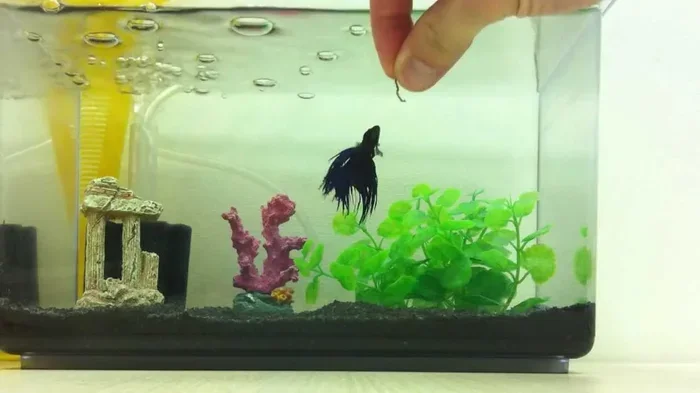
The 2.5-gallon “betta cube” is everywhere. It is not a suitable tank for any fish, especially not for testing the limits of betta compatibility. A small tank has no space to create visual barriers or territories. Aggression is concentrated and inescapable. Always start with a properly sized tank for your goal. For a single male, 5+ gallons. For a sorority, 40+ gallons. For a community, 20+ gallons long.
Mistake 2: Ignoring the Cycling Process
Placing fish, especially stressed fish like bettas in a social experiment, into an uncycled tank is a death sentence. The toxic ammonia and nitrite spikes will weaken their immune systems, making them more susceptible to disease and less able to cope with social stress. A tank must be fully cycled (with established nitrifying bacteria) for at least 4-6 weeks before adding any betta. Test your water parameters (ammonia, nitrite, nitrate, pH) relentlessly.
Mistake 3: Using Fake Plants and Sparse Decor
Plastic plants and a single castle do nothing to break sight lines. Betta aggression is driven by constant visual contact with a rival. You need density. A tank should look like a jungle, not a museum exhibit. Invest in live plants (they also help with water quality) or high-quality silk plants. Use driftwood, rock piles, and PVC pipes to create a complex 3D landscape.
Mistake 4: Having No Backup Plan
If you try a sorority or community, you must have a separate, cycled quarantine tank ready at all times. The moment you see a fish being relentlessly chased or having its fins nipped, you need to act within hours, not days. Have nets, buckets, and a cycled hospital tank on standby. The “plan” cannot be “we’ll see what happens.” The plan must be “if X happens, fish Y goes to the backup tank immediately.”
The Verdict: What Should You Do?
After all this, the answer is simpler than the journey here. For the vast majority of people—especially first-time betta owners, families, or anyone wanting a beautiful, low-stress aquarium—the answer is a resounding no, you should not keep multiple betta fish in the same tank. The risks of severe injury, chronic stress, and death are overwhelmingly high. The ethical choice is to provide one betta with a spacious, beautifully planted, properly sized solo tank. You will be rewarded with a vibrant, interactive pet that displays its full personality.
If you are an experienced aquarist with a large tank (40+ gallons), a deep knowledge of fish behavior, and the resources for multiple backup tanks, you can research and attempt a female sorority. Go into it with your eyes wide open, understanding it’s a fragile experiment, not a standard practice. For community tanks, start with a single, well-chosen betta in a large, decorated tank with peaceful, fast-moving schooling fish. Be prepared to rehome the betta if he shows aggression.
The most beautiful betta tank is a healthy, thriving, peaceful one. That almost always means one betta. Respect the animal’s nature, provide for its needs, and you’ll enjoy one of the most rewarding fish in the hobby for years to come.
Frequently Asked Questions
Can two female betta fish live together?
Yes, but only in a very large (40+ gallon), heavily planted tank with all females introduced simultaneously. This is called a sorority and carries a high risk of bullying and aggression, requiring constant monitoring and a backup tank to separate aggressive individuals.
What fish can live with a male betta?
Peaceful, fast-moving, non-flashy schooling fish like Ember Tetras or Harlequin Rasboras, and sturdy bottom dwellers like Corydoras catfish or Kuhli loaches, in a tank of 20+ gallons with plenty of plants and hiding spots. The betta’s individual personality always determines success.
How can I tell if my betta is stressed from tank mates?
Look for faded or dull colors, clamped fins (held tight to the body), lethargy, hiding constantly, loss of appetite, and rapid gill movement. Persistent chasing of other fish by your betta is also a clear sign of aggression and stress for all involved.
Can I keep a male and female betta together?
No. A permanent male-female pair is impossible. The male will constantly harass the female to spawn, causing her extreme stress and physical harm. They should only be placed together briefly in a controlled breeding setup under close supervision.
What is the minimum tank size for a betta sorority?
The absolute minimum is a 40-gallon breeder tank (36″ x 18″ footprint). This provides the necessary horizontal space for distinct territories. Anything smaller, like a 20-gallon, has an extremely high failure rate and is not recommended.
My betta flares at his reflection in the glass. Is that a problem?
Yes, chronic flaring at his reflection is a sign of stress. He perceives his reflection as a rival. Use a background (like a sheet of paper) on the outside of the tank to block the reflection, or ensure the tank is heavily planted to break up the view. This stress is minor compared to a real rival, but it’s still not ideal.