Can I Put Betta Fish in Bottled Water
Can you put betta fish in bottled water? Technically, yes, but it depends entirely on the type of bottled water you use. Not all bottled water is created equal, and some varieties can seriously harm your betta fish. This guide breaks down everything you need to know about using bottled water for your betta so you can make the safest choice for your finned friend.
Key Takeaways
- Not all bottled water is safe: Spring water can work in a pinch, but distilled and purified water lack essential minerals your betta needs to thrive.
- Mineral content matters: Betta fish require water with some dissolved minerals and a stable pH level between 6.5 and 7.5 for optimal health.
- Bottled water can be expensive long-term: Using bottled water for regular water changes becomes costly compared to treating tap water with a water conditioner.
- Dechlorination is still important: Even bottled water may need treatment depending on its source and processing method.
- Tap water with conditioner is usually best: Most experts agree that properly treated tap water is the most practical and healthy option for betta fish.
- Emergency use is fine: Bottled spring water works well as a temporary solution if your regular water source is compromised.
- Always test water parameters: Regardless of your water source, regularly testing pH, ammonia, nitrite, and nitrate levels keeps your betta safe.
📑 Table of Contents
- Can I Put Betta Fish in Bottled Water? The Complete Answer
- Understanding What Betta Fish Need From Their Water
- Types of Bottled Water and Their Effects on Betta Fish
- Practical Considerations of Using Bottled Water for Betta Fish
- When Bottled Water Makes Sense for Betta Fish
- How to Properly Use Bottled Water for Your Betta
- The Best Water Options for Betta Fish: A Comparison
- Common Mistakes Betta Owners Make With Water
- Setting Up the Perfect Betta Tank With the Right Water
- Conclusion
Can I Put Betta Fish in Bottled Water? The Complete Answer
So you just brought home a gorgeous betta fish, and now you’re staring at your tank wondering what water to use. Maybe your tap water seems sketchy, or maybe you just want the absolute best for your new buddy. Either way, you’ve probably asked yourself: can I put betta fish in bottled water?
It’s a fair question, and honestly, one that doesn’t get answered clearly enough in most pet stores. The short answer is yes, but with some very important caveats. The long answer involves understanding what different types of bottled water contain, what your betta actually needs to survive and thrive, and whether bottled water is a practical long-term solution. Let’s dive deep into all of it so you can make the best decision for your fish.
Before we get into the specifics of bottled water, it helps to understand that betta fish are actually pretty hardy creatures. They come from the warm, shallow waters of Southeast Asia, like rice paddies, marshes, and slow-moving streams in Thailand, Cambodia, and Vietnam. Their natural habitat has specific water conditions, and replicating those conditions in your home tank is the key to a healthy, happy betta. Water quality is arguably the single most important factor in betta care, so getting this right matters a lot.
Understanding What Betta Fish Need From Their Water
The Ideal Water Parameters for Bettas
Before we talk about bottled water specifically, let’s cover what your betta actually needs from its water. Betta fish thrive in water with a pH between 6.5 and 7.5, though they can tolerate a slightly wider range if the change is gradual. The water temperature should stay between 76°F and 82°F, which means you’ll almost certainly need a heater for your tank.
Beyond pH and temperature, betta fish need water that contains dissolved minerals like calcium, magnesium, and potassium. These minerals help with osmoregulation, which is how fish maintain the right balance of fluids in their bodies. Without adequate minerals, fish can experience stress, organ failure, and even death. This is one of the main reasons why the type of water you choose matters so much.
Bettas also need water that is free of chlorine, chloramine, heavy metals, and ammonia. These substances are toxic to fish even in small amounts. In the wild, bettas live in naturally filtered water where these toxins don’t accumulate. In a closed aquarium system, however, harmful chemicals can build up quickly without proper filtration and regular water changes.
Why Water Source Matters More Than You Think
Here’s something many new betta owners don’t realize: the water you pour into your tank directly affects your fish’s immune system, coloration, lifespan, and behavior. Poor water quality is the number one cause of betta fish illness. Fin rot, ich, velvet disease, and dropsy are all commonly linked to suboptimal water conditions.
When you ask can I put betta fish in bottled water, you’re really asking whether bottled water can provide the right balance of minerals, pH stability, and purity. The answer varies wildly depending on which type of bottled water you’re considering. Let’s break down each type so you know exactly what you’re working with.
Types of Bottled Water and Their Effects on Betta Fish
Spring Water: The Best Bottled Option
Spring water comes from natural underground springs and contains naturally occurring minerals like calcium, magnesium, and bicarbonates. This mineral content is actually beneficial for betta fish because it helps maintain stable pH levels and supports their biological functions.
If you’re going to use bottled water for your betta, spring water is generally the safest choice. It has a mineral profile that’s closer to what bettas experience in the wild. Many experienced betta keepers use spring water without issues, especially in areas where tap water is heavily treated with chemicals or has extreme pH levels.
However, not all spring water is created equal. Some brands have higher mineral content than others, and some may have a pH that’s slightly outside the ideal range for bettas. Always check the label for mineral content and pH information. If the brand doesn’t list these details, you can test the water yourself with a simple aquarium test kit before adding your fish.
Distilled Water: A Dangerous Choice
Distilled water is created by boiling water and collecting the steam, which leaves behind virtually all minerals and impurities. While this sounds like it would produce the “purest” water, it’s actually one of the worst choices for betta fish.
Here’s why: distilled water has essentially zero mineral content. When you place a fish in distilled water, osmosis causes water to rush into the fish’s body because the mineral concentration inside the fish is higher than in the surrounding water. This can cause the fish’s cells to swell, leading to a condition called osmotic shock. Symptoms include lethargy, loss of appetite, bloating, and in severe cases, death.
Some people try to fix this by adding mineral supplements to distilled water, which can work but requires precise measurements and constant monitoring. For most betta owners, the risk simply isn’t worth it. If you’re curious about this topic, our article on can I use distilled water for betta fish goes into even more detail about the science behind why distilled water is problematic.
Purified Water: Proceed With Caution
Purified water has been filtered to remove chemicals and contaminants, but the purification process varies. Some purified water goes through reverse osmosis, which strips out most minerals similar to distillation. Other purified water is simply filtered tap water that has had chlorine and sediment removed but retains its mineral content.
The problem with purified water is that you often can’t tell from the label alone what process was used or what the final mineral content is. If the purification process removed minerals, you’ll face the same problems as with distilled water. If it retained minerals, it might be perfectly fine for your betta.
When in doubt, test purified water before using it. Check the pH, general hardness (GH), and carbonate hardness (KH). If the readings fall within acceptable ranges for betta fish, you’re good to go. If not, you’ll need to either choose a different water source or add appropriate supplements.
Drinking Water: What’s Really in the Bottle?
“Drinking water” is a vague term that can mean almost anything. Some brands of drinking water are simply municipal tap water that has been additionally filtered. Others are spring water or purified water with added minerals for taste. The inconsistency makes it a risky choice for betta fish unless you know exactly what’s in the bottle.
Some drinking water brands add minerals like sodium, potassium, and magnesium to improve flavor for human consumption. While these minerals aren’t necessarily harmful to fish, the amounts and ratios may not be ideal for betta biology. Additionally, some drinking water contains added fluoride or other compounds that could be problematic for aquarium use.
Practical Considerations of Using Bottled Water for Betta Fish
The Cost Factor
Let’s talk about the elephant in the room: bottled water is expensive. A single gallon of spring water typically costs between $1 and $2, and a betta tank needs regular water changes of about 25% weekly. For a standard 5-gallon betta tank, that means you’re replacing roughly 1.25 gallons every week.
Over the course of a year, that adds up to about 65 gallons of bottled water, costing anywhere from $65 to $130 or more. Compare that to tap water, which costs fractions of a cent per gallon, and you can see why most experienced betta keepers recommend treating tap water with a quality water conditioner instead.
A good water conditioner like Seachem Prime costs around $10 for a bottle that treats hundreds of gallons. It neutralizes chlorine, chloramine, and heavy metals within minutes, making your tap water perfectly safe for betta fish. The cost difference is dramatic, and the results are just as good, if not better, than most bottled water options.
Convenience and Consistency
Another practical consideration is convenience. Hauling gallons of bottled water home from the store every week gets old fast. Tap water is available instantly from your sink, and with a proper conditioner, it’s ready for your tank in minutes.
Consistency also matters. When you use the same water source and treatment method every time, your tank’s water parameters stay stable. Switching between different brands of bottled water can cause pH and mineral fluctuations that stress your fish. Stability is one of the most important factors in aquarium water quality.
Environmental Impact
It’s worth noting that using bottled water for your aquarium generates significant plastic waste. Hundreds of plastic bottles per year for a single small tank adds up environmentally. If you’re looking for an eco-friendly approach to betta care, treating tap water is far more sustainable than relying on bottled water.
When Bottled Water Makes Sense for Betta Fish
Emergency Situations
There are absolutely times when bottled water is the right choice for your betta. If your municipal water supply has been compromised by a boil-water advisory, chemical spill, or natural disaster, bottled water becomes a necessary alternative. In these situations, spring water is your best bet because it contains the minerals your fish needs.
Similarly, if you’re doing a partial water change and realize you’ve run out of water conditioner, bottled spring water can work as a temporary fix. It’s far better to use bottled spring water in an emergency than to leave your fish in dirty, ammonia-filled water while you wait to get conditioner.
Areas With Extremely Poor Tap Water
Some regions have tap water that is exceptionally hard, heavily chlorinated, or contaminated with substances that are difficult to remove with standard water conditioners. If you’ve tested your tap water and found that it has extreme pH levels, very high or very low hardness, or contains contaminants like high levels of copper or lead, bottled spring water might be a more practical solution.
Before making this decision, though, consider investing in a reverse osmosis (RO) filtration system for your home. RO systems produce water that’s similar to distilled water but can be remineralized with aquarium-specific products to create the perfect water for your betta. The upfront cost is higher, but it pays for itself over time compared to buying bottled water indefinitely.
Travel and Temporary Housing
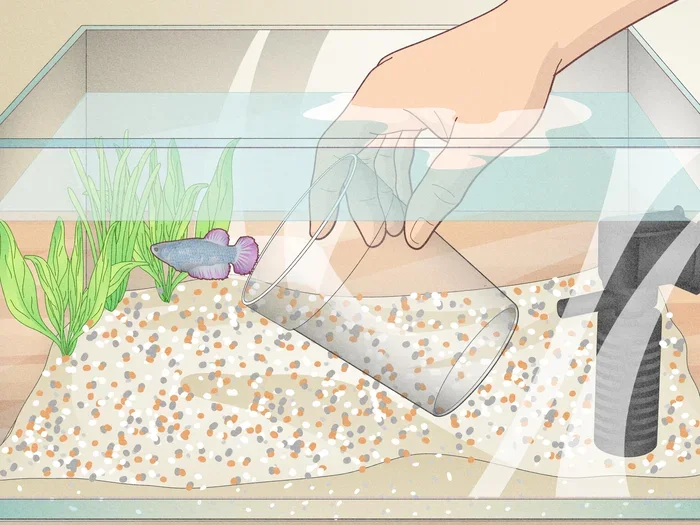
If you need to transport your betta or set up a temporary tank while cleaning the main aquarium, bottled spring water is convenient and safe. Small containers of spring water are easy to carry and don’t require any additional treatment. Just make sure the water temperature matches your betta’s tank before making the switch.
How to Properly Use Bottled Water for Your Betta
Step-by-Step Guide
If you’ve decided to use bottled water for your betta, here’s how to do it right:
- Choose spring water: Look for bottles labeled “spring water” specifically. Avoid distilled, purified, or “drinking water” unless you can verify the mineral content.
- Check the label: Look for mineral content information on the bottle. You want water with some dissolved minerals, not zero.
- Test the pH: Use a liquid test kit or pH strips to verify the water falls between 6.5 and 7.5. If it’s slightly outside this range, you can adjust it with pH buffers.
- Temperature match: Use a thermometer to ensure the bottled water is within 2-3 degrees of your tank temperature before adding it.
- Add beneficial bacteria: If you’re setting up a new tank with bottled water, add a bacterial starter product to establish the nitrogen cycle.
- Monitor your fish: Watch your betta closely for signs of stress after introducing new water. Lethargy, loss of appetite, or clamped fins could indicate a problem.
What to Avoid
When using bottled water for betta fish, there are several mistakes you should avoid at all costs:
- Never use flavored or enhanced water: Bottled water with added flavors, vitamins, or electrolytes marketed for human fitness can contain ingredients harmful to fish.
- Don’t use carbonated water: Carbonated or sparkling water contains dissolved CO2 that can seriously harm your betta.
- Avoid water with added minerals for taste: Some brands add minerals specifically for human taste preferences, and the ratios may not be suitable for fish.
- Don’t skip testing: Even spring water can vary between brands and batches. Always test before use.
- Never use hot water from a water heater: If you’re mixing bottled water with hot tap water to reach the right temperature, be aware that water heaters can leach metals into hot water.
The Best Water Options for Betta Fish: A Comparison
Treated Tap Water: The Gold Standard
For the vast majority of betta owners, treated tap water is the best option. It’s affordable, consistent, and when properly conditioned, provides everything your betta needs. A quality water conditioner removes chlorine, chloramine, and heavy metals while leaving beneficial minerals intact.
If you’re wondering about tap water safety, our detailed guide on can you put betta fish in tap water covers everything you need to know about making tap water safe for your fish. The process is simple: fill a clean container with tap water, add the recommended dose of water conditioner, wait a few minutes, and you’re ready to go.
One advantage of tap water that many people overlook is that it’s already buffered and stabilized by your municipal water treatment facility. This means the pH and mineral content are designed to be consistent, which translates to a more stable aquarium environment.
Spring Water: A Solid Alternative
Spring water is the best bottled option and works well as either a primary water source or an emergency backup. Its natural mineral content supports fish health, and the pH is usually within an acceptable range for bettas. The main drawbacks are cost and the inconvenience of purchasing and transporting it regularly.
If you choose spring water as your primary source, buy in bulk to save money. Many warehouse stores sell spring water in large 5-gallon jugs or multi-packs at a lower per-gallon cost. Store it in a cool, dark place away from direct sunlight to prevent algae growth.
RO/DI Water With Remineralization: The Premium Choice
For serious betta enthusiasts, reverse osmosis or deionized (RO/DI) water with added remineralization products offers the ultimate control over water parameters. You start with completely pure water and add back exactly the minerals your betta needs in the right proportions.
This approach is especially popular among breeders and show-quality betta keepers who need precise control over water chemistry. It’s also excellent for areas with very hard or contaminated tap water. The downside is the initial investment in an RO system and the ongoing cost of remineralization products.
Common Mistakes Betta Owners Make With Water
Using the Wrong Water Source
One of the most common mistakes new betta owners make is assuming all water is the same. Pouring distilled water directly into a betta tank without understanding the consequences can be fatal. Similarly, using water from a water softener (which replaces calcium and magnesium with sodium) can create an environment that’s harmful to freshwater fish.
Another frequent error is using hot tap water to fill the tank. Hot water from your plumbing can contain higher levels of metals like copper and lead because these substances dissolve more readily in hot water. Always use cold tap water and heat it with an aquarium heater to the proper temperature.
Skipping Water Testing
Many betta owners never test their water, assuming that if the water looks clear, it’s fine. This is a dangerous assumption. Ammonia, nitrite, and nitrate are invisible to the naked eye but can reach toxic levels quickly in a small tank. A basic aquarium test kit is one of the most important investments you can make for your betta’s health.
Test your water weekly for ammonia, nitrite, nitrate, and pH. In a properly cycled tank, ammonia and nitrite should always be zero, nitrate should be below 20 ppm, and pH should remain stable within the 6.5-7.5 range. If any of these parameters are off, take corrective action immediately.
Changing Too Much Water at Once
While regular water changes are essential, changing too much water at once can shock your betta. A 25% water change once a week is the standard recommendation for most betta tanks. If you need to do a larger change due to a water quality emergency, try to match the temperature and parameters of the new water as closely as possible to the old water.
This is especially important when switching water sources. If you’ve been using tap water and need to switch to bottled water temporarily, do it gradually over several water changes rather than all at once. This gives your betta time to adjust to any differences in mineral content or pH.
Setting Up the Perfect Betta Tank With the Right Water
Choosing Your Tank Size
Before we wrap up, let’s briefly touch on tank size because it directly affects water quality. The minimum recommended tank size for a betta is 5 gallons, though larger is always better. Smaller tanks experience faster parameter swings because there’s less water volume to buffer changes.
If you’re still keeping your betta in a bowl, our article on can you keep betta fish in a bowl explains why upgrading to a proper tank is one of the best things you can do for your fish’s health and longevity.
Essential Equipment for Water Quality
To maintain excellent water quality regardless of your water source, you’ll need a few key pieces of equipment:
- Water conditioner: Essential for treating tap water. Seachem Prime, API Stress Coat, and Tetra AquaSafe are all excellent choices.
- Water test kit: The API Master Test Kit is the gold standard for freshwater aquariums. It tests pH, ammonia, nitrite, and nitrate.
- Aquarium heater: Bettas need consistent temperatures between 76°F and 82°F. A reliable adjustable heater is a must.
- Filter: A gentle filter helps maintain the nitrogen cycle and keeps the water clean between water changes. Sponge filters are ideal for betta tanks.
- Thermometer: A simple stick-on or digital thermometer helps you monitor temperature at a glance.
The Nitrogen Cycle and Why It Matters
Understanding the nitrogen cycle is crucial for any betta owner. In a new tank, beneficial bacteria need time to colonize and establish themselves. These bacteria convert toxic ammonia (from fish waste and decaying food) into nitrite, and then into less harmful nitrate. This process, called the nitrogen cycle, typically takes 4-6 weeks to complete.
During the cycling period, you’ll need to monitor water parameters closely and perform frequent water changes to keep ammonia and nitrite levels safe. Products like Seachem Stability or Tetra SafeStart can speed up the cycling process by introducing beneficial bacteria directly into the tank.
Whether you’re using bottled water or tap water, the nitrogen cycle works the same way. The key is to be patient and consistent with your water testing and maintenance routine. A fully cycled tank is the foundation of betta fish health, and no amount of expensive bottled water can substitute for a properly functioning biological filter.
Conclusion
So, can you put betta fish in bottled water? The answer is yes, but with important caveats. Spring water is the safest bottled option because it contains the minerals your betta needs. Distilled and purified water should generally be avoided unless you’re experienced with remineralization. And while bottled water works in a pinch, treated tap water remains the most practical, affordable, and consistent choice for most betta owners.
The most important thing isn’t which water source you choose, it’s that you understand what’s in your water and how it affects your fish. Test your water regularly, maintain stable parameters, and perform consistent water changes. Whether you use bottled spring water or treated tap water, your betta will thrive as long as you provide clean, properly conditioned water with the right mineral balance.
Your betta depends on you for everything, and water quality is the single biggest factor you can control. Take the time to get it right, and you’ll be rewarded with a vibrant, active, and healthy fish that can live for 3 to 5 years or even longer. That’s a pretty great return on a little bit of knowledge and effort.
Frequently Asked Questions
Can betta fish live in bottled water permanently?
Betta fish can live in bottled spring water permanently since it contains the necessary minerals. However, the cost and inconvenience make it impractical for most owners. Treated tap water with a quality conditioner is a more sustainable long-term solution that provides equally good results.
Is spring water safe for betta fish without treatment?
Spring water is generally safe for betta fish without additional treatment because it doesn’t contain chlorine or chloramine. However, you should always test the pH and mineral content before use to ensure it falls within the acceptable range for bettas, which is pH 6.5 to 7.5.
What happens if I put my betta in distilled water?
Putting a betta in distilled water can cause osmotic shock because distilled water lacks minerals. Water rushes into the fish’s cells, causing swelling, stress, and potentially death. If you must use distilled water, you need to add aquarium-specific mineral supplements before introducing your fish.
How often should I change my betta’s water?
You should change approximately 25% of your betta’s water once a week in a properly filtered and cycled tank. If your tank isn’t cycled or is smaller than 5 gallons, you may need to do more frequent changes of 30-50% to maintain safe water quality.
Can I mix bottled water with tap water for my betta?
You can mix bottled spring water with treated tap water, and many betta owners do this successfully. Just make sure the tap water is properly dechlorinated first, and test the combined water’s pH and hardness to ensure it’s within the ideal range for bettas.
Do I need to use a water conditioner with bottled water?
Typically, no. Bottled spring water doesn’t contain chlorine or chloramine, so a conditioner isn’t necessary. However, if you’re using purified water that may have been treated with chemicals, or if you’re mixing it with tap water, using a conditioner is a good precaution.