Can Betta Fish See Their Reflection

Betta fish can absolutely see their reflection, and they often react aggressively toward it, thinking it’s a rival fish. This behavior is deeply rooted in their territorial nature. While brief mirror exposure can provide exercise, prolonged viewing can stress your betta significantly.
If you have ever noticed your betta fish flaring up at the side of their tank, puffing out their gills, and dancing around like they are ready for a fight, you might have wondered what exactly is going on. The answer is simpler than you think. Your betta fish can see their reflection, and they are not happy about it.
Betta fish are one of the most visually oriented aquarium fish you can keep. Their eyes are designed to detect movement, color, and threats in their environment. When they catch a glimpse of themselves in the glass of their tank or a nearby mirror, they do not recognize it as their own reflection. Instead, they see what they believe is another betta invading their space. This triggers an intense territorial response that is fascinating to watch but can be harmful if it happens too often.
In this article, we will dive deep into how betta fish vision works, why they react so strongly to their reflection, and what you can do to keep your fish happy and stress-free. Whether you are a new betta owner or have kept these beautiful fish for years, understanding this behavior will help you provide a better home for your aquatic friend.
Key Takeaways
- Betta fish have excellent vision and can clearly see their reflection in glass, mirrors, and other reflective surfaces.
- They interpret reflections as rival fish, which triggers their natural territorial aggression and flaring behavior.
- Short mirror exposure (2-3 minutes) can provide mental stimulation and exercise for your betta.
- Prolonged reflection exposure causes stress, which can weaken your betta’s immune system and shorten their lifespan.
- Bettas may flare at tank glass, phone screens, and even shiny objects near their aquarium.
- Managing reflection triggers through proper tank placement and background materials keeps your betta calm and healthy.
- Understanding your betta’s vision helps you create a better environment and bond with your fish more effectively.
📑 Table of Contents
- How Betta Fish Vision Works
- Why Betta Fish React to Their Reflection
- Common Reflections That Trigger Bettas
- The Effects of Reflection Exposure on Betta Health
- How to Manage Reflections in Your Betta Tank
- Using Mirrors Safely for Betta Enrichment
- Understanding Your Betta’s World Through Their Eyes
- Conclusion
How Betta Fish Vision Works
The Anatomy of a Betta Fish Eye
Betta fish have surprisingly complex eyes for their small size. Their eyes are positioned on the sides of their head, which gives them a wide field of view. This side-eyed placement is common among prey and territorial fish because it allows them to monitor a large area for both food and threats at the same time. A betta can see nearly 360 degrees around them, with only a small blind spot directly behind their body.
Their eyes contain both rod and cone cells, which means they can see in varying light conditions and perceive a broad spectrum of colors. In fact, betta fish can see more colors than humans can. They can detect ultraviolet light, which is invisible to us. This enhanced color vision plays a huge role in how they communicate with other bettas, choose mates, and identify threats in their environment.
What Betta Fish Can See
Bettas have excellent visual acuity when it comes to detecting movement. Even the slightest motion near their tank can grab their attention instantly. This is why your betta might swim excitedly to the front of the tank when you walk into the room. They see you coming from a distance and associate your presence with feeding time.
They can also see in relatively low light conditions, though their vision is not as specialized as some nocturnal fish. If you want to learn more about how they navigate in dim environments, check out our article on can betta fish see in the dark for a deeper look at their nighttime vision capabilities.
One important thing to understand is that betta fish do not have the same depth perception as humans. Their eyes work independently to some extent, which means they judge distance differently. This is one reason why bettas sometimes miss their food or bump into objects in their tank. Their strength lies in detecting movement and color rather than pinpointing exact distances.
Why Betta Fish React to Their Reflection
Territorial Instincts Kick In
Betta fish are famously territorial, especially males. In the wild, male bettas establish and defend small territories against other males. When two males encounter each other, they engage in a display of dominance that involves flaring their gill covers, spreading their fins, and showing off their most vibrant colors. This behavior is designed to intimidate the opponent without actual physical combat, though fights can and do happen.
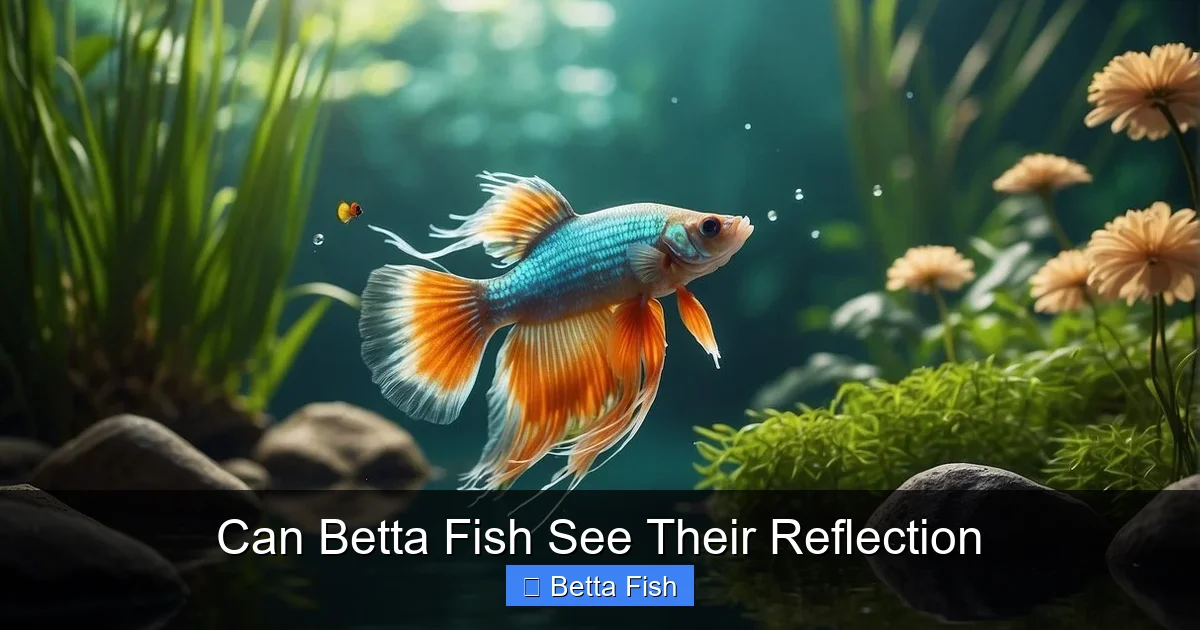
Visual guide about Can Betta Fish See Their Reflection
Image source: koala.sh
When your betta sees their reflection, their brain processes the image as another male betta entering their territory. The reflected fish mirrors every movement your real betta makes, which makes the illusion even more convincing. Your betta flares up, and the “rival” flares right back. This creates a frustrating loop that can go on indefinitely because the reflection never backs down.
The Science Behind the Flare
Flaring is a stress response, but it is also a natural behavior. When a betta flares, their body releases small amounts of stress hormones while simultaneously activating their fight-or-flight response. In short bursts, this is not harmful. In the wild, bettas flare at rivals briefly and then one fish usually retreats, ending the confrontation.
The problem with a reflection is that the confrontation never ends. The “rival” never swims away, never submits, and never gives your betta the satisfaction of winning the encounter. This can keep your betta in a prolonged state of agitation, which is where the real danger lies. Chronic stress from constant flaring can suppress your betta’s immune system and make them more susceptible to diseases like fin rot and ich.
Do Bettas Recognize Themselves?
This is a question that fascinates animal behavior researchers. The ability to recognize oneself in a mirror is called self-recognition, and it is rare in the animal kingdom. Only a handful of species, including great apes, dolphins, elephants, and magpies, have demonstrated this ability through controlled experiments.
Betta fish have not passed the mirror self-recognition test, and there is no scientific evidence to suggest they can recognize themselves in a reflection. Every indication points to the fact that they genuinely believe their reflection is another fish. This is why the territorial response is so consistent and powerful every time they encounter a reflective surface.
Common Reflections That Trigger Bettas
Tank Glass
The most common source of reflections for betta fish is the glass or acrylic walls of their own tank. Depending on the lighting in your room, the angle of the tank, and the darkness of the water, your betta may see their reflection more clearly at certain times of day. Bright room lighting with a darker tank interior creates the perfect mirror effect.
If you notice your betta flaring at one particular side of their tank more than others, it is likely because that side produces the strongest reflection. You can test this by observing the tank from your betta’s eye level and looking for reflective spots on the glass.
Mirrors and Reflective Decorations
Some aquarium decorations have polished or metallic surfaces that can create reflections. Even the backside of a heater or filter with a shiny surface can trigger a reaction. If you have placed a mirror near the tank for any reason, your betta will almost certainly notice it and respond.
Phone screens, tablets, and laptop screens placed near the tank can also catch your betta’s attention. The glowing screen creates a reflective surface that your betta may investigate and react to, especially if the screen displays movement or bright colors.
External Light Sources
Lighting plays a huge role in how visible reflections are inside a tank. A bright aquarium light with a dark room behind the tank creates a mirror effect similar to looking into a window at night. Conversely, a bright room with dim tank lighting reduces reflections significantly. Understanding this relationship gives you control over how often your betta encounters their reflection.
The Effects of Reflection Exposure on Betta Health
Short-Term Exposure: Not All Bad
Believe it or not, brief exposure to a mirror can actually benefit your betta. Allowing your betta to see their reflection for just two to three minutes can provide mental stimulation and physical exercise. The flaring and swimming involved in confronting a rival gives your betta a workout similar to what they would get in the wild during territorial disputes.
Some experienced betta keepers use a small mirror during play sessions to engage their fish. The key is keeping these sessions short and controlled. Think of it like a quick game rather than a prolonged battle. After a couple of minutes, remove the mirror and let your betta calm down. This can be a fun way to interact with your fish and observe their natural behaviors up close.
Long-Term Exposure: A Serious Concern
When a betta is constantly exposed to their reflection, the effects are far from beneficial. Chronic stress is one of the biggest killers of pet betta fish, and a persistent reflection is a major contributor. A betta that flares at their reflection for hours each day is living in a constant state of fight-or-flight.
This ongoing stress response takes a real toll on their body. Their immune system becomes compromised, making them vulnerable to bacterial infections, fungal diseases, and parasites. You might notice your betta becoming lethargic, losing their vibrant color, refusing food, or developing torn and damaged fins. Over time, chronic stress can significantly shorten your betta’s lifespan.
Signs Your Betta Is Stressed by Reflections
There are several warning signs to watch for if you suspect your betta is being stressed by constant reflection exposure. A stressed betta may hide more than usual, spending most of their time behind plants or decorations. They might lose interest in food or become unusually aggressive during feeding time.
Color changes are another indicator. A healthy betta typically displays rich, vivid colors. If your betta’s colors start to fade or develop stress stripes (horizontal lines across their body), this is a clear sign that something in their environment is causing them distress. Constant flaring without any provocation other than their reflection is perhaps the most obvious symptom.
How to Manage Reflections in Your Betta Tank
Use a Tank Background
One of the simplest and most effective solutions is to apply a background to the outside of your tank. You can purchase solid-colored aquarium backgrounds from most pet stores, or you can use construction paper, poster board, or even a piece of fabric. Attach the background to the back and sides of the tank to eliminate the reflective surfaces that trigger your betta’s territorial response.
A dark background, such as black or deep blue, works particularly well because it absorbs light rather than reflecting it. This not only reduces reflections but also makes your betta’s colors pop, creating a more visually appealing tank. Many betta keepers report that their fish become calmer and more active after backgrounds are added to the tank.
Adjust Your Lighting
Lighting adjustments can make a big difference. If your tank is brighter than the room around it, the glass acts like a mirror. Try balancing the light levels so that the room is at least as bright as the tank interior. Using a room light or lamp near the tank during the day can help reduce the mirror effect.
At night, turn off the aquarium light and keep the room dim. This prevents the tank from becoming a bright beacon that creates strong reflections on the glass. A consistent light cycle that mimics natural day and night patterns is also beneficial for your betta’s overall health and circadian rhythm.
Reposition the Tank
Sometimes the simplest fix is moving the tank to a different location. If your betta’s tank sits across from a window, a mirror, or another reflective surface in your home, the reflections will be constant. Moving the tank to an interior wall or a location with less glare can dramatically reduce the problem.
Consider the angle of the tank as well. Tilting the tank slightly or repositioning it so that the strongest light source is behind the viewer rather than behind the tank can help minimize reflections. Even small adjustments to the tank’s position can have a noticeable effect on your betta’s behavior.
Provide Plenty of Hiding Spots
Even with the best management strategies, some reflections may be unavoidable. Giving your betta plenty of places to retreat and feel secure is essential. Live plants, silk plants, caves, and betta hammocks all provide shelter where your fish can escape from the perceived threat of their reflection.
Hiding spots serve a dual purpose. They give your betta a sense of security, which reduces overall stress levels, and they break up the line of sight across the tank, which can reduce the intensity of territorial responses. A well-decorated tank with lots of visual barriers is one of the best things you can do for your betta’s mental health.
Using Mirrors Safely for Betta Enrichment
Creating a Play Session
If you want to use a mirror to provide enrichment for your betta, you can do so safely by following a few simple rules. First, use a small mirror that you can easily hold outside the tank and remove quickly. Never leave a mirror inside the tank where your betta has constant access to it.
Hold the mirror against the outside of the glass and allow your betta to see their reflection for no more than two to three minutes. Watch your betta’s behavior closely. If they seem overly agitated or if the session goes beyond a few minutes, remove the mirror immediately. Each betta has a different tolerance level, so pay attention to how your individual fish responds.
Frequency Matters
A mirror play session once or twice a week is plenty for most bettas. Some keepers do it a few times a week, while others prefer to use it only occasionally. There is no strict rule, but moderation is key. If you notice your betta becoming more stressed or aggressive over time, reduce the frequency of mirror sessions.
Watch for positive signs during these sessions. A betta that flares briefly and then loses interest is showing a healthy response. A betta that becomes fixated, refuses to leave the mirror side of the tank, or continues flaring long after the mirror is removed may be experiencing too much stress from the exercise.
Understanding Your Betta’s World Through Their Eyes
How They See You
While bettas cannot recognize themselves in a mirror, they can learn to recognize their owners over time. Your betta can see you approaching the tank and may begin to associate your face and movements with positive experiences like feeding. This is a form of visual learning that demonstrates just how capable their eyesight truly is.
If you are curious about the bond between bettas and their owners, our article on can my betta fish see me explores this topic in more detail and explains how your fish perceives your presence.
Color and Environment
Since bettas can see a wider range of colors than humans, the colors in their environment matter more than you might think. Bright, colorful decorations and plants can stimulate their visual senses, while a bare tank with nothing to look at can lead to boredom. Creating a visually rich environment helps keep your betta mentally engaged and happy.
The substrate color at the bottom of the tank can also influence how your betta perceives their surroundings. Dark substrates tend to make bettas feel more secure and display more vibrant colors, while light or reflective substrates can increase stress and make them feel exposed.
Conclusion
Betta fish can absolutely see their reflection, and for them, it is as real as any other fish in their territory. Their remarkable vision, designed by evolution to detect rivals, mates, and threats, means that a simple reflection in the glass of their tank can trigger a full-blown territorial display. While this behavior is completely natural and even impressive to watch, it is important as a betta owner to manage how often and how long your fish is exposed to these reflections.
By using tank backgrounds, adjusting lighting, repositioning the tank, and providing plenty of enrichment and hiding spots, you can minimize unwanted reflection exposure while still giving your betta a stimulating and healthy environment. Short, controlled mirror sessions can be a fun way to engage with your fish, but always remember that moderation is essential.
Understanding how your betta sees the world is one of the most rewarding aspects of keeping these incredible fish. Their vision shapes how they interact with their environment, with you, and with their own reflection. By creating a home that respects their natural instincts while protecting them from chronic stress, you are setting your betta up for a long, colorful, and happy life.
Frequently Asked Questions
Why does my betta fish flare at the glass?
Your betta flares at the glass because they see their reflection and mistake it for a rival betta fish. This triggers their natural territorial behavior, causing them to puff out their gills and spread their fins in a display of dominance. It is a completely normal reaction, though frequent flaring can cause stress.
Is it okay to use a mirror to exercise my betta fish?
Yes, brief mirror exposure of two to three minutes can provide good mental stimulation and physical exercise for your betta. However, you should never leave a mirror in the tank permanently, as constant exposure leads to chronic stress and health problems. Keep the sessions short and occasional.
Can betta fish see color in their reflection?
Betta fish can actually see more colors than humans, including ultraviolet light, so their reflection appears very vivid and colorful to them. This makes the reflected image even more convincing as a real rival fish. Their enhanced color vision is one reason why they react so strongly to what they see.
How do I stop my betta from seeing their reflection?
You can reduce reflections by adding a solid background to the outside of your tank, adjusting room lighting to match or exceed tank brightness, and repositioning the tank away from windows and mirrors. Providing plenty of plants and decorations inside the tank also helps break up reflective surfaces and gives your betta places to hide.
Do betta fish get tired of flaring at their reflection?
Betta fish do not get tired in the traditional sense, but prolonged flaring is physically and mentally exhausting for them. A betta that flares constantly at their reflection can develop chronic stress, which weakens their immune system and leads to health issues. It is important to limit their exposure to reflections for their overall well-being.
Can female betta fish also see and react to their reflection?
Yes, female betta fish can see their reflection and may react to it, though they are generally less aggressive than males. Female bettas are still territorial by nature, especially when kept in groups. If you are interested in keeping multiple females together, learn more about can you keep female betta fish together to understand their social dynamics.