Betta fish can detect dark blue light, but they perceive it differently than humans do. Their unique vision allows them to sense blue wavelengths, though dim blue lighting may appear muted or shadowy to them. Understanding how betta fish see dark blue light helps you create a more comfortable, stress-free aquarium environment that supports their natural day-night cycle.
Key Takeaways
- Betta fish can detect dark blue light: Their eyes are sensitive to blue wavelengths, even at lower intensities, though they perceive it as a dim, muted tone.
- Blue light affects their circadian rhythm: Prolonged exposure to blue light at night can disrupt their sleep cycle and cause stress over time.
- Dark blue light is less harsh than white light: It provides enough illumination for viewing without overwhelming your betta’s sensitive eyes during nighttime hours.
- Not all blue light is equal: Shorter wavelengths (true blue) are safer than purple-tinted or UV-heavy bulbs that may harm their vision.
- Moderation matters: Using dark blue LED lights for short periods mimics moonlight and supports natural behavior without disturbing rest.
- Your betta can see you through blue light: Bettas recognize movement and shapes even under dim blue illumination, so they are aware of your presence.
- Choose aquarium-specific lighting: Always select LEDs designed for fish tanks to avoid excessive brightness or harmful spectral output.
📑 Table of Contents
- Introduction: Can Betta Fish Really See Dark Blue Light?
- How Betta Fish Vision Works
- The Science Behind Blue Light and Betta Fish
- Does Dark Blue Light Affect Betta Fish Behavior?
- Practical Tips for Using Dark Blue Light in Your Betta Tank
- Common Myths About Betta Fish and Blue Light
- How Dark Blue Light Compares to Other Lighting Colors
- Creating the Ideal Lighting Environment for Your Betta
- Conclusion: Should You Use Dark Blue Light for Your Betta Fish?
Introduction: Can Betta Fish Really See Dark Blue Light?
If you have ever stared into a beautifully lit betta fish tank at night, you have probably noticed the soft glow of blue LED lights illuminating your vibrant little friend. It is a stunning sight. But have you ever stopped to wonder whether your betta fish actually perceives that same beautiful blue glow, or does it look completely different through their eyes? This is one of those fascinating questions that sits right at the intersection of science and aquarium hobby, and the answer might surprise you.
Betta fish are known for their incredible colors and feisty personalities, but their vision is something most owners never think about. Understanding can betta fish see dark blue light is not just a trivia question. It actually has real implications for how you set up their tank, when you turn lights on and off, and how comfortable your fish feels in its environment. After all, if lighting causes stress or disrupts their sleep, that directly impacts their health and lifespan.
In this comprehensive guide, we are going to dive deep into the science of betta fish vision, explore how different wavelengths of light affect them, and give you practical tips for using dark blue light in your aquarium. Whether you are a new betta owner or a seasoned aquarist, this information will help you make smarter choices for your underwater companion. Let us get started.
How Betta Fish Vision Works
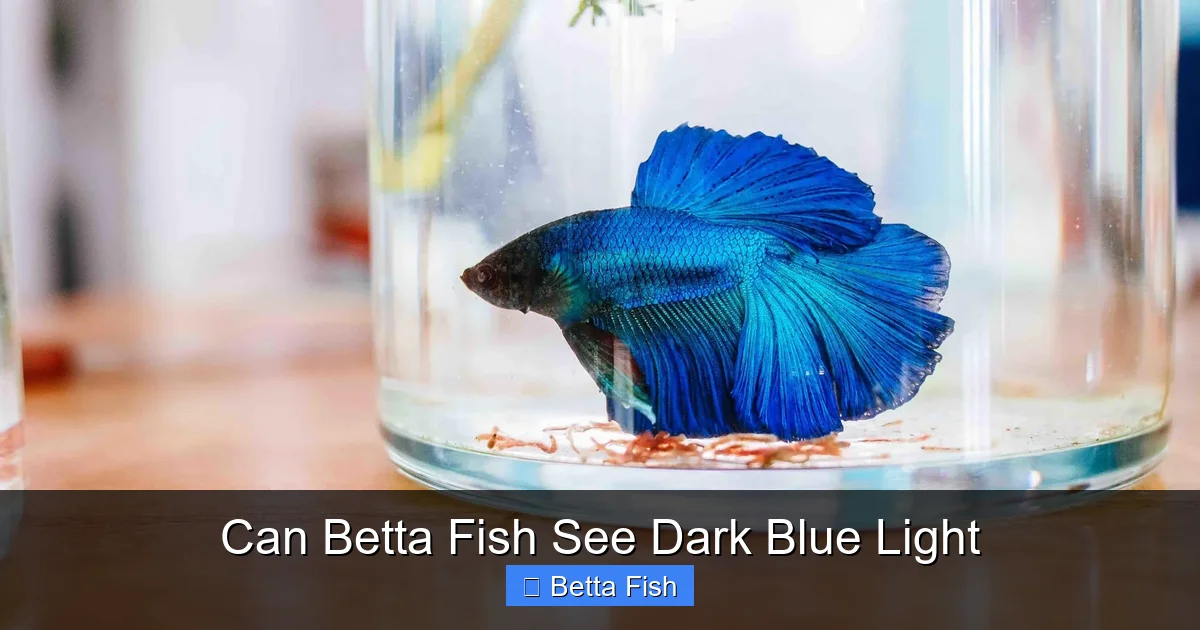
Visual guide about Can Betta Fish See Dark Blue Light
Image source: hepper.com
The Anatomy of a Betta Fish Eye
Before we talk about dark blue light specifically, it helps to understand how betta fish eyes are built. Like many fish species, betta fish have eyes that are adapted for life underwater. Their eyes contain two types of photoreceptor cells: rods and cones. Rods are responsible for detecting light levels and movement, while cones handle color vision and detail.
What makes betta fish particularly interesting is that they have a higher density of cone cells compared to many other freshwater fish. This means they are capable of seeing a broad spectrum of colors, including some wavelengths that humans cannot detect. Their eyes are positioned on the sides of their head, giving them a wide field of view. This is an evolutionary advantage in the wild, where spotting predators and prey from multiple directions is critical for survival.
Color Perception in Betta Fish
Research on fish vision shows that betta fish can perceive colors across a wide spectrum, including ultraviolet wavelengths that are invisible to humans. Their color vision extends from the red end of the spectrum all the way through to violet and UV. This means that when we talk about can betta fish see dark blue light, the answer leans strongly toward yes, they can detect it, but the way they experience it is different from what we see.
Think of it this way. If you walk into a room lit only by a dim blue nightlight, you still perceive the color blue, but everything looks muted and shadowy. For betta fish, a similar thing happens. They can detect the blue wavelength, but because the light is dim, their rod cells are doing most of the work rather than their cone cells. So they sense the presence of blue light, but the richness and vibrancy of that color may be significantly reduced compared to how we perceive it under brighter conditions.
The Science Behind Blue Light and Betta Fish
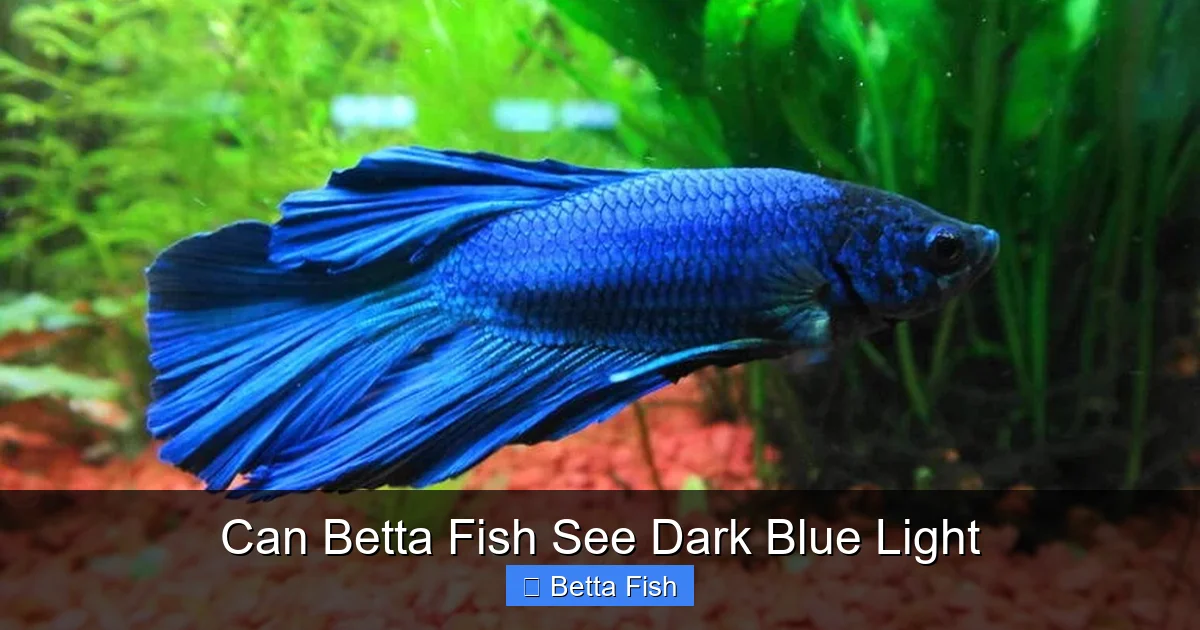
Visual guide about Can Betta Fish See Dark Blue Light
Image source: fishkeepingadvice.com
Understanding Light Wavelengths
Light is measured in nanometers, and different colors correspond to different wavelengths. Blue light typically falls in the range of approximately 450 to 495 nanometers. Dark blue light, which is what we are focusing on in this article, refers to blue light that is lower in intensity. It is the kind of soft, dim blue glow you might see from a moonlight LED strip in an aquarium.
The reason this matters for betta fish is that their photoreceptors are particularly sensitive to wavelengths in the blue and violet range. In their natural habitat, shallow freshwater environments in Southeast Asia, blue light is abundant during the day because water absorbs longer wavelengths like red and orange more quickly, leaving shorter wavelengths like blue to penetrate deeper. Over millions of years, betta fish evolved to thrive in this blue-shifted visual environment.
How Blue Light Penetrates Water
Here is something most people do not realize. The way light behaves in air is very different from how it behaves in water. Red light gets absorbed within the first few meters of water, while blue light can travel much deeper. This is why underwater photos often have a blue tint unless artificial lighting is used.
For betta fish living in the shallow rice paddies and streams of Thailand and Cambodia, blue light is the dominant color in their visual world. Their eyes are optimized for this. So when you place a dark blue LED light in their aquarium, you are essentially mimicking a natural lighting condition that their biology is already tuned to detect. This is one reason why many betta owners find that their fish seem calm and active under soft blue lighting.
Does Dark Blue Light Affect Betta Fish Behavior?

Visual guide about Can Betta Fish See Dark Blue Light
Image source: s3.amazonaws.com
Calming Effects of Blue Light
Many aquarium hobbyists use blue LED lights to create a moonlight effect in their tanks at night. The idea is that a soft blue glow allows the fish to retain some visual orientation without being stimulated by bright white light. For betta fish, this approach generally works well. Under dim blue light, bettas tend to remain calm and continue their normal swimming patterns without the startled behavior that sudden bright light can cause.
However, it is important to note that while dark blue light is less disruptive than white light, it is still light. Betta fish need periods of complete darkness to maintain a healthy circadian rhythm. If blue light is left on 24 hours a day, it can interfere with their sleep cycle and lead to chronic stress. A stressed betta is more susceptible to diseases like fin rot and ich, and may also display faded coloration and reduced appetite.
Feeding and Activity Under Blue Light
If you have ever tried to feed your betta under dark blue light, you may have noticed that they still respond to food. This is because betta fish rely on a combination of visual cues and lateral line sensing to locate food. Even in dim blue light, their eyes can detect the movement of food particles in the water.
That said, feeding under very dim light is not ideal. If you want to ensure your betta is eating properly, it is best to feed them during their normal daytime lighting period. If you happen to feed them under blue light, make sure the light is bright enough for them to clearly see the food. A good rule of thumb is that if you can barely see the food yourself, it is probably too dim for your betta to locate it easily.
Practical Tips for Using Dark Blue Light in Your Betta Tank
Choosing the Right Blue Light
Not all blue lights are created equal. When selecting a blue LED for your betta tank, look for lights specifically designed for aquarium use. These lights are engineered to produce wavelengths that are safe for aquatic life. Avoid using generic blue LED strips or party lights, as these may emit wavelengths that are too intense or include harmful UV components.
A quality aquarium moonlight LED will produce a soft, diffused blue glow that is gentle on your betta’s eyes. Many of these lights come with adjustable brightness settings, which is perfect for dialing in the right intensity. Remember, the goal is to create a subtle ambient glow, not a spotlight.
Setting a Proper Light Schedule
One of the most important things you can do for your betta fish is establish a consistent light schedule. In the wild, bettas experience roughly 12 hours of daylight and 12 hours of darkness. Replicating this in your aquarium supports their natural biological rhythms.
Here is a recommended lighting schedule for a betta tank with blue light:
- 8:00 AM: Turn on main daylight spectrum LED (white or full-spectrum light)
- 8:00 AM to 8:00 PM: Main light remains on for 10 to 12 hours
- 8:00 PM: Switch to dark blue moonlight LED for 1 to 2 hours
- 9:00 or 10:00 PM: Turn off all lights for the remainder of the night
This schedule gives your betta a gradual transition from bright daylight to a soft blue twilight, and then into complete darkness. It mimics the natural light changes they would experience in the wild and helps prevent the stress caused by sudden light changes.
Signs Your Betta Does Not Like the Lighting
Your betta fish will tell you if something is wrong with their lighting if you know what to look for. Here are some signs that the blue light or overall lighting setup may be causing issues:
- Hiding constantly: If your betta spends most of its time hiding behind plants or decorations, the light may be too bright or too dim for their comfort.
- Clamped fins: A betta that holds its fins close to its body is often stressed, and improper lighting is a common cause.
- Loss of color: Faded or washed-out coloration can indicate chronic stress from lighting that is either too intense or never turns off.
- Erratic swimming: Darting around the tank or glass surfing can be a response to lighting that is uncomfortable or disorienting.
- Loss of appetite: If your betta is not eating, stress from poor lighting could be a contributing factor.
If you notice any of these signs, try adjusting the brightness, duration, or type of lighting you are using. Every betta is a little different, and what works for one may not work for another.
Common Myths About Betta Fish and Blue Light
Myth: Betta Fish Cannot See Blue Light at All
This is simply not true. As we discussed earlier, betta fish have cone cells that are sensitive to blue wavelengths. They can absolutely detect blue light, including dark blue light. The confusion likely comes from the fact that very dim light of any color is harder to see, but that does not mean it is invisible. Your betta knows the blue light is there, even if they are not as active under it as they would be under bright daylight.
Myth: Blue Light Is Harmful to Betta Fish
There is a persistent myth that blue light damages fish eyes or causes health problems. In reality, blue light within the normal visible spectrum (around 450 to 495 nanometers) is perfectly safe for betta fish. The key factors are intensity and duration. A soft blue glow for a couple of hours in the evening is harmless. Leaving any light on 24/7, regardless of color, is the real problem. If you are concerned about your betta’s health in relation to lighting, also consider factors like water quality and diet, which play a much larger role. Speaking of health topics, if you are dealing with fin issues, you might want to read about whether betta fish fins can grow back, as stress from poor lighting can sometimes contribute to fin damage.
Myth: Betta Fish Do Not Need Any Light
Some people believe that because betta fish come from murky waters, they do not need light. This is a misunderstanding. While bettas do tolerate lower light conditions better than some other fish, they still benefit from a regular light cycle. Light helps regulate their internal clock, supports healthy behavior, and even encourages live plants in the tank to grow. Complete darkness around the clock is just as problematic as constant light.
How Dark Blue Light Compares to Other Lighting Colors
Blue Versus Red Light
Red light is absorbed quickly in water and is less natural for betta fish. Some aquarists use red light for nighttime viewing because it is even less disruptive than blue light, but bettas can still detect it. Between the two, dark blue light is generally considered a better option because it more closely resembles the natural underwater light conditions bettas evolved in.
Blue Versus White Light
White light contains all colors of the visible spectrum and is the best choice for your betta’s main daytime lighting. It supports plant growth, enhances your betta’s natural coloration, and provides the full spectrum of light their eyes are designed to process. Dark blue light should be used as a supplement, not a replacement for white light. Think of it as a moonlight feature rather than a primary light source.
Blue Versus Green Light
Green light is another popular choice for aquariums, and it is generally safe for betta fish. However, blue light tends to create a more calming atmosphere and is closer to the natural wavelengths that dominate underwater environments. If you are choosing between the two for nighttime lighting, blue is usually the better bet for bettas.
Creating the Ideal Lighting Environment for Your Betta
Combining Light Types for the Best Results
The best approach to betta fish lighting is to use a combination of light types throughout the day. Start with a full-spectrum white light during the day, transition to a soft blue light in the evening, and then provide complete darkness overnight. This three-phase approach respects your betta’s natural circadian rhythm and provides visual enrichment.
If you are setting up a new tank, invest in an aquarium light with built-in day and night modes. Many modern LED fixtures come with a remote control that lets you switch between bright white daylight and soft blue moonlight with the push of a button. These fixtures are convenient and ensure that your betta gets the right type of light at the right time.
Monitoring Your Betta’s Response
Every betta fish is unique, and their response to dark blue light may vary slightly. Some bettas seem to enjoy swimming under blue light, while others appear indifferent. Pay attention to your individual fish and adjust accordingly. If your betta seems happy, active, and maintains vibrant coloration under your current lighting setup, you are doing things right.
It is also worth noting that your betta can see you even under blue light. If you have ever noticed your betta swimming toward you when you approach the tank at night, that is because they recognize your shape and movement. Learn more about this fascinating behavior in our article on whether your betta fish can see you. This recognition happens even under dim blue lighting, which shows just how capable their vision is.
Conclusion: Should You Use Dark Blue Light for Your Betta Fish?
So, can betta fish see dark blue light? Absolutely. Their eyes are well-equipped to detect blue wavelengths, even at lower intensities. Dark blue light is a natural fit for their visual biology and can be a wonderful addition to your aquarium when used correctly.
The key takeaways are straightforward. Use dark blue light as a supplemental nighttime feature, not a primary light source. Keep the intensity low and the duration short, ideally one to two hours in the evening before turning off all lights. Always provide your betta with a period of complete darkness to support their health and well-being. Choose aquarium-specific LEDs that produce safe wavelengths without harmful UV output.
When you get the lighting right, your betta fish will reward you with vibrant colors, active behavior, and a long, healthy life. Lighting is just one piece of the puzzle, but it is an important one. By understanding how your betta perceives light, you are taking a meaningful step toward being a better fish keeper and providing your finned friend with the best possible care.
Frequently Asked Questions
Can betta fish see dark blue light at night?
Yes, betta fish can detect dark blue light at night. Their eyes are sensitive to blue wavelengths, so they perceive the soft glow even in low light. However, prolonged exposure can disrupt their sleep, so it is best to limit blue light to one or two hours in the evening.
Is dark blue light safe for betta fish?
Dark blue light within the visible spectrum (450 to 495 nanometers) is safe for betta fish when used in moderation. Avoid generic LED strips not designed for aquariums, as they may emit harmful wavelengths. Always choose aquarium-specific fixtures.
How long should I leave blue light on for my betta?
Limit dark blue light to one to two hours in the evening before turning off all lights. Your betta needs 8 to 10 hours of complete darkness each night to maintain a healthy circadian rhythm and avoid stress-related health issues.
Can blue light stress out my betta fish?
Blue light can stress your betta if it is too bright or left on for too long. Signs of stress include hiding, clamped fins, and loss of coloration. Use a dim, soft blue glow and follow a consistent lighting schedule to prevent problems.
Do betta fish need blue light to be healthy?
No, betta fish do not require blue light to be healthy. They need a regular cycle of bright daylight and complete darkness. Blue light is an optional supplement that can create a calming moonlight effect, but it is not essential for their well-being.
Will my betta recognize me under blue light?
Yes, your betta can recognize you even under dim blue light. Their vision is sensitive enough to detect your shape and movement, so they are likely aware of your presence when you approach the tank at night.

