Betta fish and koi fish cannot live together safely. These two species have completely different habitat requirements, size differences, and temperaments that make cohabitation dangerous. Understanding why they are incompatible is essential for responsible fish keeping and ensuring the well-being of both species.
Key Takeaways
- Temperature mismatch: Betta fish need warm water between 76-82°F, while koi thrive in cooler water between 59-77°F, making shared conditions impossible.
- Size and space differences: Koi grow up to 3 feet long and need ponds with hundreds of gallons, while bettas stay under 3 inches and live in small tanks.
- Aggression concerns: Male bettas are territorial and may attack koi, while koi may accidentally injure or eat small bettas simply due to their size.
- Water quality needs: Koi produce massive amounts of waste requiring heavy filtration, while bettas prefer calm, still water with gentle filtration.
- Different social behaviors: Betta fish are solitary and territorial, while koi are social schooling fish that need groups of their own kind.
- Separate habitats are necessary: Keeping bettas in heated aquariums and koi in outdoor ponds is the only responsible approach for both species.
📑 Table of Contents
- Can Betta Fish Live with Koi Fish? The Complete Answer
- Understanding the Betta Fish: A Tropical Solitary Species
- Understanding the Koi Fish: A Coldwater Pond Giant
- The Critical Differences That Prevent Cohabitation
- What Happens If You Try to House Them Together?
- Proper Care for Betta Fish
- Proper Care for Koi Fish
- Common Misconceptions About Mixing Fish Species
- Alternative Fish That Can Live with Bettas
- Final Thoughts: Keeping Both Species Happy and Separate
Can Betta Fish Live with Koi Fish? The Complete Answer
If you have ever stared at a gorgeous betta fish with its flowing fins and then looked at a pond full of colorful koi, you might have wondered: can these two beautiful fish live together? It is a fair question. Both species are stunning, popular, and beloved by fish enthusiasts around the world. But the short and honest answer is no, betta fish and koi fish cannot live together. The reasons go far beyond simple preference. They involve biology, habitat needs, behavior, and basic animal welfare.
Many new fish keepers make the mistake of thinking that any fish can share a tank as long as the water looks clean. Unfortunately, that is not how it works. Fish have evolved over millions of years to thrive in very specific environments. When you force two species with completely different needs into the same space, one or both will suffer. In the case of bettas and koi, the mismatch is so extreme that cohabitation is not just a bad idea — it is genuinely dangerous for both animals.
In this article, we will break down every reason why betta fish and koi fish should never share the same habitat. We will look at their temperature requirements, size differences, behavioral traits, water quality needs, and much more. By the end, you will have a clear understanding of why these two species need to stay separate and how to properly care for each one on its own.
Understanding the Betta Fish: A Tropical Solitary Species
Natural Habitat and Origins
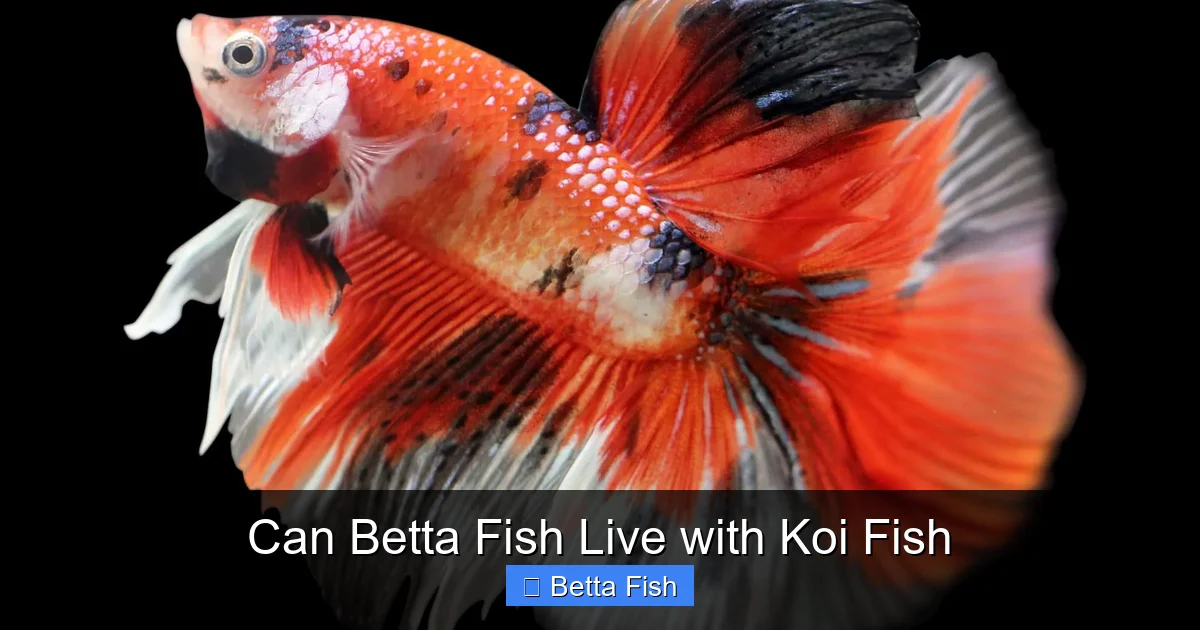
Betta fish, whose scientific name is Betta splendens, originate from the warm, shallow waters of Southeast Asia. Countries like Thailand, Cambodia, and Vietnam are home to wild bettas. In their natural environment, they live in rice paddies, slow-moving streams, and shallow ponds where the water is warm, still, and rich with vegetation. These conditions have shaped everything about how bettas breathe, eat, and behave.
Visual guide about Can Betta Fish Live with Koi Fish
Image source: aquariadise.com
One fascinating fact about bettas is that they possess a special organ called the labyrinth organ. This allows them to breathe air directly from the surface of the water. It is an adaptation that helps them survive in oxygen-poor environments. However, this does not mean they can tolerate poor water quality. It simply means they have a backup system for low-oxygen situations.
Temperature and Water Requirements
Betta fish are tropical creatures through and through. They need water temperatures between 76°F and 82°F to stay healthy and active. If the water drops below 76°F, their metabolism slows down. They become sluggish, lose their appetite, and become vulnerable to diseases like ich and fin rot. Prolonged exposure to cold water can be fatal.
In addition to warm water, bettas prefer slightly acidic to neutral water with a pH between 6.5 and 7.5. They also need calm water with minimal current. Strong filters or powerheads can stress them out because in the wild, they are adapted to still or very slow-moving water. A gentle sponge filter is usually the best choice for a betta tank.
Behavior and Temperament
Betta fish, especially males, are known for their aggressive and territorial nature. In the wild, a male betta will defend a small territory against other males. This instinct does not disappear in captivity. Male bettas will flare their gills, spread their fins, and attack anything they perceive as a rival — including fish with long, flowing fins that resemble another betta.
Female bettas are generally less aggressive but can still be territorial, especially in smaller spaces. They can sometimes live in groups called sororities, but this requires careful planning and a heavily planted tank with plenty of hiding spots. Even then, sororities can fail if the hierarchy breaks down.
This solitary and territorial nature is one of the biggest reasons bettas and koi cannot coexist. A betta will either see a koi as a threat and attack it, or the koi will simply be too large and overwhelming for the betta to handle. Either way, the betta loses.
Understanding the Koi Fish: A Coldwater Pond Giant
Natural Habitat and Origins
Koi fish are a domesticated variety of the common carp, Cyprinus carpio. They originated in Japan, where they were originally bred for food and later developed into the ornamental fish we know today. Koi are closely related to goldfish but grow to a much larger size. In the wild, carp live in rivers, lakes, and ponds with plenty of space to swim and forage.
Visual guide about Can Betta Fish Live with Koi Fish
Image source: acaquarium.com
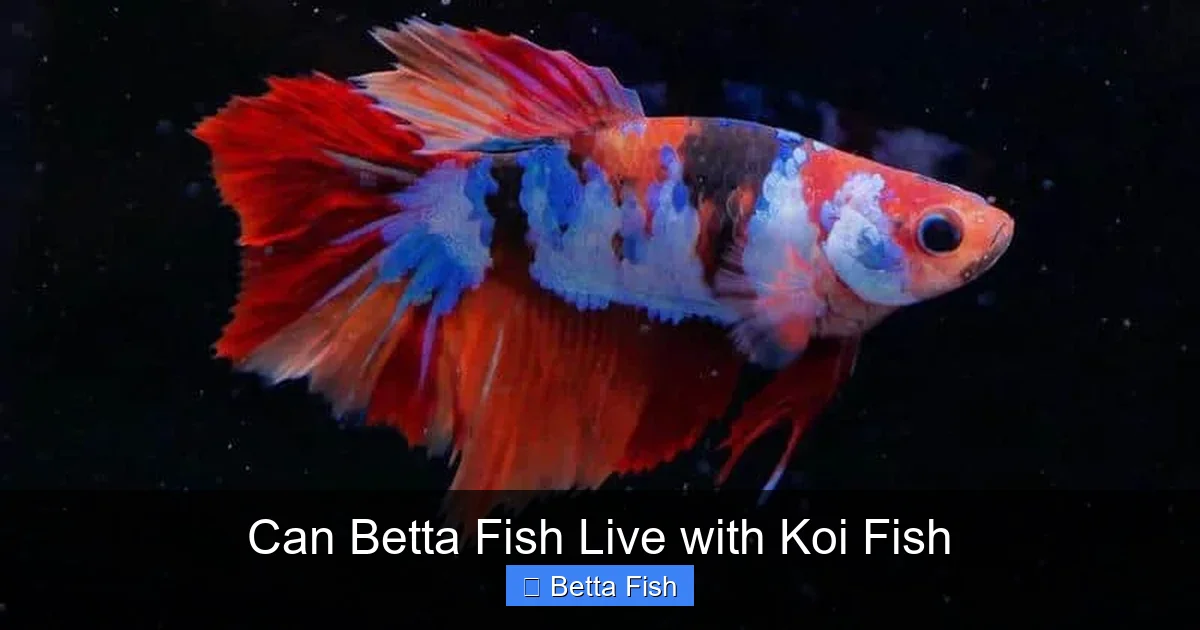
Unlike bettas, koi are coldwater fish. They can survive in a wide range of temperatures, from near freezing to around 80°F, but they thrive best in water between 59°F and 77°F. They are incredibly hardy and can live for decades — some koi have been known to live over 50 years with proper care.
Size and Space Requirements
Here is where the size difference becomes truly staggering. While a betta fish reaches a maximum length of about 2.5 to 3 inches, a full-grown koi can reach lengths of 24 to 36 inches or more. That means a single koi can be more than ten times longer than a betta. The weight difference is even more dramatic, with koi weighing up to 35 pounds or more.
Because of their enormous size, koi need a lot of space. A single koi requires at least 250 gallons of water, and most koi keepers recommend 1,000 gallons or more for a small group. This is why koi are almost always kept in outdoor ponds rather than indoor aquariums. A typical koi pond holds anywhere from 1,500 to 5,000 gallons or more.
Social Behavior and Diet
Koi are social, peaceful fish that do best in groups. They are not aggressive toward other fish, but they are large, active, and constantly on the move. They spend their days swimming, digging in the substrate, and searching for food. Their peaceful nature does not mean they are safe with small fish, though. A koi might accidentally swallow a betta simply because the betta is small enough to fit in its mouth.
Koi are omnivores with a voracious appetite. They eat algae, insects, plant matter, and commercial koi pellets. They produce an enormous amount of waste, which means koi ponds need powerful filtration systems, regular water changes, and careful monitoring of water parameters. The waste output of a single koi is equivalent to that of many smaller fish combined.
The Critical Differences That Prevent Cohabitation
Temperature Incompatibility
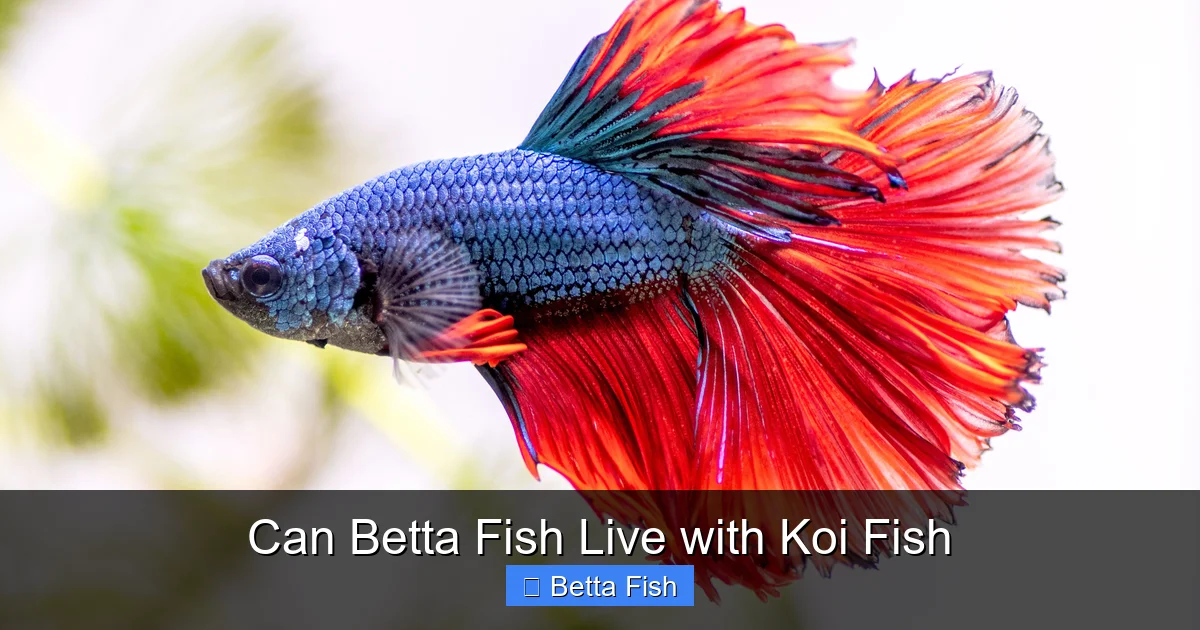
The most fundamental problem with housing bettas and koi together is the temperature mismatch. Betta fish need warm tropical water between 76°F and 82°F. Koi prefer cooler water between 59°F and 77°F. There is almost no overlap in their ideal ranges, and even the small overlap at around 76-77°F is not ideal for either species.
Visual guide about Can Betta Fish Live with Koi Fish
Image source: bettafishworld.com
If you keep the water warm enough for a betta, the koi will become stressed. Warm water holds less dissolved oxygen, and koi need plenty of oxygen to stay healthy. On the other hand, if you keep the water cool enough for koi, the betta will become lethargic, stop eating, and eventually get sick. There is simply no temperature that keeps both species healthy and comfortable.
Size and Predation Risk
The size difference between these two species cannot be overstated. A betta fish is tiny — barely the length of your thumb. A koi fish is enormous — longer than your forearm. In the animal kingdom, a predator-prey relationship often develops when one animal is small enough to be eaten by another. While koi are not predators in the traditional sense, they are opportunistic feeders. If something small and colorful swims by, a koi might try to eat it.
Even if a koi does not try to eat a betta, the sheer size difference means that a single tail swipe from a koi could seriously injure or kill a betta. Betta fish have delicate fins and small bodies. They are not built to withstand the physical force of a large, powerful fish swimming past them.
Water Flow and Filtration Needs
Betta fish need calm, still water. Strong currents stress them out and make it difficult for them to swim and breathe properly. Koi, on the other hand, need powerful filtration because of the massive amount of waste they produce. A koi pond typically has a strong pump and filtration system that creates significant water movement.
If you put a betta in a koi pond, the strong water flow would exhaust the little fish. Betta fish are not strong swimmers. They have long, heavy fins that make it hard to fight against currents. A betta in a koi pond would be constantly struggling just to stay in place, leading to extreme stress and eventual death.
Water Quality and Chemistry
Koi produce so much waste that their ponds need heavy-duty filtration, frequent water testing, and regular partial water changes. The ammonia and nitrate levels in a koi pond can spike quickly if the filtration is not adequate. While bettas are relatively hardy for their size, they are sensitive to poor water conditions. High ammonia or nitrate levels can burn their gills and damage their organs.
Additionally, koi ponds often have different water chemistry than betta tanks. Koi prefer a pH between 7.0 and 8.0, which is slightly alkaline. Bettas prefer a pH between 6.5 and 7.5, which is slightly acidic to neutral. While both species can tolerate a pH around 7.0, the other water quality issues make cohabitation impractical.
What Happens If You Try to House Them Together?
Scenario 1: Putting a Betta in a Koi Pond
Some people might think that a large koi pond would give a betta plenty of room to swim. Unfortunately, this scenario ends badly for the betta almost every time. The water in a koi pond is too cold for a betta, especially during fall and winter when temperatures drop. Even in summer, the water temperature in a large pond rarely stays consistently warm enough for a tropical fish.
Visual guide about Can Betta Fish Live with Koi Fish
Image source: splashyfishstore.com
The strong filtration and water movement in a koi pond would also stress the betta. The koi themselves, while not aggressive, are large and active. They would swim around the betta constantly, causing stress and fear. The betta would have nowhere to hide and no way to escape. Over time, the betta would become stressed, stop eating, and succumb to disease.
Scenario 2: Putting Koi in a Betta Tank
This scenario is even more obviously problematic. A betta tank typically holds between 3 and 10 gallons of water. A single koi needs at least 250 gallons. There is simply no way to fit a koi in a betta tank. Even a baby koi, which starts at around 3-4 inches, would quickly outgrow a small aquarium and need to be moved to a larger pond within weeks.
If someone were to put a baby koi in a betta tank temporarily, the koi would produce far more waste than the small filter could handle. Ammonia levels would spike, poisoning both fish. The warm water needed for the betta would also be less than ideal for the koi. It is a lose-lose situation.
Proper Care for Betta Fish
Setting Up the Ideal Betta Tank
If you want to keep a betta fish happy and healthy, you need to set up an environment that mimics its natural habitat as closely as possible. Here are the essentials:
- Tank size: A minimum of 5 gallons, though 10 gallons is even better. Larger tanks are easier to maintain and give your betta more room to explore.
- Heater: A reliable aquarium heater set to 78°F is essential. Use a thermometer to monitor the temperature daily.
- Filter: A gentle sponge filter or a hang-on-back filter with adjustable flow. Avoid strong currents.
- Substrate: Fine gravel or sand. Avoid sharp decorations that could tear your betta’s delicate fins.
- Plants: Live or silk plants provide hiding spots and enrichment. Avoid plastic plants with sharp edges.
- Lid: Bettas are jumpers. Always keep a lid on the tank to prevent escapes.
Betta Tank Mates (If Any)
While bettas are best kept alone, some keepers have success with carefully chosen tank mates. Snails and shrimp are popular choices because they are peaceful and help clean the tank. If you are interested in learning more about compatible companions, check out our guides on can betta fish live with snails and can betta fish live with shrimp. For a broader overview, our article on what other fish can live with betta fish covers many options in detail.
Remember that every betta has a unique personality. Some are more aggressive than others. Always have a backup plan in case your betta does not accept its tank mates. Never add a tank mate without monitoring the situation closely for at least a week.
Proper Care for Koi Fish
Setting Up the Ideal Koi Pond
Koi are a long-term commitment. They can live for decades and grow to impressive sizes. Here is what you need to provide for healthy, happy koi:
- Pond size: A minimum of 1,000 gallons for a small group of koi. Bigger is always better.
- Depth: The pond should be at least 3-4 feet deep to provide temperature stability and protection from predators.
- Filtration: A powerful biological and mechanical filtration system. Koi produce a lot of waste, and inadequate filtration leads to poor water quality.
- Aeration: Air pumps and water features like waterfalls help maintain oxygen levels, especially in warm weather.
- Water quality: Test the water regularly for ammonia, nitrite, nitrate, and pH. Perform partial water changes weekly or biweekly.
- Shade: Provide shade with plants, umbrellas, or pond structures to protect koi from overheating and sunburn.
Koi Social Needs
Koi are social fish that thrive in groups. A single koi can survive alone, but it will be happier and healthier with companions. Keep at least three to five koi together for the best results. They will swim together, feed together, and display more natural behaviors when they have company.
Because koi are so large and social, they are not suitable for indoor aquariums. They need the space and natural environment that only an outdoor pond can provide. If you do not have the space for a proper koi pond, consider other coldwater fish that are better suited to home aquariums.
Common Misconceptions About Mixing Fish Species
“They Are Both Fish, So They Should Be Fine Together”
This is one of the most dangerous misconceptions in the fish-keeping hobby. Just because two animals are both fish does not mean they can share the same habitat. Think of it this way: a lion and a zebra are both mammals, but you would not put them in the same enclosure and expect harmony. Fish species have evolved in different environments with different needs, and those needs must be respected.
“My Betta Is Peaceful, So It Will Be Fine”
While some bettas are less aggressive than others, their territorial instincts are hardwired. Even a “peaceful” betta may become stressed or aggressive when placed in an unfamiliar environment with large, unfamiliar fish. Additionally, the problem is not just about the betta’s behavior. The koi’s size and activity level alone are enough to cause serious problems for a betta, regardless of the betta’s temperament.
“A Bigger Tank Will Solve Everything”
A larger tank does help with many fish-keeping challenges, but it cannot overcome fundamental biological incompatibilities. No matter how large the tank or pond, you cannot create water that is simultaneously warm enough for a betta and cool enough for koi. You cannot make a koi small enough to safely coexist with a betta. The laws of biology set hard limits on what is possible.
Alternative Fish That Can Live with Bettas
If you are looking to add some life to your betta tank, there are several species that can coexist with bettas under the right conditions. Here are some popular options:
- Snails: Nerite snails and mystery snails are excellent tank mates. They are peaceful, help clean algae, and are too large for a betta to harm.
- Shrimp: Cherry shrimp and Amano shrimp can work, though some bettas will hunt them. Provide plenty of hiding spots with plants and decorations.
- Corydoras catfish: These small, peaceful bottom dwellers can sometimes coexist with bettas in a 10-gallon or larger tank. Keep them in groups of at least five.
- Harlequin rasboras: These small, peaceful schooling fish can work with bettas in a 15-gallon or larger tank. Keep them in groups of six or more.
Always research any potential tank mate thoroughly before adding them to your betta’s home. For more detailed information, our article on can a betta fish live with other fish provides comprehensive guidance on choosing safe companions.
Final Thoughts: Keeping Both Species Happy and Separate
Betta fish and koi fish are both incredible species that bring joy to fish keepers around the world. However, they belong in completely different environments. Betta fish need warm, calm, small aquariums with gentle filtration and plenty of hiding spots. Koi fish need large, cool, well-filtered ponds with powerful aeration and plenty of swimming room.

Visual guide about Can Betta Fish Live with Koi Fish
Image source: fishkeepertank.com
Trying to house these two species together would be harmful to both. The betta would suffer from cold water, strong currents, and the stress of living near enormous fish. The koi would suffer from warm water, inadequate space, and poor water quality in a small tank. Neither species would thrive, and both would likely die prematurely.
The best approach is to appreciate each species for what it is and provide the care it deserves. If you have the space and resources, you could keep both bettas and koi — just in separate habitats designed specifically for their needs. A beautiful betta in a well-planted 10-gallon tank and a group of colorful koi in a spacious outdoor pond would give you the best of both worlds without compromising the health of either species.
Responsible fish keeping means understanding and respecting the needs of every animal in your care. By keeping bettas and koi in their proper environments, you ensure that both species can live long, healthy, and happy lives.
Frequently Asked Questions
Can betta fish and koi fish live in the same tank?
No, betta fish and koi fish cannot live in the same tank. They have completely different temperature requirements, size differences, and habitat needs that make cohabitation impossible and dangerous for both species.
What temperature do betta fish need compared to koi?
Betta fish need warm water between 76°F and 82°F, while koi thrive in cooler water between 59°F and 77°F. There is almost no overlap in their ideal temperature ranges, making shared water conditions impossible.
Will a koi fish eat a betta fish?
While koi are not aggressive predators, they are opportunistic feeders and may try to eat a betta if it is small enough to fit in their mouth. Even without predation, a koi’s size and activity level could accidentally injure or kill a betta.
How big do koi fish get compared to betta fish?
Koi fish can grow up to 24-36 inches long and weigh over 35 pounds, while betta fish only reach about 2.5-3 inches in length. This massive size difference makes them completely incompatible as tank mates.
Can I put a betta fish in my outdoor koi pond?
No, you should never put a betta fish in an outdoor koi pond. The water is too cold, the filtration creates too strong a current, and the koi are far too large. A betta placed in a koi pond would quickly become stressed and die.
What are good tank mates for betta fish instead of koi?
Good tank mates for betta fish include snails, shrimp, corydoras catfish, and harlequin rasboras. These species are peaceful, similar in size, and can tolerate the warm, calm water conditions that bettas require.

