Can betta fish live with fire belly toads? The short answer is no. While both are popular pets, betta fish and fire belly toads have completely different habitat needs, temperaments, and water requirements that make cohabitation dangerous. Fire belly toads are semi-aquatic amphibians that need land areas, while bettas are fully aquatic fish requiring warm, still water. Attempting to house them together almost always ends in stress, injury, or death for one or both animals.
Key Takeaways
- Habitat mismatch: Betta fish are fully aquatic, while fire belly toads are semi-aquatic and need both water and land areas to survive.
- Water temperature conflict: Bettas need warm water between 76–82°F, while fire belly toads prefer cooler temperatures around 65–75°F.
- Toxicity risk: Fire belly toads secrete toxins from their skin that can poison betta fish and contaminate the water.
- Aggression concerns: Male bettas are territorial and may attack toads, while toads may nip at a betta’s flowing fins.
- Different pH and water quality needs: Bettas prefer slightly acidic water, while fire belly toads need neutral to slightly alkaline conditions.
- Feeding challenges: These species have different dietary needs and feeding behaviors, making proper nutrition difficult in a shared tank.
- Safer alternatives exist: There are many better tank mates for betta fish that share similar water and habitat requirements.
[FEATURED_IMAGE_PLACEHOLDER]
📑 Table of Contents
- Introduction: The Truth About Betta Fish and Fire Belly Toads
- Understanding the Betta Fish: A Fully Aquatic Species
- Understanding the Fire Belly Toad: A Semi-Aquatic Amphibian
- The Five Reasons Betta Fish and Fire Belly Toads Cannot Live Together
- What Happens If You Try to House Them Together
- Safe Alternatives: Better Tank Mates for Your Betta Fish
- Setting Up a Proper Fire Belly Toad Habitat
- Can Any Fish Live With Fire Belly Toads?
- Common Myths About Mixing Betta Fish and Amphibians
- Conclusion: Keep Your Betta and Your Toads Happy and Separate
Introduction: The Truth About Betta Fish and Fire Belly Toads
If you’re a fish keeper, you’ve probably wondered about mixing different species in your aquarium. It’s a fair question — especially when you have a beautiful betta fish and are thinking about adding something unique like a fire belly toad. Both are stunning, both are popular in the pet trade, and both seem like they could make an interesting display. But can betta fish live with fire belly toads in the same tank? The reality is more complicated than you might hope.
Many pet stores sell both betta fish and fire belly toads in close proximity, which can give the false impression that they’re compatible. Some employees may even tell you it’s fine to keep them together. Unfortunately, this is one of the most common pieces of misinformation in the aquarium hobby. The truth is that these two animals have fundamentally different needs when it comes to their environment, diet, water chemistry, and social behavior.
In this article, we’ll break down exactly why betta fish and fire belly toads should not share a tank. We’ll cover everything from habitat differences and water parameters to toxicity risks and aggression. By the end, you’ll have a clear understanding of why this pairing doesn’t work — and what you can do instead to create a thriving aquarium.
Understanding the Betta Fish: A Fully Aquatic Species
Natural Habitat and Behavior
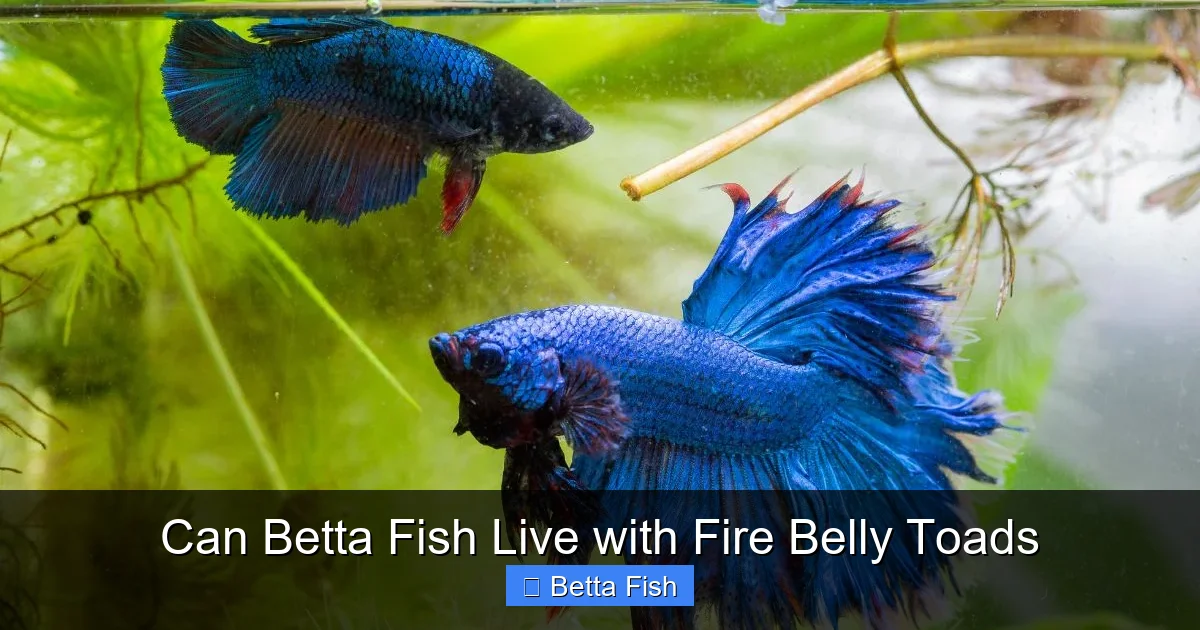
Betta fish, also known as Betta splendens, are native to the shallow, warm waters of Southeast Asia. You’ll find them in rice paddies, marshes, and slow-moving streams in countries like Thailand, Cambodia, and Vietnam. These environments are consistently warm, with very little water current, and are rich with vegetation. Understanding this natural habitat is essential when considering whether betta fish can live with fire belly toads — because their needs are quite specific.
Visual guide about Can Betta Fish Live with Fire Belly Toads
Image source: 4.bp.blogspot.com
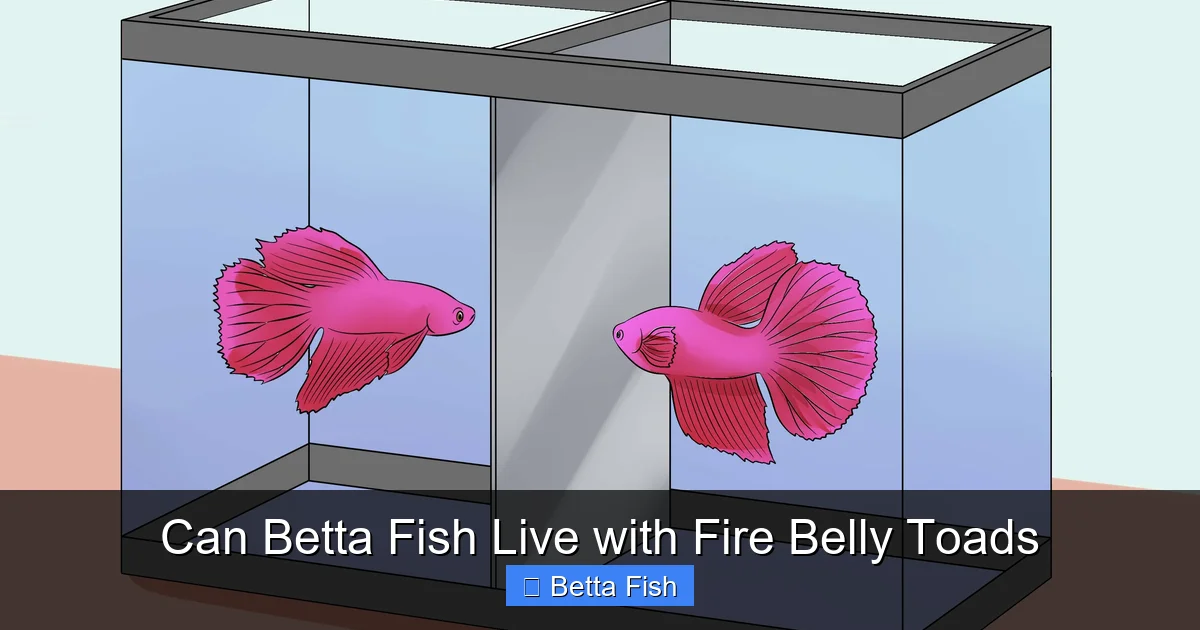
Male bettas are famously territorial. In the wild, they claim small territories and defend them aggressively against other males. This instinct doesn’t disappear in captivity. A male betta will flare his gill covers, spread his fins, and attack anything he perceives as a threat — including animals that aren’t even fish. Females are somewhat less aggressive but can still be feisty, especially in smaller tanks.
Water Requirements for Betta Fish
Betta fish are tropical creatures that need consistently warm water. The ideal temperature range is 76–82°F (24–28°C). They can survive brief dips outside this range, but prolonged exposure to cold water weakens their immune system and makes them susceptible to diseases like ich and fin rot. A reliable aquarium heater is non-negotiable for a betta tank.
In terms of water chemistry, bettas prefer slightly acidic to neutral water with a pH between 6.5 and 7.5. They also need still or very gently moving water because their long, flowing fins make it difficult to swim against strong currents. A filter with an adjustable flow or a sponge filter works best. If you’re exploring what other species might share a betta’s home, check out our guide on what other fish can live with betta fish for compatible options.
Understanding the Fire Belly Toad: A Semi-Aquatic Amphibian
Natural Habitat and Behavior
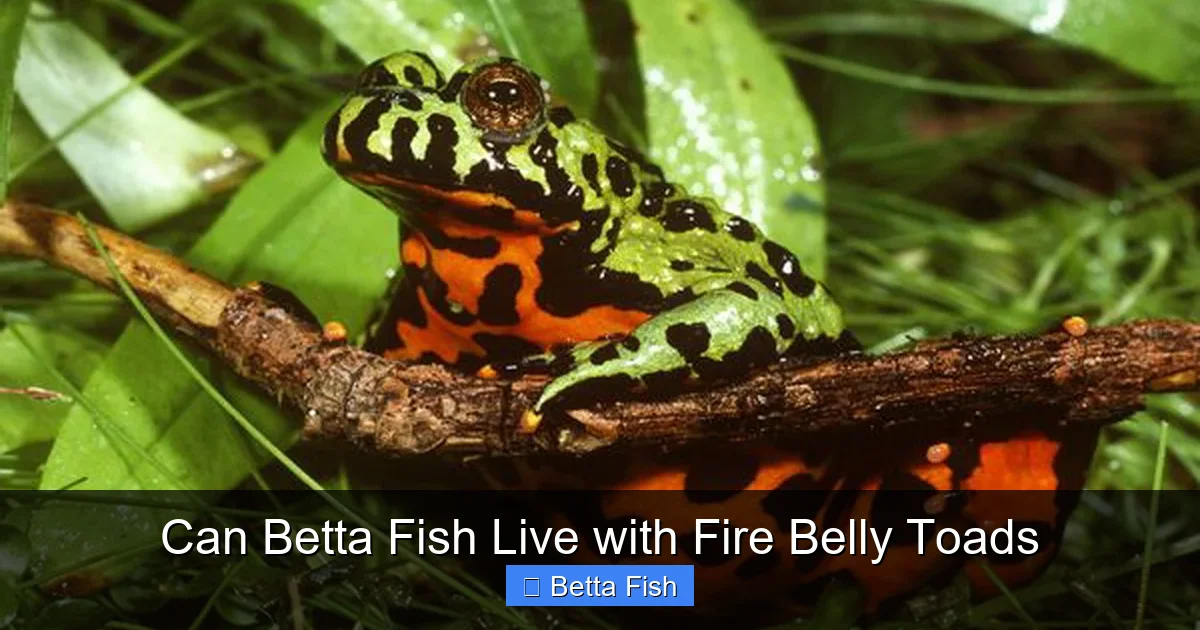
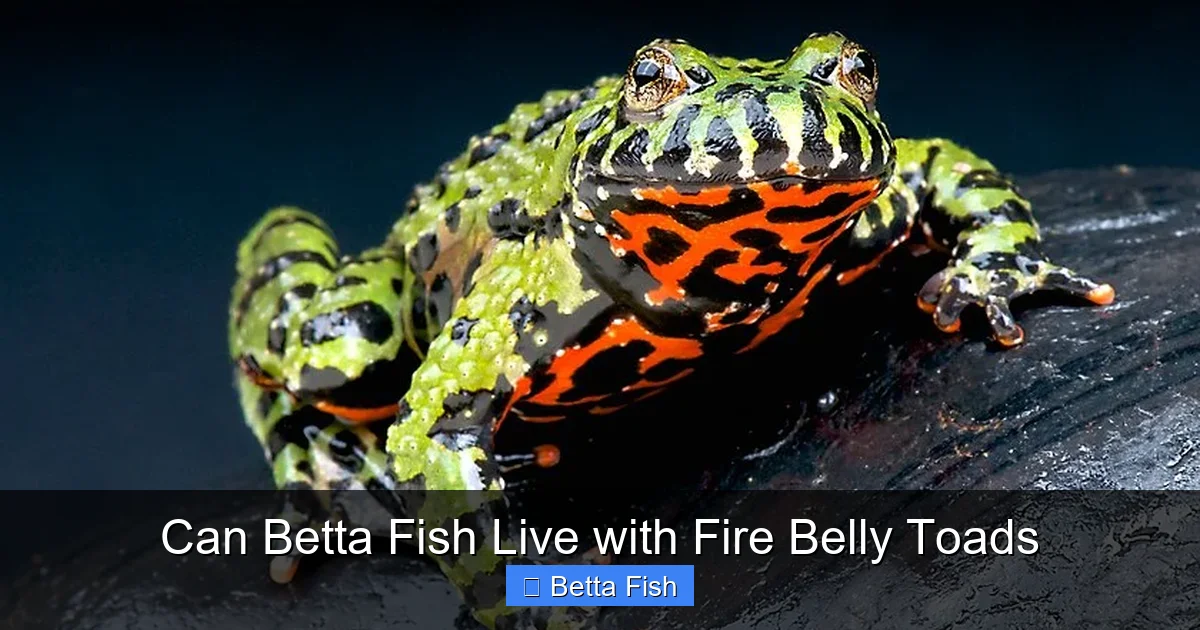
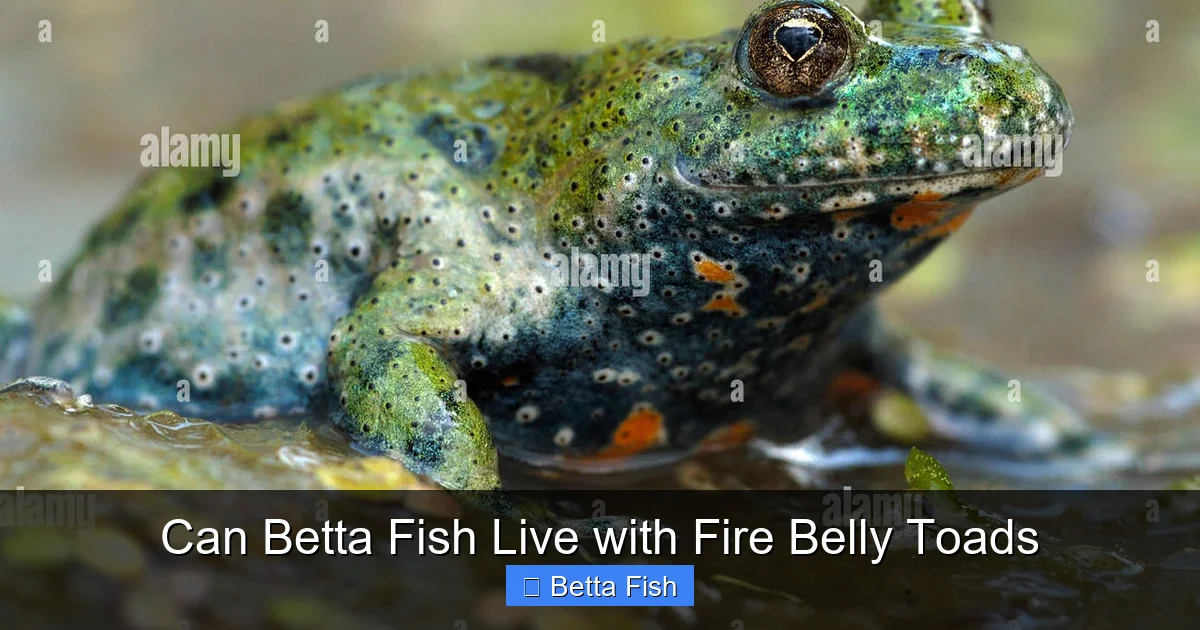
Fire belly toads (Bombina orientalis) are small, brightly colored amphibians native to Korea, China, and parts of Russia. Their name comes from the vivid red or orange markings on their bellies, which serve as a warning to predators about their toxicity. Unlike betta fish, fire belly toads are semi-aquatic, meaning they need access to both water and land to thrive.
Visual guide about Can Betta Fish Live with Fire Belly Toads
Image source: s7d2.scene7.com
In the wild, fire belly toads live along the edges of ponds, streams, and marshes. They spend significant time hopping on land, hunting for insects, and then returning to the water to cool off and hydrate. This dual lifestyle is critical to their health and well-being. A fire belly toad kept entirely underwater will eventually drown, and one kept entirely on land will dehydrate and die.
Water and Land Requirements
Setting up a proper fire belly toad enclosure requires creating a paludarium — a habitat that combines water and land areas. The water section should be shallow, typically only 2–4 inches deep, because these toads aren’t strong swimmers. The land section should include moss, bark, and hiding spots where the toad can retreat. This setup is fundamentally incompatible with a standard betta aquarium, which is designed to be fully submerged with deep water.
Fire belly toads also prefer cooler temperatures than betta fish. Their ideal range is 65–75°F (18–24°C), which is significantly below what a betta needs. At temperatures above 80°F, fire belly toads become stressed, stop eating, and can develop serious health problems. This temperature gap alone is one of the biggest reasons why betta fish cannot live with fire belly toads.
The Five Reasons Betta Fish and Fire Belly Toads Cannot Live Together
1. Completely Different Habitat Structures
The most fundamental problem is that betta fish and fire belly toad need entirely different living spaces. A betta tank is fully aquatic, typically 5–10 gallons or more, filled entirely with water, heated, and filtered. A fire belly toad enclosure is a paludarium with roughly 50% water and 50% land. You cannot create a single environment that meets both animals’ needs without compromising the health of one or both.

Visual guide about Can Betta Fish Live with Fire Belly Toads
Image source: petshun.com
If you put a fire belly toad in a betta tank, the toad will struggle to reach the surface to breathe and may drown. If you put a betta fish in a fire belly toad enclosure, the water is usually too shallow, too cool, and lacks the filtration that bettas need to stay healthy. There is simply no middle ground.
2. Dangerous Temperature Conflict
As mentioned earlier, betta fish need warm tropical water between 76–82°F, while fire belly toads thrive in cooler conditions between 65–75°F. If you set the temperature high enough for the betta, the toad will suffer from heat stress. If you set it low enough for the toad, the betta’s immune system will weaken, leaving it vulnerable to disease.
Some people suggest splitting the difference and keeping the water around 75°F. While this falls within the survivable range for both species, it’s not optimal for either. The betta will be more sluggish and prone to illness, and the toad will be uncomfortable and stressed. In aquarium keeping, “surviving” is not the same as “thriving.” We owe it to our pets to provide conditions where they can truly flourish.
3. Toxicity: The Hidden Danger
Here’s something many people don’t realize: fire belly toads secrete toxins from their skin. The bright colors on their bellies aren’t just for show — they’re a warning to predators. These secretions contain bufadienolides, which are compounds that can be harmful or even fatal to small fish like bettas. In the confined space of an aquarium, these toxins can quickly build up in the water and poison your betta.
Even if the toad doesn’t release large amounts of toxin during handling or stress, the constant low-level secretion can irritate a betta’s gills and skin. Over time, this exposure can lead to respiratory distress, skin lesions, and increased susceptibility to infections. This is one of the most serious and often overlooked reasons why keeping betta fish with fire belly toads is a bad idea.
4. Aggression and Stress
Male bettas are aggressive by nature. They will attack anything that enters their territory and triggers their territorial instincts. A fire belly toad moving through the water — with its bright colors and unusual shape — is almost guaranteed to provoke a betta’s aggression. The betta may nip at the toad’s legs, bite its tail, or constantly flare and chase it around the tank.
On the flip side, fire belly toads are opportunistic eaters. They will try to eat anything that fits in their mouths, including a betta’s long, flowing fins. A toad nipping at a betta’s fins can cause serious damage, leading to fin rot and secondary infections. Both animals would be under constant stress, which weakens their immune systems and shortens their lifespans.
If you’re curious about how betta aggression plays out with other species, our article on can a male betta live with other fish provides helpful insights into betta temperament.
5. Incompatible Water Chemistry and Quality Needs
Beyond temperature, betta fish and fire belly toads have different preferences when it comes to water chemistry. Bettas do best in slightly acidic water (pH 6.5–7.0), while fire belly toads prefer neutral to slightly alkaline conditions (pH 7.0–7.8). While there’s some overlap, the bigger issue is water quality management.
Fire belly toads produce a significant amount of waste relative to their size, and their skin secretions can foul the water quickly. Betta fish are sensitive to ammonia and nitrite spikes, which are more likely to occur in a tank with a toad producing extra waste. Additionally, the medications and treatments used for amphibians are often toxic to fish, so if either animal gets sick, treating them in a shared tank becomes nearly impossible.
What Happens If You Try to House Them Together
Despite all the warnings, some people still attempt to keep betta fish and fire belly toads together. Here’s what typically happens in those scenarios:

Visual guide about Can Betta Fish Live with Fire Belly Toads
Image source: amphibiancare.com
- Week 1: Both animals seem fine. The betta may flare at the toad occasionally, and the toad may hide more than usual, but no obvious harm is done.
- Week 2–3: The betta becomes increasingly aggressive or stressed. The toad’s skin secretions begin affecting water quality. One or both animals stop eating normally.
- Month 1: Visible problems appear. The betta may develop fin damage from the toad’s nipping, or the toad may have skin irritation from the warm water. Ammonia levels spike due to the toad’s waste production.
- Month 2+: Without intervention, one or both animals will develop serious health issues. Fin rot, fungal infections, respiratory distress, and poisoning are common outcomes.
The bottom line is that attempting to keep betta fish and fire belly toads together is a gamble where the animals always lose. Responsible pet ownership means providing each species with the environment it needs, not forcing them into an arrangement that causes harm.
Safe Alternatives: Better Tank Mates for Your Betta Fish
If you were hoping to create a diverse aquarium with your betta fish, don’t worry — there are plenty of safe and compatible options. The key is choosing tank mates that share similar water temperature, pH, and habitat requirements. Here are some excellent alternatives:
Visual guide about Can Betta Fish Live with Fire Belly Toads
Image source: c8.alamy.com
Peaceful Community Fish
Small, peaceful fish that don’t have bright colors or long fins (which bettas may see as competition) make great tank mates. Ember tetras, harlequin rasboras, and corydoras catfish are all popular choices. They occupy different areas of the tank, reducing the chance of territorial conflicts. For a comprehensive list, check out our guide on can a betta fish live with other fish.
Invertebrates
Snails and shrimp are fantastic additions to a betta tank. Nerite snails, mystery snails, and cherry shrimp are all hardy, peaceful, and help keep the tank clean by eating algae and leftover food. They’re too small and unthreatening to trigger a betta’s aggression in most cases. Learn more about keeping betta fish with snails and betta fish with shrimp in our detailed guides.
Bottom Dwellers
Fish that stay near the bottom of the tank, like kuhli loaches or otocinclus catfish, rarely cross paths with betta fish, which tend to occupy the middle and upper water columns. This spatial separation reduces the chance of conflict and allows both species to coexist peacefully.
Setting Up a Proper Fire Belly Toad Habitat
If you love fire belly toads and want to keep them, that’s absolutely the right call — just not in the same tank as your betta. Here’s how to set up an ideal fire belly toad enclosure:
Visual guide about Can Betta Fish Live with Fire Belly Toads
Image source: wikihow.com
Enclosure Size and Layout
A 20-gallon tank works well for a group of 3–5 fire belly toads. Divide the tank into approximately 50% water and 50% land using a sloped substrate, a floating platform, or a custom-built divider. The water section should be shallow (2–4 inches) and easy to enter and exit. Use a gentle filter — a small air-driven sponge filter works perfectly — and make sure there are no sharp edges that could injure the toads.
Temperature and Lighting
Keep the ambient temperature between 65–75°F. In most homes, this means you may not need a heater at all — in fact, you might need to keep the room cool during summer. Fire belly toads don’t require UVB lighting, but a low-wattage light on a 12-hour cycle helps maintain a natural day-night rhythm and supports any live plants in the enclosure.
Substrate and Decor
Use coconut fiber, sphagnum moss, or organic topsoil for the land area. Avoid gravel or small stones that the toads might accidentally ingest. Include plenty of hiding spots like cork bark, PVC pipes, and plant cover. Live plants such as pothos, ferns, and mosses help maintain humidity and create a naturalistic environment.
Feeding Your Fire Belly Toads
Fire belly toads are insectivores. Feed them a variety of small crickets, fruit flies, bloodworms, and waxworms. Dust their food with a calcium supplement a few times a week to prevent metabolic bone disease. Feed juveniles daily and adults every 2–3 days. Remove any uneaten food to keep the enclosure clean.
Can Any Fish Live With Fire Belly Toads?
While this article focuses on whether betta fish can live with fire belly toads, you might wonder if any fish can share a toad’s enclosure. The answer is that it’s generally not recommended. Most fish require fully aquatic conditions, and the shallow, cool water of a fire belly toad habitat isn’t suitable for them. Additionally, the toads’ skin secretions can harm fish, and many fish will nip at the toads’ sensitive skin.

Visual guide about Can Betta Fish Live with Fire Belly Toads
Image source: buildyouraquarium.com
Some keepers have had limited success keeping small, hardy fish like white cloud mountain minnows in the water section of a fire belly toad paludarium, since these fish tolerate cooler temperatures. However, even this combination requires careful monitoring, and it’s not something we recommend for beginners. The safest approach is to keep your fire belly toads in a species-only setup where their needs can be fully met without compromise.
Common Myths About Mixing Betta Fish and Amphibians
Myth: “My Pet Store Said It Was Fine”
Pet store employees don’t always have specialized knowledge about species compatibility. While many are well-informed, others may give advice based on what sells rather than what’s best for the animals. Always do your own research before combining any species. The fact that a store sells both animals in the same section doesn’t mean they belong in the same tank.
Visual guide about Can Betta Fish Live with Fire Belly Toads
Image source: housedpet.com
Myth: “They Seemed Fine for a While”
Just because animals survive together temporarily doesn’t mean the arrangement is healthy. Chronic stress can take weeks or months to show visible symptoms. By the time you notice problems, the animals may have already suffered significant harm. Prevention is always better than treatment.
Myth: “A Bigger Tank Would Solve the Problem”
While a larger tank can reduce aggression between fish, it doesn’t solve the fundamental incompatibilities between betta fish and fire belly toads. The temperature conflict, habitat structure differences, toxicity risk, and water chemistry mismatches exist regardless of tank size. No amount of space can bridge the gap between a fully aquatic tropical fish and a semi-aquatic cool-water amphibian.
Conclusion: Keep Your Betta and Your Toads Happy and Separate
So, can betta fish live with fire belly toads? The answer is a clear and definitive no. These two animals have fundamentally different needs that cannot be reconciled in a single enclosure. From temperature conflicts and habitat structure differences to the very real risk of toxicity and aggression, there are too many factors working against this combination.
Visual guide about Can Betta Fish Live with Fire Belly Toads
Image source: acaquarium.com
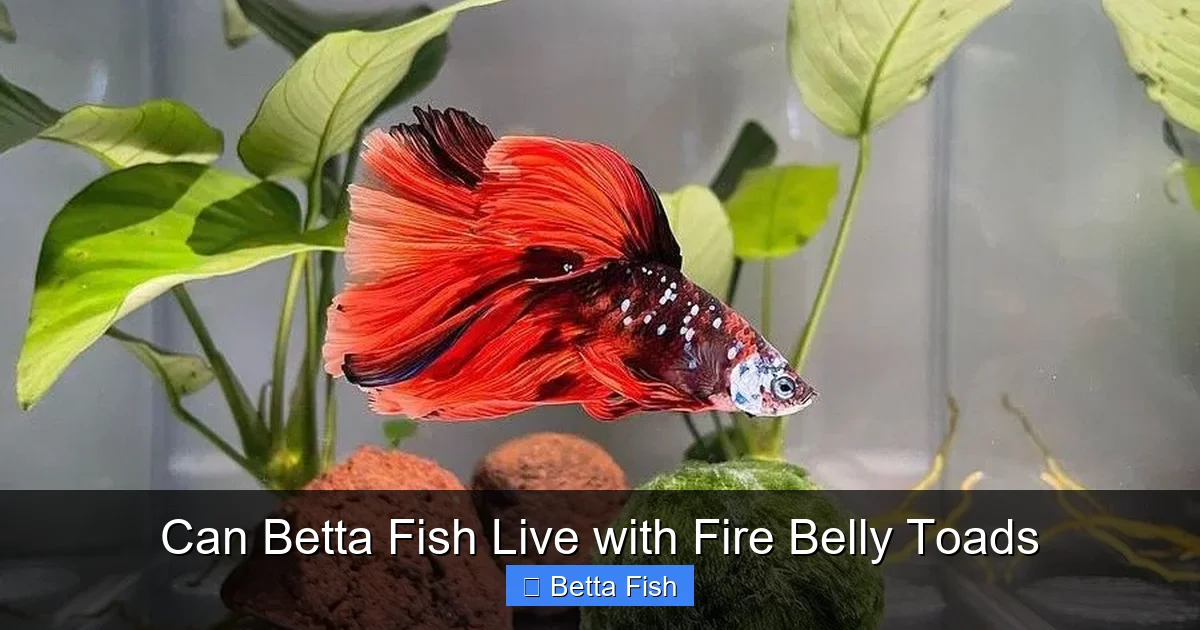
The good news is that both betta fish and fire belly toads are wonderful pets when kept in proper, species-appropriate setups. Your betta will thrive in a warm, planted aquarium with peaceful tank mates that share its tropical requirements. Your fire belly toads will flourish in a cool, semi-aquatic paludarium with plenty of land and shallow water. By giving each species the environment it deserves, you’ll enjoy healthy, vibrant animals for years to come.
Responsible pet ownership starts with understanding and respecting the needs of every animal in your care. When we prioritize their well-being over our desire to create a mixed-species display, we become better keepers and our pets live longer, happier lives. Keep your betta fish and fire belly toads in separate, well-maintained habitats, and both will reward you with their unique beauty and fascinating behaviors.
Frequently Asked Questions
Can betta fish live with fire belly toads in the same tank?
No, betta fish and fire belly toads cannot live together. They have completely different habitat needs, temperature requirements, and water chemistry preferences. Fire belly toads also secrete toxins that can harm or kill betta fish in the confined space of an aquarium.
What temperature do betta fish need compared to fire belly toads?
Betta fish require warm tropical water between 76–82°F, while fire belly toads need cooler conditions between 65–75°F. There is no temperature range that is optimal for both species simultaneously, making cohabitation impossible.
Are fire belly toads toxic to fish?
Yes, fire belly toads secrete bufadienolides from their skin as a defense mechanism. These toxins can irritate a fish’s gills and skin, cause respiratory distress, and even lead to death in the small volume of an aquarium. This is one of the most serious risks of housing them together.
Can African dwarf frogs live with betta fish instead?
African dwarf frogs are a much better option than fire belly toads because they are fully aquatic and share similar water temperature requirements with betta fish. However, even this combination requires careful monitoring. Learn more in our guide on can aquatic frogs live with betta fish.
What are the best tank mates for a betta fish?
Good tank mates for betta fish include small peaceful fish like ember tetras and corydoras catfish, as well as invertebrates like snails and cherry shrimp. The best companions share similar water parameters and don’t trigger the betta’s territorial aggression.
How do I set up a proper home for fire belly toads?
Fire belly toads need a paludarium with both water and land areas, shallow water (2–4 inches deep), cool temperatures between 65–75°F, mossy substrate, and plenty of hiding spots. A 20-gallon tank divided roughly 50/50 between water and land works well for a small group of 3–5 toads.

