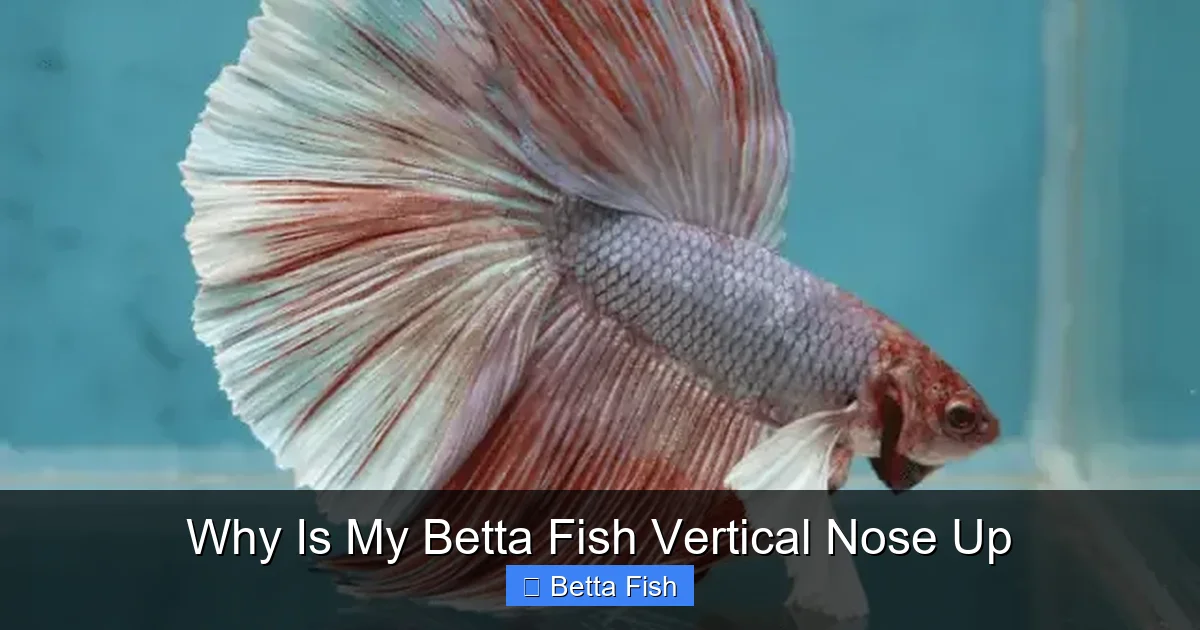
Why Is My Betta Fish Vertical Nose Up

Seeing your betta fish swimming with its nose pointed upward can be alarming. This posture often signals stress, illness, or water‑quality problems. By checking tank conditions, diet, and health signs, you can quickly correct the issue and keep your betta thriving.
Key Takeaways
- Water quality is the #1 culprit: Poor parameters cause buoyancy problems that make a betta tilt nose‑up.
- Swim bladder disease is common: Infections, constipation, or over‑feeding can impair the swim bladder.
- Observe behavior: Loss of appetite, faded colors, or gasping at the surface often accompany the nose‑up posture.
- Quick fixes work: Fasting, a pea treat, or a water change can resolve many cases within 24‑48 hours.
- Prevention beats cure: Regular water changes, a balanced diet, and a stress‑free environment keep the swim bladder healthy.
- Know when to seek help: Persistent tilt, bleeding, or rapid decline means a vet or experienced hobbyist should intervene.
- Internal resources: Use our related guides on floating sideways, swimming sideways, and water cloudiness for a fuller picture.
📑 Table of Contents
- Introduction: When Your Betta Looks Like a Diving Plane
- 1. The Swim Bladder: Your Betta’s Internal Buoyancy Engine
- 2. Water Quality: The Silent Saboteur
- 3. Feeding Habits: When Too Much Really Is Too Little
- 4. Stress Factors: Anything That Makes Your Betta Unhappy Can Tilt Its Head
- 5. When to Call the Experts
- 6. Prevention: Keeping Your Betta Upright for Life
- Putting It All Together
- Related Articles You Might Find Helpful
- Conclusion: A Straight‑Up Betta Is Within Reach
Introduction: When Your Betta Looks Like a Diving Plane
Imagine opening the lid of your betta tank and seeing your bright little fighter gliding with its head angled toward the ceiling. It’s not a new trick—it’s a warning sign. A vertical nose‑up position is one of the most common “red flags” betta owners encounter, and it usually points to a problem that can be solved with a few simple steps.
In this article we’ll break down everything you need to know about why is my betta fish vertical nose up, from the science of the swim bladder to everyday tank‑maintenance habits. By the end, you’ll feel confident spotting the cause, applying a fix, and preventing the issue from returning.
1. The Swim Bladder: Your Betta’s Internal Buoyancy Engine
What is the swim bladder?
The swim bladder is a small, gas‑filled organ located just behind the backbone. It lets a betta adjust its depth without constantly swimming. When the bladder works properly, the fish can hover at any level. If the bladder is out of balance, the fish will tilt, float, or sink.
Visual guide about Why Is My Betta Fish Vertical Nose Up
Image source: japanesefightingfish.org
How does a tilt happen?
Think of the swim bladder like a balloon inside a backpack. If the balloon shifts to one side, the backpack leans. Similarly, when gas or fluid builds up on one side of the bladder, the fish’s head may point upward while the tail stays low.
Common swim‑bladder problems
- Swim bladder disease: A catch‑all term for any condition that impairs buoyancy.
- Constipation: Food lodged in the intestine can press against the bladder.
- Infection: Bacterial or parasitic infections inflame the organ.
- Physical injury: A sudden bump or a sharp object can damage the bladder wall.
2. Water Quality: The Silent Saboteur
Why water matters more than you think
Betta fish are hardy, but they are also sensitive to ammonia, nitrite, nitrate, and pH swings. Bad water can stress the fish, weaken its immune system, and directly affect the swim bladder’s ability to regulate gas.

Visual guide about Why Is My Betta Fish Vertical Nose Up
Image source: k.sinaimg.cn
Key parameters to check
- Ammonia & nitrite: Both should read 0 ppm. Even a trace can cause stress.
- Nitrate: Keep under 20 ppm for a betta.
- pH: Ideal range is 6.5‑7.5.
- Temperature: 76‑82 °F (24‑28 °C) is optimal.
Quick water‑quality fix
Perform a 25‑30 % water change using conditioned water that matches the tank temperature. Test the water again after 24 hours; if the parameters improve, the nose‑up tilt often resolves within a day.
3. Feeding Habits: When Too Much Really Is Too Little
Over‑feeding and constipation
Betta pellets can expand in the gut, especially if you feed more than two pellets twice a day. A full gut pushes against the swim bladder, causing the fish to tilt nose up.

Visual guide about Why Is My Betta Fish Vertical Nose Up
Image source: x0.ifengimg.com
Fasting as a diagnostic tool
Stop feeding for 24‑48 hours. If the tilt improves, constipation was likely the cause. After fasting, re‑introduce a light diet of high‑quality pellets or frozen brine shrimp.
The magic of the green pea
Cooked, peeled green peas are a classic remedy. The fiber helps clear the intestine. Offer a single pea (cut in half) once, then return to a normal diet. Most owners see improvement within 12‑24 hours.
4. Stress Factors: Anything That Makes Your Betta Unhappy Can Tilt Its Head
Tank mates and aggression
While many keep bettas alone, some owners house them with peaceful species. A bully can cause stress, leading to poor swimming posture. If you notice flaring or rapid fin movement, consider separating the fish.
Improper lighting and temperature fluctuations
Sudden changes in light or temperature can shock the fish. Use a timer for a consistent day/night cycle and a reliable heater.
Decor and water flow
Strong currents from power filters can force a betta to fight the flow, resulting in abnormal posture. Use a gentle sponge filter or adjust the flow rate to a low setting.
5. When to Call the Experts
Red flags that need professional help
- Persistent nose‑up tilt after 48 hours of corrective care.
- Visible sores, fin rot, or bleeding.
- Rapid loss of color or lethargy.
- Swelling of the abdomen.
Finding a qualified fish vet
Look for a veterinarian with a specialty in aquatic animals. Bring a water‑test report and, if possible, a photo of the tilt. Early intervention boosts the chance of a full recovery.
6. Prevention: Keeping Your Betta Upright for Life
Routine tank maintenance
Change 20‑30 % of the water weekly, clean the substrate, and test parameters each week. A clean tank is the foundation of a healthy swim bladder.
Balanced diet plan
Feed 2‑3 high‑quality pellets once daily, supplemented with occasional frozen or live foods. Rotate protein sources to avoid nutrient deficiencies.
Environment enrichment
Provide live plants or silk leaves for the betta to rest on. A calm, covered tank reduces stress and encourages natural behavior.
Regular health checks
Spend a few minutes each day watching your betta’s swimming angle, coloration, and appetite. Early detection of a subtle tilt can prevent a bigger problem.
Putting It All Together
When you ask, “why is my betta fish vertical nose up?” the answer usually lies in one of three areas: water quality, swim‑bladder health, or stress. By systematically checking each factor—testing the water, adjusting feeding, and ensuring a calm environment—you can often cure the tilt within a day or two.
If the problem persists, don’t hesitate to seek professional advice. Remember, a healthy betta is a happy betta, and a happy betta rarely swims with its nose pointed at the ceiling.
Related Articles You Might Find Helpful
- Why Is My Betta Fish Floating Sideways
- Why Is My Betta Fish Swimming Sideways
- Why Is My Betta Fish Water Cloudy
Conclusion: A Straight‑Up Betta Is Within Reach
Seeing your betta tilt nose up can feel like a crisis, but it’s often a solvable issue. Start with a quick water change, fast the fish for a day, and offer a pea treat. Monitor the situation, adjust feeding, and keep the tank clean. With these steps, you’ll likely see your betta swimming level again, flashing its brilliant colors and performing those graceful flares you love.
Stay observant, stay consistent, and enjoy the vibrant personality of your betta for years to come.
Frequently Asked Questions
Why is my betta fish vertical nose up after a water change?
Sudden temperature or pH shifts during a water change can stress the swim bladder. Make sure the new water matches the tank’s temperature and is properly conditioned.
Can a cracked tank glass cause my betta to swim nose up?
No, a cracked glass won’t affect buoyancy. The tilt is usually internal (swim bladder) or environmental (water quality).
Is it normal for a betta to tilt nose up when it’s breeding?
During breeding, males may display unusual swimming patterns, but a persistent vertical nose‑up posture is not typical and should be checked.
How long should I fast my betta before giving a pea?
Fast for 24‑48 hours. After the fast, give a small piece of cooked, peeled pea, then resume normal feeding.
What should I do if my betta’s nose stays up even after a water change and fasting?
Consider an infection or injury. Look for additional signs like discoloration or sores, and consult a fish‑specialized veterinarian.
Can over‑feeding live foods cause a nose‑up tilt?
Yes. Live foods can be rich and cause constipation if given in excess. Feed small portions and balance with high‑quality pellets.