Which Is Better Cod Oil or Fish Oil
For betta fish, high-quality fish oil is almost always the superior choice over cod liver oil. While both provide essential omega-3 fatty acids (EPA/DHA) that bettas cannot produce themselves, cod liver oil carries significant risks due to its high, unregulated levels of fat-soluble vitamins A and D, which can accumulate and become toxic to fish. Fish oil offers a cleaner, more concentrated source of the specific fatty acids bettas need for vibrant colors, strong fins, and reduced inflammation, without the dangerous vitamin load. Always choose a reputable, pharmaceutical-grade fish oil product intended for aquatic use and follow strict dosage guidelines.
Key Takeaways
- Betta-Specific Need: Bettas are obligate carnivores requiring pre-formed, animal-based omega-3s (EPA/DHA) from marine sources; they cannot efficiently use plant-based ALA.
- Cod Liver Oil’s Critical Flaw: Its naturally high vitamins A and D pose a serious risk of hypervitaminosis (toxicity) in fish, as they cannot excrete excess fat-soluble vitamins effectively.
- Fish Oil’s Advantage: Provides a purer, more concentrated dose of EPA/DHA without the potentially harmful vitamin content, making it safer for regular supplementation.
- Source & Purity Are Paramount: Always use oils specifically processed and tested for purity (free of heavy metals, PCBs) and intended for animal/aquatic use, not generic human supplements.
- Dosage is Non-Negotiable: Over-supplementation of *any* oil can cause water quality issues (film, cloudiness) and digestive problems; “less is more” is the golden rule for bettas.
- Observe Your Betta: The best indicator is your fish’s response—improved fin quality, luster, and activity are positive signs; lethargy, clamped fins, or loss of appetite indicate a problem.
📑 Table of Contents
- Introduction: Why the Oil Question Matters for Your Betta
- Understanding the Contenders: What Exactly Are Cod Liver Oil and Fish Oil?
- Nutritional Breakdown: Comparing the Core Components
- The Betta-Specific Benefits: What We’re Actually Trying to Achieve
- Risks and Considerations: Why Cod Liver Oil is Problematic for Bettas
- How to Choose and Use Fish Oil for Your Betta: A Practical Guide
- Conclusion: The Clear Winner for Bettas
Introduction: Why the Oil Question Matters for Your Betta
As dedicated betta fish keepers, we constantly seek that edge—that secret to enhancing the flowing elegance of a halfmoon’s fins, the electric pop of a red dragon’s scales, or the robust health that keeps our little warriors thriving. We meticulously research filtration, heater stability, and premium pellets. Yet, one nutritional cornerstone often flies under the radar: essential fatty acid supplementation. The debate frequently centers on two popular marine oils: cod liver oil and fish oil. But when it comes to the sensitive, carnivorous betta splendens, which is truly better? This isn’t just a human health question repurposed; it’s a critical decision that can mean the difference between vibrant vitality and silent toxicity. Let’s dive deep into the molecular makeup, the betta-specific biology, and the practical realities to settle this once and for all.
First, a fundamental truth: bettas are obligate carnivores. In the wild, they feast on insects, larvae, and zooplankton. Their digestive systems and metabolic pathways are evolutionarily tuned to extract nutrients from animal tissue, not plant matter. This is crucial because it defines their need for omega-3 fatty acids. There are three primary types: ALA (alpha-linolenic acid), found in plants; and EPA (eicosapentaenoic acid) and DHA (docosahexaenoic acid), found almost exclusively in marine animals. Bettas have a very limited ability to convert plant-based ALA into the vital EPA and DHA they need for cell membrane integrity, neurological function, and inflammation control. Therefore, their diet must include direct sources of EPA and DHA. This is where both cod liver oil and fish oil enter the picture, but they are not created equal.
Understanding the Contenders: What Exactly Are Cod Liver Oil and Fish Oil?
Cod Liver Oil: The Vitamin-Packed Byproduct
As the name suggests, cod liver oil is extracted from the livers of codfish (primarily Atlantic cod). Its historical use stems from its rich profile of fat-soluble vitamins. It is not merely an omega-3 supplement; it is a vitamin delivery system. The liver is the body’s primary storage and processing organ for vitamins A and D, so cod liver oil naturally contains significant, variable amounts of both. A typical teaspoon can contain thousands of International Units (IU) of Vitamin A and several hundred IU of Vitamin D. While these vitamins are essential, their therapeutic window—the range between sufficient and toxic—is narrow, especially for aquatic creatures with different metabolisms than mammals.

Visual guide about Which Is Better Cod Oil or Fish Oil
Image source: collagensei.com
Fish Oil: The Concentrated Omega-3 Powerhouse
Fish oil, in its most common supplemental form, is typically rendered from the whole bodies of various oily fish (like anchovies, sardines, mackerel, or salmon) or from the tissues of specific fish. The production process is designed to maximize the concentration of EPA and DHA while minimizing other components. High-quality, molecularly distilled fish oils are stripped of virtually all vitamins A and D, leaving a purified, concentrated profile of the specific fatty acids that are the target of supplementation. Think of it as the “active ingredient” without the “extra baggage.”
The Crucial Processing Difference
The extraction and refinement methods also diverge. Cod liver oil often undergoes less intensive purification to preserve its vitamin content, which can mean higher levels of contaminants if not carefully sourced. Premium fish oils for human or veterinary use almost always undergo molecular distillation, a process that removes mercury, PCBs, dioxins, and other persistent organic pollutants to extremely low levels. For a betta, whose entire body mass is small and whose environment is a closed system, purity is not a luxury; it’s a necessity. Impurities can accumulate in the fish’s body and the tank water over time.
Nutritional Breakdown: Comparing the Core Components
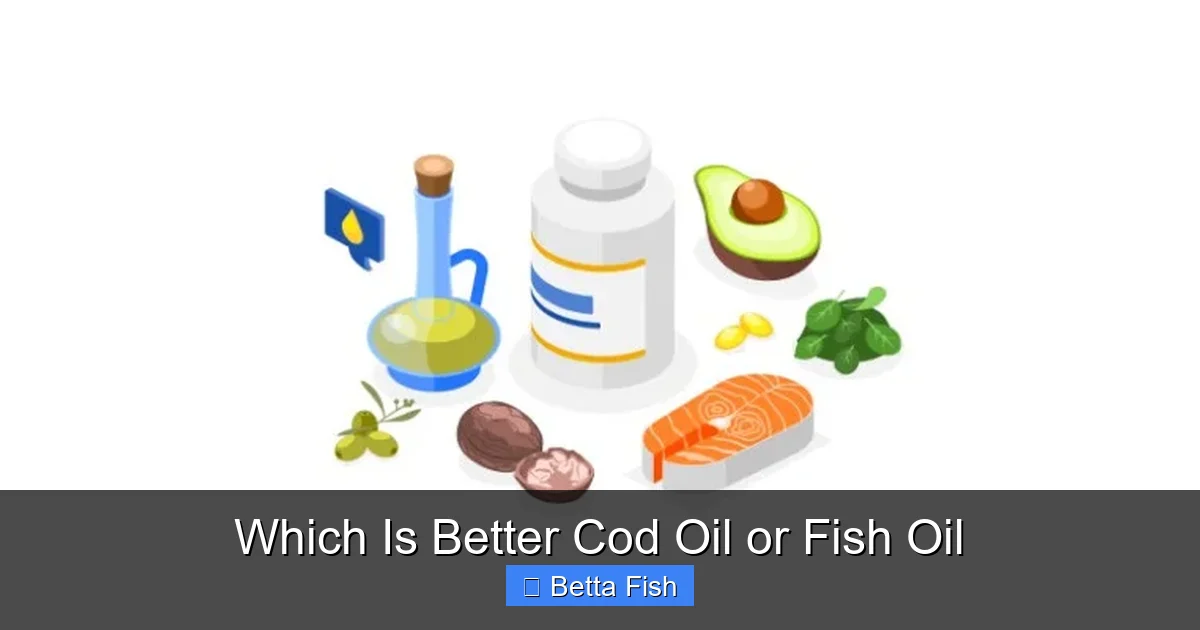
Let’s look at a simplified, per-serving comparison to understand the fundamental divergence. Remember, these are approximate averages for human supplements; betta-specific products will have tailored concentrations.
Visual guide about Which Is Better Cod Oil or Fish Oil
Image source: timesofreading.com
- Omega-3 Fatty Acids (EPA/DHA): Both oils provide these. Fish oil is generally far more concentrated. A standard fish oil softgel might provide 300-500mg of combined EPA/DHA. Cod liver oil might provide only 100-200mg, with the rest of its fat content being other lipids and the vitamins.
- Vitamin A: This is the biggest red flag for cod liver oil. A single teaspoon (5mL) can contain 4,500–10,000+ IU. For a 2-3 inch betta weighing less than a gram, this is an astronomically excessive dose. Vitamin A toxicity (hypervitaminosis A) in fish can cause skeletal deformities, liver damage, eye lesions, and reduced fertility.
- Vitamin D: Similarly, cod liver oil provides 400–1,000+ IU per teaspoon. While vitamin D is crucial for calcium metabolism, excess leads to hypercalcemia (too much calcium in the blood), which can cause kidney damage, tissue calcification, and lethargy. Bettas have a very low tolerance for this.
- Other Fat-Soluble Vitamins (E, K): Present in minor amounts in both, but not a primary factor in the comparison.
- Contaminant Load: Due to the liver’s role as a filter, cod liver oil has a higher inherent risk of containing lipophilic (fat-loving) toxins like PCBs and dioxins if not sourced from pristine, cold waters and purified meticulously.
The Betta-Specific Benefits: What We’re Actually Trying to Achieve
For Vibrant Coloration
Those stunning reds, blues, and iridescent greens in a betta are partly due to pigments called carotenoids (which must come from their diet) and the structural integrity of their skin and scale cells. DHA is a primary structural component of cell membranes. Adequate, bioavailable DHA supports healthy skin and scale development, allowing pigments to display more vividly. It also supports overall health, which is intrinsically linked to color vibrancy. A betta with nutritional deficiencies will often appear dull and washed out.
Visual guide about Which Is Better Cod Oil or Fish Oil
Image source: cdn.consumerlab.com
For Fin Growth, Repair, and Prevention of Fin Rot
Fin rot is often a bacterial or fungal secondary infection that exploits a primary weakness. Strong, resilient fin tissue is the first line of defense. Omega-3 fatty acids, particularly EPA, are precursors to anti-inflammatory compounds called eicosanoids. By supporting a balanced inflammatory response, they help the betta’s own immune system manage minor injuries and prevent the progression of fin nipping or decay into full-blown rot. Healthy fin rays and membranes require robust cell membranes built with proper fatty acids.
For Immune System Modulation and Stress Reduction
Bettas are famously sensitive. Chronic stress suppresses the immune system, making them susceptible to diseases. Omega-3s help regulate the immune system, preventing both under-activity (susceptibility to infection) and over-activity (excessive inflammation). For a fish in a community tank, dealing with water parameter fluctuations, or recovering from an illness, this immune modulation is invaluable. DHA is also critical for brain and nervous system health, which can influence stress responses and behavior.
For Improved Appetite and Digestive Health
Some bettas can be stubborn eaters. The palatability of a high-quality fish oil, when dosed correctly (a tiny drop on frozen or live food), can stimulate a stronger feeding response. Furthermore, omega-3s support the health of the gastrointestinal tract lining, potentially improving nutrient absorption from their primary diet of pellets or insects.
Risks and Considerations: Why Cod Liver Oil is Problematic for Bettas
The Scary Reality of Vitamin A Toxicity
This is the single most compelling reason to avoid cod liver oil for betta fish. Vitamin A is stored in the liver. Chronic overdosing leads to a buildup, causing hypervitaminosis A. Symptoms in fish can be subtle at first: loss of appetite, lethargy, and clamped fins. As it progresses, you may see skeletal abnormalities (curved spine, swollen joints), eye problems (cloudiness, pop-eye), and liver enlargement/failure. Because bettas are so small, the margin between a “therapeutic” and “toxic” dose of vitamin A from cod liver oil is virtually non-existent. You cannot reliably dose it safely.
Vitamin D Toxicity and Calcium Disruption
Excess vitamin D causes the body to pull calcium from bones and soft tissues into the bloodstream, leading to hypercalcemia. This results in mineralization (hardening) of soft tissues like the kidneys, heart, and blood vessels. Symptoms include loss of appetite, weakness, and increased urination (if observable). This is a silent, progressive killer. The vitamin D content in cod liver oil is enough to pose this risk with consistent, even moderate, supplementation.
Water Quality Degradation
Any oil added to the tank will float and eventually form a thin film on the surface. This can: 1) Reduce gas exchange at the water’s surface, stressing the betta (who is a labyrinth breather, but still relies on surface oxygen), 2) Trap dust and debris, 3) Be aesthetically unpleasant. More critically, degraded oils in the water can contribute to organic load, feeding bacterial blooms. This is why any oil supplement should ideally be pre-mixed with food (e.g., a drop on a frozen brine shrimp cube) and offered as a “treat” that the betta consumes immediately, not drizzled directly into the water column.
The Dosage Dilemma
With fish oil, you are primarily dosing a known quantity of EPA/DHA. With cod liver oil, you are dosing an unknown and highly variable cocktail of EPA/DHA plus unpredictable amounts of vitamins A and D. One batch of cod liver oil could be vastly different in vitamin content from another. This makes precise, safe dosing for a creature as small as a betta practically impossible.
How to Choose and Use Fish Oil for Your Betta: A Practical Guide
Selecting the Right Product
Do not reach for the human fish oil capsule from your local pharmacy without serious consideration. Many contain additives, flavorings, or are in a gelatin capsule that won’t dissolve in water. Your best bets are:
- Liquid, Pharmaceutical-Grade Fish Oil: Look for brands that state “molecularly distilled,” “purified,” “free of mercury and PCBs,” and list the exact EPA/DHA content per serving. A product like “Nordic Naturals” or “Carlson Labs” (in liquid form) is often a good human-grade starting point, but you must verify purity.
- Betta-Specific or Aquatic Supplements: Some premium betta food manufacturers (like Ocean Nutrition) offer liquid marine-based supplements designed for ornamental fish. These are formulated with the correct ratios and purity for aquatic use and are the most hassle-free, responsible choice.
- High-Quality Frozen or Freeze-Dried Foods Pre-Enriched: Many top-tier frozen foods (brine shrimp, bloodworms, mysis shrimp) are now enriched with marine oils. This is an excellent, foolproof way to provide the benefits without any dosing guesswork. Simply feed the enriched food as part of the rotation.
The Golden Rules of Dosing
Rule 1: Food First, Always. Never add oil directly to the tank. Place 1-2 pellets or a small portion of frozen food in a betta-sized container (like a small cup or the lid of the food container). Add one single drop of liquid fish oil and mix gently to coat. Let it sit for 30 seconds, then offer it to your betta. Ensure it consumes the entire portion. If there’s leftover oil-coated food, remove it to prevent water fouling.
Rule 2: Frequency & Quantity. For a healthy adult betta, supplementation 2-3 times per week is more than sufficient. More is not better. Think of it as a nutritional “boost,” not a daily staple. A single drop, as described above, is plenty for one feeding.
Rule 3: Start Low, Go Slow. If you’ve never supplemented, start with once a week for a month. Observe your betta closely for any negative changes (reduced appetite, clamped fins, lethargy, excessive slime coat). If all is well, you can consider increasing to twice a week.
Rule 4: Store Properly. Fish oil oxidizes (goes rancid) quickly when exposed to light and air. Always buy small bottles, store them in the refrigerator after opening, and use within the manufacturer’s recommended timeframe (usually 30-60 days post-opening). Rancid oil is pro-inflammatory and harmful. If it smells “off” (like strong fish or nail polish remover), discard it.
Integrating with a High-Quality Base Diet
Fish oil is a supplement, not a replacement. The foundation of your betta’s diet must be a high-quality, protein-rich pellet (with fish meal or krill meal as the first ingredient) and a variety of frozen or live foods (daphnia, brine shrimp, bloodworms). The oil enhances this base diet. A betta eating only low-quality pellets with fillers (wheat, soy) will not thrive, even with oil supplementation. The oil makes a good diet great; it cannot fix a bad diet.
Conclusion: The Clear Winner for Bettas
The science is clear, and the practical realities of betta fish biology are decisive. For the specific needs of Betta splendens, a purified, contaminant-tested fish oil is unequivocally the better and safer choice over cod liver oil. The risks associated with cod liver oil—primarily the uncontrollable and toxic delivery of vitamins A and D—far outweigh any potential marginal benefits. The betta’s small size, sensitive metabolism, and closed aquatic environment make it uniquely vulnerable to the effects of fat-soluble vitamin overdose.
Fish oil, when selected with care for purity and used with disciplined, minimal dosing mixed with food, provides the precise, bioavailable omega-3 fatty acids (EPA and DHA) that bettas require for optimal color expression, fin development, immune resilience, and overall vitality. It delivers the “good stuff” without the dangerous baggage. Your path to a healthier, more vibrant betta lies not in a vitamin-laden legacy supplement, but in a targeted, modern approach: a foundation of high-quality, varied protein paired with a cautious, observation-based regimen of pure fish oil. Your betta’s dazzling display and enduring health will be your reward.
Frequently Asked Questions
Can I use the human fish oil capsules I have at home for my betta?
Generally, no. Human softgels contain additives, preservatives, and gelatin that are not meant for aquatic environments and can foul the water. The dosage is also impossible to control accurately for a betta. If you must use one, pierce the capsule and use a single drop on food, but a liquid, pure product designed for animals is far safer and more effective.
What about plant-based oils like flaxseed oil for my betta?
Flaxseed oil is high in ALA, the plant-based omega-3. As obligate carnivores, bettas have a very poor ability to convert ALA into the essential EPA and DHA they need. Therefore, flaxseed oil is largely ineffective for meeting their specific fatty acid requirements. Stick to marine animal sources.
How will I know if I’m giving too much or too little fish oil?
Too little may show no obvious change. Signs of too much include a persistent oily film on the water surface, reduced appetite, cloudy water, or your betta appearing lethargic or developing excess slime coat. The correct minimal dose (one drop on food, 2-3x/week) should improve fin quality, color vibrancy, and activity over several weeks without any negative side effects.
My betta is a picky eater and spits out food with oil on it. What should I do?
First, try a different base food—some bettas prefer frozen bloodworms over pellets. Second, use an even smaller amount of oil (a *tiny* fraction of a drop). Third, consider using a pre-enriched frozen food like Hikari Bio-Pure Frozen Brine Shrimp, which already contains the oil and is highly palatable. Forcing an unpalatable supplement can cause stress and hunger strikes.
Is there any scenario where cod liver oil would be appropriate for a betta?
In nearly 20 years of specialized betta keeping and consultation with aquaculture veterinarians, I have never encountered a scenario where the risks of cod liver oil’s vitamin load are justified for a betta. The potential for chronic, irreversible toxicity is too high. Any potential benefit from its omega-3s can be obtained more safely and effectively from a purified fish oil.
Can I use fish oil to treat fin rot or other diseases?
Fish oil is a supportive nutritional supplement for long-term health and immune function, not a medication. It can help strengthen a betta’s overall resilience and may support recovery when used alongside proper medication (like antifungal or antibacterial treatments) for active fin rot. It should never be used as the sole treatment for a diagnosed disease. Always quarantine and treat sick fish with appropriate veterinary-approved medications first.