Which Is Better 1 Piece or 2 Piece Fishing Rod
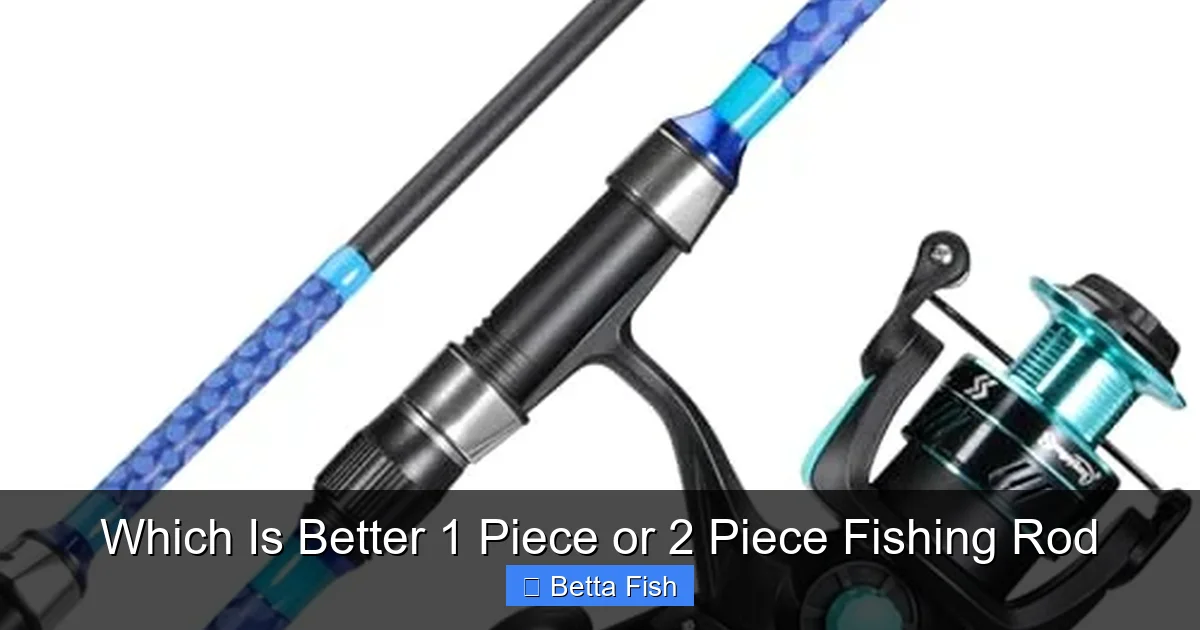
The debate between a 1 piece or 2 piece fishing rod hinges on a core trade-off: pure performance versus supreme convenience. A 1-piece rod offers maximum sensitivity, power, and strength with no weak link at a ferrule joint, making it the choice for serious, dedicated anglers. A 2-piece rod sacrifices a tiny amount of that seamless feel for vastly improved portability and storage, ideal for travelers, those with small vehicles, or casual fishermen. Your best choice depends entirely on your primary fishing style, how you transport your gear, and which factor—ultimate feel or easy transport—matters more to you on the water.
Key Takeaways
- 1-Piece Rods Excel in Sensitivity and Power: With no joint to disrupt the blank’s natural vibration, they provide the most direct feel for bites and the strongest backbone for setting hooks and fighting fish.
- 2-Piece Rods Win on Portability and Storage: They break down to fit in car trunks, overhead bins, and small closets, making them essential for travelers, backpackers, and anyone with limited space.
- The Ferrule Joint is the Critical Weak Point: The connection in a 2-piece rod is the most common failure point if not properly aligned and maintained, and it can slightly dampen sensitivity.
- Modern 2-Piece Technology Has Narrowed the Gap: Advances like over-sized ferrules and precise manufacturing mean high-end 2-piece rods now perform remarkably close to their 1-piece counterparts for most applications.
- Your Fishing Venue Dictates the Best Choice: For dedicated, local fishing from a boat or bank, a 1-piece is often superior. For varied locations, hiking to remote ponds, or air travel, a 2-piece is non-negotiable.
- Consider the Target Species and Technique: Finesse techniques for species like Betta in tight, vegetated waters benefit from any sensitivity edge, often favoring 1-piece rods. General-purpose or trolling applications are more forgiving.
- Price Point Often Reflects Construction Quality: You generally get what you pay for. A cheap 2-piece rod will feel mushy and be unreliable, while a premium 1-piece delivers consistent, high-end performance.
📑 Table of Contents
- The Great Divide: Choosing Between a 1-Piece and 2-Piece Fishing Rod
- Understanding the Core Construction: How They’re Actually Made
- Performance Deep Dive: Sensitivity, Power, and Action
- Portability, Storage, and the Reality of Your Life
- Durability and Longevity: Where They Can Break
- Choosing Based on Your Betta Fishing Style and Venue
- The Final Verdict: It’s Not About “Better,” It’s About “Better For You”
The Great Divide: Choosing Between a 1-Piece and 2-Piece Fishing Rod
You stand in the tackle shop, rod in hand, facing a fundamental question that has split anglers for decades: which is better, a 1 piece or 2 piece fishing rod? This isn’t about brand, material, or action. This is about the very soul of your tool. For the Betta fish enthusiast, this decision is particularly poignant. Pursuing the vibrant, territorial Betta—whether in the sprawling rice paddies of Thailand or a meticulously managed local pond—often means navigating tight, vegetated waterways where every nibble matters. The rod you choose becomes a direct extension of your intent. A 1-piece rod promises an unbroken conversation between you and the fish, a pure transfer of energy from your wrist to the hook. A 2-piece rod offers the freedom to chase that conversation anywhere, breaking down to fit on a bicycle, in a backpack, or in the overhead bin of a plane bound for a Betta fishing expedition. There is no universal “best.” There is only the best for you, for your specific pursuit. Let’s unravel this debate, piece by piece.
Understanding the Core Construction: How They’re Actually Made
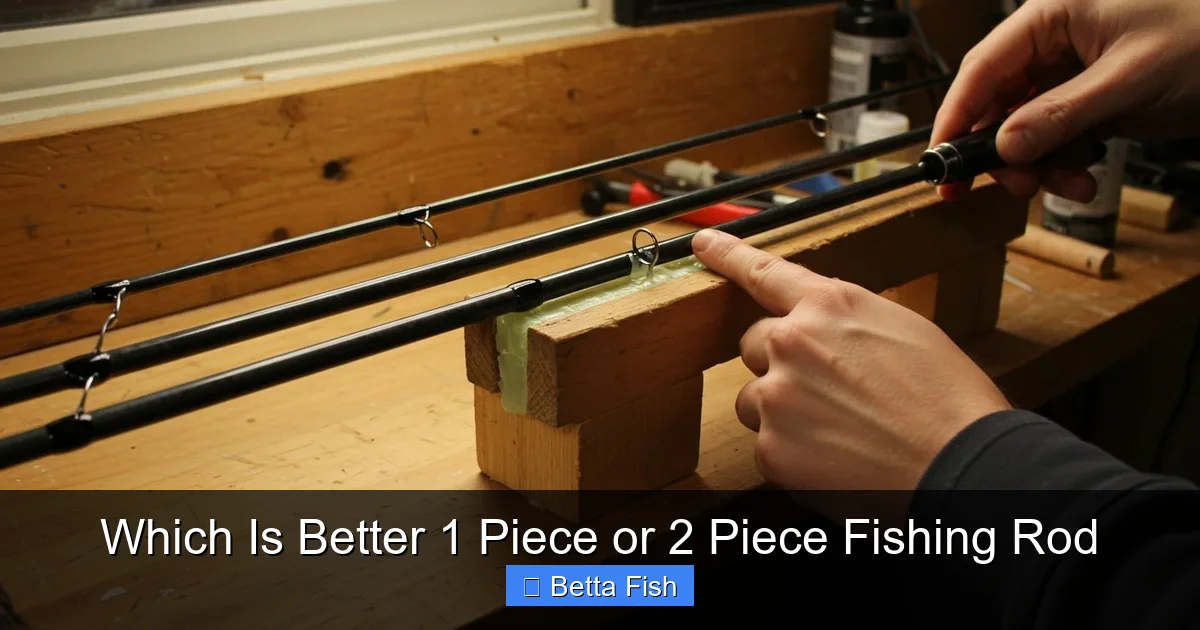
Before we can judge performance, we must understand the anatomy. A fishing rod is a tapered tube, or “blank,” typically made from graphite, fiberglass, or a composite. The number of “pieces” refers to how many sections this blank is divided into and how it connects.
Visual guide about Which Is Better 1 Piece or 2 Piece Fishing Rod
Image source: spinningpole.com
The Uncompromised 1-Piece Blank
A 1-piece rod is exactly that: a single, continuous length of material from butt to tip. There are no joints, no ferrules (the metal or graphite sleeves that connect sections), and no potential weak links. The carbon fiber or glass fibers run the entire length, uninterrupted. This is the purest form of rod design. When you flex it, the entire rod bends in a smooth, progressive arc designed by engineers. When a fish bites, the vibrations travel up this unbroken pathway directly to your hand. It’s a single, unified instrument.
The Engineering Marvel of the 2-Piece (and 3-Piece) Rod
A 2-piece rod is two blanks joined by a ferrule system. One section has a male end (a smaller diameter tube that inserts), and the other has a female end (a larger diameter sleeve that receives it). This seems simple, but it’s a critical engineering junction. The goal is to make this joint as structurally sound and vibration-transmissive as the rest of the rod. Modern high-end rods use oversized ferrules (where the male tube is almost as thick as the blank wall itself) to maintain strength and stiffness. Some even use a “spigot” ferrule, where the male end is a solid peg, not a hollow tube, for maximum strength. A 3-piece rod simply adds another junction, further enhancing portability at an even greater potential cost to feel and strength.
Performance Deep Dive: Sensitivity, Power, and Action
This is where the heart of the debate lives. For anglers chasing light-biting, delicate species like Betta, sensitivity isn’t a luxury; it’s the difference between success and frustration.

Visual guide about Which Is Better 1 Piece or 2 Piece Fishing Rod
Image source: i0.wp.com
The Unmatched “Feel” of a 1-Piece Rod
Imagine plucking a single guitar string. The vibration travels cleanly from your finger, through the string, to the soundhole. Now imagine tying a knot in that string halfway up. The vibration is dampened, slightly muted. The ferrule joint in a 2-piece rod is that knot. It is a physical discontinuity in the material. While modern engineering minimizes the effect, it cannot eliminate it entirely. A 1-piece rod transmits the faintest tick, the most subtle change in pressure, with absolute clarity. For detecting the cautious nip of a Betta on a micro-jig or the delicate pickup of a live worm, this is paramount. The power is also more direct. When you set the hook, the entire force of your sweep travels through one continuous lever arm to the hook point. There’s no microscopic give or flex at a joint to sap that energy.
How Far Modern 2-Piece Rods Have Come
To dismiss a 2-piece rod as “mushy” is to ignore two decades of massive innovation. Today’s best 2-piece rods from reputable brands use ferrules that are incredibly precise. They are machined to tolerances of fractions of a millimeter. When assembled correctly, the joint is rigid and nearly seamless. The difference in sensitivity is often measurable only in controlled tests or to the most elite, experienced anglers. For 95% of fishermen, including most Betta anglers, the sensitivity loss in a quality 2-piece rod is negligible on the water. The action—the speed at which the rod returns to straight after being bent—is also preserved well. You can find fast, medium, and slow actions in both formats. The key is the quality of the construction. A $100 1-piece rod will often outperform a $100 2-piece rod, but a $300 2-piece rod can easily outperform a $150 1-piece rod.
Portability, Storage, and the Reality of Your Life
This is the trump card for the 2-piece rod. Performance is theoretical if you can’t get your rod to the water.
Visual guide about Which Is Better 1 Piece or 2 Piece Fishing Rod
Image source: spinningpole.com
The Logistics of a 1-Piece: A Commitment to Space
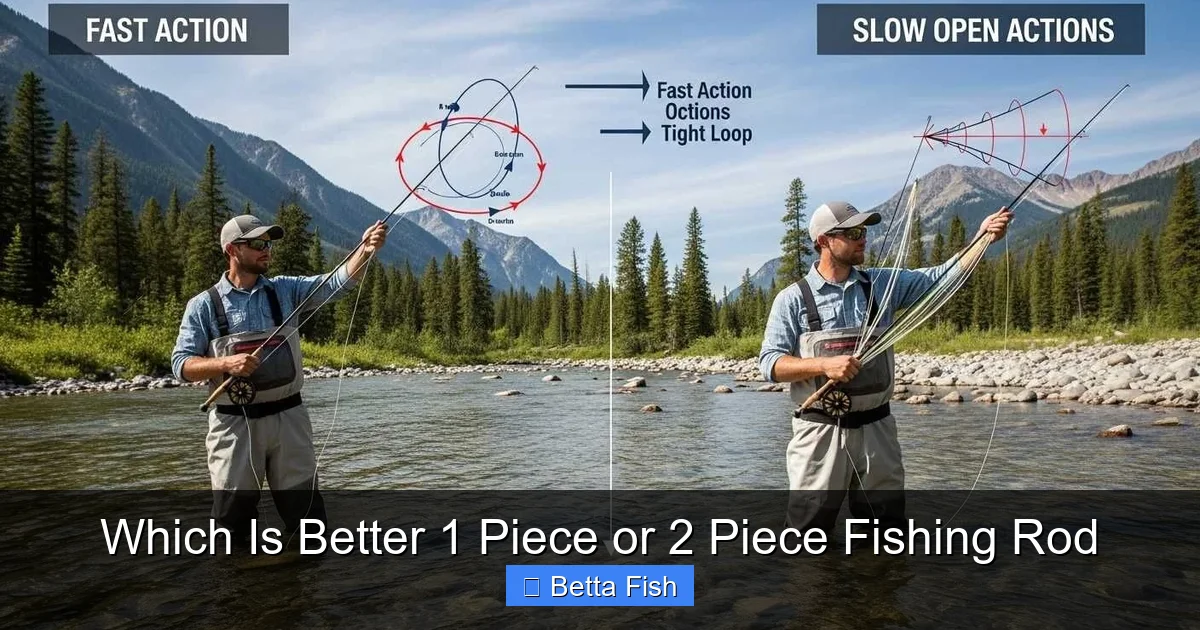
A typical 1-piece rod for Betta fishing might be 6 to 7.5 feet long. That’s a long, rigid object. You need a vehicle with a roof rack, a large trunk, or a van. You need a long, vertical space at home to store it—a closet corner, a wall rack. If you’re flying to a destination, a 1-piece rod is a major headache, often requiring a specialized, expensive tube and additional baggage fees. For the urban angler with a compact car or the traveler chasing Bettas in different provinces, a 1-piece is a non-starter. It commits you to a specific, local fishery.
The Freedom of the 2-Piece: Your Rod, Anywhere
Break that same rod down. It now fits in a standard suitcase, a large backpack, or the backseat of a tiny car. You can stash it in a closet, under a bed, or in the trunk alongside your other gear. For the kayak angler, a 2-piece rod is essential—it can be stowed on deck without creating a dangerous, lengthy obstruction. For the mountain biker riding to a remote Betta stream, it’s the only option. This convenience enables a lifestyle of fishing. It means you can toss your rod in the car for an impromptu evening session. It means you can travel with your gear without it being a logistical burden. For many, this freedom of movement is worth a microscopic, often imperceptible, sacrifice in ultimate feel.
Durability and Longevity: Where They Can Break
Both rod types are incredibly durable when used correctly. Their failure modes, however, are different.
The 1-Piece: Strong, But with a Single Point of Catastrophe
With no joint, a 1-piece rod’s strength is uniform along its length. Its weakness is its length. A severe impact—getting shut in a car door, high-sticking (over-flexing) it against a hard object, or a major accident—can cause a catastrophic break that renders the entire rod useless. There’s no “sacrificial” section. It’s all or nothing. However, if stored and transported properly (in a rod tube or with tip protectors), a 1-piece rod is incredibly resilient and can last a lifetime.
The 2-Piece: The Ferrule is the Battlefield
The ferrule joint is the most stressed part of a 2-piece rod. It’s where two different diameters meet and where all bending force concentrates. Failure usually happens here. This can occur from:
- Improper Assembly: Not pushing the sections together firmly and evenly until they click or seat properly.
- **Over-Tightening:** Cranking the ferrule lock (if it has one) excessively can crack the graphite.
- Impact While Assembled: Banging the rod against a hard surface while the joint is connected stresses that point.
- Sand/Debris: A single grain of sand in the ferrule can prevent a perfect fit, creating a weak spot.
Conversely, the 2-piece design can sometimes be a savior. A tip-over-butt impact that would snap a 1-piece rod might just break the tip section of a 2-piece rod, which is often a cheaper and easier repair. Proper maintenance—cleaning ferrules, ensuring they are seated, and storing the rod disassembled—is absolutely critical for a 2-piece rod’s longevity.
Choosing Based on Your Betta Fishing Style and Venue
Let’s get practical. What do you, the Betta angler, actually do?
Scenario 1: The Dedicated Local Angler
You have a favorite pond, a small lake, or a known stretch of stream within a 30-minute drive. You go weekly. You have a truck or a car with a trunk. You store your gear at home in a dedicated spot. Verdict: Lean strongly toward a 1-piece rod. You are optimizing for pure performance. Every ounce of sensitivity and every iota of power transfer will enhance your experience and catch rate. The convenience trade-off is zero for you.
Scenario 2: The Traveler and Tournament Angler
You fish different lakes across the state or country. You might be loading up for a week-long trip to the Betta-rich waters of Chiang Mai. You might be flying to a tournament. You might hike a mile into a forest to a secluded pond. Verdict: You need a 2-piece (or even 3-piece) rod. Portability is not a luxury; it’s a requirement. Look for high-end travel-specific rods from brands known for their ferrule technology. The slight performance dip is a fair price for access.
Scenario 3: The Kayak or Float Tube Angler
Your platform is limited. A 7-foot rod sticking out is a hazard and a nuisance. You need to store rods on deck, often horizontally. Verdict: 2-piece is the practical choice. You can break rods down to 3-4 foot sections for secure, compact storage on your vessel. The ability to quickly reassemble is key.
Scenario 4: The Multi-Species Generalist
You chase Bettas with micro-jigs, but you also throw bigger baits for panfish, small bass, or even catfish on the same outing. You might need multiple rods. Verdict: This is nuanced. You could have a dedicated, sensitive 1-piece rod for your primary Betta technique and a more general-purpose 2-piece for other tasks. Or, if you only want one rod, a versatile 2-piece with a good medium action is the most flexible tool for varied jobs.
The Final Verdict: It’s Not About “Better,” It’s About “Better For You”
So, which is better, 1 piece or 2 piece fishing rod? The answer is a resounding “it depends.” We can state some clear truths. A 1-piece rod, all else being equal, will always have a slight edge in raw sensitivity, power transfer, and strength. It is the purebred racehorse of the rod world. A 2-piece rod will always win on portability, storage ease, and travel convenience. It is the versatile, reliable workhorse.
For the angler whose life revolves around a few local Betta holes, who has the space and doesn’t travel, the 1-piece is the undeniably superior tool. You are buying the best possible instrument for the job. For anyone whose fishing life involves movement—travel, hiking, limited vehicle space, multiple venues—the 2-piece is not a compromise; it’s an enabler. It makes fishing possible where it wouldn’t be otherwise. The modern 2-piece rod, if you spend enough to get a good one, is so close in performance that the vast majority of anglers will never notice the difference on the water, but will constantly appreciate the convenience.
Your final step is to go to a reputable tackle shop. Feel them. Hold a 1-piece and a 2-piece of similar quality and action side-by-side. Flex them. Tap the tip. See if you can detect the difference. Then, honestly ask yourself: where will this rod live? How will it get to the water? The rod that gets used is always better than the perfect rod left at home.
Frequently Asked Questions
Will I really notice a difference in sensitivity between a 1-piece and a high-end 2-piece rod?
For most anglers, especially in real-world fishing conditions with wind and water movement, the difference is minimal with a modern, well-made 2-piece rod. However, if you are an ultra-sensitive finesse angler targeting light-biters like Betta with very light baits, you may perceive a slightly “softer” or less direct feel at the tip of a 2-piece. The difference is often more theoretical than practical.
Is a 2-piece rod strong enough to handle a big, fighting fish?
Absolutely. A high-quality 2-piece rod from a reputable brand is engineered and tested to handle its rated line weight and lure weight just as a 1-piece is. The ferrule joint is the strongest part of the rod when properly assembled. The failure would be in the blank itself if you drastically exceed the rod’s power. For typical Betta-sized fish and even larger panfish or bass, a properly rated 2-piece rod is more than sufficient.
Do 2-piece rods tend to break more often at the joint?
They can, but only if improperly cared for. The joint is a stress concentration point. Breakage usually results from not fully seating the sections, getting sand or grit in the ferrule, or impacting the rod while it’s assembled. With diligent care—cleaning ferrules, ensuring a tight, even fit, and storing disassembled—a good 2-piece rod is very reliable. Its breakage rate in normal use is not significantly higher than a 1-piece.
What’s the single most important thing to look for in a 2-piece rod?
The ferrule design and overall build quality. Look for rods from established brands known for their rod-building technology. An oversized ferrule (where the male insert is thick) is a good sign of a strong joint. When you assemble it, it should feel solid with no twist or play. A cheap, loose-feeling joint is the hallmark of a poor-quality 2-piece rod that will dampen sensitivity and fail early.
For a beginner who might only buy one rod, what should I choose?
Consider your lifestyle over pure performance. If you have a big car, a garage, and fish locally, a mid-range 1-piece spinning rod (6’6″ to 7′ medium-light) is a fantastic, simple, high-performing first rod. If you have a small car, live in an apartment, might travel, or want to try kayaking, get a good quality 2-piece rod in the same length/action. The convenience will prevent it from gathering dust. Don’t buy the cheapest option in either category; a $50-100 rod from a known brand will serve you far better.
Does a 2-piece rod affect casting distance or accuracy?
In theory, a tiny amount of energy can be lost at the joint during a powerful cast, potentially reducing maximum distance by a few feet. For most casting distances used in Betta fishing (short to medium), this is irrelevant. Accuracy is also virtually unaffected. Any perceived loss is far outweighed by the fact that if you didn’t have a portable rod, you might not be casting at all. For tournament-level long-distance casting, a 1-piece might be chosen, but for the vast majority of applications, it’s a non-issue.