Which Fish Are Good with Bettas

Not all bettas must live alone. With the right tank setup, careful species selection, and a slow introduction process, many bettas can thrive with peaceful companions. Success hinges on understanding your individual betta’s personality, providing ample space and hiding spots, and choosing tank mates that are not flashy, fin-nipping, or territorial. Patience and close observation are your most important tools.
Key Takeaways
- Your Betta’s Personality is Everything: Some bettas are docile community fish, while others are fiercely territorial. You must observe your individual fish to determine its tolerance level.
- Tank Size is Non-Negotiable: A minimum of 20 gallons is strongly recommended for a successful betta community tank to provide enough space for territories and reduce stress.
- Avoid Fin Flair and Flashy Colors: Steer clear of fish with long, flowing fins (like fancy guppies) or extremely bright colors that can trigger a betta’s aggression.
- Dense Planting & Hiding Spots are Crucial: Live or silk plants, caves, and driftwood break line-of-sight, giving both your betta and its tank mates places to retreat and feel secure.
- Introduce in the Correct Order: Always establish your betta in the fully cycled, decorated tank first, then add potential tank mates after a period of observation.
- Quarantine All New Fish First: A 2-4 week quarantine in a separate tank prevents the introduction of diseases or parasites into your main betta aquarium.
- Be Prepared to Separate: Have a backup plan (like a divider or a second tank) ready in case incompatibility is discovered, as some bettas will never tolerate tank mates.
📑 Table of Contents
- Debunking the Solitary Myth: Can Bettas Have Friends?
- Understanding Betta Temperament: The Foundation of Compatibility
- Tank Setup Essentials: Building a Peaceful Kingdom
- Top Tank Mate Recommendations: The Safe & Suitable Candidates
- Fish to Avoid at All Costs: The Danger Zone
- The Introduction Process: Patience is a Virtue
- Troubleshooting Common Issues: When Things Go Wrong
- Conclusion: A Rewarding Journey with the Right Approach
Debunking the Solitary Myth: Can Bettas Have Friends?
For decades, the image of a betta fish—the Siamese fighting fish—has been that of a solitary creature, trapped in a tiny, lonely vase. This outdated practice has led to a pervasive myth: that bettas must always, and forever, be kept alone. While it’s true that male bettas are notoriously aggressive towards other male bettas, the idea that they can’t coexist with any other species is a significant oversimplification. The truth is, with careful planning, a properly sized aquarium, and a deep understanding of your individual betta’s temperament, you can create a thriving community tank. The question of which fish are good with bettas doesn’t have a single answer, but rather a set of guidelines and a list of proven, compatible candidates.
Think of your betta not just as a fighter, but as a complex, intelligent personality. In the wild, bettas are not isolated; they inhabit vast, shallow rice paddies and slow-moving streams where they encounter countless other species. Their aggression is primarily reserved for rival males defending a prime territory. In a spacious, well-structured aquarium, that same territorial instinct can be managed, allowing for peaceful cohabitation. This article will serve as your complete blueprint. We’ll move beyond simple lists to explore the “why” behind compatibility, covering essential tank setup, the critical introduction process, and troubleshooting, so you can make an informed, confident decision for your aquatic family.
Understanding Betta Temperament: The Foundation of Compatibility
Before you even consider a tank mate, you must become an expert on your betta. Compatibility is 50% about the chosen species and 50% about your specific betta’s disposition. Assuming all bettas behave the same way is the fastest route to disaster.

Visual guide about Which Fish Are Good with Bettas
Image source: petshun.com
The Siamese Fighting Fish Legacy
The betta’s (Betta splendens) reputation for aggression stems from centuries of selective breeding for fighting. This has ingrained a strong territorial drive, particularly in males. A male betta will flare (spread its gills and fins dramatically) at its own reflection, a rival male, or sometimes anything it perceives as a threat. However, this flaring is often a display, not an immediate death sentence. The key is to distinguish between a curious, occasional flare and relentless, persistent aggression that results in torn fins or a stressed, hiding fish. Female bettas, while less commonly kept in community settings, can also be territorial and may establish a pecking order with other fish.
Personality Variations: From Docile to Demon
Within the breed, there’s a huge spectrum. Some bettas are “dragons”—bold, curious, and seemingly unbothered by the activity of other fish. Others are “skittish” and will hide at the slightest movement. Then there are the “divas” who will flare at anything that moves, including a stray shadow. Your first step is to spend time observing your betta in its current, solitary setup. Is it curious about you? Does it patrol a specific area? Is it easily startled? A betta that is chronically stressed in a bare tank may be more likely to be aggressive in a community setting simply because it has no安全感 (sense of security). The ideal candidate for a community tank is a betta that is active, curious, but not hyper-vigilant or constantly flaring at its surroundings.
Tank Setup Essentials: Building a Peaceful Kingdom
You cannot put a territorial betta in a 5-gallon tank with other fish and expect harmony. The environment is the single most important factor you can control to foster peace. A proper setup provides space, security, and clear boundaries, which reduces competition and stress for all inhabitants.
Visual guide about Which Fish Are Good with Bettas
Image source: d2csxpduxe849s.cloudfront.net
Size Matters: The 20-Gallon Minimum Rule
This is the golden rule. While a betta can live in a 5-gallon tank alone, for community living, you need to start at a minimum of 20 gallons (long or breeder style). Why so big? Space allows for distinct territories. Your betta can claim the top/mid-water region near a plant or decoration, while small schooling fish occupy the open water column, and bottom dwellers stay near the substrate. In a small tank, there is no escape; every movement is a direct confrontation. A 20-gallon provides the horizontal swimming space these active fish need and dilutes the betta’s perceived dominance. A 29-gallon or larger is even better and opens up more options for tank mates.
Creating Visual Barriers: The Art of the Aquascape
Line-of-sight is your enemy. If your betta can see another fish constantly, it will perceive it as an intruder in its territory. You must break that constant visual connection. This is where dense planting and décor come in. Use a mix of:
- Floating Plants: Java moss, dwarf water lettuce, or frogbit. These are perfect. They shade the water’s surface (which bettas love), provide dense cover for fish to hide under, and block the betta’s view from above.
- Mid-Height Plants: sturdy, broad-leafed plants like Anubias, Java fern, or Amazon swords. Anchor these to driftwood or rocks to create thickets and boundaries.
- Driftwood and Rock Caves: These provide literal hiding places. A betta will often claim a cave or the space behind a large piece of wood as its personal fortress.
- PVC Pipes or Terracotta Pots: Excellent, cheap hiding spots for both your betta and smaller fish.
The goal is a lush, complex environment where fish can choose to be in the open or completely out of view.
Water Parameters and Filtration: The Unsexy but Vital Foundation
A stable, clean environment is critical for all fish, but especially for bettas, which are sensitive to poor water quality. Your tank must be fully cycled (established nitrogen cycle) before adding any fish. Target parameters: temperature 76-80°F (24-27°C), pH 7.0-7.5, ammonia and nitrite at 0 ppm. Use a gentle filter. A strong current will stress your betta and may prevent other species from swimming comfortably. Sponge filters or hang-on-back filters with a baffle (a sponge over the intake) are excellent choices to create a soft flow. Perform regular water changes (25% weekly) to maintain pristine conditions.
Top Tank Mate Recommendations: The Safe & Suitable Candidates
Now for the fun part. When choosing which fish are good with bettas, we are looking for specific traits: peaceful temperament, a preference for different swimming levels, no long or flashy fins, and a body shape that isn’t too “betta-like.” Here are the top categories and species, from most to least recommended.
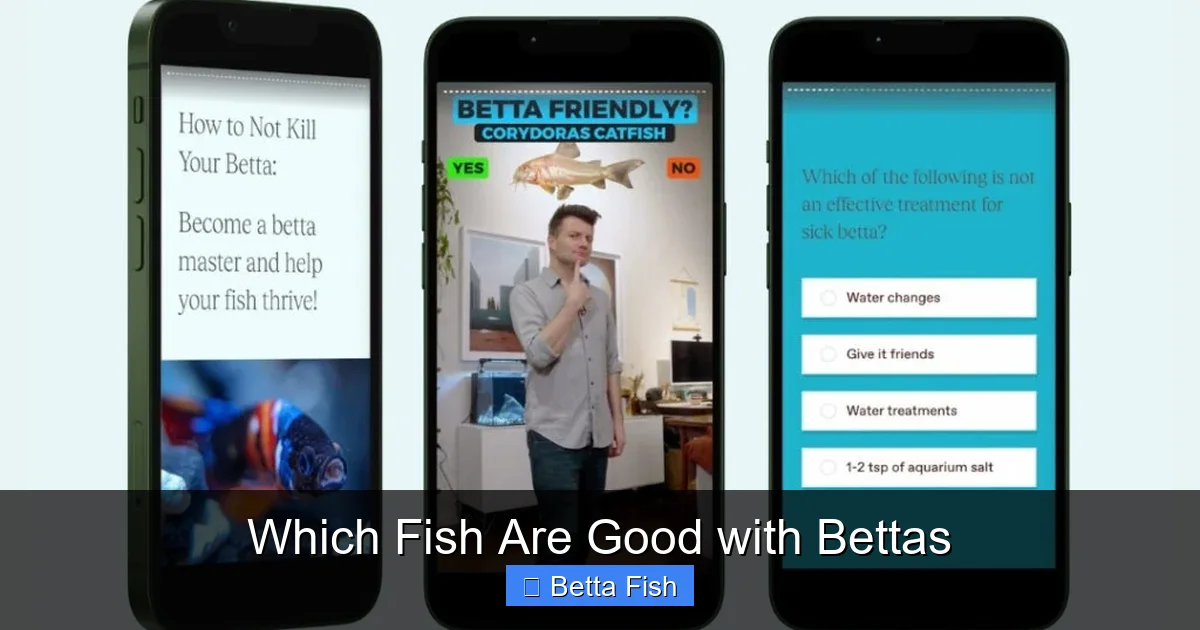
Visual guide about Which Fish Are Good with Bettas
Image source: fishkeepingadvice.com
Peaceful Schooling Fish (The Top Choice)
Small, active, schooling fish are often the best betta companions for two key reasons: they occupy the open mid-water column (a space bettas usually ignore), and they are so focused on each other that they pay little attention to the betta. They should be kept in groups of 6+ to feel secure and display natural behavior.
- Neon Tetras (Paracheirodon innesi): The classic choice. They are tiny (1.5 inches), peaceful, and their shimmering blue-red stripe is different enough from a betta’s colors to usually not trigger aggression. They stay in the middle of the tank. Important: Use a soft, dimly lit tank; bright light can stress neons.
- Harlequin Rasboras (Trigonostigma heteromorpha): Slightly larger (2 inches) and hardier than neons. Their orange and black markings are distinct. They are active, social, and excellent dither fish (fish that swim openly, reassuring other fish that it’s safe).
- Ember Tetras (Hyphessobrycon erythrostigma): A stunning, tiny (1 inch) fish with a fiery orange body. Their small size and darting behavior make them less likely to be seen as a threat. They are perfect for a planted 20+ gallon.
- Celestial Pearl Danios (Danio margaritatus): Also called Galaxy Rasboras. These stunning, tiny fish (1 inch) with speckled patterns are peaceful and prefer the upper to mid-levels. They are a bit more shy, so a heavily planted tank is ideal.
- White Cloud Mountain Minnows (Tanichthys albonubes): Extremely hardy, active, and cold-tolerant (good if your room is cooler). They are silvery with a red stripe. They are fast swimmers and tend to ignore bettas completely.
Bottom-Dwelling Clean-Up Crew
These fish occupy a completely different niche—the substrate. They are generally slow, peaceful, and have armored bodies, making them poor targets for a betta. They also help clean up uneaten food.
- Corydoras Catfish (Cories): The absolute best and most popular bottom dweller. These small, armored catfish are adorable, social, and must be kept in groups of 5+. Species like Corydoras pygmaeus (Pygmy Cory), C. habrosus (Salt and Pepper), or C. hastatus (Dwarf Cory) are perfect for a 20-gallon. They are active sifters and utterly harmless.
- Kuhli Loaches (Pangio kuhlii): Eel-like, fascinating fish that burrow and cruise the bottom at night. They are completely peaceful and have a unique appearance that doesn’t register as a threat. Keep them in groups of 3-5. They need a soft substrate and plenty of hiding places.
- Otocinclus Catfish (“Ottos”): The dedicated algae eater. These tiny, suckermouth catfish are gentle and schooling. They are best for tanks with established algae growth (like green spot algae on glass). They are sensitive to water quality, so only add them to a mature, clean tank.
Other Suitable Candidates
These are excellent options but may have slightly more specific needs.
- African Dwarf Frogs (Hymenochirus curtipes): A fantastic, truly unique companion. They are fully aquatic, peaceful, and have a comical personality. They occupy the same mid-level as a betta but their slow, waddling movement and different appearance (no fins) usually mean they are ignored. They can be hand-fed! Note: Do not confuse with aggressive African Clawed Frogs. Only Dwarf Frogs.
- Snails: Ramshorn, Nerite, Mystery, and Trumpet snails are all great. They are completely ignored by most bettas. Nerite snails are excellent algae eaters and won’t overpopulate your tank. Snails are a perfect “first step” into adding life to a betta tank.
- Shrimp: This is a gamble. Ghost shrimp and Bamboo shrimp are the hardiest and most likely to survive. Cherry shrimp are often seen as food, especially by a curious betta. A heavily planted tank with dense cover is essential for shrimp to thrive. Some bettas will ignore them, others will hunt them relentlessly.
Fish to Avoid at All Costs: The Danger Zone
Just as important as knowing the good candidates is knowing the wrong ones. Some fish are guaranteed to cause problems, stress, or injury.
Fancy Guppies and Other Long-Finned Fish
This is the #1 mistake. Male guppies, especially fancy varieties with huge, flowing tails, look exactly like a rival male betta to your betta. The result is relentless flaring, fin-nipping, and a stressed, ragged guppy. The same goes for male swordtails, platties with large fins, and even some fancy goldfish varieties. The trigger is the long, flowing finnage.
Aggressive or Territorial Cichlids & Gouramis
Fish like Paradise Fish (another gourami) are even more aggressive than bettas. Dwarf Cichlids (like Rams or Apistogrammas) can be territorial and may claim a cave, leading to clashes. Betta species (like Betta imbellis, the peaceful betta) are still risky due to the possibility of hybrid aggression. Avoid any fish known for being “nippy” or “bossy.”
Fin-Nippers: The Silent Assassins
Some peaceful-looking fish have a nasty habit of nipping at the long, flowing fins of a betta. Tiger Barbs are the classic example—they are fin-nipping bulls in a china shop. Some Tetras (like Black skirt tetras) can also be nippy, especially if not kept in a large enough school. A nipped betta fin is a gateway to fungal or bacterial infections.
The Introduction Process: Patience is a Virtue
You have the perfect 20-gallon planted tank. You’ve chosen a school of ember tetras. Now what? How you introduce these fish is as important as which fish you choose. Rushing this process is the most common cause of failure.
The Quarantine Period: Protecting Your Investment
Never, ever add new fish directly from the pet store to your main tank. The store water can contain pathogens (like Ich or velvet) or parasites (like flukes or anchor worms). You must set up a simple hospital/quarantine tank (a 10-gallon with a filter and heater is fine). Observe all new fish for 2-4 weeks for any signs of illness (spots, clamped fins, scratching, lethargy). Only after this period, and ideally after treating with a general preventative like copper-based medication (for parasites) or an antibiotic (for bacterial issues) as advised by an aquatic vet, should you consider moving them to the main display tank. This step protects your entire ecosystem.
Establishing the Betta First: The Home Field Advantage
Your betta must be the permanent resident. Add your betta to the fully cycled, fully decorated 20+ gallon tank first. Let it live there alone for at least 2-4 weeks. This allows it to:
- Establish its own territory without competition.
- Become comfortable and confident in its surroundings.
- Learn that the decorations, plants, and boundaries are “home.”
A betta that is added to a tank *after* other fish have established territories is more likely to be the aggressor, as it feels it’s invading. Letting the betta claim the space first often leads to a more stable hierarchy.
The First Glimpse & Monitoring Phase
When you’re ready to add the quarantined school of fish, do it at night or when the lights are off. Use a net or cup to gently transfer them, minimizing store water introduction. For the first few days, watch closely. Sit by the tank for 15-20 minutes at a time. You are looking for:
- Chasing: Is the betta relentlessly pursuing a specific fish? Occasional curiosity is normal; constant chase is bad.
- Flaring: Constant, rigid flaring directed at tank mates is a sign of high stress/aggression.
- Hiding: Are the new fish permanently hidden, not coming out to eat? That’s a sign they are terrified.
- Torn Fins: Any damage on the betta or its new friends means separation is necessary immediately.
If you see persistent aggression after 48-72 hours, you will need to implement a divider or rehome one party. If the betta largely ignores the fish and they go about their business, you’ve likely succeeded.
Troubleshooting Common Issues: When Things Go Wrong
Even with perfect planning, issues can arise. Here’s how to diagnose and handle them.
Signs of Stress in Your Betta
A stressed betta is a sick betta. Look for: faded or clamped fins, loss of appetite, excessive hiding, rapid gill movement (gasping), lying on the bottom, or constant, frantic flaring at everything. If stress is due to tank mates, the solution is often separation. First, double-check your water parameters—poor water quality is the #1 cause of stress and can make a normally peaceful betta reactive.
When to Separate: No Shame in Trying Again
If your betta is showing persistent, targeted aggression (chasing to the point of exhaustion, nipping fins) or if the new fish are visibly stressed and not eating, you must separate them. This does not mean you failed; it means your particular betta is not suited for a community tank, and that’s okay. Many bettas live perfectly happy, healthy lives as sole occupants. Have a plan before you start:
- Tank Divider: A clear acrylic or mesh divider in your 20+ gallon tank can create two separate territories. This allows you to keep the betta and a school of fish in the same tank, visually, but physically separated.
- A Second Tank: A simple 5-gallon cycled “hospital” tank can serve as a permanent home for a incompatible tank mate, or as a temporary holding area while you rehome it.
Your priority is the health and safety of all your fish. Forcing incompatible fish to live together is cruel and will lead to injury or death.
Conclusion: A Rewarding Journey with the Right Approach
The question of which fish are good with bettas opens a door to a more complex, engaging, and beautiful aquarium. It moves us beyond the simple, sad image of a lone fish in a cup and into the realm of responsible, modern fishkeeping. The path to a successful betta community is paved with research, patience, and careful observation. It starts with selecting a compatible, spacious environment, choosing the right peaceful, non-threatening tank mates from the lists above, and following a cautious, quarantine-first introduction protocol.
Remember, your betta is an individual. Its success with tank mates is not a guarantee but a possibility you must earn through proper setup and respect for its nature. Begin with the hardiest, most dissimilar candidates—a school of harlequin rasboras or a group of pygmy corydoras in a well-planted 20-gallon tank is a classic, high-success starting point. Monitor diligently, be prepared to intervene, and celebrate the peaceful coexistence when it happens. Watching a curious betta gently inspect a school of tiny tetras, or seeing it rest peacefully under a floating plant while corydoras sift the sand below, is one of the most rewarding experiences in the hobby. You are not just keeping a fish; you are curating a miniature, harmonious ecosystem.
Frequently Asked Questions
Can all betta fish live with other fish?
No. While many bettas can be successful with carefully chosen tank mates, some individual bettas are inherently too aggressive or stressed by any other fish. Your betta’s unique personality is the ultimate deciding factor. Always start with the assumption that your betta might prefer to be alone and proceed with extreme caution and close observation.
What is the absolute minimum tank size for a betta with tank mates?
While a 10-gallon is the absolute bare minimum for a betta alone, for any chance at successful community housing, a 20-gallon long or breeder tank is the strongly recommended minimum. This provides the necessary horizontal space for territories and reduces the frequency of unwanted interactions between your betta and its companions.
How long should I quarantine new fish before adding them to my betta tank?
You should quarantine all new fish in a separate, cycled hospital tank for a minimum of 2 weeks, with 4 weeks being ideal. This allows you to observe them for any signs of disease (like Ich, velvet, or internal parasites) that could be introduced to your main display tank and potentially harm your betta.
How do I know if my betta is stressed by its new tank mates?
Signs of a stressed betta include constant, frantic flaring at other fish, relentless chasing, faded or clamped fins, loss of appetite, excessive hiding, and rapid gill movement. If you see these behaviors consistently, especially chasing that leads to exhaustion or fin damage, you must separate the fish immediately.
Are snails and shrimp good tank mates for bettas?
Snails are almost always excellent and ignored betta companions. Shrimp are a bigger gamble. Large, hardy shrimp like Bamboo or Ghost shrimp have a better chance. Small, colorful shrimp like Cherry shrimp are often viewed as food by bettas. Success with shrimp heavily depends on a densely planted tank providing constant cover and a betta with a particularly calm temperament.
My betta started attacking a peaceful tank mate. What should I do?
Act quickly. Remove the attacked fish to a separate hospital tank immediately to prevent injury or death. Have a backup plan (like a divider or a second tank) ready before you even attempt community housing. You must accept that your specific betta is not compatible with tank mates. It is not a failure; it is responsible fishkeeping to provide a safe, stress-free environment for all your pets, even if that means your betta lives solo.