Which Betta Fish Should I Get
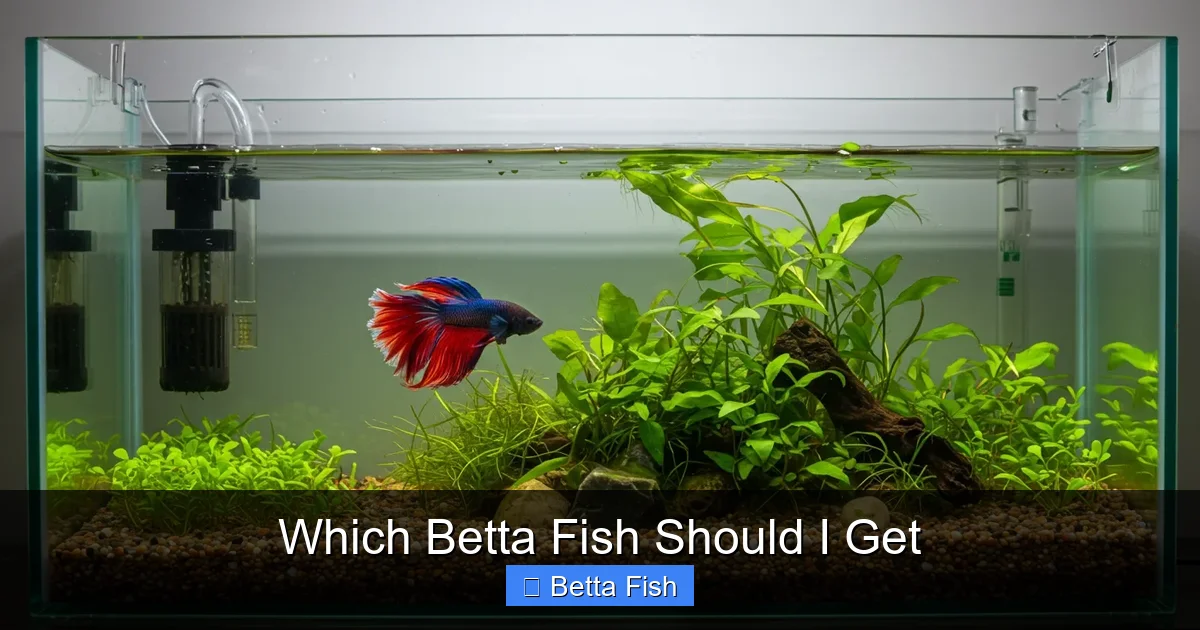
Selecting the right betta fish goes far beyond just picking the prettiest one at the store. You must consider the fish’s long-term needs: a proper heated and filtered tank (never a small bowl), understanding different fin types and their care requirements, and committing to a carnivorous diet. The healthiest betta comes from a reputable source, not a big-box store. Your choice should be based on your ability to provide a species-appropriate environment, not just aesthetic preference.
Key Takeaways
- Prioritize Tank Setup Over Aesthetics: A healthy betta needs a minimum 5-gallon heated and filtered tank; a beautiful fish in a tiny bowl is a recipe for a short, stressed life.
- Fin Type Dictates Care: Large, flowing fins (like Halfmoons) are more prone to damage and require gentler water flow, while shorter-finned Plakats are often hardier and more active swimmers.
- Focus on Health, Not Just Color: Look for clear eyes, intact fins, active swimming, and no signs of disease (like cotton-like growth or clamped fins) over the most vibrant color pattern.
- Bettas Are Carnivores: Their diet must be primarily high-quality animal protein (pellets, frozen foods like brine shrimp), not plant matter or “vegetarian” foods.
- Source Responsibly: Seek reputable local breeders, specialized aquarium stores, or certified online sellers who prioritize fish health over mass production.
- Temperament Varies: While all males are aggressive toward other males, individual personalities differ; some are curious and interactive, others more shy. Observe the fish before choosing.
📑 Table of Contents
- So, You Want a Betta Fish? Let’s Talk Real Talk.
- Understanding the Betta: It’s Not Just a “Fighting Fish”
- Decoding Betta Varieties: Fin Types and Color Patterns
- The Non-Negotiables: Setting Up the RIGHT Home Before the Fish Arrives
- Finding Your Perfect Match: Evaluating a Betta’s Health and Personality
- What to AVOID: The Big-Box Store Trap and Other Pitfalls
- Bringing Your Betta Home: Acclimation and First Steps
- The Final Word: It’s a Commitment, Not an Accessory
So, You Want a Betta Fish? Let’s Talk Real Talk.
You’ve seen them, haven’t you? Those tiny, brilliantly colored fish in little cups at the store, floating lazily behind a plastic leaf. They’re mesmerizing. The Betta splendens, or Siamese fighting fish, is arguably the most popular aquarium fish in the world, famous for its jaw-dropping colors and dramatic fin displays. But here’s the crucial first step in answering “which betta fish should I get?” You have to forget everything you think you know about betta care. The image of the fish in a cup is the single biggest lie ever told about these incredible animals. It’s a temporary display method, not a habitat. Choosing the right betta is less about the fish’s appearance and entirely about your commitment to providing the environment it needs to thrive for 3-5 years, sometimes longer. This guide will walk you through the real factors that matter, from the fish in front of you to the equipment waiting at home.
Understanding the Betta: It’s Not Just a “Fighting Fish”
Before you even look at a single fish, you need to understand what a betta *is*. Native to the shallow, warm, slow-moving rice paddies and floodplains of Thailand, bettas are labyrinth fish. This means they have a special organ that allows them to breathe air directly from the surface. This adaptation is key to their survival in oxygen-poor water, but it also creates a critical need in captivity: they must have easy access to the water’s surface. A tall, dense forest of plants (real or silk) is not just decoration; it’s a security blanket that makes them feel safe from predators (real or imagined) above.
Visual guide about Which Betta Fish Should I Get
Image source: aquariadise.com
The Myth of the “Solitary” Betta
The “fighting” moniker comes from their historic use in gambling matches in Southeast Asia. Male bettas are indeed fiercely territorial and will fight to the death with other males. This is non-negotiable. However, the idea that they must live alone is a common oversimplification. While a male should never be housed with another male, he can often coexist with carefully selected, peaceful tank mates in a properly sized and decorated community tank. Female bettas can sometimes be kept in sorority groups (5+ females) in a large, heavily planted tank, but this is an advanced setup with high risks of aggression. For a beginner, starting with a single betta in a species-only tank is the absolute safest and most stress-free choice for both you and the fish.
Decoding Betta Varieties: Fin Types and Color Patterns
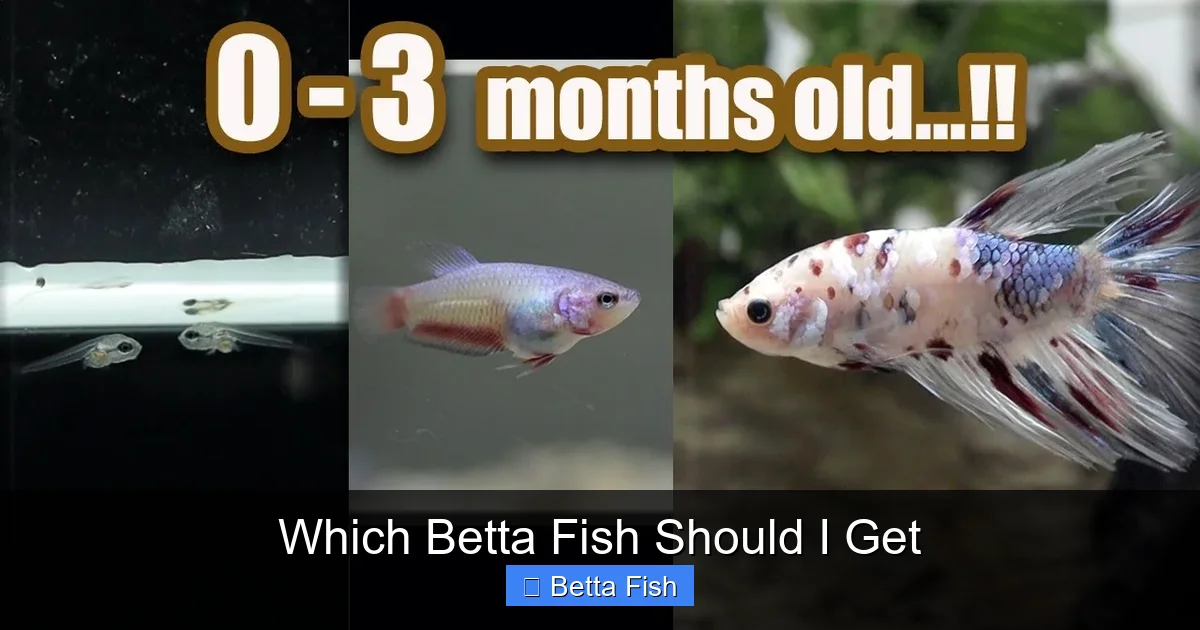
This is the fun part! The incredible diversity of bettas is a result of centuries of selective breeding. When you’re browsing, you’ll see terms like Halfmoon, Plakat, Crowntail, and Dumbo. These refer to fin type and shape, which is the primary visual characteristic. Here’s what you need to know about the most common types you’ll encounter and how they impact care.
Visual guide about Which Betta Fish Should I Get
Image source: i.ytimg.com
The Flowing Elegance: Halfmoon (HM) and Double Tail (DT)
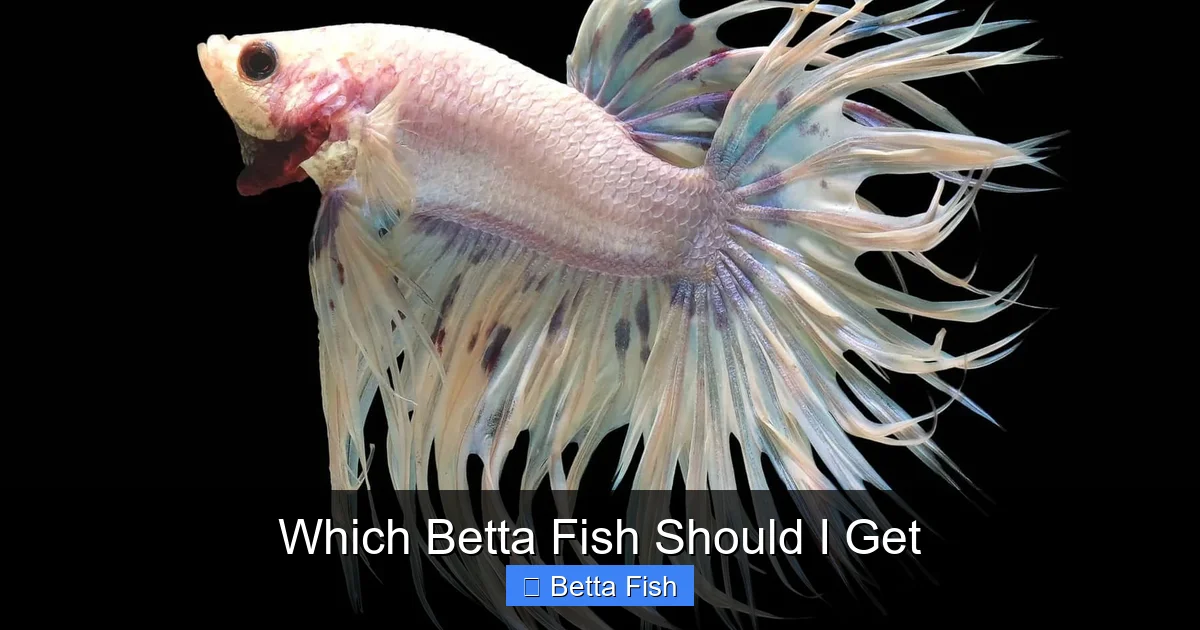
The Halfmoon is the classic show betta. When the male flares his fins, they form a perfect 180-degree semi-circle, like a moon. The Double Tail has two separate caudal fins, giving it a full, dramatic appearance. These are the prima donnas of the betta world. Their long, flowing fins are stunning but come with significant care considerations. They are prone to fin rot and tearing on sharp decorations or from strong filter outflow. Their large finnage also makes them slower and more susceptible to being outcompeted for food in a community tank. If you choose a Halfmoon or Double Tail, your tank setup must be meticulously betta-safe: no plastic plants with sharp edges, a filter with a very gentle flow (often baffled with a sponge), and careful selection of tank mates that won’t nip at flowing fins.
The Athletic Swimmer: Plakat (PK)
Plakat means “fin cutter” in Thai, and these bettas have short, rounded fins that end closer to the body. They look more like a “wild-type” betta and are incredibly active, strong swimmers. Because of their shorter fins, they are generally much hardier than their long-finned cousins. They are less prone to fin damage, handle stronger water flow better, and are often more curious and interactive with their owners. For a first-time betta owner, a healthy Plakat is an excellent, forgiving choice. They still need a proper heated tank, but they are more resilient to minor fluctuations and mistakes in tank setup.
The Unique Looks: Crowntail, Dumbo/Elephant Ear, and Others
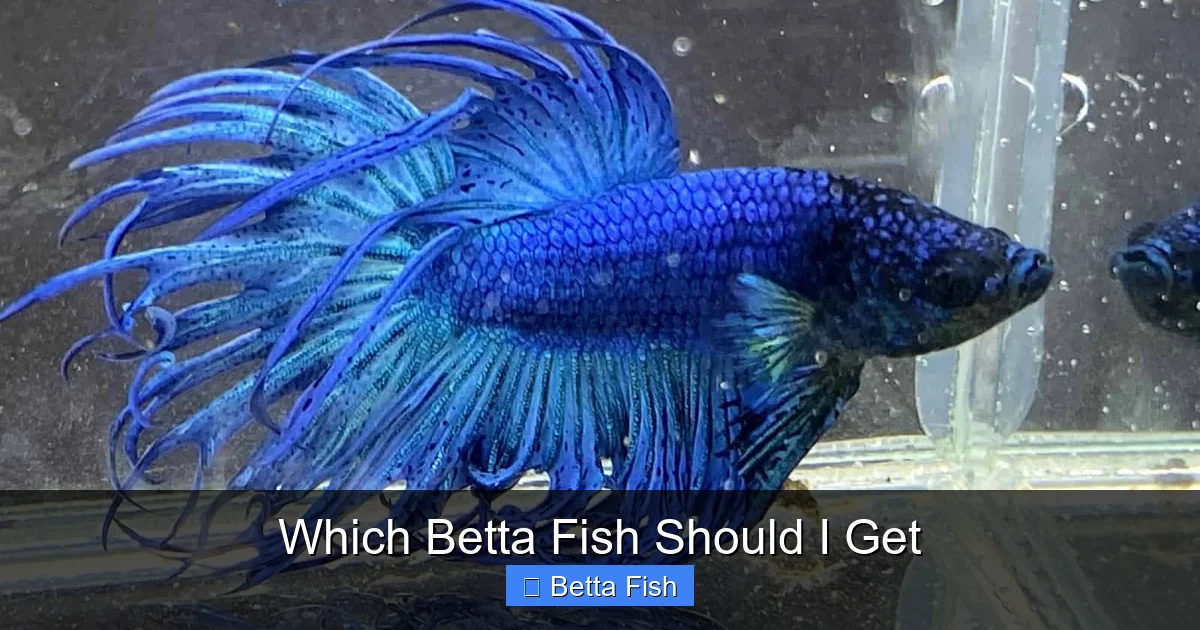
Crowntails have extended fin rays that give a spiky, crown-like appearance. They are beautiful but the points can be fragile. Dumbo bettas have enormous, sail-like pectoral fins that look like elephant ears, making them exceptionally graceful but also requiring very gentle water flow to prevent fatigue. You might also see “Rosetail” (extra overlapping fin rays), “Feathertail,” or “Veiltail” (long, flowing but not a full 180-degree spread). The key takeaway: the more extreme and flowing the finnage, the more meticulous your tank husbandry must be. Don’t choose a fin type you find beautiful without being prepared to accommodate its specific needs.
The Non-Negotiables: Setting Up the RIGHT Home Before the Fish Arrives
This section is the most important. You cannot bring a betta home and then set up its tank. The tank must be fully cycled and stable for weeks before the fish is introduced. Here is the absolute minimum checklist for a thriving betta habitat.
Visual guide about Which Betta Fish Should I Get
Image source: aquariadise.com
Tank Size: The 5-Gallon Rule is the Starting Point
Let’s be clear: a bowl, a vase, or a 1-gallon “betta tank” is animal cruelty. It’s that simple. A single betta requires a minimum of 5 gallons of water. Why? Dilution. Toxins from the fish’s waste (ammonia) build up quickly in small volumes of water, causing burns and poisoning. A larger volume provides a stable, forgiving environment where water parameters (ammonia, nitrite, nitrate, pH, temperature) fluctuate slowly and safely. It also gives the fish space to swim, explore, and exhibit natural behaviors. A 5-gallon tank is the responsible starting point. A 10-gallon is even better and opens up more safe tank mate options. Every gallon above 5 makes your life easier and the fish’s life healthier.
Heater: Bettas Are Tropical Fish
Bettas come from water that is consistently 75-82°F (24-28°C). Room temperature is almost always too cold. A cold betta is a lethargic, immune-compromised betta prone to disease like fin rot. You must have an adjustable aquarium heater. For a 5-gallon tank, a 25-watt heater is sufficient. Use a reliable thermometer (a cheap stick-on LCD one works fine) to constantly verify the temperature. Do not trust the heater’s dial blindly.
Filter: Gentle, Gentle, Gentle
Bettas are not built for whitewater rivers. In the wild, they live in stillness. A strong filter current will stress them out, tire them, and can even damage their fins. You need a filter that provides biological filtration (good bacteria to process toxins) and mechanical filtration (removing debris) with a very gentle flow. Sponge filters are a fantastic, cheap, and gentle option for bettas. Hang-on-back (HOB) filters can work if you baffle the outflow with a sponge or create a barrier with plants. The goal is to see gentle water movement, not a swirling vortex.
Substrate, Plants, and Hiding Spots
Use soft, sand or fine-gravel substrate. Sharp gravel can damage their sensitive barbels and underside. Now, for the most critical part: cover, cover, cover. A betta must feel it can hide from the “sky.” Use live plants (like Anubias, Java Fern, Marimo moss balls which are actually algae) or high-quality silk plants. Avoid plastic plants—they have sharp edges that will shred fins. Provide at least one solid hiding spot, like a ceramic pot, a betta log, or a cave. The tank should be lush and cluttered from the betta’s perspective; open swimming space is less important than feeling secure.
Finding Your Perfect Match: Evaluating a Betta’s Health and Personality
Okay, you’ve set up the perfect tank. Now, how do you choose the actual fish? This is where you put on your detective hat. The store environment is often terrible, so you have to be a savvier shopper.
The Health Checklist: What to Look For
Walk up to the cup or tank and observe. A healthy betta will be:
- Active and Alert: It should be swimming, not just floating motionless at the top or bottom. A slight flare at your approach is a good sign of curiosity.
- Fins Intact: Look for no tears, splits, or ragged edges. Fins should be held relatively open, not clamped tightly to the body (a sign of severe stress or illness).
- Eyes Clear: No cloudiness, swelling, or protrusion (pop-eye).
- Body Unmarred: No sores, red patches, cotton-like growths (fungus), or white spots (ich). The scales should lie flat.
- Eating: If you see it being fed, it should go for the food eagerly.
Red flags include: lethargy, constant gulping at the surface (could mean poor water quality in the cup or a respiratory issue), bloating, and clamped fins. If a store has even one visibly sick betta, the water conditions for all their bettas are likely poor. Walk away.
Personality Matters: Observe Before You Commit
Bettas have distinct personalities. Some are bold “watchdogs,” flaring at their reflection or your finger. Others are shy and will hide. There is no “best” personality, only one that matches your expectations. If you want an interactive pet you can “play” with (with a stick or by targeting), look for a curious, active fish. If you want a beautiful living piece of art to admire, a calmer, less reactive betta might be your style. Spend a few minutes watching it. Does it explore? Does it react to movement? This is your chance to choose a companion with a temperament you’ll enjoy.
What to AVOID: The Big-Box Store Trap and Other Pitfalls
This cannot be stressed enough. The majority of bettas sold in large chain pet stores are shipped in terrible conditions—packed in tiny bags with medicated water, sitting on shelves for weeks. They are often already sick, stressed, and genetically over-specialized for extreme fins at the cost of health. These are the “impulse buy” bettas that often die within weeks, not because you did anything wrong, but because they were doomed from the start.
Your best sources are:
- Local Betta Breeders: Find them on social media (Instagram, Facebook groups) or through local aquarium clubs. They breed for health and temperament, often keep their fish in proper setups, and can give you a full history.
- Specialized Local Fish Stores (LFS): Not the big chains. A good local store will often source from local breeders, keep their bettas in filtered, heated tanks (not cups), and have knowledgeable staff. This is the ideal place to buy.
- Reputable Online Breeders: This is becoming more common. These breeders ship directly, with guarantees and meticulous care. They are more expensive ($30-$100+), but you are paying for a healthy, well-bred fish with a known lineage. Do your research on any online seller thoroughly.
If you must buy from a chain store, inspect the fish with extreme diligence using the health checklist above, and be prepared for a potentially rocky start. The $5-10 you save is rarely worth the emotional and financial cost of treating a chronically ill fish.
Bringing Your Betta Home: Acclimation and First Steps
You have your tank cycled, heated, filtered, and decorated. You’ve selected a healthy-looking betta from a good source. Now, the critical moment of introduction.
The Drip Acclimation Method is Essential
Never just dump the betta and its cup water into your tank. The water parameters (temperature, pH, hardness) will be drastically different, causing osmotic shock. The safest method is the drip acclimation:
- Float the sealed cup/bag in your tank for 15-20 minutes to equalize temperature.
- Gently transfer the fish and its water into a clean container (a small bucket or bowl).
- Using airline tubing, start a very slow drip (1-2 drops per second) from your main tank into the container.
- Once the water volume in the container has doubled (or tripled), carefully net the betta and transfer it to its new home. Do not add the store water to your tank.
- Close the lid on the tank (bettas are jumpers!) and turn off the lights. Let it settle for 24 hours without disturbance.
This slow process allows the fish to gradually adjust to your tank’s chemistry, dramatically reducing stress and the risk of shock.
The First 24 Hours and Beyond
After acclimation, don’t be alarmed if the betta hides for a day or two. This is normal. Offer a tiny amount of high-quality food (a couple of pellets or a few frozen daphnia) the next day. Observe for any signs of distress. For the first week, keep a very close eye on water parameters. Your cycled tank should handle the bioload, but it’s good practice to test ammonia and nitrite daily for the first week to ensure the cycle is truly stable. Then, enjoy! Your job is now to maintain that pristine environment with weekly water changes (25-30%), filter media rinses (in old tank water, never tap), and consistent feeding.
The Final Word: It’s a Commitment, Not an Accessory
So, which betta fish should you get? The answer is: the one for which you can build the right home. Start by building the tank first—a 5-gallon minimum, heated, filtered, and planted. Then, seek out a healthy fish from a reputable source whose fin type and personality match the environment you’ve created. A Plakat from a local breeder in a 10-gallon community tank with Corydoras catfish might be the perfect fit. A Halfmoon from a specialist in a species-only 5-gallon with ultra-soft flow might be another. The fish’s needs dictate the setup, not your initial wish for a specific color. By flipping the script—tank first, fish second—you’re not just buying a pet. You’re adopting a companion and accepting the responsibility to provide the kind of life this magnificent, intelligent creature deserves. That’s how you answer “which betta fish should I get?” with confidence and care.
Frequently Asked Questions
Can male betta fish live with other fish?
Yes, but only with carefully chosen, peaceful tank mates in a properly sized (minimum 10 gallons is much safer) and heavily planted tank. Avoid fish with long, flowing fins (like guppies) that may trigger aggression or be nipped at. Good candidates include small, fast schooling fish like neon tetras (in a larger school), peaceful bottom-dwellers like Corydoras catfish or Kuhli loaches, and snails. Always have a backup plan (a separate tank) in case aggression occurs.
How often should I change my betta’s water?
In a properly cycled, filtered tank of 5 gallons or more, you should perform a 25-30% water change once a week. This dilutes waste products (nitrates) and maintains water quality. During the water change, use a gravel vacuum to clean the substrate, and never replace all the water at once. In uncycled or unfiltered small containers, water changes must be done much more frequently (often daily), which is why those setups are not recommended.
Why is my betta’s fin getting torn or developing a white, fuzzy edge?
Torn fins are usually caused by physical damage (sharp decorations, strong filter current, or fin-nipping tank mates). The white, fuzzy edge is likely a secondary fungal or bacterial infection called fin rot, which takes hold when the fin is damaged and water quality is poor. Treatment involves immediately improving water quality, ensuring a gentle filter flow, and using an appropriate medication like a mild antibacterial or antifungal treatment specifically for fish, after identifying the issue.
Do betta fish really need a heater?
Absolutely, yes. Bettas are tropical fish native to water consistently between 75-82°F (24-28°C). Without a heater, they will live in a constant state of cold stress, which suppresses their immune system, slows their metabolism, and makes them highly susceptible to diseases like fin rot and dropsy. An adjustable aquarium heater with a separate thermometer is non-negotiable equipment for a healthy betta.
How long do betta fish live?
With proper care—meaning a heated, filtered, appropriately sized tank, a high-quality carnivorous diet, and clean water—a betta fish will typically live 3 to 5 years. There are many reports of bettas living 6, 7, or even longer under exemplary conditions. The common myth that they only live a year or two is a direct result of the improper care (small bowls, no heater, poor diet) they often receive.
What is the best food for a betta fish?
A high-quality betta-specific pellet should be the staple, as it is formulated with the high animal protein content (40%+) they require. Supplement this 2-3 times a week with treats of frozen or freeze-dried foods like brine shrimp, bloodworms, or daphnia. These provide essential nutrients and help vary their diet. Avoid feeding them flakes (most are for omnivores/herbivores), peas (for digestive issues only), or any “vegetarian” foods. They are strict carnivores.