Contrary to popular belief, not all betta fish must live alone. While male bettas are famously solitary, female bettas can often coexist in carefully managed groups called sororities. Additionally, many peaceful community fish and invertebrates can be compatible tank mates, provided the aquarium is properly sized, decorated, and monitored. The key is understanding individual temperament, species requirements, and providing an environment that minimizes stress and aggression.
Key Takeaways
- Male Betta Fish: Almost always need to be housed alone due to their extreme territorial aggression towards other males and often towards similarly shaped or colorful fish.
- Female Betta Sororities: Groups of 4-6 females can thrive in large, heavily planted tanks (minimum 20-30 gallons) with ample hiding spots to establish a stable hierarchy.
- Ideal Tank Mates: Choose peaceful, fast-swimming, non-flashy fish from the bottom and mid-levels of the tank, such as certain danios, rasboras, and corydoras catfish.
- Safe Invertebrates: Aquatic snails (mystery, nerite) and ghost/cherry shrimp are often excellent, low-risk companions that help clean the tank.
- Tank Setup is Non-Negotiable: A successful community requires a minimum of 20 gallons, dense vertical and horizontal planting, and a complex layout with visual barriers to break lines of sight.
- Observation & Quarantine: Always introduce new fish slowly and watch for signs of stress or aggression for at least 72 hours. Quarantine all new arrivals first.
- Individual Personality Matters: Some bettas, regardless of gender, are inherently more aggressive or docile. You must be prepared to separate a fish that doesn’t fit the group.
📑 Table of Contents
- Introduction: Busting the “Lone Fish” Myth
- Understanding Betta Temperament: Nature vs. Nurture
- The Female Betta Sorority: A Viable Community?
- Compatible Tank Mates for a Single Betta
- The Critical Role of Tank Size and Aquascaping
- Step-by-Step: Introducing a New Tank Mate
- Common Mistakes and How to Avoid Them
- Conclusion: The Path to a Harmonious Tank
Introduction: Busting the “Lone Fish” Myth
If you’ve ever considered getting a betta fish, you’ve almost certainly heard the cardinal rule: one betta, one tank. This advice is given for a very good reason—the Siamese fighting fish, with its spectacular fins and fiery personality, has a well-earned reputation for aggression, especially among males. However, this blanket statement overlooks the fascinating nuances of betta behavior and the possibilities for creating a thriving aquatic community. The real answer to “which betta fish can be together?” is a nuanced “it depends.” It depends on the betta’s gender, its individual personality, the tank environment, and the choice of tank mates.
This guide will dive deep into the specifics. We’ll separate myth from reality, exploring the conditions under which bettas can cohabitate with their own kind or with other species. Our goal is to equip you with the knowledge to make safe, informed decisions that prioritize the health and happiness of your betta and any other creatures sharing its underwater world. Forget simple yes/no answers; we’re talking about responsible aquarium stewardship.
Understanding Betta Temperament: Nature vs. Nurture
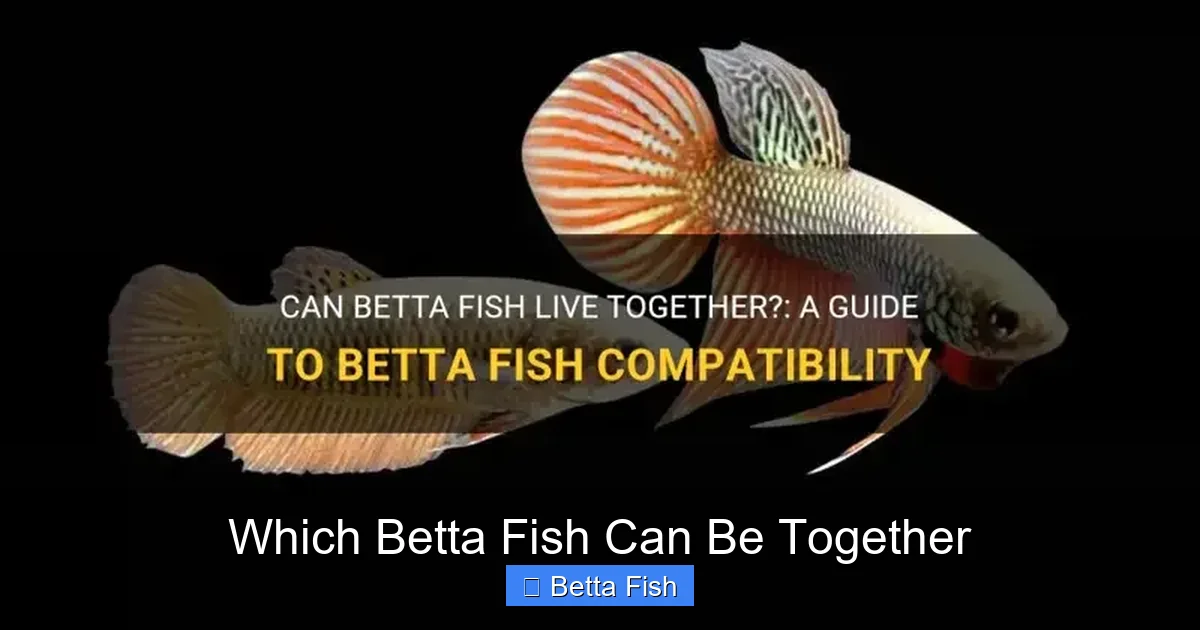
Before we discuss tank configurations, we must understand the betta itself. Bettas are labyrinth fish, native to the shallow, slow-moving rice paddies and floodplains of Southeast Asia. Their aggressive tendencies, particularly in males, evolved from a need to defend small, resource-rich territories from rivals. This instinct is hardwired but can be influenced by environment and individual genetics.
Visual guide about Which Betta Fish Can Be Together
Image source: petshun.com
The Gendered Reality: Male vs. Female
The most critical distinction is between male and female bettas. Male bettas are the quintessential solitary fish. Their long, flowing fins are a primary trigger for other bettas (and many other fish) to perceive them as rivals or prey. Even in a massive tank, a male betta will typically attack another male on sight, often to the death. They may also flare (a threat display) at their own reflection or at fish with bright colors or flowing fins. Keeping two males together is an almost certain recipe for disaster and is never recommended.
Female bettas, while still capable of aggression, are generally less territorial and more social. In the wild, they often tolerate each other in larger, resource-abundant spaces. This natural behavior is the foundation of the successful “betta sorority.” However, “less aggressive” does not mean “non-aggressive.” A sorority requires meticulous planning and ongoing management to succeed.
The Role of Individual Personality
Just like people, bettas have unique personalities. You may have a particularly mellow male that seems indifferent to tank mates in a well-populated community, or a fiercely dominant female in a sorority that bullies others. There is no guarantee. This is why observation is a non-negotiable part of the process. You must be prepared to have a backup plan—a separate “hospital” or “solitary” tank—ready to isolate a betta that is being bullied or is bullying others relentlessly.
The Female Betta Sorority: A Viable Community?
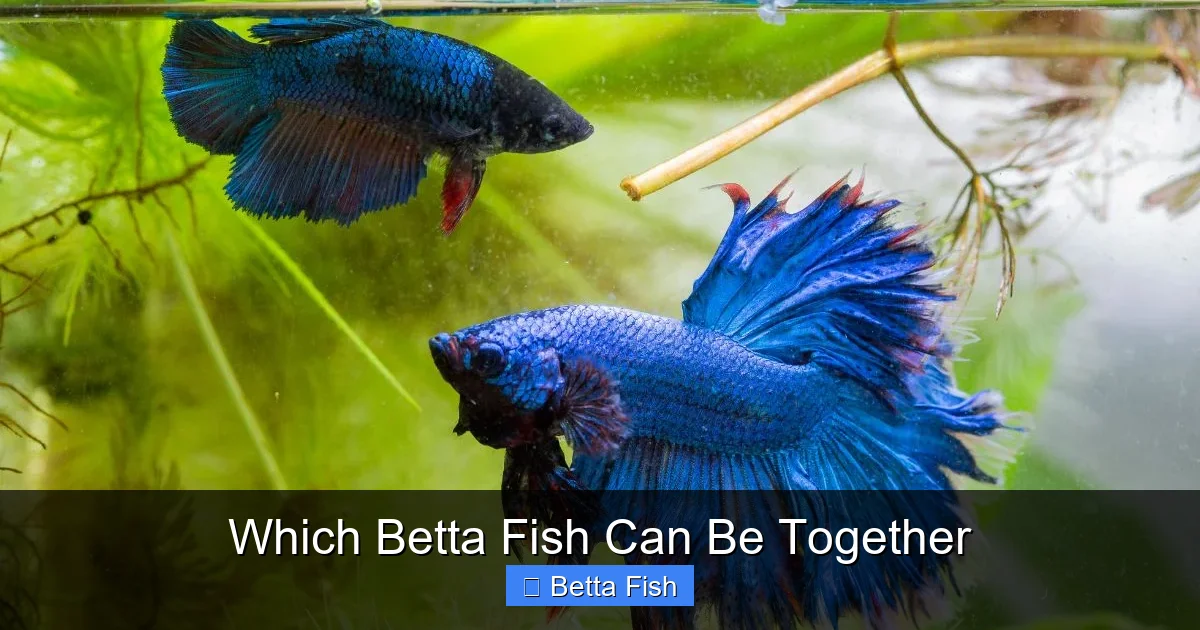
A sorority is a group of female bettas living together. It is the most common way to keep multiple bettas in one tank, but it is not a casual endeavor. Success hinges on three pillars: numbers, space, and structure.
Visual guide about Which Betta Fish Can Be Together
Image source: housedpet.com
The Golden Rules of Sorority Setup
1. Group Size (4-6 is Ideal): Never start with just two females. In a pair, one will almost inevitably bully the other relentlessly. A group of 4-6 allows aggression to be distributed. The hierarchy establishes itself, and weaker individuals have places to hide. Starting with fewer than four increases the risk of fatal bullying.
2. Tank Size (Minimum 20 Gallons, 30+ Preferred): This is the absolute minimum. A 20-gallon long tank provides the horizontal swimming space that is crucial. Larger is always better. In a cramped tank, even a sorority will fail. Think of it as a large, open-plan office versus a small cubicle—stress levels are dramatically different.
3. Aggressive Planting and Décor: The tank must look like a dense jungle, not an open arena. Use live plants (like Anubias, Java Fern, Cryptocoryne) or high-quality silk plants to create walls and hiding spots. Provide multiple visual barriers—large rocks, driftwood, ceramic pots (with holes plugged), and tall plant clusters. The goal is to break constant lines of sight so a dominant female cannot constantly harass a submissive one.
Establishing the Hierarchy
When you first introduce the females (always at the same time, never adding to an established group), there will be flaring, chasing, and occasional nipping. This is normal as they figure out their pecking order. This process can take 24-72 hours. You should only intervene if:
- One fish is being cornered and cannot escape.
- There is significant fin nipping leading to torn fins or infection.
- A fish is hiding constantly and not eating for more than 48 hours.
If intervention is needed, have a separate hospital tank ready. Sometimes, a particularly aggressive individual must be removed permanently to save the group. Even in a successful sorority, the hierarchy can shift, so ongoing observation is key.
Compatible Tank Mates for a Single Betta
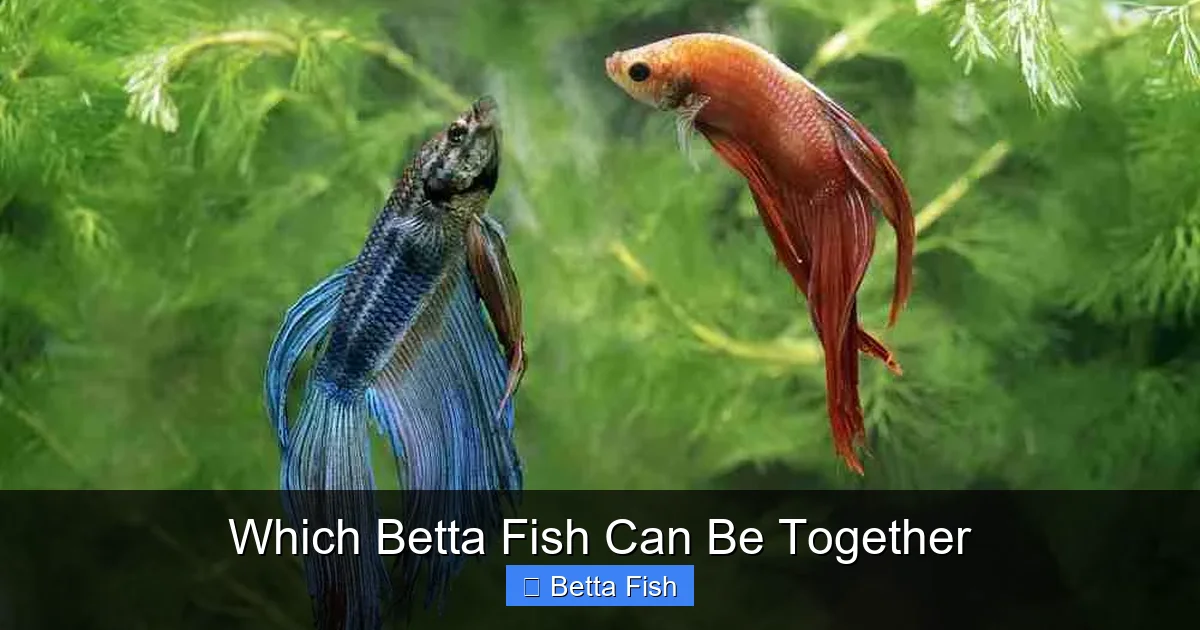
This is where most betta owners find success. A single betta (male or female) can often be the centerpiece of a peaceful community tank, provided its tank mates are chosen with extreme care. The rules are simple: avoid anything that will trigger the betta’s aggression or be seen as food.
Visual guide about Which Betta Fish Can Be Together
Image source: fishkeepingwisdom.com
The “No” List: What to Absolutely Avoid
Other Betta Fish: Never house a male betta with any other betta. Female bettas together require the sorority rules above.
Long-Finned, Colorful Fish: Guppies (males especially), fancy goldfish, angelfish, and some gouramis resemble rival bettas. Their flowing fins are an irresistible target for nipping.
Fin-Nippers: Tiger barbs, serpae tetras, and some danios (like the zebra danio in a group) are notorious for nipping at the betta’s long, flowing fins, causing severe stress and injury.
Slow, Delicate Fish: Betta are curious and may nip at slow-moving fish with long fins like some fancy goldfish, fancy guppies, or threadfin rainbowfish. They are also likely to see them as food.
The “Yes” List: Top Community Contenders
The safest companions are small, fast-swimming, plain-colored fish that occupy different tank levels.
- Mid-Level Swimmers: Harlequin Rasboras and Lambchop Rasboras are excellent. They are peaceful, schooling fish that are fast enough to evade a curious betta and prefer the middle of the tank. Small Celestial Pearl Danios (CPDs) are another fantastic, colorful but non-threatening option.
- Bottom-Dwellers: This is the safest zone. Corydoras catfish (like the Pygmy or Panda cory) are peaceful, social scavengers that stay on the bottom, completely ignoring the betta above. Kuhli loaches are eel-like, nocturnal, and also excellent bottom cleaners. Otocinclus catfish are tiny algae eaters that are virtually invisible to a betta.
- Shrimp & Snails: Amano shrimp are large, fast, and primarily algae-eaters. Ghost shrimp or Cherry shrimp are smaller and can be viewed as a snack, but in a well-planted tank with a calm betta, they often breed successfully. Nerite snails and Mystery snails are perfect—they have a hard shell and move slowly, posing no threat and being of little interest to a betta.
Practical Example: A 20-gallon planted tank with a single male Halfmoon Betta as a centerpiece, a school of 8 Harlequin Rasboras, a school of 6 Pygmy Corydoras, and a couple of Nerite Snails is a classic, highly successful community setup.
The Critical Role of Tank Size and Aquascaping
No discussion of betta compatibility is complete without emphasizing the environment. A 5-gallon “betta tank” is only suitable for a single betta. If you want to attempt any form of cohabitation—sorority or community—you must start with a much larger aquarium.
The 20-Gallon Minimum: Why Size Matters
A 20-gallon tank is the widely accepted starting point for a community with a betta. Here’s why:
- Territory Dilution: In a larger volume of water, the betta’s scent and territory markers are less concentrated, reducing its perceived need to defend a small patch.
- Space for Evasion: Other fish need room to get away. A betta’s burst of speed is short. In a long, spacious tank, a nimble rasbora can easily outmaneuver a lazy flare.
- Stable Water Parameters: Larger volumes are more resistant to sudden changes in ammonia, nitrite, and nitrate, which cause stress and can lower a fish’s tolerance for neighbors.
- Complex Layout: A 20-gallon long tank allows you to create distinct “zones” with dense planting, hardscape, and open swimming areas, giving everyone their own space.
Aquascaping for Peace: Creating a Jungle
Your tank’s layout is your primary tool for managing aggression. Follow these principles:
- Vertical Layers: Use tall plants (like Vallisneria or Amazon swords) at the back, medium-height plants (Crypts, Anubias) in the middle, and low-lying foreground plants (Dwarf Hairgrass, Lilaeopsis) to create a three-dimensional jungle.
- Hardscape as Barriers: Large pieces of driftwood or rock placed strategically can break the line of sight from one end of the tank to the other. This prevents a betta from seeing a potential “intruder” (like a cory cat) and instantly charging.
- Floating Plants: A layer of floating plants like Salvinia or Frogbit is invaluable. It diffuses light, reduces stress, and provides a sense of cover from above, which bettas especially appreciate. It also gives shy fish a place to hide.
- Open Swimming Areas: While dense planting is key, you must also leave one or two open areas for active schooling fish to swim without constantly bumping into plants.
Step-by-Step: Introducing a New Tank Mate
You have your perfectly sized, densely planted 20+ gallon tank. You have your calm, individual betta. You’ve chosen a compatible species. Now, the introduction process is critical.
Step 1: Quarantine (The Unskippable Step)
Always, always quarantine all new fish for at least 2-4 weeks in a separate tank. This prevents you from accidentally introducing diseases (like ich, velvet, or internal parasites) into your main display tank. This is the single most important step for long-term health.
Step 2: Rearrange the Tank
Before adding the new fish, do a significant rearrangement of the plants and décor. This disrupts the betta’s established territory and resets the “social map.” The betta will be focused on exploring the changed environment, not immediately defending against a new intruder.
Step 3: The Acclimation Process
Float the bag with the new fish in your tank for 15-20 minutes to equalize temperature. Then, use a drip acclimation method or slowly add tank water to the bag over 30-60 minutes to acclimate the new fish to your water parameters. This is standard for any sensitive fish.
Step 4: The First 72 Hours of Vigilance
Gently release the new fish into the tank, ideally near a hiding spot. For the next three days, you must be a detective. Watch for:
- Flaring: The betta flaring its gills and extending its fins is a warning sign. Occasional flaring from a distance is normal; constant chasing is not.
- Chasing: The betta relentlessly pursuing another fish.
- Nipping: Bits of fin missing on the new fish or the betta.
- Hiding: The new fish not coming out to eat for more than 24-48 hours.
- Stress in the Betta: The betta itself becoming lethargic, losing color, or clamping its fins due to the stress of a new arrival.
Be prepared to remove the new fish immediately if severe aggression occurs. Sometimes, a betta just won’t accept any company. That’s okay—its well-being is the priority.
Common Mistakes and How to Avoid Them
Even with the best intentions, aquarists make errors that lead to tragedy. Here are the most frequent pitfalls.
Mistake 1: “He’s So Pretty, He Must Be Friendly”
This is the classic error. A betta’s brilliant colors and flowing fins are a product of selective breeding for aggression and show. A beautiful betta is often a more aggressive betta. Do not assume temperament based on appearance. Always research the specific variety (e.g., some Plakat bettas with shorter fins can be slightly less aggressive, but this is not a rule).
Mistake 2: Underestimating Tank Size
Putting a betta and a few neon tetras in a 10-gallon tank is a recipe for stress. The betta feels it has no space, and the tetras have no room to escape. The “minimum” is just that—the absolute smallest acceptable. Bigger is always better for community harmony.
Mistake 3: Incompatible Species Choice
Choosing fish based solely on “they’re small and peaceful” without considering their natural behavior. For example, some “peaceful” tetras can be fin-nippers in small groups. Always research the specific species’ requirements and typical behavior in a community setting.
Mistake 4: Poor Aquascaping
A sparsely decorated tank is an arena, not a habitat. Without plants and structures to break sight lines, a betta will see any movement as a challenge. Invest time and effort in creating a complex, planted environment.
Mistake 5: Lack of Patience and Observation
Dumping fish together and walking away. Successful communities require active management in the first week and consistent observation thereafter. You are the guardian of this ecosystem. Watch your fish interact during feeding times. Learn their normal behaviors so you can spot the abnormal ones immediately.
Conclusion: The Path to a Harmonious Tank
So, which betta fish can be together? The definitive answer is: a carefully selected group of 4-6 female bettas in a 30+ gallon, heavily planted sorority tank, or a single betta (male or female) in a 20+ gallon, densely aquascaped community with peaceful, fast-swimming, non-flashy tank mates from different swimming levels. Anything outside these parameters is high-risk and requires exceptional circumstances and constant vigilance.
The journey to a successful betta community is one of patience, research, and careful observation. It’s about creating an environment that respects the betta’s innate territorialism while providing enough complexity and space for all inhabitants to feel secure. Start with the right tank, choose your companions wisely, and become a keen observer of your aquatic world. By doing so, you move beyond the outdated myth of the necessarily lonely betta and can enjoy the dynamic beauty of a truly harmonious underwater community.
Frequently Asked Questions
Can I keep two male betta fish together?
No. Two male bettas will almost certainly fight to the death. Their extreme territorial aggression towards other males is a defining characteristic. They require individual tanks.
How many female bettas can be kept in a sorority?
A sorority should start with a group of 4-6 females in a minimum 20-30 gallon tank. This number allows a stable hierarchy to form and gives weaker fish places to hide from dominant ones.
What are the absolute safest tank mates for a betta?
The safest options are peaceful bottom-dwellers like Pygmy Corydoras or Kuhli loaches, and invertebrates like Nerite snails or Amano shrimp. These creatures occupy different tank levels and do not trigger the betta’s aggression.
How can I tell if my betta is stressed by tank mates?
Signs of stress include constant flaring and chasing, lethargy, clamped fins, loss of appetite, faded colors, and hiding all day. A stressed betta is more susceptible to disease.
My betta is chasing my other fish. What should I do?
First, assess if it’s constant, relentless chasing or occasional flaring. If it’s relentless and the other fish is stressed or injured, you must remove the betta or the other fish immediately. Have a backup tank ready. Some bettas simply cannot live with others.
Can I keep a betta with neon tetras or guppies?
Neon tetras are a common but risky choice. They are fast and school, which helps, but their bright colors and active mid-level swimming can provoke some bettas. Guppies, especially males with long fins, are almost always a bad idea and will be nipped or attacked. It’s better to choose less flashy rasboras or danios.

