Where to Buy Half Moon Betta Fish

Finding a healthy Half Moon Betta fish requires knowing where to look. Your best bets are specialized online breeders, high-quality local fish stores, and trusted aquarium shops. Always prioritize sellers who provide clear photos, health guarantees, and details on the fish’s environment. A proper tank setup is non-negotiable before you bring your new betta home. Choosing a vibrant, active fish from a reputable source is the first step to a long, happy relationship.
Key Takeaways
- Reputable Sources Are Key: Buy from specialized online breeders, established local fish stores (LFS), or high-end aquarium shops. Avoid big-box retailers where fish health is often inconsistent.
- Health Inspection is Mandatory: Look for clear eyes, intact fins, vibrant color, and active swimming. Avoid fish with clamped fins, fuzz, torn fins, or lethargy.
- Know Your Half Moon: A true Half Moon betta will have a full 180-degree tail spread when flared. Be wary of sellers mislabeling other tail types.
- Tank Setup Comes First: Never buy a betta without having a properly cycled, heated, and filtered tank (minimum 5 gallons) ready and waiting.
- Ask Questions: A good seller will know about the fish’s age, feeding habits, and water parameters. Their willingness to share is a great sign.
- Quarantine is Recommended: If possible, quarantine a new betta for 2-4 weeks in a separate tank to protect existing aquarium inhabitants from potential disease.
- Price Reflects Quality: Expect to pay $25-$75+ for a quality Half Moon from a breeder. Extremely cheap fish often come from high-volume, low-welfare operations.
📑 Table of Contents
- What Makes a Half Moon Betta So Special?
- Top Tier Sources: Where to Buy Half Moon Betta Fish
- Local Pet Stores & Big-Box Retailers: Proceed with Extreme Caution
- What to Look For: The Buyer’s Inspection Checklist
- The Non-Negotiable: Preparing the Home Before the Hunt
- Common Pitfalls & How to Avoid Them
What Makes a Half Moon Betta So Special?
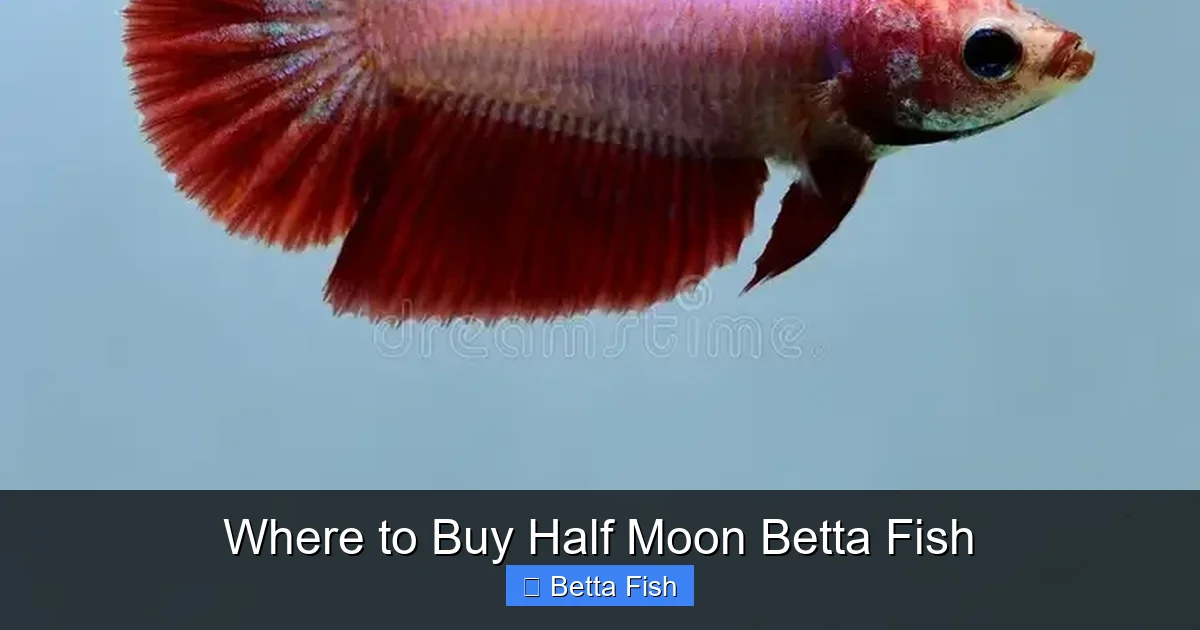
Before we dive into where to find one, let’s talk about what you’re actually looking for. The Half Moon betta, often written as “Halfmoon,” is the superstar of the betta world. Its defining feature is a stunning tail that, when fully flared, forms a perfect semi-circle—a full 180-degree spread. This breathtaking display, combined with the fish’s natural aggression and personality, makes it a coveted prize for any aquarist. But that magnificent tail is also a double-edged sword. It’s genetically delicate, more prone to tearing, and requires pristine water conditions to stay healthy and beautiful. This is why where you buy your Half Moon betta fish is arguably the most important decision you’ll make in its care journey. A poorly bred or unhealthy fish from a bad source will struggle, no matter how perfect your tank is.
The Genetics Behind the Beauty
The Half Moon trait is a recessive genetic mutation. This means both parents must carry the gene to produce Half Moon offspring. Responsible breeders work for generations to enhance not just the tail spread, but also body type, color intensity, and overall vigor. This selective breeding is why a true, high-quality Half Moon from a dedicated breeder commands a higher price. It represents hundreds of hours of work and careful pairing. When you buy a Half Moon betta, you’re not just buying a fish; you’re investing in a line of genetics that has been refined for that iconic, symmetrical sail.
Top Tier Sources: Where to Buy Half Moon Betta Fish
So, where should you look? The marketplace is a mixed bag, ranging from exceptional to abysmal. Let’s break down the most reliable avenues, starting with the gold standard.

Visual guide about Where to Buy Half Moon Betta Fish
Image source: thumbs.dreamstime.com
Specialized Online Betta Breeders & Sellers
This is the premier destination for serious enthusiasts seeking top-tier Half Moon bettas. These are not just stores; they are passionate breeders and curators.
- What They Offer: Unmatched variety in colors (including rare marbles, koi, and multicolors), consistent high-quality genetics, detailed lineage information, and often, fish that are already accustomed to shipped life. Many will video their fish for you to confirm activity and health before purchase.
- How to Find Them: Search for terms like “premium betta breeder,” “show quality halfmoon betta for sale,” or “imported betta fish.” Look for active communities on forums like Fishlore or Reddit’s r/bettafish for breeder recommendations. Reputable names in the US include Thailand-based breeders who import directly (like those on Aquabid) or established domestic operations like Bettas4Ever or King Betta.
- The Process: Buying usually involves browsing online galleries, selecting your fish, and paying a shipping fee (often $30-$50+ for live arrival guarantees). Fish are shipped in insulated containers with oxygenated bags, typically via overnight courier. You must be home to receive the box to immediately acclimate the fish.
- Tip: Always read reviews meticulously. Look for comments about healthy arrival, accurate representation of color/type, and responsive customer service regarding the Half Moon betta fish for sale.
High-Quality Local Fish Stores (LFS)
Don’t overlook your local aquarium shop! A truly excellent LFS can be a fantastic source.
- What They Offer: The chance to see the fish in person before buying. You can assess its current health, activity, and tail condition directly. Staff often have deep, practical knowledge and can offer immediate, localized advice.
- How to Identify a Good One: The store should be clean, with well-maintained display tanks. Fish should be housed appropriately (no bettas in tiny cups!). Staff should be able to answer questions about the fish’s origin, diet, and tank parameters. If they sell Half Moons, they should be in individual, filtered, heated systems, not communal tanks.
- The Process: You select and purchase immediately. This eliminates shipping stress, which is a major plus. You can also often get a health guarantee from the store itself.
- Tip: Build a relationship. frequent the store, ask questions, and show you’re a knowledgeable, committed hobbyist. They’ll be more likely to hold a special fish for you or give you first pick of new arrivals.
Premium Aquarium/Reptile Expos & Events
Major reptile and aquarium expos, often held in large convention centers, attract top breeders from across the country.
- What They Offer: A huge concentration of breeders in one place. You can meet the breeders face-to-face, see dozens of Half Moon bettas from different bloodlines, and often get incredible deals on show-quality fish that didn’t quite make the judge’s cut.
- The Process: You attend the event, browse vendor booths, and buy on the spot. Fish are sold in small bags, and you must have your transport container ready (a small, insulated cooler with water from the vendor’s tank).
- Considerations: Travel stress for the fish can be high if the vendor has had a long trip. Inspect the fish carefully in the bag. Also, be prepared for crowds and do your research on which vendors are reputable before you go.
- Tip: Go early in the day for the best selection. Have a list of desired colors/patterns, but be open to falling in love with an unexpected gem.
Local Pet Stores & Big-Box Retailers: Proceed with Extreme Caution
This category includes national chains like PetSmart, Petco, and large general pet stores. While convenient, they are generally the least recommended source for a delicate, high-quality Half Moon betta.
Visual guide about Where to Buy Half Moon Betta Fish
Image source: thumbs.dreamstime.com
The Reality of the Supply Chain
The bettas in these stores typically come from large-scale commercial farms, often in Southeast Asia. The focus is on volume and low cost, not genetic quality or long-term health. You will rarely find a true, symmetrical Half Moon in these stores; you’re more likely to see “halfmoon” used as a catch-all term for any long-tailed betta (like a “dumbo” ear or a veil tail that *almost* flares wide). The fish endure long, stressful shipping journeys in tiny bags with minimal water, often packed in boxes with dozens of others. By the time they reach the store, many are already weakened.
What to Expect & How to Mitigate Risk
If you must buy from such a store, you must become a meticulous inspector.
- Inspect the Display: Are the bettas in individual cups? Are the cups dirty? Is the water cloudy? Are there dead or dying fish in other cups? A dirty, poorly maintained display is a red flag for overall fish health.
- Inspect the Individual Fish: Look for the specific Half Moon traits. Gently tap the cup—does the fish flare? Does it show a near-180-degree spread? Look for any signs of fin rot (ragged, blackened, or fuzzy edges), pop-eye, clamped fins, or lethargy. A healthy betta will be alert, curious, and flare at its reflection.
- Ask About Quarantine: Ask a manager when the fish arrived. If it’s been in the store for less than a week, it’s still in its most vulnerable post-shipment period. Consider waiting a week or two, or better yet, finding a different source.
- The Verdict: You can get lucky and find a reasonably healthy fish, but you are playing the odds. The genetic quality for a true Half Moon is almost never there. For a first-time betta owner, this source is a recipe for heartbreak and high vet bills. For a Half Moon specifically, we strongly advise seeking out the sources in Section 2.
What to Look For: The Buyer’s Inspection Checklist
Regardless of where you buy a Half Moon betta fish, your personal inspection is the final and most critical gatekeeper. Have this checklist ready.

Visual guide about Where to Buy Half Moon Betta Fish
Image source: tropicflow.com
The Visual Health Exam
Use a small net or cup to gently move the fish if possible (a reputable seller will facilitate this).
- Eyes: Should be clear, bright, and protruding normally. Cloudy, sunken, or bulging (pop-eye) eyes are major red flags.
- Fins: This is paramount for a Half Moon. Look for fins that are intact, undamaged, and flowing. No blackening, fraying, holes, or cotton-like growth (fin rot). The tail base should be strong and connected smoothly to the body.
- Body: Should be smooth, streamlined, and free of sores, lumps, or patches of missing scales. No visible parasites (like tiny white “salt” grains—ich).
- Color: Vibrant and even. While some bettas have color-changing patterns (marbling), sudden patches of pale or discolored skin can indicate stress or disease.
- Gills & Operculum: Should not be constantly flared or pumping rapidly when the fish is at rest. This indicates breathing difficulty, often from poor water quality or ammonia poisoning.
Behavioral Red Flags
- Lethargy: Is the fish resting on the bottom, not moving, or floating listlessly? A healthy betta is curious and active, exploring its space.
- No Flare Response: While some fish are shy, a complete lack of reaction to a mirror or your finger near the glass can indicate extreme weakness or illness.
- Gasping at Surface: Constant trips to the top for air is a sign of poor water quality in its current tank or an underlying respiratory issue.
- Hiding Constantly: While bettas do rest among plants, a fish that is perpetually buried or wedged in a corner is severely stressed.
The Non-Negotiable: Preparing the Home Before the Hunt
You would never buy a Half Moon betta fish without having its permanent home fully cycled and ready. This is the single biggest mistake new owners make. The fish’s immune system is already weakened from transport. Dumping it into an uncycled tank is a death sentence.
The Proper Half Moon Habitat
- Tank Size: Minimum 5 gallons. Larger is always better, especially for a fish with a large, energy-intensive tail. It provides stable water parameters and swimming space.
- Heater & Thermometer: Bettas are tropical fish. A stable temperature of 78-80°F (25.5-26.5°C) is essential. Use a reliable heater with a thermostat and always have a separate thermometer to verify.
- Filter: A gentle filter is crucial for biological filtration. A sponge filter is ideal—it provides excellent bacteria colonization and a gentle flow that won’t damage delicate fins. Avoid strong currents.
- Cycling: This 4-6 week process establishes beneficial bacteria that consume toxic ammonia and nitrite. You must test water (with a liquid test kit like API Freshwater Master) and see 0ppm ammonia, 0ppm nitrite, and some nitrate (<20ppm) before adding the fish.
- Plants & Hiding Spots: Use live plants (like Java fern, Anubias, floating frogbit) or soft silk plants. They reduce stress, improve water quality, and give the betta places to rest without his fins dragging on rough surfaces. Avoid plastic plants with sharp edges.
- Lid: Bettas are labyrinth fish and need access to surface air. Use a lid to prevent escapes, but ensure there is space for the fish to gulp air.
Common Pitfalls & How to Avoid Them
Even with the best intentions, new Half Moon owners can stumble. Here’s how to sidestep the most common issues.
Mistake 1: The “Instant Community”
You see your beautiful Half Moon and think, “It needs friends!” Do not house a male betta with other male bettas. They will fight to the death. Even with female bettas (sororities), it’s advanced and risky. For a Half Moon, with its large, tempting fins, the risk of fin-nipping from almost any community fish is high. The safest, most recommended tankmate for a Half Moon betta is nothing. The only true “community” for a male betta is a carefully selected tank of invertebrates like snails (Nerite, Mystery) or shrimp (Amano, Ghost). Some very peaceful, fast-moving fish like neon tetras *in a large, heavily planted tank* might work, but it’s a gamble. For a first-time Half Moon betta owner, a species-only tank is the wisest choice.
Mistake 2: Overfeeding & Poor Water Management
Bettas have small stomachs. Overfeeding leads to constipation, bloating, and water pollution. Feed a high-quality pellet or frozen food (daphnia, brine shrimp) once a day, only what they can eat in 2-3 minutes. The real key is water changes. In a cycled, filtered 5-gallon tank, perform a 25% water change weekly using dechlorinated water at the correct temperature. This dilutes waste and keeps parameters stable, which is absolutely critical for a Half Moon’s delicate fins.
Mistake 3: Ignoring Water Parameters
Betta fins, especially the large, flowing Half Moon tail, are sensitive to ammonia and nitrite. Even low levels can cause fin rot and deterioration. You must have a liquid water test kit. Test regularly, especially after water changes or if you suspect an issue. Maintain ammonia and nitrite at zero. Keep nitrate under 20ppm with regular changes. pH should be stable between 6.5-7.5.
Frequently Asked Questions
How much does a Half Moon betta fish typically cost?
From a reputable online breeder or high-end LFS, expect to pay between $25 and $75 for a standard color Half Moon. Rare colors (like koi, copper, or multicolored), exceptional show-quality specimens, or imports from Thailand can cost $100 to $300 or more. Extremely cheap bettas ($5-$10) are almost always from high-volume commercial farms with poor genetics and health.
Is it safe to ship a Half Moon betta fish?
Yes, when done by experienced, reputable breeders. They use insulated boxes, heat packs (if needed), and double-bagging with pure oxygen. Shipping is typically overnight to minimize stress. Reputable sellers offer a “live arrival guarantee,” meaning they will refund or replace the fish if it arrives deceased. Always be home to receive the box and acclimate the fish immediately and properly upon arrival.
Why can’t I find a “true” Half Moon at my local pet store?
True Half Moon bettas require specific, recessive genetics. Large-scale commercial farms prioritize color and basic tail length over the perfect 180-degree spread and symmetrical form. The fish they supply to big-box stores are usually “round tail” or “veil tail” types that may flare wide but do not achieve the true half-circle shape. For an authentic Half Moon, you need to seek specialized breeders who focus on this specific trait.
What’s the difference between a Half Moon and a Delta Tail betta?
This is a common point of confusion. A Half Moon betta’s tail, when fully flared, forms a perfect, symmetrical semi-circle (180 degrees) with the two ends meeting at a sharp point on the fish’s body. A Delta Tail has a similar spread but the tail edges are rounded, and the ends do not meet at the body, leaving a small gap. A true Half Moon is rarer and more genetically demanding than a Delta.
Can I keep a Half Moon betta with other fish?
It’s possible but tricky. Male bettas are solitary and aggressive by nature. A Half Moon’s large, flowing fins make it an irresistible target for fin-nippers. The only truly safe tankmates are peaceful invertebrates like snails (Nerite, Mystery) and certain shrimp (Amano, Ghost). If attempting a community, the tank must be very large (20+ gallons), heavily planted, and house only very fast-moving, non-aggressive, non-finned fish like some rasboras or tetras. For most owners, a species-only tank is the best and safest choice for a Half Moon.
What is the average lifespan of a Half Moon betta?
With proper care—including a heated, filtered tank, a high-quality diet, and clean water—a Half Moon betta can live 3 to 5 years, sometimes longer. Bettas from reputable breeders, with stronger genetics, often have better longevity potential than those from commercial farms. Their delicate fins can sometimes be a point of vulnerability, making consistent, excellent water quality even more important for their long-term health.