When to Feed New Betta Fish
Bringing home a new betta fish requires patience, especially with feeding. You must wait 24-48 hours after acclimation before offering the first meal to allow stress to subside. Start with a tiny, betta-sized portion (the size of its eye) once daily. Overfeeding is the #1 mistake new owners make, leading to serious health and water quality issues. Establishing a consistent routine and choosing high-quality, varied foods are fundamental to your betta’s long-term vitality and color.
So, you’ve just brought home a beautiful, flaring new betta fish. You’ve set up the perfect tank, added the plants, and adjusted the water. Now, the big question looms: when do you actually feed the thing? It seems simple, but for a new betta, timing is everything. Feed too soon, and you risk exacerbating transport stress. Feed the wrong amount, and you can create a cascade of health problems. Getting this first step right is one of the most important things you can do for your new aquatic companion’s long-term health and happiness. This guide will walk you through every detail, from those first anxious hours to establishing a lifelong healthy feeding routine.
Key Takeaways
- Acclimation is Key: Always wait a full 24-48 hours after your betta is in its new tank before the first feeding. This allows stress from transport to diminish.
- Tiny Portions are Critical: A betta’s stomach is roughly the size of its eye. Feed no more than 2-3 pellets or 3-4 bloodworms per meal, once a day.
- Overfeeding is Dangerous: Excess food decays, polluting water and causing constipation, swim bladder disease, and fatal ammonia spikes.
- Fasting is Beneficial: It’s safe and healthy to skip 1-2 days per week. This gives their digestive system a rest and mimics natural feeding patterns.
- Variety is Essential: Rotate between high-quality pellets, frozen, and live foods to provide complete nutrition and prevent boredom.
- Observe, Don’t Just Feed: Watch your betta eat. If food isn’t consumed within 2-3 minutes, you’ve overfed. Remove uneaten food immediately.
- Routine Builds Trust: Feed at the same time each day. Your betta will learn to anticipate meals, reducing stress and encouraging activity.
📑 Table of Contents
- Why Timing Matters: The Stress of a New Environment
- The Critical Acclimation Period: The 24-48 Hour Rule
- The First Feeding: Technique and Portion Control
- Establishing a Consistent Feeding Routine
- Food Types & Nutritional Needs: Building a Balanced Diet
- Common Feeding Mistakes & How to Fix Them
- Health Indicators: What Your Betta’s Eating (or Not Eating) Tells You
- Conclusion: Patience and Observation are Your Greatest Tools
Why Timing Matters: The Stress of a New Environment
Before we talk about food, we need to understand what your new betta is going through. That little fish has just endured a major upheaval. It was likely netted, placed in a small bag with a few cups of water, possibly jostled during transport, and then dropped into a completely new, unfamiliar environment. This is profoundly stressful for a creature that thrives in stable, predictable conditions.
The Physiology of Stress in Bettas
Stress triggers a physiological response in bettas, just like in humans. Their bodies release stress hormones like cortisol. One immediate effect is that their digestive system essentially shuts down or slows to a crawl. Their metabolism prioritizes survival over digestion. Offering a hearty meal the moment they’re dropped into the tank is like asking a person with a severe stomach flu to run a marathon—it’s not going to end well. The food will sit undigested, ferment in their gut, and very likely cause constipation or a life-threatening swim bladder disorder.
Water Quality and the New Tank Syndrome
Beyond the fish’s internal state, there’s the tank itself to consider. If you’ve just set up a new aquarium, it is almost certainly not cycled. “Cycling” refers to establishing a colony of beneficial bacteria that consume toxic fish waste (ammonia and nitrite). In a new tank, these bacteria populations are nonexistent or tiny. The moment you add a fish, it begins producing ammonia. If you then add food that isn’t eaten, that food decays and adds even more ammonia to the water. For a stressed betta with a weakened immune system, this toxic soup can be a death sentence. This is why the timing of the first feeding is so closely tied to water management.
The Critical Acclimation Period: The 24-48 Hour Rule
This is the golden rule for new bettas: do not feed for at least 24 hours, and ideally 48 hours, after they have been placed in their new, fully temperature-acclimated tank. This period is not about starvation; it’s about recovery and observation. You are giving your betta a chance to de-stress, explore its new home without the immediate burden of digestion, and for you to observe its baseline behavior.
Visual guide about When to Feed New Betta Fish
Image source: i.ytimg.com
Step-by-Step: The First 48 Hours
First, ensure proper acclimation. Don’t just dump the bag water into your tank. Float the sealed bag in the tank for 15-20 minutes to equalize temperature. Then, slowly add small amounts of your tank water to the bag over 30-45 minutes before gently netting the betta and placing it in the tank. Discard the bag water.
Now, the waiting begins. During this 24-48 hour period:
- DO NOT FEED. Resist the urge. Your betta has energy reserves from its last meal at the store or breeder.
- Observe behavior. Is your betta lethargic and hiding? That’s normal. Is it actively exploring, flaring at its reflection, or hovering near the top? These are signs of decreasing stress.
- Check water parameters. If you have a test kit, check ammonia and nitrite. They will likely be present. This is expected in a new tank, but you need to know the levels.
- Ensure the heater is working. Bettas need warm water (78-80°F / 25.5-26.5°C). A cold, stressed betta will not eat properly.
Signs Your Betta is Ready for Its First Meal
After 24 hours, look for these positive indicators before considering food:
- Active Exploration: It’s swimming confidently throughout the tank, not just hiding.
- Curiosity: It approaches the glass when you move near the tank.
- Normal Fin Posture: Fins are gracefully extended, not clamped tightly against the body.
- Healthy Color: Colors appear vibrant, not pale or washed out.
If after 48 hours your betta is still extremely lethargic, clamped, or not moving, the issue is likely water quality or illness, not hunger. Do not feed. Focus on a partial water change with dechlorinated, temperature-matched water.
The First Feeding: Technique and Portion Control
Once your betta shows signs of readiness, it’s time for its inaugural meal in its forever home. This moment is more about setting the correct precedent than providing substantial nutrition.
Visual guide about When to Feed New Betta Fish
Image source: wallpaperaccess.com
The “Eye-Size” Rule: How Much is Enough?
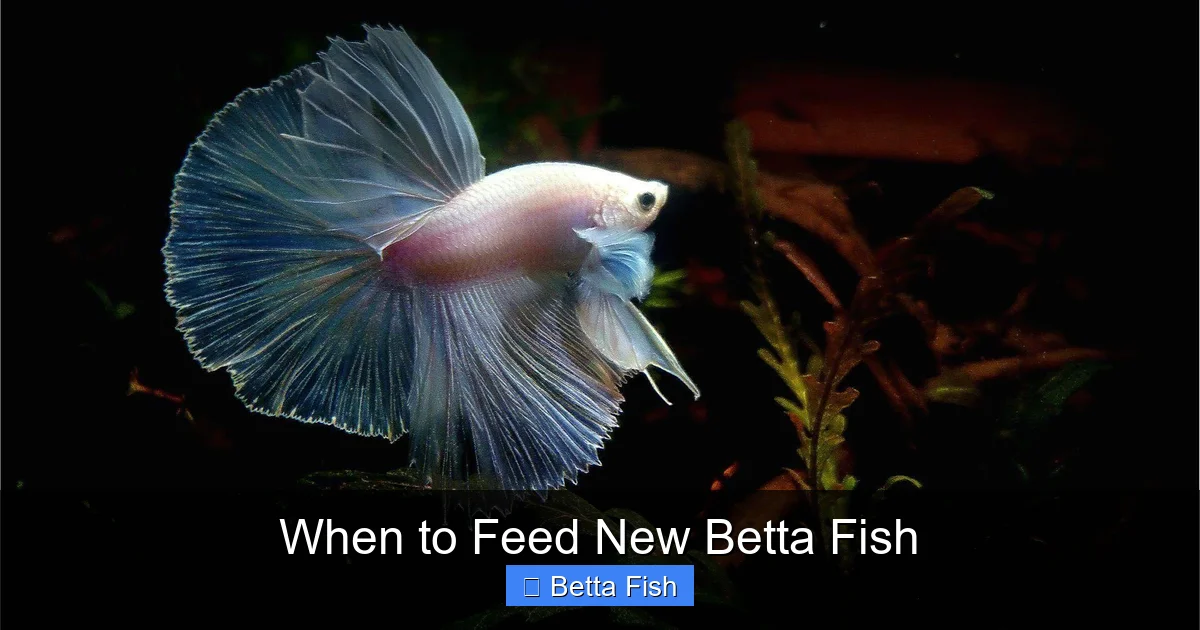
This cannot be stressed enough: a betta’s stomach is approximately the size of its eye. That’s a tiny, pea-sized volume. For a new betta, start even smaller. The goal of the first 2-3 meals is simply to awaken its digestive system and associate you with food. Offer one or two high-quality betta pellets (reputable brands like Hikari Betta Bio-Gold or New Life Spectrum Opti-Betta are excellent) or one frozen bloodworm or brine shrimp (thawed first). If using live foods, start with just 2-3 tiny daphnia or microworms.
Think of it not as a meal, but as a “taste test.” You are teaching it to eat in its new home.
How to Offer the First Meal
Use a pair of long tweezers or your fingers (washed and free of soap!) to hold the food item just above the water surface or slightly submerged in front of your betta. Drop it directly in front of it. This targets their natural hunting instinct, as they are surface feeders and insectivores in the wild. Watch intently. If it eats the food within seconds, great. If it ignores it, remove the food immediately with a net or siphon. Do not leave it to decay. Try again in 24 hours. A healthy betta will not starve missing a few days of food.
Establishing a Consistent Feeding Routine
After the first successful meal, you need to build a sustainable, healthy routine. Consistency is your best tool for reducing stress and ensuring proper nutrition.
The Ideal Schedule: Frequency and Timing
For an adult betta, once-a-day feeding is perfectly adequate and often ideal. Betta stomachs are short and simple; they do not need multiple meals. Feeding once a day allows for complete digestion and prevents the buildup of waste from frequent eating. Choose a time that works for you—morning or evening—and stick to it religiously. Your betta will learn to expect food at that time, becoming more active and excited as you approach the tank, which is a great sign of a confident, healthy fish.
Incorporate a weekly fast. Choose one day a week (many aquarists prefer Sunday) to feed absolutely nothing. This 24-hour fast is incredibly beneficial. It gives the digestive tract a complete rest, helps clear any minor blockages, and can actually improve long-term health and vitality. It also helps you remember that you don’t need to feed every single day.
Portion Control in Practice
Every betta is different. A large, active half-moon male in a 10-gallon tank may need 3-4 pellets. A smaller female in a 5-gallon may only need 1-2. The eye-size rule is your starting point. After feeding, observe. If your betta eats everything and is still looking for more immediately after, you can *very slightly* increase the next day’s portion. If there is obvious food left floating after 2-3 minutes, you have overfed. Scale back. Remember, it’s always better to err on the side of underfeeding. You can always give a tiny bit more tomorrow, but you cannot undo the effects of overfeeding today.
Food Types & Nutritional Needs: Building a Balanced Diet
Not all betta food is created equal. In the wild, a betta eats insects, insect larvae, and tiny crustaceans. A good captive diet should mimic this as closely as possible.
The Staple: High-Quality Pellets
Pellets should form the base of your betta’s diet (60-70%). Look for pellets with the following:
- High protein content (at least 40% for bettas).
- Whole ingredients like salmon, krill, or shrimp as the first few items, not just “fish meal.”
- No fillers like wheat, soy, or potato starch high on the list.
- Small, sinking or slow-sinking pellets designed for bettas. Large pellets that float indefinitely are often packed with air and fillers.
Soak dry pellets in a bit of tank water for a minute before feeding to prevent them from expanding in your betta’s dry stomach, which can cause constipation.
Supplemental & Treat Foods: Frozen, Live, and Freeze-Dried
This is where you provide variety and essential nutrients. Offer these 2-3 times per week instead of pellets.
- Frozen Foods: The best choice. Frozen bloodworms, brine shrimp, or daphnia are nutrient-rich, easy to store, and pose little disease risk (if purchased from a reputable brand like Hikari or San Francisco Bay Brand). Thaw a small cube in a dish of tank water, rinse, and feed.
- Live Foods: The ultimate enrichment. Microworms, vinegar eels, or daphnia cultured at home are fantastic. Avoid feeder guppies or goldfish—they carry parasites and are nutritionally inappropriate.
- Freeze-Dried Foods: A convenient alternative to frozen. Always soak these in tank water before feeding to rehydrate them, as they can cause constipation if eaten dry.
Foods to AVOID
Never feed your betta:
- Bettas are carnivores. They cannot digest plant matter. Do not feed peas, lettuce, or “vegetable” betta pellets.
- Human food of any kind.
- Generic tropical fish flakes—they are too large and lack sufficient protein.
- Live tubifex worms—they are notorious parasite carriers.
- Bread or grains.
Common Feeding Mistakes & How to Fix Them
Even with the best intentions, new betta owners often fall into traps. Here are the most common and how to avoid or correct them.
Mistake 1: Overfeeding (The Silent Killer)
Symptom: Cloudy water, visible food piles on the substrate, bloated betta, constipation (stringy feces), lethargy, rapid deterioration of water quality (high ammonia/nitrite).
Fix: Immediately perform a 25-30% water change. Stop feeding for 2-3 days. For constipation, offer a *soaked* daphnia (a natural laxative) or a tiny piece of cooked, deshelled pea (only for omnivores like goldfish; use daphnia for bettas). Re-evaluate your portion size. Use a calibrated spoon or count pellets. When in doubt, feed less.
Mistake 2: Feeding Low-Quality Food
Symptom: Faded colors, lack of energy, fin rot, poor growth in juveniles, excessive waste production.
Fix: Invest in a high-quality pellet as a staple. Supplement with frozen foods. You are what you eat—this applies to fish, too. Better food means better health, color, and immune function.
Mistake 3: Ignoring Water Quality
Symptom: This is the root cause of most feeding-related issues. No amount of perfect feeding can save a betta in toxic water.
Fix: You must have a liquid test kit (API Freshwater Master Test Kit is the standard). Test weekly. In a new tank, perform 25% water changes every 2-3 days for the first 2-3 weeks to control ammonia until the cycle completes. In an established tank, 25% weekly changes are the minimum. Always use a water conditioner like Seachem Prime to detoxify chlorine and chloramines.
Health Indicators: What Your Betta’s Eating (or Not Eating) Tells You
Your betta’s response to food is one of the best daily health checks you can perform.
Signs of a Healthy, Hungry Betta
- Eager response: Swims to the surface immediately when you approach.
- Active hunting: Tracks and chases food items.
- Consumes food quickly (within 1-2 minutes).
- Returns for more after finishing the first offering (if you are feeding a proper portion, it should be satisfied, not ravenous).
- Vibrant color and extended, flowing fins.
Signs of a Problem: When They Won’t Eat
A sudden loss of appetite is a red flag. Possible causes, in order of likelihood:
- Water Quality: The #1 suspect. Test immediately and perform a water change.
- Stress: From tank mates, loud noises, sudden temperature changes, or recent moves.
- Illness: Ich (white spots), velvet (golden dust), fin rot, dropsy (pineconing). Look for other physical symptoms.
- Constipation: From previous overfeeding. Look for a swollen, bloated abdomen.
- Boredom with Food: They are smart and can get bored of the same pellet every day. Try a different brand or offer a frozen treat.
Action Plan for a Refusing Betta: First, test and change 50% of the water. Ensure temperature is correct. Fast for 24 hours. Then, offer a tempting treat like a tiny, rinsed frozen bloodworm. If refused after another 24 hours, begin investigating for disease or consider a fast of 3-4 days to clear the system, then try again with a high-quality, soaked pellet.
Conclusion: Patience and Observation are Your Greatest Tools
Feeding a new betta fish is less about following a rigid clock and more about reading the subtle cues of a recovering animal. The foundational principle is delay, then discretion. By waiting 24-48 hours, you allow the acute stress of transport to fade. By starting with microscopic portions, you awaken a dormant digestive system without overwhelming it. By establishing a consistent, once-daily routine with a weekly fast and a varied, high-quality diet, you build the foundation for a long, vibrant life.
Remember, your betta is not a hamster. It has a slow metabolism and evolved to eat sporadically in the wild. Your role is not to provide endless banquets but to be a mindful steward of its health. The most important tool in your arsenal is not a food container, but your own observant eyes. Watch your betta eat. Learn its habits. Notice its energy. The simple act of feeding, done correctly, becomes a daily ritual of connection and care, ensuring your new betta doesn’t just survive, but truly thrives in its new home.
Frequently Asked Questions
How long should I wait to feed my new betta fish?
You should wait a full 24 to 48 hours after placing your new betta in its fully acclimated tank before offering its first meal. This allows stress from transport to subside and its digestive system to normalize.
How can I tell if my betta is actually hungry?
A hungry, healthy betta will actively swim to the surface when you approach the tank, track your movements, and eagerly chase food. A lack of interest in food is more often a sign of stress, poor water quality, or illness rather than simple hunger.
Is it okay to skip days of feeding my betta?
Yes, and it’s highly beneficial! Implementing a 24-hour fast once a week is an excellent practice. It gives the digestive system a rest, helps prevent constipation, and mimics natural feeding patterns where food is not always abundant.
What is the best time of day to feed my betta?
The best time is whatever time you can consistently stick to every day. Bettas thrive on routine. Choose a morning or evening feeding time and do it at the same hour daily. Consistency reduces stress more than the specific hour matters.
My betta is ignoring its food. What should I do?
First, check your water quality with a test kit—ammonia or nitrite spikes are the most common cause. Perform a 25-50% water change with dechlorinated, temperature-matched water. Fast for 24 hours, then try a tempting treat like a tiny frozen bloodworm. If refusal continues, look for signs of disease.
Can I give my betta treats other than pellets?
Absolutely. A varied diet is crucial. Offer high-quality frozen foods (bloodworms, brine shrimp, daphnia) or live foods (microworms, daphnia) 2-3 times per week as a supplement to a staple pellet diet. Always avoid overfeeding treats.