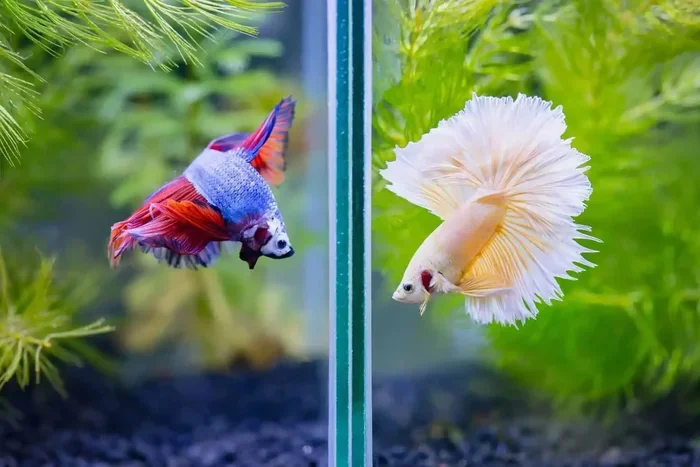
When to Change Betta Fish Water
Maintaining pristine water is the single most important factor in betta fish health. Unlike many fish, bettas require partial water changes (25-50%) weekly in filtered tanks and full changes every 2-3 days in unfiltered bowls. Consistency, proper dechlorination, and avoiding over-cleaning are critical to preventing stress, disease, and premature death.
So you’ve brought home a beautiful betta fish, with its flowing fins and vibrant colors. You’ve picked out a perfect tank, some silk plants, and maybe a little cave for it to explore. You’re feeding it high-quality food and watching it flare at its own reflection with pride. But there’s one crucial, non-negotiable task that stands between your betta and a long, healthy life: when to change betta fish water. It’s not glamorous, but it’s everything. This guide will walk you through exactly when, why, and how to do it, turning a chore into a simple, effective routine that your finned friend will thank you for.
The biggest myth about betta fish is that they can live in a tiny, dirty bowl on a windowsill. This couldn’t be further from the truth. Bettas are native to the shallow, warm rice paddies and slow-moving streams of Southeast Asia. While these waters are often warm and low-flow, they are not stagnant, polluted puddles. They are part of a dynamic, cycling ecosystem. In your aquarium, that cycle is broken. There’s no natural inflow of fresh water to dilute the fish’s waste. That means you are the ecosystem. Your schedule for changing betta fish water is the artificial rain that replenishes the habitat. Get it wrong, and your betta will slowly succumb to the toxic buildup of its own waste. Get it right, and you’ll enjoy a active, colorful companion for three to five years, sometimes even longer.
Let’s clear up the biggest question right away: how often. The answer is not one-size-fits-all. It hinges entirely on one thing: do you have a filter? This single factor changes the entire game of aquarium maintenance.
Key Takeaways
- Water Quality is Paramount: Ammonia, nitrites, and nitrates from fish waste are invisible killers. Regular changes dilute these toxins to safe levels.
- Frequency Depends on Your Setup: Filtered tanks need 25-50% weekly changes. Small unfiltered bowls require 100% changes every 2-3 days.
- Partial Changes are Usually Best: Full, 100% changes disrupt beneficial bacteria and cause significant stress. Partial changes maintain a stable ecosystem.
- Always Use a Water Conditioner: Tap water contains chlorine and heavy metals lethal to bettas. Never add untreated tap water to the tank.
- Match Temperature & pH: New water must be within 1-2°F (0.5-1°C) of tank water and have a similar pH to prevent thermal shock and pH crash.
- Clean Surfaces, Don’t Scrub Everything: Gently rinse filter media in old tank water to preserve good bacteria. Never use soap or clean all decorations at once.
- Consistency Trumps Perfection: A reliable weekly schedule is far better than an occasional deep clean. Predictability reduces stress for your betta.
📑 Table of Contents
- Why Water Quality Is a Non-Negotiable for Betta Health
- The Golden Rule: How Often to Change Betta Fish Water
- Partial vs. Full Water Changes: A Detailed Comparison
- The Step-by-Step Guide to a Perfect Partial Water Change
- Essential Tools & Products for Success
- Special Situations & Troubleshooting
- The Conclusion: Building a Habit for a Happy Betta
Why Water Quality Is a Non-Negotiable for Betta Health
Before we dive into schedules, we must understand what we’re fighting against. Fish, including bettas, excrete ammonia directly through their gills and as waste. In a closed system, this ammonia begins to accumulate almost immediately. Ammonia is extremely toxic, burning gills and causing internal damage. Beneficial bacteria (the good guys) convert this ammonia into nitrites, which are also highly toxic. A second type of bacteria then converts nitrites into nitrates, which are much less toxic but still harmful in high concentrations.
The Nitrogen Cycle in Your Betta Tank
This process is called the nitrogen cycle. In a well-established, filtered tank, this cycle is actively running. The filter media is a home for those beneficial bacteria colonies. Their job is to process ammonia and nitrites. However, they do not remove nitrates. Nitrates accumulate over time and must be physically removed through water changes. In a small, unfiltered bowl, the cycle is either non-existent or incredibly fragile. There is no significant bacterial colony to process toxins, so ammonia and nitrites build up rapidly and directly. This is why water changes in unfiltered setups are so frequent and must be so complete.
The visible signs of poor water—cloudiness, algae, film on the surface—are just the tip of the iceberg. The real dangers are invisible. You cannot see ammonia or nitrite. A betta suffering from poor water quality might show clamped fins, lethargy, loss of appetite, faded colors, or rapid gill movement (gasping for air). These are often misdiagnosed as disease, when in reality, the cure is simply clean water. Preventative maintenance through proper water changes is the best medicine you can provide.
The Golden Rule: How Often to Change Betta Fish Water
Here is the practical breakdown based on your tank’s equipment. Remember, these are starting points. You may need to adjust based on tank size, stocking (a betta alone vs. with tank mates), and feeding habits.

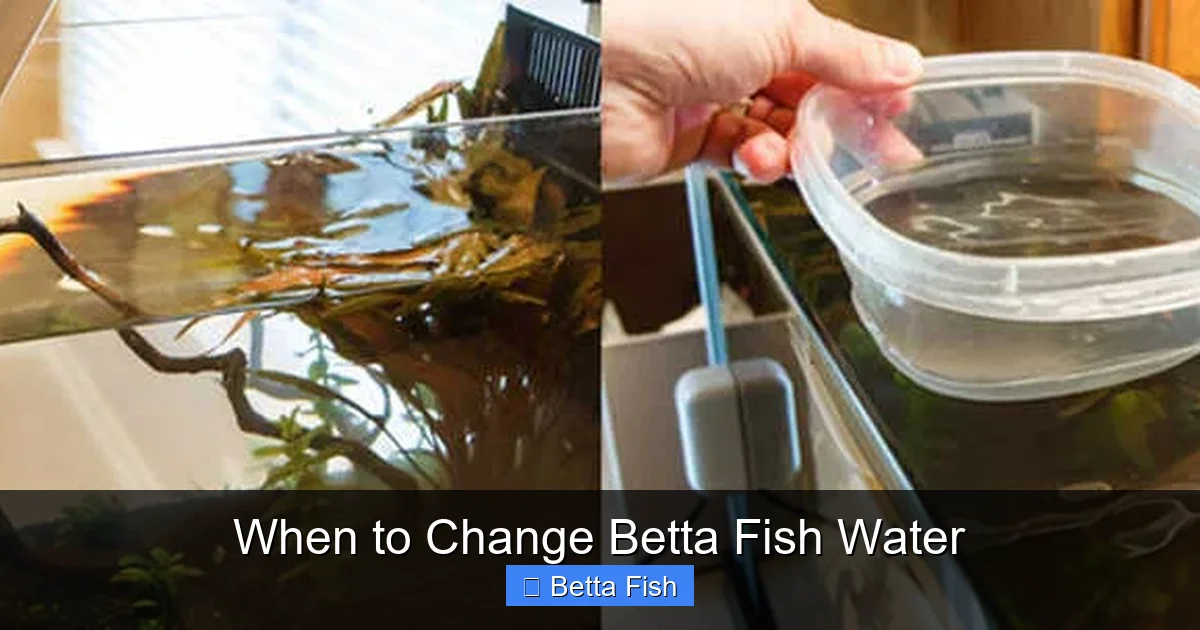
Visual guide about When to Change Betta Fish Water
Image source: uploads-ssl.webflow.com
For Filtered Tanks (3+ Gallons Recommended)
If your betta lives in a tank with a gentle filter (a sponge filter is ideal), you have a built-in system that helps process toxins. This allows for a more stable, less stressful maintenance routine.
- Frequency: Perform a 25-50% partial water change once per week.
- Why Partial? A full, 100% change every week would wipe out the beneficial bacteria living in your filter media and on surfaces. These bacteria are essential for processing new ammonia. A partial change dilutes nitrates while leaving the bacterial colony intact and functional.
- The Test: If you use a liquid water test kit (highly recommended), check your nitrate levels. If they are consistently below 20 ppm before your weekly change, your schedule is likely perfect. If they are climbing above 40 ppm, you may need to increase the change percentage to 50% or consider changing twice a week.
For Unfiltered Tanks / “Bowls” (Strongly Discouraged)
Let’s be clear: a unfiltered container under 2.5 gallons is not a suitable long-term home for a betta. It’s a temporary holding tank at best. However, if this is your current setup, the water change schedule is urgent and strict.
- Frequency: Perform a 100% full water change every 2-3 days.
- Why So Often? With no biological filtration, ammonia and nitrites spike dangerously fast. A 2-day schedule is the maximum safe interval in a small volume of water. A 1-gallon unfiltered bowl can become toxic in under 48 hours after a feeding.
- The Reality: This schedule is labor-intensive and stressful for the fish due to the constant full-system disruption. This is why upgrading to a filtered 5-gallon tank is the single best improvement you can make for your betta’s welfare. It allows for a more stable, less frequent, and less stressful maintenance routine.
Partial vs. Full Water Changes: A Detailed Comparison
Understanding the difference between these two methods is key to doing the job correctly and protecting your betta’s health.

Visual guide about When to Change Betta Fish Water
Image source: fishkeepertank.com
Partial Water Change (The Standard for Filtered Tanks)
This is your weekly workhorse. You remove a portion of the old water and replace it with fresh, conditioned water.
- Process: Use a gravel vacuum/siphon to remove 25-50% of the water. As you siphon, gently stir the gravel to lift trapped waste and uneaten food. This is the most effective cleaning you can do. Do not remove your fish.
- Benefits: Maintains stable water parameters (temperature, pH, mineral content), preserves the beneficial bacterial colony, causes minimal stress to the fish, and effectively removes nitrates and solid waste.
- When to do it: Your weekly scheduled maintenance. Also, if you overfeed or your tank gets visibly dirty between changes, an extra 25% change is a safe and helpful boost.
Full Water Change (For Emergencies or Unfiltered Setups)
This means removing and replacing 100% of the water. It is a major event for the aquarium ecosystem and should not be done on a filtered tank’s weekly schedule.
- Process: You must carefully net your betta and place it in a clean, temporary holding container (like a small plastic tub) with some of its old tank water. Completely empty and clean the tank, decor, and gravel (without soap!). Refill with fresh, conditioned water at the correct temperature, then acclimate your betta back in.
- Risks: Destroys the beneficial bacterial colony, causing a “new tank syndrome” spike in ammonia. Causes significant stress due to the loss of all familiar water chemistry and the physical move. Can lead to pH shock if the new water chemistry is different.
- When to do it: Only for unfiltered tanks on their 2-3 day schedule. Or as an emergency measure for a severe, acute water quality crisis (e.g., a dead fish decomposing in the tank for days, a chemical spill) in a filtered setup. Even then, a series of large partial changes is often safer.
The Step-by-Step Guide to a Perfect Partial Water Change
Let’s make this foolproof. Here is your weekly ritual for a filtered betta tank.
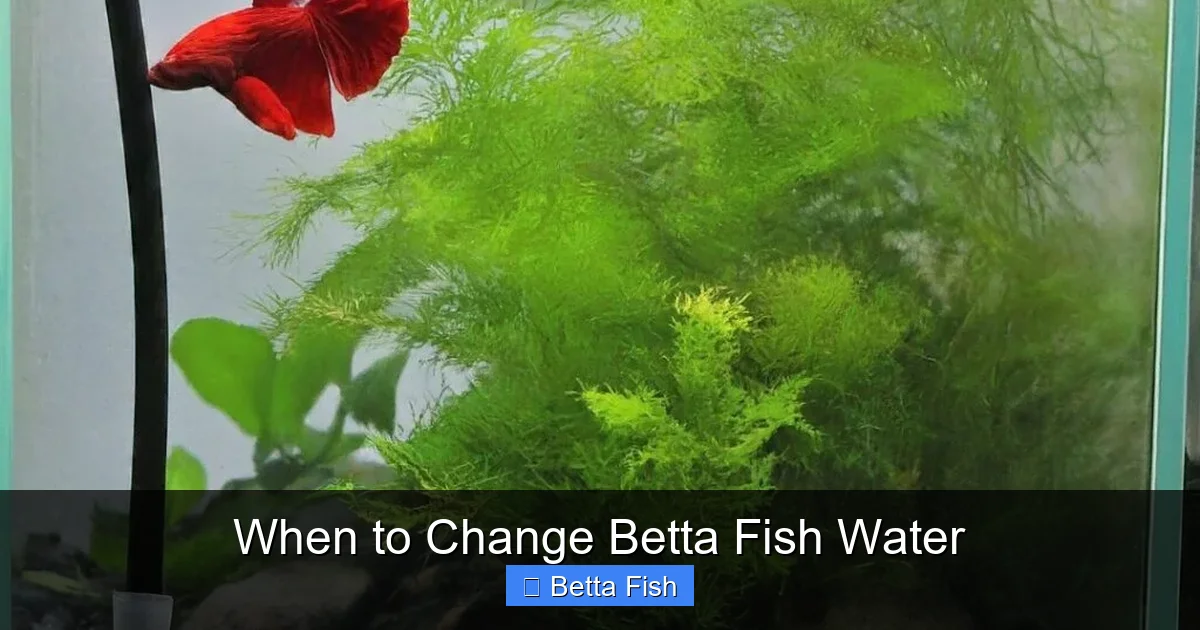
Visual guide about When to Change Betta Fish Water
Image source: fishkeepertank.com
What You’ll Need
- Gravel vacuum/siphon (a wide-mouth one is easiest for betta tanks)
- Two clean buckets (dedicated solely to aquarium use—never use ones that held chemicals)
- Water conditioner (e.g., Seachem Prime, API Stress Coat)
- Thermometer
- Old towel (for spills!)
The 15-Minute Process
- Prepare Your New Water: Fill your clean bucket with tap water. Add the correct dose of water conditioner immediately, as per the bottle instructions. Stir well. Let it sit while you work so it can neutralize chlorines. Check the temperature with your thermometer. It must match your tank water within 1-2°F (0.5-1°C). If it’s too cold, add a little warm (not hot!) tap water. If too warm, add a little cold. This is critical.
- Start Siphoning: Place the vacuum end into the tank gravel. Squeeze the bulb or begin the siphon flow. Gently move the vacuum through the gravel, lifting waste and debris. Focus on areas under decorations and near the filter outlet where waste collects. Your goal is to remove solid waste and old water. Continue until you’ve removed 25-50% of the tank’s volume.
- Refill Slowly: Place the clean end of your siphon into the bucket of conditioned new water and gently siphon it into the tank. Alternatively, you can pour carefully. Pour the new water slowly against a glass wall or onto a decorative rock to avoid startling your betta and disturbing the substrate too much.
- Check & Clean: Once filled, check the water level and temperature one last time. Wipe any spills. Give your betta a quick observation. It should be active and curious. You’re done! No need to remove the fish.
Essential Tools & Products for Success
Having the right gear makes the job easy and ensures you’re doing it right.
The Gravel Vacuum: Your Best Friend
This is not optional. A simple siphon vacuum (often sold as a “Python” or similar brand) is the only way to effectively remove waste from the substrate. It uses the force of gravity to pull dirty water and debris out, leaving clean gravel behind. Get one with a wide mouth for your betta’s tank size.
Water Conditioner: Absolutely Mandatory
Never, ever skip this. Tap water contains chlorine and chloramines to kill bacteria—which would also kill your fish and the beneficial bacteria in your filter. A dechlorinator neutralizes these instantly. For a betta, a conditioner that also detoxifies ammonia (like Seachem Prime) is a fantastic bonus, as it can provide a safety net for any unexpected ammonia spikes.
A Reliable Thermometer
Betta water should be a stable 78-80°F (25.5-26.5°C). Your heater has a dial, but it’s not always accurate. A separate, floating or sticker thermometer gives you a true reading to match your new water to during changes.
(Optional but Helpful) A Bucket & Water Test Kit
A dedicated, clean bucket is essential. A basic liquid test kit (API Freshwater Master Test Kit is the gold standard) is the ultimate tool for knowing *why* your schedule works. Testing weekly before your change tells you your nitrate level, confirming if your change volume is adequate.
Special Situations & Troubleshooting
Life happens. Here’s how to adapt your routine.
After Overfeeding
Did you accidentally dump in too many pellets? Uneaten food will rot and foul the water quickly. If you see food on the bottom, use your gravel vacuum to spot-clean it out during an unscheduled partial change. Don’t wait for your weekly day.
When Introducing New Tank Mates
Adding tank mates (like snail or shrimp) increases the bioload—the amount of waste produced. For a few weeks after adding a new creature, increase your partial change to 30-40% weekly to accommodate the extra nutrients.
During a Cycling Process
If you are setting up a new tank and cycling it (growing beneficial bacteria before adding the betta), water changes work differently. During the cycle, you must change 50% of the water every 1-2 days to keep ammonia/nitrite levels from getting so high that they stall the bacterial growth. Once the cycle is complete (ammonia and nitrite at 0, nitrate present), you settle into your weekly 25-50% routine.
What About Algae?
A little algae is normal and even healthy. If you get a bloom, the cause is usually too much light or too many nutrients (nitrates). Your water changes are your primary tool for nutrient reduction. Increase your change volume or frequency temporarily. Never use algae-killing chemicals in a betta tank. To clean glass, use a clean algae pad (the kind for acrylic tanks) during your water change.
The Conclusion: Building a Habit for a Happy Betta
Changing your betta fish water is not a suggestion; it’s the core of responsible ownership. It’s the direct link between your care and your fish’s vitality. By now, the rule should be clear: if you have a filter, do a 25-50% partial change weekly. If you don’t have a filter, do a 100% full change every 2-3 days, and plan to upgrade to a filtered tank immediately.
Make your water change day a consistent ritual—every Sunday morning, for example. Use your checklist: condition new water, match temperature, siphon the gravel, refill slowly. This predictability creates a stable, stress-free environment. Your betta will reward you with bolder colors, more active exploration, and the joyous sight of a healthy bubble nest. You are the steward of its world. By mastering when and how to change its water, you provide the foundation for a thriving life. That’s the real secret to a happy betta.
Frequently Asked Questions
Can I change all of my betta’s water at once every week in a filtered tank?
No, you should not perform 100% full water changes weekly on a filtered tank. This will destroy the beneficial bacteria that process toxins, leading to dangerous ammonia spikes. Stick to 25-50% partial changes to maintain a stable, healthy ecosystem.
What are the signs that my betta’s water needs an immediate change?
Look for cloudy water, a strong ammonia or “fishy” odor, visible algae blooms, or uneaten food on the bottom. Behavioral signs include lethargy, clamped fins, loss of appetite, and frantic gasping at the surface. If you see these, do a 25-50% partial change immediately.
Is it safe to use regular tap water for my betta tank?
You can use tap water, but you must always treat it with a complete water conditioner before it touches your betta or tank. Conditioner neutralizes chlorine, chloramines, and heavy metals that are present in municipal tap water and are lethal to fish.
Do I need to take my betta out of the tank during a partial water change?
No, you do not need to remove your betta for a standard 25-50% partial water change. The process of siphoning and refilling is not stressful for the fish if done carefully and with properly conditioned, temperature-matched water. Removing the fish is only necessary for a full 100% change.
How do I clean my filter without killing the good bacteria?
Never rinse filter media under untreated tap water, as the chlorine will kill the beneficial bacteria. Instead, during your water change, squeeze or rinse the filter sponge/cartridge in the bucket of old tank water you just siphoned out. This cleans the debris while preserving the bacterial colony.
My new water is the right temperature. Do I still need to acclimate my betta?
For a partial change, no acclimation is needed because you are only replacing a portion of the water, and the chemistry remains largely the same. For a full 100% water change (required for unfiltered bowls), you must acclimate your betta to the new water chemistry by slowly adding new water to its temporary holding container over 15-20 minutes before returning it to the clean tank.