When Do Betta Fish Make Bubble Nests
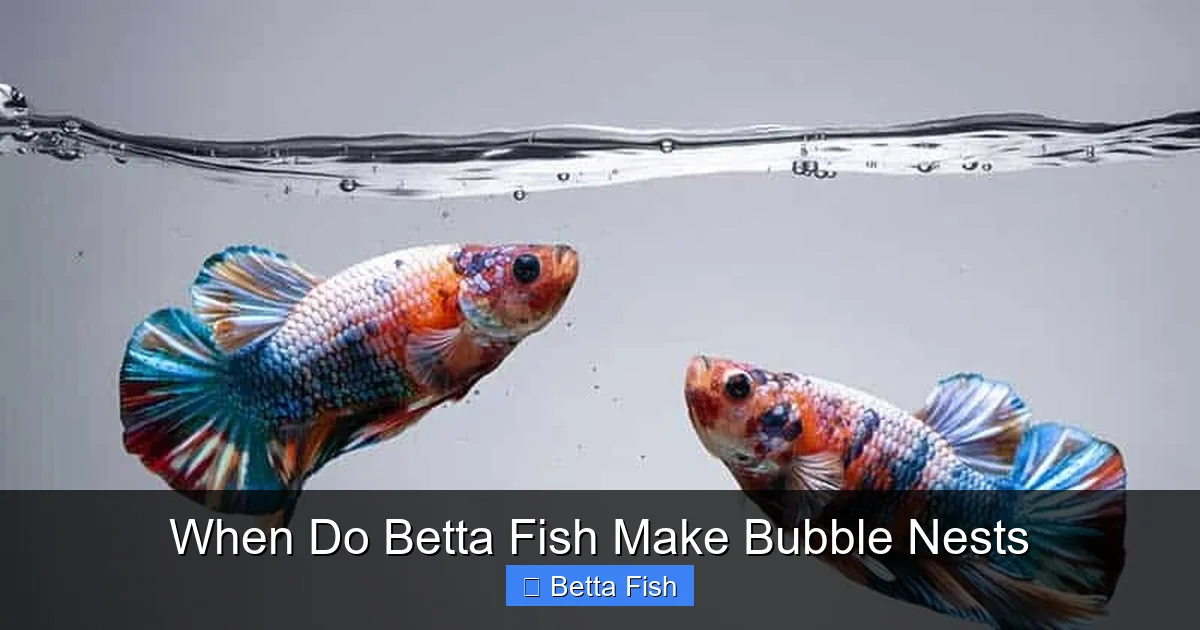
Betta fish build bubble nests as a natural instinct driven by health, water conditions, and hormones. While often linked to breeding readiness, even non-breeding males and occasionally females will create them. Factors like warm, calm water, good nutrition, and a secure tank environment encourage nest-building. The presence, size, and frequency of nests are key indicators of your betta’s overall well-being and contentment.
Ah, the iconic bubble nest. That foamy, intricate collection of bubbles clinging to the water’s surface or a plant leaf is one of the most captivating behaviors a betta fish owner can witness. It’s a sight that often sparks a flurry of questions: “Is my fish ready to breed?” “Is he happy?” “Why is my female doing this?” Understanding the “when” and “why” behind bubble nest construction is fundamental to becoming a more insightful and successful betta keeper. This behavior is not just a random act; it’s a complex communication tool and a direct window into your fish’s physical state and mental well-being. Let’s dive deep into the fascinating world of betta bubble nests.
Key Takeaways
- Instinctive Behavior: Bubble nesting is a hardwired breeding instinct in male bettas, but females and non-breeding males can also do it.
- Health Indicator: A betta building a nest is usually a sign of good health, energy, and optimal water conditions.
- Environmental Triggers: Warm water (78-82°F), calm surface, low flow, and proper tank setup are primary catalysts for nest building.
- Not Always Breeding-Ready: While nests signal *potential* breeding readiness, they don’t guarantee a male is ready to spawn with a female.
- Nest Quality Matters: The size, density, and location of the bubble nest can indicate the betta’s confidence and water quality satisfaction.
- Do Not Destroy: Never intentionally destroy a bubble nest; it’s a sign of a happy fish and destroying it causes significant stress.
- Encourage Naturally: Provide pristine water, a secure lid (to prevent jumps), warm temps, and floating plants or a betta leaf hammock to encourage nesting.
📑 Table of Contents
- What Exactly Is a Betta Bubble Nest?
- The Primary Catalyst: Optimal Health and Water Conditions
- Environmental and Tank Setup Factors
- Hormonal Influences and Seasonal Cues
- Breeding Readiness: The Nest is Just the First Step
- What to Do (and NOT Do) When You See a Bubble Nest
- Special Cases: Females and Non-Nesters
- Conclusion: A Language of Comfort and Instinct
What Exactly Is a Betta Bubble Nest?
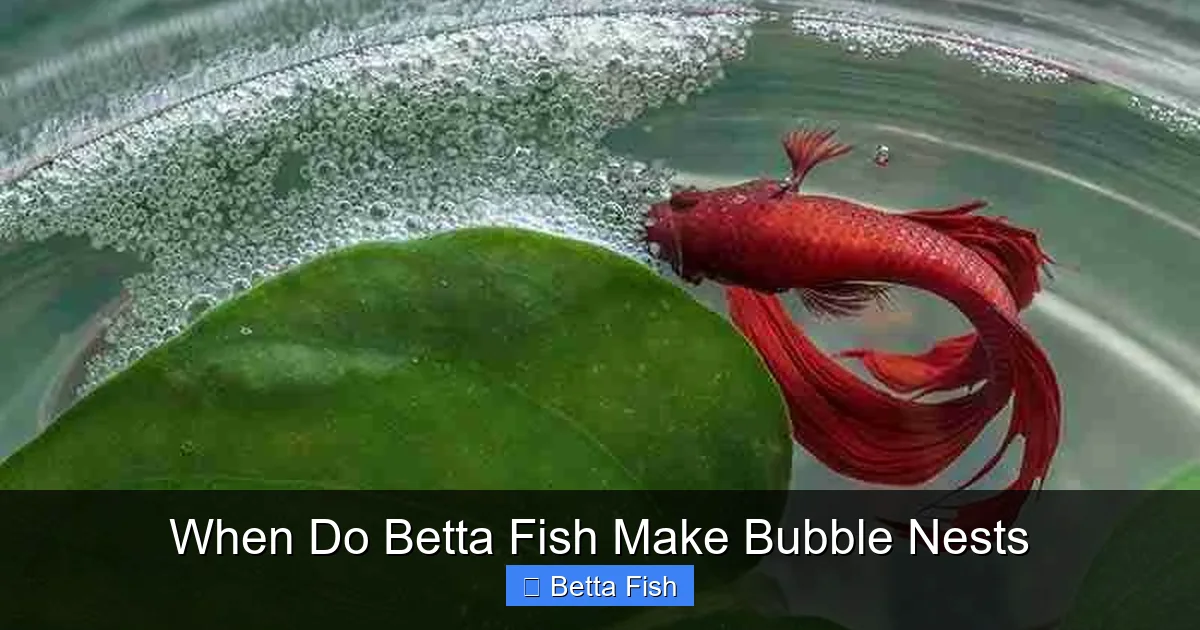
Before we explore the “when,” we must fully grasp the “what.” A bubble nest is precisely what its name suggests: a collection of bubbles. However, it’s far from simple. Male bettas (and sometimes females) use a special secretion from their mouth, often called “bubble nest mucus” or “saliva,” to coat each bubble. This secretion acts like a soap, reducing the water’s surface tension and allowing the bubbles to be more stable and last longer without popping immediately.
The Architecture of a Nest
The construction process is methodical. The betta will gulp a mouthful of air from the water’s surface, then swim to a chosen spot—often a calm corner, under a leaf, or near a piece of decor—and release a bubble. He then coats it with his mucus and maneuvers it into place with his mouth and fins, carefully layering and arranging them. A well-built nest can be a tiny, neat raft or a sprawling, multi-layered structure spanning several inches across. The quality of the nest—its cohesion, size, and density—is a direct reflection of the builder’s health and energy levels. A sloppy, sparse nest made of weak, popping bubbles often points to stress, poor water quality, or illness.
The Primary Catalyst: Optimal Health and Water Conditions
This is the single most important factor. A betta will not expend the significant energy required to build a bubble nest if it is struggling. The act is a luxury behavior, reserved for times of surplus energy and comfort.
Visual guide about When Do Betta Fish Make Bubble Nests
Image source: fishkeepingacademy.com
The Role of Water Temperature
Betta fish are tropical creatures. Their ideal water temperature range is 78-82°F (25.5-28°C). Warm water increases their metabolism and activity level. When the water is at a stable, warm temperature, a betta feels physiologically primed and energetic. You’ll often notice a surge in nest-building activity after a consistent period of warm water, or following a gentle, temperature-stable water change that invigorates the system. Conversely, water that is too cold (below 76°F) will slow a betta down dramatically, making nest-building an unlikely endeavor.
The Critical Importance of Water Quality
This cannot be overstated. Ammonia, nitrite, and high nitrate levels are toxic and cause constant, low-grade stress. A stressed betta is a betta in survival mode. Its energy goes toward coping with poor water, not toward reproductive displays. Pristine water with zero ammonia/nitrite and nitrates below 20 ppm is the foundational requirement. A clean tank with a stable cycle and regular maintenance (weekly 25-50% water changes with a dechlorinator) creates the security a betta needs to feel comfortable enough to build. You might see a new nest appear shortly after a major tank clean that improves parameters.
Nutrition Fuels the Builder
Building a nest is work. It requires protein and energy. A betta on a poor diet of low-quality flakes will lack the resources for this behavior. A high-quality, varied diet—rich in animal protein from pellets, frozen or live foods like daphnia, brine shrimp, or bloodworms—provides the necessary building blocks. A well-nourished betta has the vitality to produce the mucus and dedicate time to construction.
Environmental and Tank Setup Factors
Even a healthy betta in perfect water may look at a barren, hostile tank and think, “Why bother?” The physical environment plays a huge role in triggering this instinct.
Visual guide about When Do Betta Fish Make Bubble Nests
Image source: fishkeepingacademy.com
The Need for a Calm Surface
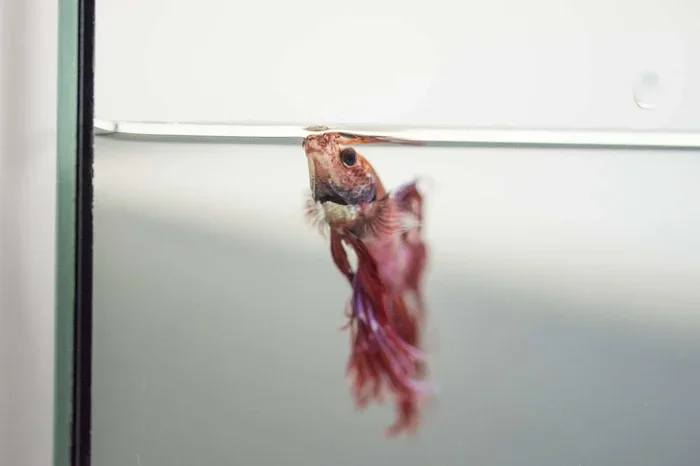
Bubble nests are built on the water’s surface. Strong filtration flow (like from a power filter with a high output) that creates excessive ripples or a current on the top layer will destroy nascent bubbles and make construction impossible. This is why many betta keepers use sponge filters—they provide excellent biological filtration with gentle, subsurface flow that doesn’t disturb the surface. If using a hang-on-back filter, you can often reduce flow with a spray bar or deflect the current with decor. A perfectly still surface is ideal.
The Power of Floating Cover and Security
In the wild, bettas build nests under overhanging leaves or debris. This provides camouflage from predators and a sense of security. Replicating this in captivity is powerful. Live floating plants like frogbit or duckweed are fantastic. Even better are artificial options: a broad-leafed live plant (like an Anubias or Java fern) with its leaves reaching the surface, or a purpose-built “betta leaf hammock” or floating log. These give the betta a tangible “ceiling” and anchor point to build upon, making the task easier and the nest more secure. A betta will almost always build a better, larger nest on or under a floating structure than on bare water.
Tank Size and Stressors
A cramped, barren 1-gallon tank with no hiding spots is a stress factory. While bettas can live in small spaces, they thrive in larger, decorated environments (5 gallons+ is the modern recommendation). A spacious, planted tank with caves, plants, and soft substrate reduces overall stress. A betta that feels his territory is secure and enriched is far more likely to engage in positive behaviors like nest-building. Conversely, a tank with aggressive tankmates, constant reflections (from shiny glass or mirrors), or sudden disturbances will suppress this behavior.
Hormonal Influences and Seasonal Cues
Beyond the immediate environment, internal biological clocks play a part. Bettas, like many animals, can be influenced by subtle seasonal changes, even indoors.
Visual guide about When Do Betta Fish Make Bubble Nests
Image source: bettafishworld.com
Temperature Fluctuations and “Spring” Signals
A consistent rise in water temperature after a cooler period can mimic a seasonal shift. This sudden increase in metabolic rate can trigger a hormonal response linked to breeding. You might find your betta builds a nest after you gradually raise the heater setting in spring. Similarly, longer photoperiods (more hours of light per day) can act as a seasonal cue, simulating longer summer days that in nature would coincide with abundant food and optimal breeding conditions.
The Role of the “Spur”
Sometimes, a healthy betta will build a nest seemingly out of the blue, with no obvious change. This is simply his internal biology at work. His hormone levels fluctuate, and a spike in testosterone (in males) can prompt nest-building as a preparatory measure, even if no female is present. It’s a “just in case” instinct. The nest sits there, a potential breeding site waiting for an opportunity that may never come. This is completely normal and a sign of a robust, instinct-driven fish.
Breeding Readiness: The Nest is Just the First Step
This is a critical point of understanding for anyone considering betta breeding. A bubble nest is a necessary but not sufficient condition for breeding readiness. It is the male’s contribution and his signal that he has a suitable spawning site. However, the female must also be in perfect, ripe condition—her body plump with eggs, her color vibrant, and she must be receptive to the male’s courtship displays.
The Courtship Dance
When a gravid (egg-filled) female is introduced to a male’s territory with a bubble nest, the true test begins. The male performs an elaborate courtship dance: flaring his gills, spreading his fins, and leading the female under the nest. A receptive female will darken in color, develop vertical “breeding bars” (like a tiger stripe pattern), and may also flare back. She will approach the nest and allow the male to wrap her in a “nuptial embrace,” where they release eggs and sperm simultaneously. If the female is not ready, she may ignore the nest, be aggressive, or even destroy it. The male may also build a new, larger nest if he feels the old one is inadequate or if the female shows interest but the spawn doesn’t occur immediately.
Post-Spawning Nest Care
After a successful spawn, the male meticulously gathers any sinking eggs and places them into the bubble nest. He then fiercely guards the nest, retrieving any eggs that fall and constantly repairing the structure. The nest now serves as a critical incubator. The male’s entire focus shifts to nest maintenance until the fry (baby bettas) become free-swimming and leave the nest, at which point the nest is often abandoned.
What to Do (and NOT Do) When You See a Bubble Nest
Spotting a bubble nest is an exciting moment. Your reaction can either reinforce positive behavior or cause undue stress.
DO: Appreciate It as a Compliment
Your betta has just told you, in his own way, that he feels safe, healthy, and comfortable in his home. This is the highest praise a fish can give. Take a moment to observe his handiwork. Notice its size, location, and construction. A large, thick, well-organized nest is a testament to excellent husbandry.
DO: Maintain Excellent, Stable Water Conditions
This is non-negotiable. Continue your rigorous maintenance schedule. The nest is a sign he’s happy now; keep him happy by ensuring his water remains pristine. Perform regular water changes with properly conditioned water at the same temperature.
DO: Consider Floating Plant Options
If you don’t have any, adding a floating plant or leaf hammock can give him an even better building platform and may encourage him to build an even more impressive nest. It also enriches the environment.
NEVER, EVER Destroy the Nest
This is the most important rule. Some old, misguided advice suggests destroying the nest to “prevent breeding” or “stop the male from getting aggressive.” This is profoundly wrong and cruel. Destroying a betta’s carefully constructed bubble nest is one of the most stressful things you can do to him. He will recognize his work is gone. It can lead to depression, loss of appetite, increased susceptibility to disease, and frantic, desperate attempts to rebuild. If you are not breeding, simply leave the nest alone. It will naturally dissipate over days or weeks as he loses interest. He may rebuild a new one later. If you need to perform a water change, work carefully around it. If a few bubbles pop, it’s not the end of the world, but do not actively scoop it out or wipe it away.
When Breeding: The Nest is Your Starting Point
If your goal is to breed, the presence of a solid bubble nest is your green light to begin the careful, multi-week process of conditioning the male and female and preparing a dedicated breeding tank. The nest is your male’s invitation; now you must ensure the female is equally prepared and the environment is perfect for a safe spawn.
Understanding Disappearing Nests
If your betta had a nest and it’s now gone, don’t panic. He may have simply decided to build a new one elsewhere, or he may have been mildly stressed by something (a loud noise, a water change, a new decoration) and abandoned it. Observe his behavior. Is he active, eating, and flaring? If yes, the nest disappearance is likely not a major concern. He’ll probably build again when he feels secure again. If he is listless, not eating, or hiding, then you need to investigate water quality and other stressors immediately.
Special Cases: Females and Non-Nesters
While the classic image is a male betta tending a nest, the reality is more nuanced.
Do Female Bettas Build Bubble Nests?
Yes, they can and do, though it’s less common and typically less elaborate than a male’s construction. A female may blow a few clusters of bubbles, often when she is particularly healthy and content, or sometimes in response to the presence of a male’s nest. It’s not a sign of breeding readiness in the same way, as females do not care for eggs. It’s simply an expression of the same instinctual behavior. Don’t be surprised if your female betta contributes a few bubbles to a male’s nest; she might even try to “help,” though the male will often take over the maintenance.
What If My Male Never Builds a Nest?
Do not assume something is wrong. Not all males are prolific nest builders. Some are simply lazy about it. Some may only build once or twice a year, or only in response to very specific conditions (like a major water change). Others may build a tiny, pathetic nest that collapses immediately. The absence of a nest is only a concern if it’s paired with other signs of poor health: lethargy, faded color, clamped fins, loss of appetite, or visible disease. A betta who is active, curious, colorful, and eating well is a healthy betta, regardless of his nest-building prowess. His instinct is there; he may just not feel the need to express it. Focus on providing consistent, high-quality care, and if he ever does build a nest, enjoy the compliment!
Conclusion: A Language of Comfort and Instinct
So, when do betta fish make bubble nests? The answer is a tapestry of conditions: when they are healthy, warm, stress-free, well-fed, and feel secure in a tank with a calm surface and adequate cover. It is a behavior that sits at the beautiful intersection of instinct and environment. It is not a guaranteed breeding request, but it is an undeniable badge of honor for a keeper—a clear signal that you have provided an environment where your betta feels so secure and vibrant that he can engage in this elaborate, energy-intensive ritual. Treat the bubble nest not as a problem to solve or a breeding order to fulfill, but as a thank-you note from your fish. Preserve it, appreciate it, and let it remind you that your attention to water quality, temperature, and habitat is paying off in the most bubbly way possible. By understanding this behavior, you move beyond just keeping a betta to truly understanding one.
Frequently Asked Questions
Do all male betta fish build bubble nests?
No. While nest-building is a strong instinct in males, individual personality and health play a role. Some males are prolific builders, while others may rarely or never build a noticeable nest, even in perfect conditions. The absence of a nest is not inherently a sign of poor health if the fish is otherwise active and vibrant.
My female betta is making bubbles. Is she ready to breed?
Not necessarily. While females can and do occasionally blow small clusters of bubbles, it is not a reliable indicator of breeding readiness like it is for males. A female’s primary readiness signs are a plump, egg-filled body and the development of vertical breeding bars. Her bubble-blowing is more likely a sign of general contentment or a response to a male’s nest.
Should I encourage my betta to build a bubble nest?
You don’t “encourage” directly, but you create the ideal environment that naturally prompts the behavior. Focus on maintaining pristine, warm water (78-82°F), providing a calm surface with gentle filtration, and adding floating plants or a betta leaf. If your betta is healthy and the conditions are right, he will build if he wants to. Never force the issue.
My betta built a nest but now seems lazy and stays in it. Is he okay?
This is often perfectly normal! A male tending a bubble nest, even a small one, may become more sedentary, spending time “fussing” over it at the surface. As long as he is still eating when food is offered, his colors are good, and he is responsive to your presence, this is likely just focused nest-guarding behavior. Monitor for any signs of illness like clamped fins or loss of appetite.
Can I use the bubble nest to breed my bettas?
The nest is your starting point, but not your only requirement. You must ensure both the male and female are in optimal, conditioned health. Introduce the female to the male’s tank (which should have the nest) only after a careful acclimation process and watch their interactions closely. The female must show interest (darkening, breeding bars) and the male must court her. Never force a spawning if either fish is aggressive or stressed.
What if my betta’s bubble nest has lots of debris or poop in it?
This is common and usually not a cause for alarm. The nest’s sticky mucus can trap floating debris, uneaten food, or fish waste. A diligent male will often try to keep it clean. The best solution is to be meticulous about feeding only what he consumes in a minute or two and maintaining excellent water quality to minimize debris. If the nest becomes very dirty, you can very gently remove some debris with a pipette during a water change, but avoid disturbing the bubble structure itself.