What Causes Bubbles in a Betta Fish Bowl
Bubbles in a betta fish bowl can come from several sources, including natural bubble nests, surface agitation, and water quality changes. Understanding what causes these bubbles helps you keep your betta fish healthy and happy. This guide breaks down every common reason and gives you simple steps to manage them effectively.
Have you ever walked past your betta fish bowl and noticed tiny bubbles floating on the surface or clinging to the sides? It can be a little surprising the first time you see them. But here is the good news — most of the time, bubbles in a betta fish bowl are completely normal.
Bubbles can tell you a lot about what is happening inside your fish bowl. Sometimes they mean your betta is happy and healthy. Other times, they might be a sign that something needs your attention. Either way, understanding the causes of bubbles in a betta fish bowl helps you take better care of your finned friend.
In this article, we will walk through every common reason you might see bubbles in your betta fish bowl. We will cover everything from natural bubble nests to water quality issues. By the end, you will know exactly what to look for and how to respond. Let us dive in.
Key Takeaways
- Bubble nests are natural: Male bettas build them as part of their breeding behavior and it is a sign of a healthy fish.
- Surface agitation causes bubbles: Filters and air stones create bubbles that improve oxygen levels in the bowl.
- Protein film creates tiny bubbles: Organic residue on the water surface traps air and forms a thin film.
- Water quality matters: Poor water conditions can cause excess bubbling and stress your betta fish.
- Not all bubbles are bad: Some bubbles indicate a well-oxygenated and thriving bowl environment.
- Regular maintenance prevents issues: Consistent water changes and cleaning keep bubble problems under control.
📑 Table of Contents
- Natural Bubble Nests: A Sign of a Happy Betta
- Surface Agitation: How Your Filter and Air Stones Create Bubbles
- Protein Film: The Invisible Cause of Tiny Bubbles
- Water Quality Issues That Cause Excessive Bubbling
- Temperature and Environmental Factors
- When Bubbles Are a Problem: Warning Signs to Watch For
- How to Manage Bubbles in Your Betta Fish Bowl
- Conclusion
Natural Bubble Nests: A Sign of a Happy Betta
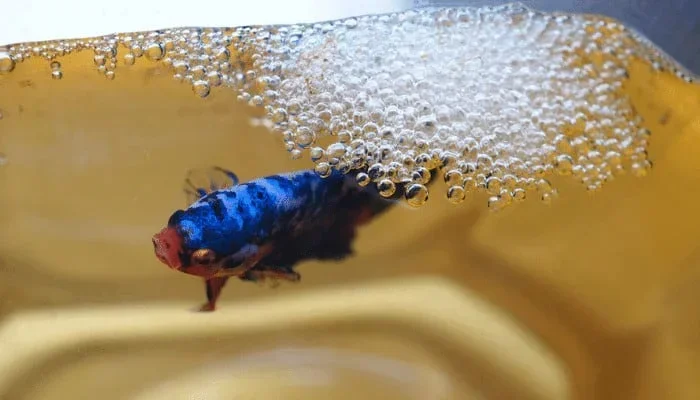
One of the most common reasons you will see bubbles in a betta fish bowl is a bubble nest. Male bettas are natural bubble nest builders. They blow tiny bubbles from their mouth and stick them together to form a floating cluster on the water surface.
This behavior is completely normal and even a good sign. It means your betta feels safe and comfortable in its environment. In the wild, male bettas build bubble nests to prepare for mating. Even if there is no female around, your betta might still build one just because it feels secure.
What Does a Bubble Nest Look Like?
A bubble nest looks like a cluster of small, foamy bubbles gathered together. They can be big or small. Some look like a thin layer of foam on the surface. Others look like a messy pile of bubbles near plants or decorations.
Here are some key things to know about bubble nests:
- Size varies: Some nests are just a few bubbles. Others can cover a large area of the water surface.
- Location changes: Bettas often build nests near the surface or near floating plants.
- They come and go: A nest might appear one day and disappear the next. This is totally normal.
- Only males build them: Female bettas do not typically build bubble nests.
If you want to learn more about what it means when your betta fish makes bubbles, check out our detailed guide on what does it mean when a betta fish makes bubbles.
Surface Agitation: How Your Filter and Air Stones Create Bubbles
Another major reason for bubbles in a betta fish bowl is surface agitation. This happens when your filter output or an air stone pushes water and air into the bowl. The movement breaks the water surface and traps tiny air pockets, which then float up as bubbles.
Surface agitation is actually important for your betta. It helps oxygen dissolve into the water. Fish absorb oxygen from the surface, so a lightly agitated surface keeps the water well-oxygenated. However, too much agitation can stress your betta, especially if it is a long-finned variety like a crowntail or halfmoon.
Filter Bubbles vs. Air Stone Bubbles
Not all bubbles come from the same source. Here is a quick look at the two main culprits:
| Source | Bubble Type | Effect on Water | Betta Comfort |
|---|---|---|---|
| Hang-on filter | Small, steady stream | Good oxygenation | Moderate — some bettas dislike strong flow |
| Air stone | Fine, constant stream | Excellent oxygenation | Can be too strong for some bettas |
| Sponge filter | Gentle, large bubbles | Good oxygenation | Usually comfortable for most bettas |
| Internal filter | Medium, adjustable | Adequate oxygenation | Generally fine if flow is low |
If you are wondering whether bubbles in your tank are a good thing, read our article on are bubbles good in a betta fish tank for more insights.
Protein Film: The Invisible Cause of Tiny Bubbles
You might notice a thin, shiny film on the surface of your betta fish bowl water. This is called a protein film. It forms when organic matter like food residue, fish waste, or decaying plant matter mixes with the water surface. The film traps small air bubbles, which cling together and form a layer of tiny bubbles.
A protein film is not dangerous by itself, but it does signal that your bowl needs cleaning. The buildup of organic material can lower water quality over time. This can affect your betta’s health if left unchecked.
How to Remove Protein Film
Getting rid of a protein film is simple. Here are a few effective methods:
- Break the surface: Gently swirl the water with your hand or a spoon. This breaks the film apart.
- Increase surface agitation: A slightly stronger filter output can prevent the film from forming.
- Do a partial water change: Replace 25 to 30 percent of the water weekly to remove organic buildup.
- Use a paper towel: Gently dab the surface with a clean paper towel to lift the film off.
Keeping up with regular maintenance is the best way to stop protein film from returning. For tips on maintaining clean water, see our guide on how to change water for betta fish in a bowl.
Water Quality Issues That Cause Excessive Bubbling
Sometimes, bubbles in a betta fish bowl are a warning sign. Poor water quality can cause your bowl to produce more bubbles than usual. When ammonia, nitrite, or nitrate levels rise, the water becomes unstable. This can lead to excessive gas exchange at the surface, which shows up as constant bubbling.
Here are the main water quality problems that can cause excess bubbles:
- High ammonia levels: This happens when waste builds up faster than beneficial bacteria can process it. Ammonia is toxic to bettas and needs immediate attention.
- Excess nitrites: Nitrites damage your betta’s gills and cause stress. Bubbling may increase as the fish tries to get more oxygen.
- High nitrates: While less toxic than ammonia, high nitrates still harm your fish over time and can change water behavior.
- pH swings: Sudden changes in pH cause rapid gas exchange, which looks like a burst of bubbles.
Regular testing with a liquid test kit helps you catch these problems early. Aim to test your water at least once a week. This keeps your betta fish bowl in the best possible condition.
Quick Tips for Better Water Quality
- Test your water weekly for ammonia, nitrites, and nitrates.
- Perform 25 percent water changes every 5 to 7 days.
- Use a water conditioner to remove chlorine and chloramine from tap water before adding it to the bowl.
- Avoid overfeeding your betta — leftover food decays quickly and pollutes the water.
- Keep the bowl away from direct sunlight, which can cause algae blooms and water chemistry shifts.
For more on keeping your betta healthy, also check out why are there bubbles in my betta fish bowl.
Temperature and Environmental Factors
Believe it or not, temperature plays a role in bubble formation. Warmer water holds less dissolved oxygen than cooler water. When the water in your betta fish bowl gets too warm, your betta may swim to the surface more often to gulp air. This can create more bubbles and surface disturbance.
The ideal temperature range for a betta fish bowl is between 76 and 82 degrees Fahrenheit. If the water goes above 85 degrees, oxygen levels drop and your betta may show signs of stress. Below 72 degrees, your betta becomes sluggish and its immune system weakens.
Other Environmental Factors
A few other things in your betta’s environment can affect bubble activity:
- Bowl size: Smaller bowls have less stable water chemistry, which can lead to more frequent bubble changes.
- Decorations: Rough or porous decorations can trap tiny air bubbles that release slowly over time.
- Lighting: Live plants under lights produce oxygen during photosynthesis, which can create small bubbles on leaf edges.
- Room temperature: A cold room can lower the water temperature and change how gases dissolve in the water.
For guidance on choosing the right setup, read our article on what size fish bowl for a betta to make sure your bowl is the best fit.
When Bubbles Are a Problem: Warning Signs to Watch For
Most of the time, bubbles are harmless. But there are moments when they signal trouble. Knowing the difference between normal and problematic bubbles helps you act fast when your betta needs help.
Here are the warning signs that bubbles might mean something is wrong:
- Constant rapid bubbling with no filter or air stone: This can indicate a chemical imbalance in the water.
- Your betta is gasping at the surface: If your fish seems to be struggling to breathe, the water may be low in oxygen or high in toxins.
- Bubbles accompanied by a foul smell: Bad odor means decay is happening in the bowl and water needs immediate changing.
- Cloudy water with bubbles: A bacterial bloom can cause both cloudiness and excess surface bubbles.
- Sudden appearance of many bubbles after a water change: This often means the new water has chlorine or chloramine that is off-gassing.
If you notice any of these signs, test your water right away and do a partial water change. Acting quickly can save your betta’s life.
How to Manage Bubbles in Your Betta Fish Bowl
Now that you know the causes, let us talk about what you can do. Managing bubbles in a betta fish bowl is mostly about consistent maintenance and smart setup choices.
Daily and Weekly Routine
Follow this simple routine to keep bubbles under control:
- Daily: Check the water temperature and look at your betta’s behavior. Make sure the surface is not covered in excess film.
- Every 5 to 7 days: Do a 25 percent water change. Use treated water at the same temperature as the bowl.
- Weekly: Test water parameters with a liquid test kit. Look for ammonia, nitrite, and nitrate levels.
- Monthly: Clean the bowl glass and any decorations. Rinse filter media in old tank water to preserve beneficial bacteria.
Sticking to this routine keeps your betta fish bowl clean and stable. Your betta will be happier, healthier, and less stressed by excess bubble activity.
Choosing the Right Equipment
The equipment you use makes a big difference. Here are some recommendations:
- Use a gentle sponge filter: It provides biological filtration without creating too much flow or agitation.
- Skip the air stone if your betta seems stressed: Some bettas do not like the constant bubbling of an air stone.
- Choose a low-flow filter: Look for filters with adjustable output or ones designed for small bowls.
- Add live plants: Plants like java moss or anubias help absorb waste and produce natural oxygen.
For more on what you can add to your setup, visit our guide on what can you put in with a betta fish for safe and fun decoration ideas.
Conclusion
Bubbles in a betta fish bowl are usually nothing to worry about. Whether they come from a natural bubble nest, your filter, or surface agitation, they are often a sign of a healthy and active environment. The key is knowing what is normal and what is not.
Keep up with regular water changes, test your water often, and watch your betta’s behavior. If something seems off, act quickly. A little maintenance goes a long way toward keeping your betta happy and your bowl bubble-free — or at least bubble-managed.
Now that you understand the main causes of bubbles in a betta fish bowl, you are better equipped to provide a safe and comfortable home for your fish. Trust your instincts, stay observant, and enjoy the simple pleasure of watching your betta thrive.
Frequently Asked Questions
Are bubbles in a betta fish bowl always normal?
Most of the time, yes. Bubbles are usually a sign of normal biological activity, especially bubble nests or gentle filter output. However, if the bubbling is sudden, excessive, or accompanied by other symptoms like gasping or cloudy water, it could point to a water quality issue that needs attention.
Should I be worried if my betta builds a bubble nest?
No, a bubble nest is a great sign. It means your male betta feels safe and healthy. Even if you do not plan to breed your fish, bubble nest building is a natural and positive behavior. You can leave the nest alone or gently remove it if it gets too large.
Can a filter that is too strong cause excess bubbles?
Yes, absolutely. A filter with too much output creates strong surface agitation, which produces more bubbles. If your betta seems stressed by the current or is having trouble swimming, try adjusting the filter flow or switching to a gentler sponge filter.
How often should I clean my betta fish bowl to prevent bubble problems?
A partial water change of about 25 percent every 5 to 7 days is ideal for most bowls. This removes waste buildup and organic residue that can cause protein films and excess bubbling. Consistent cleaning is the single best way to prevent most bubble-related issues.
Does water temperature affect bubble formation in a betta bowl?
Yes, warmer water holds less dissolved oxygen, which can cause your betta to swim to the surface more and create more disturbance. Keeping the temperature between 76 and 82 degrees Fahrenheit helps maintain stable oxygen levels and reduces unnecessary bubbling.
Can I use tap water in my betta fish bowl without treating it first?
No, you should always treat tap water with a water conditioner before adding it to your bowl. Tap water contains chlorine and chloramine that are harmful to bettas. These chemicals can also cause off-gassing, which looks like a sudden burst of bubbles. Always condition your water first.