Is Ammonia Level in a Betta Fish Tank Bad
Yes, ammonia levels in a betta fish tank are extremely bad and can be lethal. Even small amounts of ammonia can damage your betta’s gills, cause stress, and lead to serious health problems. This guide covers everything you need to know about ammonia, from what causes it to how you can keep your betta safe.
Key Takeaways
- Ammonia is toxic to betta fish: Even trace amounts can harm your betta’s gills and overall health.
- The nitrogen cycle is essential: Beneficial bacteria convert ammonia into less harmful substances.
- Common causes include overfeeding and poor maintenance: Uneaten food and waste build up ammonia fast.
- Testing your water regularly is a must: An ammonia test kit helps you catch problems early.
- Symptoms show up fast: Look for clamped fins, lethargy, and red or inflamed gills.
- Prevention is easier than treatment: Regular water changes and proper filtration keep ammonia in check.
- A cycled tank is a safe tank: Always cycle your tank before adding your betta.
📑 Table of Contents
- Is Ammonia Level in a Betta Fish Tank Bad?
- What Is Ammonia and Why Is It Dangerous?
- How Ammonia Builds Up in Your Betta Tank
- The Nitrogen Cycle: Your Tank’s Best Friend
- Symptoms of High Ammonia in Betta Fish
- How to Test and Monitor Ammonia Levels
- How to Reduce and Prevent Ammonia in Your Betta Tank
- Common Mistakes That Cause Ammonia Spikes
- What to Do If Ammonia Spikes in Your Tank
- Conclusion
Is Ammonia Level in a Betta Fish Tank Bad?
If you own a betta fish, you have probably heard the word “ammonia” thrown around a lot. And for good reason. Ammonia is one of the most dangerous substances that can build up in your fish tank. Even at low levels, it can cause serious harm to your betta. The question is not really whether ammonia is bad. It is. The real question is how do you keep it under control.
Understanding ammonia levels in a betta fish tank is one of the most important parts of betta fish care. Whether you are a complete beginner or have kept fish for years, knowing how ammonia works can save your fish’s life. In this article, we will break down everything you need to know. From what ammonia is to how you can test for it and reduce it. We have got you covered.
Your betta depends on you to keep its environment safe. Water quality is everything when it comes to betta fish health. A small change in tank water quality can make a huge difference. Let us dive in and learn how to protect your finned friend.
What Is Ammonia and Why Is It Dangerous?
Ammonia is a chemical compound made of nitrogen and hydrogen. In a fish tank, ammonia comes from fish waste, uneaten food, and decaying plant matter. In a natural environment, bacteria break down ammonia. But in a closed system like a fish tank, ammonia can build up fast if you are not careful.
The Science Behind Ammonia
Fish produce ammonia through their gills and waste. This is normal. But in a small tank, that ammonia does not get diluted or removed easily. Ammonia is toxic at even 0.25 parts per million (ppm). At 1.0 ppm, it becomes lethal for most fish. Bettas are especially sensitive because they are small and live in relatively confined spaces.
Here is a simple breakdown of ammonia toxicity levels:
- 0.0 ppm: Safe and ideal for betta fish.
- 0.25 ppm: Stressful and harmful over time.
- 0.5 ppm: Dangerous. Can cause gill damage.
- 1.0 ppm and above: Lethal. Can kill your betta within hours.
These numbers show why monitoring ammonia levels in a betta fish tank should be a top priority. You cannot always see ammonia. It is colorless and odorless in low concentrations. That is why testing is so important.
How Ammonia Builds Up in Your Betta Tank
Now that you know ammonia is dangerous, let us talk about how it gets into your tank. Understanding the sources helps you prevent problems before they start.
Fish Waste and Respiration
Your betta produces ammonia every single day through its gills and waste. This is completely natural. In a large, well-maintained tank, the beneficial bacteria handle this waste. But in a small or uncycled tank, ammonia collects quickly.
Many beginners make the mistake of keeping their betta in a one gallon tank. While bettas can survive in small spaces, ammonia builds up much faster in tiny volumes. A larger tank gives you more buffer and time to catch problems.
Overfeeding and Uneaten Food
Overfeeding is one of the biggest causes of ammonia spikes. Betta fish are small and do not need a lot of food. When you feed them too much, the extra food sinks to the bottom and decays. This decay releases ammonia into the water.
A good rule of thumb is to feed your betta only what it can eat in two minutes. Any more than that and you are feeding the ammonia problem, not your fish.
Decaying Plant Matter and Decorations
Dead leaves, rotting food, and decaying organic matter all release ammonia. If you have live plants in your tank, trim dead leaves regularly. Also, make sure any decorations you add are fish-safe and do not leach chemicals into the water.
The Nitrogen Cycle: Your Tank’s Best Friend
The nitrogen cycle is the natural process that keeps ammonia under control in a fish tank. It is the reason why experienced fish keepers say “cycle your tank before adding fish.” Without a fully cycled tank, ammonia has nowhere to go.
How the Nitrogen Cycle Works
The nitrogen cycle has three main stages:
- Ammonia: Fish waste and uneaten food produce ammonia. This is the first and most toxic stage.
- Nitrite: Beneficial bacteria called Nitrosomonas convert ammonia into nitrite. Nitrite is also harmful but less toxic than ammonia.
- Nitrate: Another group of bacteria called Nitrobacter converts nitrite into nitrate. Nitrate is much less harmful and can be removed through regular water changes.
A fully cycled tank has healthy colonies of these beneficial bacteria. They work hard to keep ammonia levels in a betta fish tank safe. This is why you should never add a betta to an uncycled tank. It is like putting your fish in a toxic environment from day one.
How to Cycle Your Tank
Cycling a tank takes about 4 to 6 weeks. During this time, you are growing enough beneficial bacteria to process ammonia. You can cycle using fishless methods, which is the safest approach. Add a source of ammonia (like fish food) and let the bacteria build up naturally. Test the water regularly until you see ammonia and nitrite drop to zero. That means your cycle is complete.
Symptoms of High Ammonia in Betta Fish
Detecting high ammonia early can save your betta’s life. Bettas show clear signs when ammonia levels rise. Knowing these symptoms helps you act fast.
Physical Symptoms
- Red or inflamed gills: This is one of the first signs of ammonia irritation.
- Clamped fins: Your betta holds its fins close to its body when stressed.
- Loss of color: A healthy betta is vibrant. Dull or faded colors signal a problem.
- Rapid breathing: Your betta gasps at the surface or breathes very fast.
- Lethargy: Your betta stops moving and stays at the bottom of the tank.
Behavioral Symptoms
- Refusing food: A betta that stops eating is often stressed by poor water conditions.
- Hiding or staying still: Bettas are curious fish. If yours hides constantly, something is wrong.
- Scratching against objects: This is a sign of irritation from ammonia or other toxins.
If you notice any of these symptoms, test your water immediately. High ammonia is a medical emergency for your betta. The faster you act, the better the chances of recovery.
How to Test and Monitor Ammonia Levels
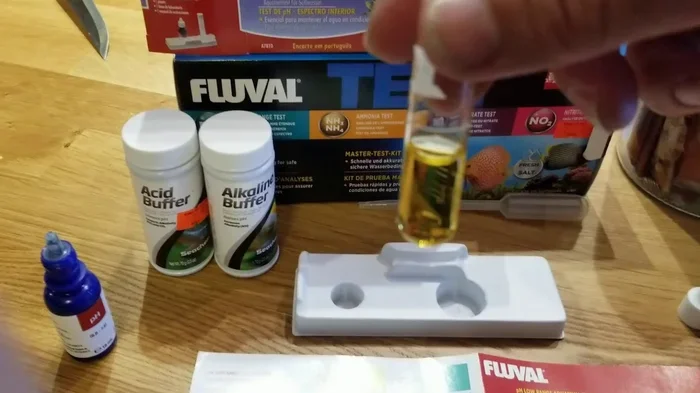
You cannot see ammonia with the naked eye. That is why a water test kit is essential for every betta owner. Testing your water regularly keeps you ahead of problems.
Types of Ammonia Test Kits
- Liquid test kits: These are the most accurate. Brands like API and Seachem offer reliable options. They use a color-change method to measure ammonia levels.
- Test strips: These are convenient and easy to use. However, they are less precise than liquid kits. They work well for quick checks.
- Digital testers: These give precise readings but can be expensive. They are great for serious hobbyists.
We recommend testing your water at least once a week. Also test after any water change, after feeding heavily, or if you notice any symptoms in your betta. Keeping track of your water parameters gives you a baseline. You will notice changes faster when you have records to compare.
How to Reduce and Prevent Ammonia in Your Betta Tank
Prevention is always better than treatment when it comes to ammonia. Here are the best ways to keep ammonia levels in a betta fish tank low and safe.
Perform Regular Water Changes
Water changes are the simplest and most effective way to remove ammonia. Replace 25 to 50 percent of your tank water every week. Use dechlorinated water at the same temperature as your tank. This dilutes any ammonia that has built up and keeps your betta healthy.
If you use tap water in a betta fish tank, always add a water conditioner to remove chlorine and chloramine. These chemicals can harm beneficial bacteria and make ammonia problems worse.
Do Not Overfeed Your Betta
Feed small amounts once or twice a day. Remove any uneaten food after a few minutes. This simple habit prevents a lot of ammonia from forming in the first place.
Maintain Your Filter
A good filter does more than just keep water moving. It houses beneficial bacteria that process ammonia. Make sure your filter is running properly and clean the media gently in old tank water. Never use tap water to clean filter media. It kills the good bacteria you need.
Some people wonder whether they can use a filter in a betta fish tank. The answer is yes. A filter is one of the most important pieces of equipment for maintaining water quality. It helps control ammonia and keeps your betta’s environment stable.
Add Beneficial Bacteria Supplements
If your tank is new or you have just finished a cycle, adding a beneficial bacteria supplement can speed up the process. These products contain live cultures of the bacteria that convert ammonia to nitrite and then nitrate. They are a great safety net for new tank owners.
Avoid Overstocking Your Tank
More fish means more waste. More waste means more ammonia. Keep your tank appropriately stocked for its size. For a betta alone, a 5-gallon tank is the minimum recommended size. A larger tank gives you more room for error and more stable water parameters.
Common Mistakes That Cause Ammonia Spikes
Even experienced fish keepers can make mistakes that lead to ammonia spikes. Here are the most common ones to avoid.
- Skipping the nitrogen cycle: Never add a betta to an uncycled tank. This is the number one cause of ammonia poisoning.
- Cleaning too aggressively: Scrubbing all the algae and replacing all the filter media at once can destroy beneficial bacteria.
- Using untreated tap water: Chlorine and chloramine in tap water can kill beneficial bacteria and increase ammonia.
- Ignoring water tests: Testing your water should be a regular habit, not something you do only when problems appear.
- Overcrowding the tank: Even if your betta seems fine alone, adding too many fish raises ammonia levels quickly.
Avoiding these mistakes will keep your betta fish tank ammonia levels in a safe range. Your betta will be happier, healthier, and more active.
What to Do If Ammonia Spikes in Your Tank
Despite your best efforts, ammonia spikes can still happen. Here is what you should do if you detect a spike.
- Test the water immediately: Confirm the ammonia level with your test kit.
- Do a large water change: Replace 50 percent of the water with conditioned, temperature-matched water.
- Stop feeding: Stop feeding your betta for 24 hours to reduce waste production.
- Check your filter: Make sure your filter is working properly and the media is not clogged.
- Add beneficial bacteria: Use a bacteria supplement to boost your biological filtration.
- Monitor closely: Test the water again after 24 hours and continue until ammonia reads zero.
If your betta is showing severe symptoms like gasping at the surface or lying on the bottom, move it to a quarantine tank with clean, conditioned water. This gives your betta immediate relief while you fix the main tank.
Conclusion
Ammonia levels in a betta fish tank are something every betta owner must take seriously. Ammonia is invisible but incredibly dangerous. It can build up fast and cause serious harm to your fish. The good news is that with the right knowledge and a little effort, you can keep ammonia under control. Cycle your tank properly, test your water regularly, do not overfeed, and maintain your filter. These simple habits will protect your betta and give it a long, healthy life.
Remember, your betta trusts you to keep its home safe. By staying proactive and learning about tank water quality, you are already ahead of most fish keepers. Keep testing, keep changing water, and keep your betta happy.
Frequently Asked Questions
What is a safe ammonia level for a betta fish tank?
The only safe ammonia level for a betta fish tank is 0.0 ppm. Even 0.25 ppm can cause stress and long-term health issues. Always aim for zero ammonia through proper cycling and regular water changes.
How quickly does ammonia rise in a betta tank?
Ammonia can rise to dangerous levels within 24 to 48 hours in an uncycled or small tank. Overfeeding, overcrowding, and poor maintenance speed up this process. Regular testing helps you catch spikes early.
Can ammonia levels in a betta fish tank be lowered naturally?
Yes. Regular water changes, a well-cycled tank with beneficial bacteria, and not overfeeding are the best natural ways to lower ammonia. Adding live plants can also help absorb ammonia from the water.
How do I know if my betta has ammonia poisoning?
Look for red or inflamed gills, clamped fins, rapid breathing, lethargy, and loss of color. If you notice these symptoms, test your water right away. Early detection gives your betta the best chance of recovery.
Is it safe to add a betta to a tank that has not been cycled?
No. Adding a betta to an uncycled tank exposes it to ammonia from day one. Always cycle your tank for 4 to 6 weeks before introducing your betta. This ensures beneficial bacteria are present to process waste.
How often should I test ammonia in my betta tank?
Test your water at least once a week. Also test after water changes, if you notice any symptoms in your betta, or after any changes to your tank setup. Consistent testing is the best way to prevent ammonia problems.