How to Take Care of Koi Betta Fish
Taking care of koi betta fish requires the right tank setup, proper diet, clean water, and regular health monitoring. These stunning fish combine the vibrant colors of koi carp with the graceful beauty of bettas. With the right koi betta fish care routine, you can keep your fish healthy, colorful, and thriving for years to come.
Koi betta fish are some of the most beautiful creatures you can keep in a home aquarium. Their flowing fins and striking koi-like patterns make them stand out from regular bettas. If you have ever wondered how to take care of koi betta fish properly, you have come to the right place.
These fish are not just pretty to look at. They need specific care to stay healthy and vibrant. From the right tank setup to the perfect diet, every detail matters. In this guide, we will walk you through everything you need to know about koi betta fish care. Whether you are a beginner or an experienced fish keeper, you will find practical tips that work.
Taking care of a koi betta is not hard, but it does require attention. You need to understand their water needs, feeding habits, and common health problems. The good news is that once you set up a routine, it becomes second nature. Let us dive into the world of koi betta fish and make sure your fish thrive.
Key Takeaways
- Tank Size Matters: A minimum 5-gallon tank with a heater and filter is essential for koi betta fish.
- Water Quality Is Critical: Keep temperature between 76-82°F and maintain a pH of 6.5-7.5 for optimal health.
- Diet Drives Color and Health: Feed high-quality pellets, frozen foods, and occasional treats for vibrant colors.
- Watch for Common Health Issues: Ich, fin rot, and bloating are preventable with proper care and clean water.
- Color Enhancement Takes Effort: The right lighting, diet, and stress-free environment bring out the best in koi betta colors.
- Consistency Wins: A regular maintenance schedule keeps your koi betta fish happy and healthy long-term.
📑 Table of Contents
- What Are Koi Betta Fish?
- Setting Up the Perfect Tank for Koi Betta Fish
- Feeding Your Koi Betta Fish
- Keeping Your Koi Betta Fish Healthy
- Enhancing the Colors of Your Koi Betta Fish
- Koi Betta Fish Lifespan and Long-Term Care
- Common Mistakes to Avoid in Koi Betta Fish Care
- Final Thoughts on Koi Betta Fish Care
What Are Koi Betta Fish?
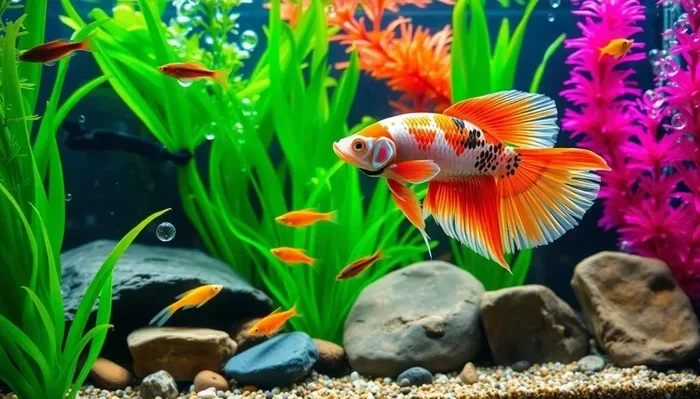
Koi betta fish are a type of ornamental betta bred to mimic the colors and patterns of koi carp. They feature red, orange, white, and black patches that look like tiny koi swimming in your tank. These fish go by several names, including koi betta, koi betta fish, and sometimes mosaic bettas.
The Beauty of Koi Betta Fish
What makes koi bettas so special is their color variation. No two koi bettas look exactly alike. Each fish has a unique pattern that can change over time based on diet, lighting, and water quality. This makes them a favorite among hobbyists who love showing off their aquariums.
Their long, flowing fins add to their elegance. A healthy koi betta fish will display bold colors and smooth finnage. If your fish starts looking dull or faded, that is often a sign that something in their environment needs adjusting.
Setting Up the Perfect Tank for Koi Betta Fish
The foundation of great koi betta fish care starts with the right tank. A proper setup reduces stress, prevents disease, and gives your fish room to swim and explore. Let us break down the essential elements of a koi betta tank.
Tank Size and Setup
Many people think bettas can live in tiny bowls. That is a myth. Koi bettas need space to thrive. A minimum tank size of 5 gallons is recommended. A 10-gallon tank is even better, especially if you plan to keep your koi betta with peaceful tank mates.
Here are the key setup requirements:
- Tank Size: 5 gallons minimum, 10 gallons or more preferred
- Heater: A reliable aquarium heater to maintain stable temperatures
- Filter: A gentle sponge filter to keep water clean without strong currents
- Substrate: Soft sand or fine gravel to protect their delicate fins
- Decorations: Live or silk plants that provide hiding spots without tearing fins
Avoid sharp decorations or rough gravel. Koi bettas have long fins that can snag easily. Keep the tank decorated but leave enough open swimming space in the center.
Water Parameters and Temperature
Water quality is the single most important factor in koi betta fish care. These fish are sensitive to changes in water conditions. Keeping parameters stable will prevent most health problems.
Here are the ideal water parameters for koi bettas:
- Temperature: 76-82°F (24-28°C)
- pH Level: 6.5-7.5
- Ammonia: 0 ppm
- Nitrite: 0 ppm
- Nitrate: Below 20 ppm
- Water Hardness: 3-4 dGH
Use a water conditioner every time you add new water to the tank. Tap water contains chlorine and chloramine that can harm your fish. If you are unsure about which conditioner to use, check out our guide on what kind of water to use for betta fish for more details.
Perform a 25-30% water change every week. This keeps nitrate levels low and maintains a clean environment. Use a gravel vacuum during water changes to remove waste from the substrate.
Feeding Your Koi Betta Fish
Feeding is one of the most enjoyable parts of koi betta fish care, but it is also where many beginners make mistakes. Overfeeding is the most common problem. It leads to bloating, poor water quality, and shortened lifespans.
Best Foods for Koi Bettas
A varied diet keeps your koi betta healthy and brings out their best colors. Here are the best food options:
- High-Quality Betta Pellets: These should be the staple of their diet. Look for pellets with high protein content (35% or more).
- Frozen Bloodworms: A great treat that provides protein and encourages natural hunting behavior.
- Brine Shrimp: Excellent for color enhancement and overall health.
- Daphnia: Helps with digestion and makes a good occasional meal.
- Flake Food: Acceptable in a pinch, but pellets are generally more nutritious.
Avoid feeding your koi betta fish exclusively live food. While live foods can be beneficial, they can also introduce parasites and bacteria into the tank. Always source frozen or freeze-dried foods from reputable suppliers.
Feeding Schedule and Portions
Feed your koi betta 2-3 times per day in small amounts. A good rule of thumb is to offer only what your fish can eat in 2-3 minutes. Remove any uneaten food after feeding to keep the water clean.
Consider implementing one fasting day per week. This helps prevent bloating and gives the digestive system a break. Many experienced fish keepers swear by this simple practice for keeping bettas healthy.
Keeping Your Koi Betta Fish Healthy
Even with the best care, koi bettas can sometimes fall ill. Knowing the signs of common health problems and how to prevent them is a key part of being a responsible fish keeper.
Common Health Issues
Here are the most common health problems you may encounter with koi bettas:
- Ich (White Spot Disease): Small white spots on the body and fins. Caused by poor water quality or temperature fluctuations. Treat with medication and raise the temperature slightly.
- Fin Rot: Frayed or discolored fins caused by bacterial infection. Often linked to dirty water. Improve water quality and use antibacterial treatment if needed.
- Bloating: A swollen abdomen usually caused by overfeeding or poor diet. Fast your fish for 24 hours and offer daphnia to help with digestion.
- Fungal Infections: White cotton-like growths on the body. Usually a secondary infection from injury or stress.
If you notice any of these issues, act quickly. Early treatment makes a big difference. For more guidance on handling sick fish, check out our article on how to care for sick betta fish.
Prevention Tips
Prevention is always better than cure. Here are simple steps to keep your koi betta healthy:
- Maintain a consistent water change schedule
- Test water parameters regularly with a liquid test kit
- Avoid overcrowding the tank
- Quarantine new fish before adding them to the main tank
- Keep the tank away from drafts, direct sunlight, and heat sources
- Wash your hands before and after tank maintenance
Following these steps dramatically reduces the risk of disease. A clean, stable environment is the best medicine for your koi betta fish.
Enhancing the Colors of Your Koi Betta Fish
One of the main reasons people love koi bettas is their gorgeous coloration. You can enhance and intensify those colors with a few simple strategies. Proper koi betta fish care includes thinking about color as part of the overall picture.
First, lighting plays a huge role. LED lights with adjustable spectrums bring out reds, oranges, and blacks in koi bettas. Avoid harsh white lights and instead choose lights designed for aquarium use with a warm tone.
Second, diet directly affects color. Foods rich in carotenoids and spirulina help intensify pigmentation. Look for foods that list these ingredients high on the label. Many hobbyists also use color-enhancing pellets specifically formulated for bettas.
Third, reduce stress. Stressed fish lose their color and become dull. Provide plenty of hiding spots, keep tank mates peaceful, and maintain a consistent routine. For more tips on bringing out the best in your fish, read our guide on how to enhance the color of betta fish.
Koi Betta Fish Lifespan and Long-Term Care
With proper care, koi betta fish can live between 3 and 5 years. Some well-cared-for specimens have even been known to reach 7 years. The key to a long lifespan is consistency in your care routine.
Here is a quick comparison of what affects koi betta lifespan:
- Good Water Quality: Extends lifespan by preventing disease and reducing stress
- Balanced Diet: Supports organ health and immune function
- Stable Temperature: Prevents thermal shock and strengthens the immune system
- Low Stress Environment: Reduces cortisol levels and promotes overall well-being
- Regular Maintenance: Catches problems early before they become serious
Think of your koi betta as a long-term companion. The effort you put into daily care pays off with years of enjoyment and beautiful fish.
Common Mistakes to Avoid in Koi Betta Fish Care
Even experienced fish keepers sometimes make mistakes. Here are the most common errors people make when caring for koi bettas:
- Keeping them in too small a tank: Bowls and cups are not suitable for long-term koi betta health.
- Skipping water changes: Dirty water leads to ammonia buildup, which is toxic and often fatal.
- Overfeeding: Excess food rots in the tank and pollutes the water fast.
- Using the wrong filter: Strong filters create currents that exhaust bettas with long fins.
- Ignoring temperature swings: Sudden changes in temperature shock the fish and weaken their immune system.
- Adding aggressive tank mates: Koi bettas need peaceful companions or should be kept alone.
Avoiding these mistakes puts you ahead of most beginners. For a deeper dive into proper betta care fundamentals, you can also explore our guide on how to take care of betta fish for broader insights that apply to all betta varieties.
Final Thoughts on Koi Betta Fish Care
Caring for a koi betta fish is a rewarding experience that combines beauty, relaxation, and a sense of accomplishment. When you get the tank setup right, feed a balanced diet, maintain clean water, and watch for health issues, your koi betta will thrive. These fish respond well to consistent care and will reward you with vibrant colors and active behavior every day.
Remember that koi betta fish care is not about perfection. It is about building good habits and paying attention to your fish. Every tank is different, and learning what works best for your specific setup is part of the journey. Start with the basics, stay consistent, and enjoy watching your koi betta grow and flourish.
Take what you have learned here and put it into action today. Your koi betta fish will thank you with years of beauty and companionship.
Frequently Asked Questions
What is the best tank size for koi betta fish?
A 5-gallon tank is the minimum recommended size for a single koi betta fish. However, a 10-gallon tank provides more swimming space and makes it easier to maintain stable water parameters. Larger tanks are always better for long-term health.
How often should I feed my koi betta fish?
Feed your koi betta 2-3 times per day in small amounts. Offer only what your fish can eat within 2-3 minutes. Include one fasting day per week to support digestion and prevent bloating.
Can koi betta fish live with other fish?
Koi bettas can sometimes live with peaceful, non-fin-nipping tank mates like corydoras or small tetras. However, they are best kept alone or with very calm species. Always monitor for aggression and have a backup plan if tank mates do not work out.
Why is my koi betta fish losing color?
Color loss in koi bettas is often caused by stress, poor water quality, or inadequate diet. Check your water parameters first, then consider upgrading the lighting and adding color-enhancing foods like those rich in spirulina and carotenoids.
What water temperature do koi betta fish need?
Koi bettas thrive in water temperatures between 76-82°F (24-28°C). Use an aquarium heater and thermometer to maintain a stable temperature. Sudden temperature changes can stress the fish and lead to illness.
How can I prevent diseases in my koi betta fish?
Keep the water clean with regular water changes, test parameters weekly, feed a balanced diet, and quarantine new fish before adding them to the main tank. A stable, stress-free environment is the strongest defense against most common diseases.
=== CONCLUSION ===
Taking care of koi betta fish does not have to be complicated. With the right tank, clean water, proper food, and regular attention, you can create a thriving home for your fish. Focus on the fundamentals, avoid common mistakes, and enjoy the process. Your koi betta will reward you with stunning colors and healthy, active behavior for years to come.