How to Take Care of a Blind Betta Fish
Taking care of a blind betta fish is easier than you think. With the right tank setup, consistent feeding routine, and a few simple adjustments, your blind betta can live a full and happy life. This guide covers everything you need to know about blind betta fish care from day one.
Key Takeaways
- Blind bettas rely on other senses: smell, touch, and hearing help them navigate their world.
- A consistent tank layout is essential: keep decorations in the same place so your fish can memorize the space.
- Feeding a blind betta requires routine: use targeted feeding techniques to ensure they eat properly.
- Water quality matters even more: blind fish are more vulnerable to stress and illness.
- Avoid sudden changes: keep the environment stable and predictable for your blind betta.
- Tank mates should be chosen carefully: peaceful species work best with a blind betta.
- Regular monitoring ensures long-term health: watch for signs of stress or disease early.
📑 Table of Contents
How to Take Care of a Blind Betta Fish
Caring for a blind betta fish might sound intimidating at first. But the truth is, these beautiful creatures adapt remarkably well to life without sight. With a few thoughtful changes to their environment and routine, your blind betta can thrive just like any other fish.
Many fish owners worry when their betta loses its vision. The good news? Blindness does not mean a poor quality of life. Bettas use their sense of smell, touch, and hearing to navigate their surroundings. Once you understand how they adapt, you will see that caring for a blind betta is a rewarding experience.
This guide walks you through everything you need to know. From setting up the perfect tank to feeding techniques and health monitoring, you will find practical advice backed by experience. Let us dive in and make sure your blind betta lives its best life.
Why Do Betta Fish Go Blind?
Understanding the cause of blindness helps you provide better care. Several factors can lead to vision loss in betta fish. Age is the most common reason. As bettas grow older, their eyes may naturally deteriorate.
Injury is another major cause. Sharp decorations or aggressive tank mates can damage a betta’s eyes. Infections and diseases also play a role. Bacterial or fungal infections can cloud the eyes and eventually lead to blindness. Poor water quality over time can weaken the fish’s immune system, making it more susceptible to these issues.
Some bettas are born with eye conditions. Genetic factors can cause congenital blindness. Regardless of the cause, the care approach remains similar. Focus on creating a safe, stable environment that compensates for the lack of sight.
Setting Up the Perfect Tank for a Blind Betta
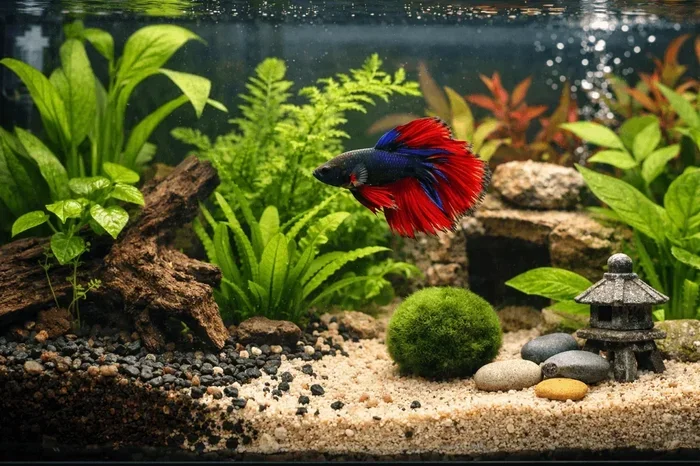
The tank setup is the foundation of blind betta fish care. A well-designed aquarium gives your fish confidence and security. Since a blind betta cannot see obstacles, the layout must be predictable and safe.
Keep the Layout Consistent
Once you set up the tank, do not move things around. Blind bettas memorize their environment using touch and smell. If you rearrange the rocks, plants, or decorations, your fish will feel lost and stressed.
Place decorations along the edges of the tank. Leave open swimming space in the center. Use soft, smooth objects only. Avoid anything sharp or rough that could injure your fish. A consistent layout helps your blind betta move around with ease.
Choose the Right Tank Size
A standard 5-gallon tank works well for a single blind betta. Larger tanks can work too, but they may be harder for your fish to navigate. Stick to a size that is easy to manage and maintain. Make sure the tank has a lid. Bettas are jumpers, and a blind fish is even more likely to leap out accidentally.
If you are unsure about the best setup, check out our guide on how to set up a fish tank for betta fish for more detailed advice on creating the ideal environment.
Use Gentle Filtration
Strong filter currents can disorient a blind betta. Choose a sponge filter or adjust the flow to be very gentle. The filter should provide biological filtration without creating a powerful current. Your fish needs to feel calm and secure at all times.
Feeding a Blind Betta Fish
Feeding is one of the most important parts of blind betta fish care. Without sight, your betta relies on smell and vibration to find food. You will need to be a bit more intentional about mealtimes.
Stick to a Feeding Schedule
Feed your blind betta at the same time every day. Routine helps your fish anticipate meals. Drop the food in the same spot each time. Over time, your betta will learn exactly where to go for dinner.
Use slow-sinking pellets or frozen foods. These give your fish time to locate the food using its senses. Avoid floating flakes that scatter easily across the tank. Targeted feeding works best. Use a pipette or tweezers to place food near your fish.
How Much and How Often
Feed your blind betta two to three small meals per day. Only give what your fish can eat in two to three minutes. Overfeeding leads to poor water quality, which affects every fish but especially a blind one that cannot detect changes easily.
Watch your fish during feeding. Make sure it is eating properly. A blind betta that stops eating may be stressed or unwell. If you notice changes in appetite, check the water parameters and look for signs of disease.
Can You Use Sinking Pellets?
Yes! Sinking pellets are excellent for blind bettas. They settle to a specific spot, making it easy for your fish to find them. Soak the pellets briefly before adding them to the tank. This prevents them from expanding in your fish’s stomach, which can cause bloating and digestive issues.
Water Quality and Maintenance
Clean water is critical for all betta fish, but it matters even more for blind bettas. A blind fish cannot detect changes in its environment. Poor water conditions can cause stress, illness, and a shortened lifespan.
Test the Water Regularly
Test ammonia, nitrite, nitrate, and pH levels every week. Keep ammonia and nitrite at zero. Nitrates should stay below 20 ppm. Use a liquid test kit for the most accurate readings. Stable water parameters are the backbone of healthy blind betta fish care.
Perform Regular Water Changes
Change 25 to 30 percent of the water every week. Use a gravel vacuum to remove waste from the substrate. Always condition new water with a dechlorinator before adding it to the tank. Sudden changes in water temperature or chemistry can shock your fish. A blind betta has no way to escape unfavorable conditions, so consistency is key.
Maintain the Filter
Rinse filter media in old tank water once a month. Never use tap water, as it kills beneficial bacteria. A well-maintained filter keeps the tank clean and the water safe. Replace filter media only when it falls apart. Do not replace all media at once.
Tank Mates and Social Interactions
Choosing the right tank mates for a blind betta requires extra thought. A blind fish cannot defend itself from aggressive companions. You need peaceful species that will not nip at your betta or cause stress.
Best Tank Mates for a Blind Betta
Consider these peaceful options:
- Ghost shrimp: They stay out of the way and help clean the tank.
- Snails: Nerite snails and mystery snails are great choices. They do not bother bettas.
- Neon tetras: Small, peaceful, and they stay in schools. They keep to themselves.
- Corydoras catfish: Bottom dwellers that are gentle and non-confrontational.
Avoid fin-nipping fish like tiger barbs or serpae tetras. These fish can injure a blind betta that cannot see or escape them. Always monitor new tank mates closely during the first few weeks.
Should You Keep a Blind Betta Alone?
Many blind bettas do just fine living alone. A single fish in a 5-gallon tank is a perfectly happy setup. If your betta seems stressed by other fish, remove the tank mates and give it a solo home. Your fish’s comfort always comes first.
If you want to learn more about how bettas interact with their environment, check out our article on how to grow a bond with your betta fish for tips on building trust and understanding your fish’s behavior.
Health Monitoring and Common Issues
Blind bettas are slightly more vulnerable to certain health issues. Since they cannot see threats or avoid problems, you must stay alert. Regular observation is the best tool you have.
Signs of Stress in a Blind Betta
Watch for these warning signs:
- Clamped fins: Fins held close to the body signal discomfort.
- Loss of appetite: Skipping meals consistently is a red flag.
- Erratic swimming: Swimming into walls repeatedly or in circles can indicate stress.
- Color fading: A dull or faded color means your fish may be unwell.
- Lethargy: Hiding at the bottom and refusing to move is concerning.
If you notice any of these signs, test the water immediately. Poor water quality is the number one cause of stress in betta fish. A blind betta has no way to escape an uncomfortable environment, so proactive monitoring is essential.
Common Diseases and How to Prevent Them
Blind bettas are prone to the same diseases as sighted bettas. Ich, fin rot, and fungal infections are the most common. The best prevention is a clean tank and stable water parameters. Avoid sudden temperature changes. Do not overfeed. Quarantine any new fish before adding them to the main tank.
If your betta does get sick, treat it promptly. Many common diseases respond well to medication. For a blind fish, you may need to observe treatment progress more closely since your fish cannot visually show typical symptoms like rubbing against objects. Instead, watch for changes in behavior and appetite.
For more information on identifying and treating common illnesses, our article on how to treat a stressed betta fish provides excellent guidance on recognizing stress signals and taking action quickly.
Quick Tips for Blind Betta Fish Care
Here is a handy list of quick tips to keep your blind betta healthy and happy:
- Keep the tank layout the same at all times.
- Feed at the same time and place every day.
- Test water parameters weekly without fail.
- Perform regular water changes of 25 to 30 percent.
- Use gentle filtration with no strong currents.
- Choose peaceful tank mates or keep your betta alone.
- Watch for signs of stress and illness daily.
- Avoid sudden changes in temperature or lighting.
- Use smooth, soft decorations only.
- Be patient and give your fish time to adapt.
These simple habits make a huge difference. A blind betta can live a long, healthy life with the right care. Many owners report that their blind fish live just as long as their sighted bettas. The key is consistency and attention to detail.
Final Thoughts on Blind Betta Fish Care
Caring for a blind betta fish is a journey that requires patience and awareness. You will need to pay closer attention to the environment, feeding routine, and water quality. But the rewards are immense. Watching a blind betta explore its tank with confidence is truly heartwarming.
Remember that blind bettas are just as capable of living happy, healthy lives as sighted fish. They adapt quickly and rely on their other senses to navigate the world. Your job is to provide a safe, stable, and enriching environment where they can thrive.
Follow the tips in this guide and you will have a confident, healthy blind betta by your side. Stay consistent, stay observant, and enjoy the unique bond that comes with caring for a fish that depends on you completely. Your efforts will be rewarded with a vibrant, active, and thriving companion.
Frequently Asked Questions
How do blind betta fish find their food?
Blind bettas use their sense of smell and the vibrations in the water to locate food. They learn to associate feeding times and locations with meals over time. Using slow-sinking pellets and feeding in the same spot each day helps them find food easily.
Can a blind betta fish live a normal lifespan?
Yes, blind bettas can live a full and normal lifespan of three to five years with proper care. The key factors are clean water, a consistent environment, and a healthy feeding routine. Blindness does not shorten their life if their needs are met.
What causes a betta fish to go blind?
Common causes include aging, eye injuries from sharp decorations, infections, and poor water quality over time. Some bettas are born blind due to genetic factors. Identifying the cause helps you adjust care but does not change the overall approach to keeping your fish healthy.
Should I change anything in my tank if my betta goes blind?
Yes, make the environment safer by removing sharp decorations and keeping the layout consistent. Use gentle filtration and avoid strong water currents. The goal is to create a predictable space where your blind betta can navigate comfortably without stress or injury.
How can I tell if my blind betta is stressed?
Watch for clamped fins, loss of appetite, erratic swimming, color fading, and lethargy. Since your fish cannot see, it relies on you to notice these behavioral changes. Testing the water regularly and maintaining stable conditions helps prevent most stress-related issues.
Can a blind betta fish live with other fish?
Yes, but choose peaceful tank mates like ghost shrimp, snails, or corydoras catfish. Avoid aggressive or fin-nipping species that could harm your blind betta. Always monitor interactions closely and be prepared to separate fish if needed.