How To.breed Betta Fish
Breeding betta fish requires careful preparation, a dedicated tank, and a clear understanding of their unique courtship behavior. This guide walks you through the essential steps to successfully raise healthy fry, from selecting a compatible pair to nurturing the eggs and delicate larvae. Discover the proven techniques that make how to breed betta fish an achievable and rewarding project for any dedicated aquarist.
How To Breed Betta Fish
SEO Title: How To Breed Betta Fish: A Complete Step-by-Step Guide
Meta Title: How To Breed Betta Fish – Essential Tips For Success
Meta Description: Learn how to breed betta fish at home with our step-by-step guide. Discover proven techniques for successful betta breeding and raising healthy fry.
URL Slug: how-to-breed-betta-fish
Key Takeaways
- Set up a proper tank to successfully breed betta fish in a controlled environment.
- Condition the breeding pair with high-protein foods for optimal health and spawning.
- Introduce the female before the male to minimize aggression during the process.
- Remove the female after spawning to prevent her from eating the eggs.
- Feed fry infusoria and baby brine shrimp for healthy growth and survival.
- Keep water temperature at 80°F and maintain pristine water quality for betta fry.
- Watch for bubble nest building as a sign the male is ready to breed.
📑 Table of Contents
Opening Summary
Breeding betta fish at home is easier than you might think. Whether you are a beginner or a hobbyist looking to expand your skills, this guide covers everything you need to know about how to breed betta fish successfully. You will learn how to prepare your fish, set up the breeding tank, and raise healthy fry from start to finish. We will walk you through each stage of the betta spawning process with simple, actionable steps. By the end, you will feel confident and ready to start your own betta fish breeding journey at home.
Introduction
If you have ever watched a male betta build a beautiful bubble nest, you know these fish are fascinating creatures. Breeding them takes that fascination to a whole new level. It can be exciting, rewarding, and surprisingly straightforward when you follow the right steps.
Many people think how to breed betta fish is complicated. But with basic knowledge and a little patience, you can raise healthy fry in your own betta fish tank. This guide gives you everything you need. Let us dive in.
Why Breeding Betta Fish Can Be Rewarding
Breeding betta fish is more than a hobby. It is a chance to witness the full life cycle of one of the most colorful freshwater fish in the world. Here is why many hobbyists love it.
- It teaches patience. You learn to observe subtle betta fish behavior signs that signal readiness.
- It builds knowledge. You gain hands-on experience with water chemistry, betta fish health, and fry care.
- It connects you to nature. Watching eggs hatch and fry swim for the first time is genuinely thrilling.
- It can save costs. Instead of buying new fish, you can grow your own collection through betta fish breeding.
There is also a creative side to it. If you enjoy specific betta fish colors or patterns, breeding lets you work toward the combinations you love most. You can even explore how to cross breed betta fish to develop unique color variations over time.
Preparing Your Betta Fish for Breeding
Preparation is the most important part of how to breed betta fish. Rushing into it without the right setup often leads to failure. Take your time with these steps.
Choosing the Right Fish
Not every betta is ready to breed. You need healthy, mature fish with strong betta fish care fundamentals. Here is what to look for:
- Age: Your fish should be at least 4 to 6 months old. For best results, check our guide on how old betta fish to breed for detailed age guidelines.
- Color intensity: Vibrant colors usually signal good health and maturity.
- Body shape: A healthy female will have a slightly round belly when ready to spawn.
- Fin condition: Fins should be full and undamaged. Avoid fish showing signs of betta fish fin loss or disease.
Before breeding, you also need to find female betta fish ready to breed. A male and female that are both conditioned well will have much higher success rates.
Conditioning the Fish
Betta conditioning means feeding your fish high-quality food to build up their energy before spawning. Offer a varied diet:
- Live or frozen bloodworms
- Brine shrimp
- High-protein betta pellets
- Daphnia for digestive health
Feed small amounts two to three times daily for about two weeks before breeding. This prepares both the male and female for the physical demands of betta spawning. Keep the water temperature stable around 78 to 80 degrees Fahrenheit during this period.
Setting Up the Breeding Tank
The breeding tank does not need to be huge. A 5 to 10 gallon tank works well. Here is a quick checklist:
- Keep the water calm and warm
- Add a bubble nest site or a floating plant for nest building
- Include a hiding spot for the female, like a cave or dense plant
- Use a gentle filter or no filter at all to keep the surface still
- Maintain water temperature between 78 and 82 degrees Fahrenheit
You can learn more about proper tank setups in our article on how to set up a fish tank for betta fish. A clean, well-planned environment makes a huge difference.
The Betta Fish Breeding Process Step by Step
Now the fun begins. Understanding each stage of how to breed betta fish helps you stay calm and make smart decisions. Here is what happens during betta spawning.
Step 1: Introduce the Female
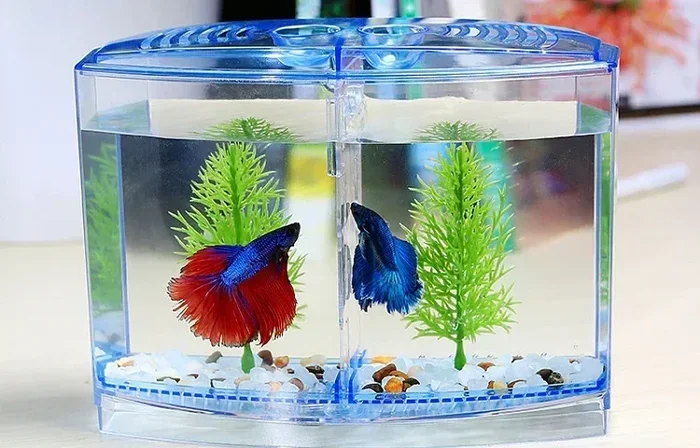
Place the female near the male’s territory but behind a clear divider. Let them see each other for a few hours. This helps them get used to one another without immediate stress. Watch their betta fish behavior closely. The male will often flare and build or reinforce his bubble nest. The female may darken in color and develop vertical stripes. These are good signs.
Step 2: Release the Female
Once both fish show readiness, remove the divider. The male will chase the female. This might look aggressive, but it is normal. The female needs to be strong enough to handle it. If she seems overwhelmed, separate them immediately. You can also refer to our detailed walkthrough on how to breed betta fish for visual examples and extra guidance.
Step 3: The Spawning Act
When ready, the male wraps around the female. She releases eggs, and he fertilizes them right away. This process can take several hours. The male then collects the eggs in his bubble nest. He may appear aggressive toward the female after spawning. This is why you should remove the female once spawning is complete. Let her recover in a separate tank.
Step 4: Egg Care
The male now takes full responsibility. He guards the eggs and keeps the nest intact. Do not disturb him during this time. He may stop eating for a day or two. That is normal. For more on egg development timing, see our article on how many days to breed betta fish.
Caring for Betta Fish Eggs and Fry
Once eggs hatch, your job changes from breeding to betta fry care. This is where many beginners struggle, but with the right approach, you can achieve strong fry survival rates.
Hatching Timeline
Betta eggs typically hatch within 24 to 48 hours after spawning. You will notice tiny wriggling bodies inside the eggs. After hatching, fry stay near the bubble nest for a few days. They absorb their egg sacs during this time. Do not feed them yet.
First Feedings
Once the fry start swimming freely, it is time to eat. Offer infusoria or liquid fry food for the first few days. After that, you can introduce:
- Micro worms
- Baby brine shrimp
- Crushed high-quality pellets
Feed tiny amounts multiple times a day. Fry have tiny stomachs and need frequent meals. Proper nutrition directly affects fry survival and growth.
Keeping the Fry Safe
Remove the male once the fry are free-swimming. He may accidentally eat them. Move the fry to a separate grow-out tank with gentle filtration. Keep the water temperature steady. Use a sponge filter to avoid suction risks. As they grow, you can gradually upgrade their environment.
For long-term growth strategies, check our guide on how to raise a betta fish. It offers practical advice on nurturing young fish into healthy adults.
Common Challenges in Betta Fish Breeding
Even experienced hobbyists face hurdles. Here are the most common problems and how to handle them.
Male Refuses to Build a Nest
A male who does not build a bubble nest may not be ready. Try improving water quality, raising the temperature slightly, and offering better food. Sometimes a mirror reflection near the tank can stimulate nesting behavior.
Female Gets Attacked
If the female cannot escape the male, she may be injured. Always provide hiding spots. If attacks are severe, separate them right away and try again later with better conditioning.
Eggs Not Hatching
Unfertilized eggs will turn white within a day or two. The male usually eats them. If many eggs fail to hatch, it may signal poor water conditions or an immature pair. Maintain stable water temperature and clean water parameters.
Fry Die Early
The most common cause is starvation. Fry are tiny and need food immediately after becoming free-swimming. Do not wait. Also, avoid strong water currents that can tire them out. Consistent betta fish care practices during this phase are critical.
Pro Tips for Successful Betta Fish Breeding
Here is a quick comparison table to help you track key breeding parameters at a glance.
| Parameter | Recommended Range | Why It Matters |
|---|---|---|
| Water Temperature | 78-82°F | Speeds up egg development and supports healthy fry |
| pH Level | 6.5-7.5 | Keeps fish stress-free and eggs viable |
| Tank Size | 5-10 gallons | Large enough for nesting, small enough for monitoring |
| Conditioning Period | 10-14 days | Builds energy reserves for successful spawning |
| Fry Food | Infusoria, micro worms | First foods must be tiny and easily digestible |
Expert Insights
Professional breeders emphasize one thing above all else: observation. Watch your fish daily. Notice changes in betta fish behavior, color, and appetite. The best breeders are not the ones who intervene the most. They are the ones who pay the closest attention. Every pair is different. Adapt your approach based on what you see.
Another pro tip: keep a breeding journal. Record dates, water readings, feeding schedules, and fry counts. Over time, this becomes your personal playbook for how to breed betta fish more successfully. If you want to breed specific varieties like koi betta fish, this record-keeping becomes even more valuable.
Quick Tips Recap
- Always condition both male and female before breeding.
- Keep the breeding tank calm with minimal light and noise.
- Remove the female after spawning to prevent stress.
- Feed fry small amounts several times a day.
- Monitor water temperature and quality every single day.
- Be patient. Not every attempt will succeed, and that is okay.
Conclusion
Learning how to breed betta fish is a journey full of discovery. From betta conditioning and bubble nest building to raising tiny fry, each stage teaches you something new. The key is preparation, patience, and close observation. Follow the steps in this guide, and you will give your fish the best chance for successful betta spawning and strong fry survival.
Betta fish breeding is not about perfection. It is about understanding your fish and giving them the environment they need. Start with one pair, learn from the experience, and build your skills over time. Soon enough, you will have a thriving collection of beautiful, healthy bettas. Get started today, and enjoy the rewarding world of raising betta fish from eggs to adults.
Frequently Asked Questions
How to breed betta fish successfully at home?
To breed betta fish successfully, set up a dedicated breeding tank with warm water around 78–80°F and add floating plants or a bubble nest base. Introduce a healthy male and female pair, condition them with live or frozen food for one to two weeks, and monitor their behavior closely for signs of readiness.
What age should betta fish be before breeding?
Both male and female bettas should be at least 4 to 6 months old before breeding. Breeding them too early can lead to health problems, weak fry, and unsuccessful spawning attempts.
How long does the betta breeding process take?
The entire betta breeding process typically takes about one to two weeks from introduction to separation. The actual spawning can happen within a few hours once the pair is ready, and the male will care for the eggs and fry for the next 24 to 48 hours before they become free-swimming.
What should I feed betta fish fry after they hatch?
Feed betta fry infusoria or liquid fry food for the first few days, then gradually introduce baby brine shrimp and micro worms. Small, frequent feedings several times a day help ensure healthy growth during their delicate early stages.
Can you breed betta fish in a community tank?
No, you should never breed betta fish in a community tank. The male betta can become aggressive during breeding, and other tank mates may harm the eggs, fry, or the breeding pair. Always use a separate breeding tank to keep everyone safe.
Why did my betta fish eat their eggs?
Betta fish may eat their eggs if they feel stressed, if the tank conditions are poor, or if the female was not removed soon after spawning. Keeping water parameters stable and removing the female quickly after breeding helps prevent this common issue.