How to Breed a Crowntail Betta Fish

Breeding a crowntail betta fish is a rewarding process that starts with choosing the right pair and ends with healthy, vibrant fry. This guide walks you through every step, from setting up the perfect betta fish breeding tank to conditioning your fish and caring for newborn betta fry. Whether you are a beginner or a seasoned hobbyist, you will find practical advice to help your crowntail betta spawn successfully.
Breeding a crowntail betta fish can feel exciting and a little intimidating at the same time. These fish are famous for their long, flowing fins and stunning colors. But getting them to breed takes more than just dropping a male and female into the same tank. You need the right setup, the right food, and the right patience.
In this guide, we will walk you through every step of how to breed a crowntail betta fish. From picking the best breeding pair to raising the tiny fry, you will find everything you need. Let us get started.
Key Takeaways
- Choose the right pair: Select a healthy male and female crowntail betta that are at least 4 to 6 months old for the best breeding results.
- Set up a proper breeding tank: A small, heated tank with gentle filtration and a floating plant for the bubble nest is essential for successful betta fish breeding.
- Condition the fish well: Feed both fish high-quality live or frozen foods for 1 to 2 weeks before introducing them to the breeding tank.
- Monitor water parameters closely: Keep the temperature between 78 and 80°F and maintain a pH of 6.5 to 7.0 for optimal spawning conditions.
- Separate the male after spawning: The male will guard the eggs and fry, but he may become aggressive toward the female once the bubble nest is built.
- Raise fry carefully: Feed baby brine shrimp and infusoria to newborn betta fry and keep the water clean to maximize survival rates.
📑 Table of Contents
Understanding Crowntail Betta Fish
The crowntail betta is one of the most popular varieties of betta fish. Its tail fins spread out like a crown, giving it a unique and eye-catching look. This variety was developed through selective breeding over many years. The result is a fish with dramatic, spiky fins that stand out in any aquarium.
Before you start betta fish breeding, it helps to understand what makes crowntail bettas special. Their fins can be delicate, which means they need gentle water flow in the tank. They also tend to be slightly more aggressive than other betta types, so careful pairing is important.
Male vs. Female Crowntail Betta Differences
Knowing the difference between a male and female crowntail betta is the first step in successful breeding. Here are the key differences:
- Male crowntail bettas have longer, more colorful fins and a more pronounced beard (the opercular membrane visible when they flare).
- Female crowntail bettas have shorter fins, a white egg spot on their underside, and a rounder body shape.
- Males also tend to build bubble nests more actively than females.
When choosing a breeding pair, always pick fish that are healthy and show vibrant colors. Avoid fish with torn fins or signs of illness like white spots or lethargy.
Setting Up the Breeding Tank
A proper tank setup makes all the difference when you are breeding crowntail bettas. You do not need a huge tank, but you do need the right conditions. Many experienced breeders use a tank between 5 and 10 gallons for the breeding process.
If you want detailed guidance on tank setup, check out our guide on how to set up a fish tank for betta fish. It covers all the essentials you need to know.
Tank Size and Equipment
- Tank size: 5 to 10 gallons is ideal for a breeding pair.
- Heater: Set the temperature to 78 to 80°F. Stable warmth encourages spawning behavior.
- Filter: Use a gentle sponge filter. Strong currents can damage the crowntail betta’s delicate fins.
- Lighting: Use soft, low lighting. Bright lights can stress the fish.
- Floating plants: Add a few floating plants like frogbit or java moss. The male will use these to build his bubble nest.
Water Parameters for Breeding
Clean, stable water is the foundation of successful betta fish breeding. Before introducing your pair, make sure the water meets these basic requirements.
- Temperature: 78 to 80°F (25 to 27°C)
- pH level: 6.5 to 7.0 (slightly acidic to neutral)
- Ammonia and nitrite: 0 ppm (zero)
- Nitrate: Below 20 ppm
Always cycle your tank before adding any fish. Uncycled tanks contain harmful ammonia that can make your bettas sick and ruin your breeding efforts. For tips on preparing the right water, read our article on how to prepare water for a betta fish.
Choosing and Conditioning the Breeding Pair
Picking the right pair is one of the most important parts of how to breed a crowntail betta fish. A healthy, well-matched pair will spawn more successfully and produce stronger fry.
Selecting a Healthy Male
Look for a male with bright, intense colors and fully extended fins. His fins should not be torn or ragged. He should be active and responsive, especially when he flares at his reflection. A male between 4 and 12 months old is in the ideal breeding age range.
Selecting a Healthy Female
The female should have a visible white egg spot near her ventral area. Her body should be plump and round, which signals that she is ready to release eggs. Avoid females that look thin, pale, or lethargic. A healthy female will contribute to a better spawn and higher fry survival rates.
Conditioning the Fish
Conditioning means feeding both fish nutrient-rich foods for 1 to 2 weeks before they meet in the breeding tank. This helps the female produce healthy eggs and gives the male the energy he needs to build a strong bubble nest.
Here is what to feed during conditioning:
- Live brine shrimp (top choice for conditioning)
- Bloodworms (feed 2 to 3 times per week)
- Daphnia (great for digestive health)
- High-quality betta pellets (as a staple food)
Feed small amounts 2 to 3 times a day. Overfeeding can dirty the water quickly, which can harm both fish. Keep the water clean during the conditioning period by doing small water changes every other day.
The Spawning Process
The actual spawning process is fascinating to watch. It usually happens within a few days to a week after you introduce the pair to the breeding tank. Here is what to expect and how to support the process.
Bubble Nest Building
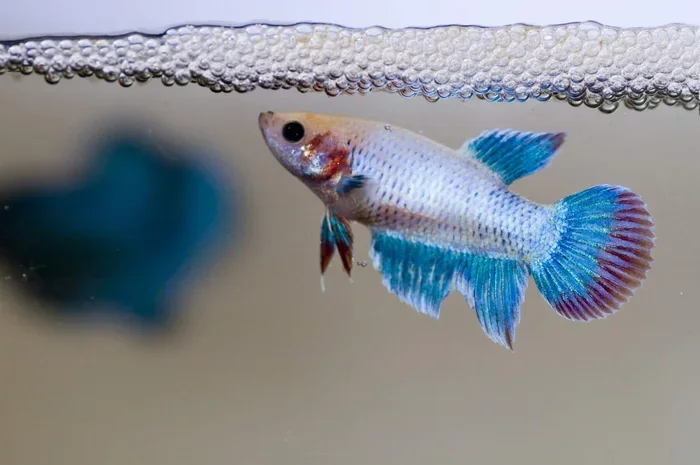
The male crowntail betta will start building a bubble nest at the surface of the water. He blows tiny bubbles and gathers them together with plant debris. A good bubble nest looks like a cluster of foam on the water surface. This nest is where the fertilized eggs will be placed.
If your male does not build a nest right away, do not worry. Give him a few days. Low water flow, gentle lighting, and floating plants all encourage nest building. Some males build nests within hours, while others take a couple of days.
Introducing the Pair
After both fish are conditioned and the bubble nest is ready, you can introduce the pair. Here is the safest way to do it:
- Place the female in a clear container inside the breeding tank so the male can see her.
- Let them see each other for 1 to 2 days. Watch for signs of interest, like the male flaring and the female darkening in color.
- If both fish seem calm and interested, release the female into the tank.
- Watch closely. Some chasing is normal, but if the male bites the female’s fins aggressively, remove the female immediately.
Egg Laying and Fertilization
When the pair is ready, the male will wrap his body around the female in a behavior called the “spawning embrace.” The female will release eggs, and the male will fertilize them right away. He will then collect the eggs and place them in the bubble nest.
This process can repeat several times over a few hours. A healthy female can release anywhere from 100 to 500 eggs in a single spawn.
After Spawning
Once the spawning is complete, remove the female from the tank immediately. The male will become very protective of the eggs and the fry. He may attack the female if she stays in the tank. Use a net to gently transfer her back to her own tank.
The male will guard the bubble nest and the eggs for 24 to 48 hours until they hatch. During this time, do not disturb the tank. Keep the lights dim and the water flow very gentle.
Caring for Betta Fry
Once the eggs hatch, you enter the most delicate phase of the entire process. Newborn betta fry are tiny and very vulnerable. Proper care during the first few weeks determines whether they survive and grow into healthy juveniles.
If you want to learn more about raising young bettas, our article on how to raise a betta fish offers detailed advice that applies directly to fry care.
First Few Days After Hatching
For the first 2 to 3 days, the fry will live off their yolk sac. They do not need any external food yet. During this time, the male will continue to guard them and pick up any eggs that fall from the nest and return them.
Once the yolk sac is absorbed, the fry will start swimming freely and looking for food. This is when you need to start feeding them.
Feeding Betta Fry
Fry need very small, live foods that they can easily consume. Here are the best options in order of preference:
- Infusoria (microscopic organisms, perfect for the first week)
- Baby brine shrimp (the gold standard for betta fry food)
- Microworms (a good alternative that is easy to culture)
- Fine crushed betta pellets (introduce after the first two weeks)
Feed the fry 3 to 4 times a day in very small amounts. Overfeeding is one of the biggest mistakes new breeders make. Uneaten food will foul the water quickly and can kill the fry.
Water Maintenance for Fry
Clean water is critical for fry survival. Since the tank is small, even small amounts of waste can spike ammonia levels fast.
- Perform 10 to 20 percent water changes every day.
- Use a turkey baster to remove uneaten food and waste from the bottom.
- Always match the temperature of new water to the tank water.
- Never use tap water directly. Treat it with a water conditioner first.
For more tips on maintaining clean water for your bettas, check out our guide on how to care for a betta fish water.
When to Separate the Male
The male will guard the fry for the first 2 to 3 days after hatching. After that, you can remove him from the breeding tank. As the fry grow, they will start to explore the tank and may even become food for the protective male if he gets hungry.
Move the male back to his regular tank once the fry are free-swimming and actively feeding on their own.
Growth Stages of Crowntail Fry
Here is a quick look at what to expect as your crowntail fry grow:
- Week 1: Fry are tiny, about 2 to 3 mm long. They stick to surfaces and feed on infusoria.
- Week 2: Fry grow to about 4 to 5 mm. They start developing their first color hints.
- Week 3: Fry reach 6 to 8 mm and become more active swimmers.
- Week 4: Fin rays begin to show. You can start introducing baby brine shrimp as a main food.
- Week 8 and beyond: The crowntail fin pattern starts to become visible. Males will begin to show longer fins than females.
It takes about 3 to 4 months for fry to reach a size where they can be moved to a juvenile tank. By 6 months, they will start showing their full adult colors and fin development.
Common Mistakes to Avoid
Even experienced breeders sometimes make mistakes. Here are the most common ones and how to avoid them:
- Skipping the conditioning phase: Unconditioned fish produce fewer eggs and weaker fry. Always condition for at least 1 to 2 weeks.
- Using too big a tank: A large tank makes it hard for the male to find and collect eggs. Stick to a small breeding tank.
- Leaving the female in too long: The male can seriously injure the female after spawning. Remove her promptly.
- Overfeeding the fry: Excess food rots quickly and spikes ammonia. Feed small amounts multiple times a day.
- Ignoring water quality: Fry are extremely sensitive to ammonia and nitrite. Test the water daily and perform regular small water changes.
Expert Tips for Better Breeding Results
Here are some insider tips that can improve your success rate when breeding crowntail bettas:
- Use a tank divider first. Let the pair see each other for a few days before full introduction. This reduces stress and aggression. You can learn how to make a divider in our guide on how to make a betta fish tank divider.
- Keep the room quiet. Vibrations and loud noises can stress breeding bettas and disrupt the spawning process.
- Use a turkey baster. It is the best tool for removing eggs, uneaten food, and waste from a small breeding tank without disturbing the fry.
- Document your spawns. Take photos of each pair and their fry. This helps you track which pairings produce the best results over time.
- Be patient. Not every spawn will be perfect. Sometimes the male eats the eggs, or the female does not release them. Each attempt teaches you something new.
Breeding crowntail bettas is a learning journey. Every spawn gives you more experience and confidence. Celebrate the small wins and learn from the challenges.
Conclusion
How to breed a crowntail betta fish is a process that rewards patience, preparation, and careful attention to detail. From choosing the right pair and setting up the breeding tank to conditioning the fish and raising the fry, each step plays a vital role in your success. Keep the water clean, feed quality foods, and watch your fish closely throughout the process.
Remember that not every spawn will go perfectly, and that is completely normal. Even seasoned breeders face failed spawns sometimes. The key is to keep learning and improving with each attempt. With the right approach, you will soon be watching healthy crowntail fry grow and develop their signature spiky fins and brilliant colors.
Start with these steps today, and you will be well on your way to successfully breeding crowntail bettas in your own home aquarium.
Frequently Asked Questions
What is the best age for a crowntail betta to start breeding?
The ideal breeding age for both male and female crowntail bettas is between 4 and 12 months old. At this age, the fish are physically mature and capable of producing healthy eggs and sperm. Breeding fish that are too young or too old can result in fewer eggs and weaker fry.
How long does the crowntail betta breeding process take?
The entire process from conditioning to free-swimming fry takes about 4 to 6 weeks. Conditioning takes 1 to 2 weeks, spawning happens within a few days after introduction, and the eggs hatch in 24 to 48 hours. The fry then need several weeks of careful feeding and water maintenance before they are ready to move to a juvenile tank.
Why did my male crowntail betta eat the eggs?
Egg eating is common and usually happens when the male is inexperienced or stressed. It can also occur if the water quality is poor or the male feels threatened. To reduce this risk, make sure the tank is quiet, the water is clean, and the pair is well-conditioned before spawning. Some breeders remove the male after he builds the nest and place the eggs in a separate container.
How many eggs does a crowntail betta female lay per spawn?
A healthy female crowntail betta can lay between 100 and 500 eggs in a single spawn. However, not all eggs will be fertilized, and not all fry will survive. Experienced breeders typically see a 50 to 70 percent hatch rate, with even fewer fry making it to adulthood depending on care and conditions.
Can I breed crowntail bettas in a bowl?
It is not recommended to breed bettas in a bowl. Bowls are too small to maintain stable water parameters and do not provide enough space for the male to build a proper bubble nest. A dedicated breeding tank of 5 to 10 gallons with a heater and gentle filter gives you much better control over the breeding environment and significantly improves your success rate.
What should I feed newly hatched crowntail betta fry?
Start with infusoria or liquid fry food for the first 3 to 5 days. Once the fry are free-swimming and their yolk sacs are absorbed, introduce baby brine shrimp, which is the most nutritious and easily digestible food for young bettas. You can also offer microworms as an alternative. Feed small amounts 3 to 4 times a day and remove any uneaten food immediately.