How Often Should You Change Water in Betta Fish Tank
You should change 20–30% of your betta fish tank water every 7–10 days for tanks under 5 gallons, and every 10–14 days for larger tanks. Regular betta fish tank maintenance keeps ammonia low, protects your fish from disease, and creates a clean living environment. The exact water change schedule depends on tank size, filtration, and how many fish you keep.
Keeping your betta fish healthy starts with one simple habit: regular water changes. If you have ever wondered how often should you change water in betta fish tank, you are not alone. This question is at the heart of proper betta fish care, and getting it right makes a huge difference.
Dirty water leads to stress, illness, and a shorter life for your fish. On the other hand, clean water keeps your betta active, colorful, and full of energy. The good news is that you do not need a complicated routine. A simple, consistent approach works wonders.
In this guide, we will walk through exactly how often to change the water, how much to change, and why it matters. We will also cover common mistakes so you can avoid them. Whether you are a total beginner or a seasoned fish keeper, you will find practical tips here.
Key Takeaways
- Small tanks (under 5 gallons): Change 20–30% of water every 7–10 days to keep conditions stable.
- Larger tanks (5+ gallons): You can stretch water changes to every 10–14 days with a good filter.
- Always treat tap water: Use a water conditioner to remove chlorine and chloramine before adding it to the tank.
- Watch for warning signs: Cloudy water, strong odor, or sluggish fish mean it is time for a water change.
- Match the temperature: New water should be close to the tank temperature to avoid shocking your betta.
- Never change all the water at once: This removes beneficial bacteria and can crash your tank cycle.
📑 Table of Contents
- Why Water Changes Matter for Betta Fish
- How Often Should You Change Water in Betta Fish Tank
- How to Do a Proper Water Change
- Common Mistakes to Avoid When Changing Water
- How to Test Your Tank Water
- Signs Your Betta Needs a Water Change Sooner
- How Water Changes Connect to Filter Maintenance
- Final Thoughts on Your Betta Water Change Routine
Why Water Changes Matter for Betta Fish
Betta fish live in enclosed spaces. Unlike fish in rivers or lakes, your betta cannot simply swim away from waste. Everything your fish produces, uneaten food, and decaying plants stays in the water. Over time, harmful chemicals build up fast.
The Build-Up of Ammonia and Nitrates
Fish waste releases ammonia into the water. Even small amounts can burn your betta’s gills and skin. Your tank’s beneficial bacteria convert ammonia into nitrite, and then into nitrate. But nitrate still builds up over time. Regular water changes dilute these toxins and keep levels safe.
Without water changes, ammonia levels spike. This leads to fin rot, infections, and breathing problems. Your fish may become lethargic or lose its vibrant color. In severe cases, it can be fatal.
How Clean Water Supports Betta Health
Clean water does more than remove toxins. It also supports your betta’s immune system. A healthy fish in clean water fights off disease much better than a stressed fish in dirty water. Think of it like washing your hands — simple, but it prevents a lot of problems.
Beyond health, clean water keeps your tank looking great. Clear water lets you enjoy your betta’s colors and swimming patterns. It also makes it easier to spot any issues early on.
How Often Should You Change Water in Betta Fish Tank
The answer depends on a few key factors. Tank size, filtration, and stocking levels all play a role. Here is a simple breakdown to guide you.
For Small Tanks (Under 5 Gallons)
Small tanks are the most common setup for bettas, especially beginners. In a tank under 5 gallons, water quality drops quickly. You should change 20 to 30 percent of the water every 7 to 10 days. This keeps nitrate levels in a safe range.
If you notice the water turning cloudy or your betta seems less active, you may need to change water more often. Some owners do partial changes every 5 days for very small bowls.
For Medium Tanks (5 to 10 Gallons)
A 5- to 10-gallon tank gives your betta more room and more stable water chemistry. With a good filter, you can go every 10 to 14 days. Change about 25 to 30 percent of the water each time.
The filter helps by housing beneficial bacteria that break down waste. But filters do not remove everything. That is why water changes are still essential even with a filter running.
For Larger Tanks (10+ Gallons)
Larger tanks are more stable, but they still need regular maintenance. If you keep bettas in a tank over 10 gallons, a water change schedule of every 10 to 14 days works well. Change 20 to 25 percent of the water each time.
Keep in mind that more fish means more waste. If you have a community tank with other species, you may need to change water more frequently.
How to Do a Proper Water Change
Doing a water change the right way matters just as much as doing it on time. A sloppy approach can stress your fish or disrupt the tank’s balance. Here is a step-by-step method that works every time.
Step 1: Prepare Your New Water
Start by filling a bucket or container with fresh water. If you use tap water, let it sit out for 24 hours to allow chlorine to evaporate. Even better, use a water conditioner to neutralize chlorine and chloramine instantly.
Make sure the new water is close to the tank temperature. Cold water can shock your betta. A quick tip is to let the bucket sit near the tank for a while before adding it in.
Step 2: Remove Old Water
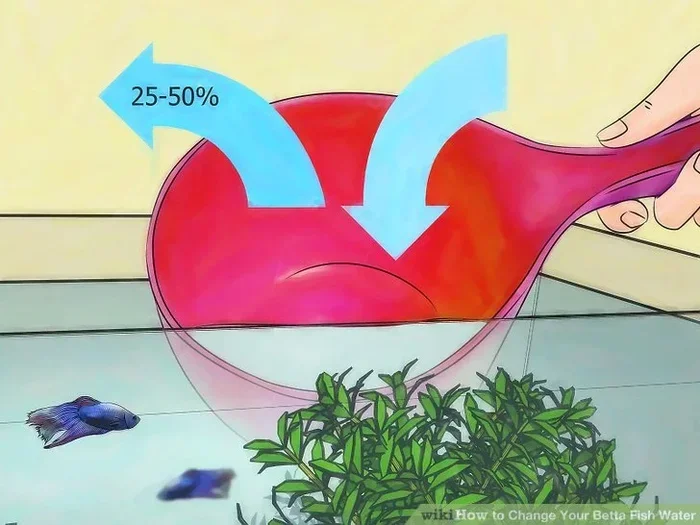
Use a gravel vacuum or siphon to remove about 20 to 30 percent of the tank water. This also pulls out debris from the gravel and substrate. Pay attention to areas where waste collects, like near decorations or corners.
If you do not have a gravel vacuum, a simple bucket and cup work fine. Just scoop out water slowly so you do not disturb your fish too much.
Step 3: Add the New Water
Slowly pour the treated water back into the tank. Pouring onto a plate or your hand helps reduce the impact on the substrate. Avoid pouring directly onto your betta or into the same spot each time.
After adding the water, check the temperature again. It should feel neutral — not warm or cold compared to the tank. This small step goes a long way in keeping your betta stress-free.
Quick Tips for Water Changes
- Always use a water conditioner before adding tap water to the tank.
- Never change more than 50 percent of the water at one time.
- Do not replace all the filter media at the same time as a water change.
- Clean your gravel during each water change to remove trapped debris.
- Keep a dedicated bucket and siphon for your tank only.
Common Mistakes to Avoid When Changing Water
Even experienced fish keepers make mistakes. Knowing what to avoid saves you time and protects your fish. Here are the most common errors people make with betta fish tank maintenance.
Changing All the Water at Once
This is the number one mistake. Some people think a full water change is better. It is not. Removing all the water wipes out beneficial bacteria that keep your tank cycling. This can cause a dangerous ammonia spike that harms or kills your fish.
Stick to partial changes of 20 to 30 percent. This keeps the bacterial colony intact while still removing waste and toxins.
Ignoring Water Temperature
Betta fish are tropical and sensitive to temperature swings. Adding cold water from the tap can cause thermal shock. Signs include clamped fins, rapid breathing, and lethargy.
Always match the temperature of new water to the tank. A simple aquarium thermometer makes this easy. Aim for water between 76 and 82 degrees Fahrenheit.
Using Untreated Tap Water
Tap water contains chlorine and chloramine, both of which are toxic to fish. These chemicals damage gills and skin over time. Some people think letting water sit overnight removes all harmful substances. While it helps with chlorine, chloramine does not evaporate easily.
A quality water conditioner handles both chemicals quickly and effectively. It is a small investment that pays off in fish health.
Skipping Water Changes When the Water Looks Fine
This is a sneaky mistake. Water can look perfectly clear while still harboring high levels of ammonia or nitrates. Just because the water looks clean does not mean it is safe for your betta.
Use a test kit to monitor water parameters regularly. This gives you a clear picture of what is happening beneath the surface.
How to Test Your Tank Water
Testing your water takes the guesswork out of betta fish tank maintenance. A basic liquid test kit measures ammonia, nitrite, nitrate, and pH. Test strips work in a pinch, but liquid kits are more accurate and reliable.
Test your water before each scheduled water change. This tells you if you need to change water more or less often. For example, if your nitrates are already climbing, you may need to do a water change every 7 days instead of 10.
You can also test after a water change to confirm your tap water source is safe. This is especially important if you have ever asked yourself, can you use tap water in a betta fish tank. The answer depends on your local water treatment, which varies by region.
Signs Your Betta Needs a Water Change Sooner
Sometimes the schedule needs to flex. Certain situations call for more frequent water changes. Watch for these warning signs:
- Cloudy or murky water: This often signals a bacterial bloom or excess waste.
- Strong, unpleasant odor: Healthy tank water should smell neutral or slightly earthy.
- Algae growth spiking: Excess light and nutrients fuel algae. More water changes reduce the nutrients that feed it.
- Betta staying at the surface or gasping: This can indicate low oxygen or high ammonia levels.
- Fins clamped close to the body: A classic sign of stress or poor water quality.
- White or fuzzy patches on the body: These could point to fungal or bacterial infections triggered by dirty water.
If you notice any of these signs, do a partial water change right away. Then test your water to identify the root cause. Sometimes adjusting your water change schedule is all it takes to turn things around.
How Water Changes Connect to Filter Maintenance
Your filter and water changes work together to keep the tank clean. The filter removes debris and hosts beneficial bacteria. But it does not replace the need for fresh water. Think of the filter as a vacuum cleaner and water changes as taking out the trash.
When you do a water change, rinse your filter media gently in old tank water. Never use tap water directly on the filter media. Chlorine in tap water kills the beneficial bacteria you worked hard to grow.
Replace filter media only when it falls apart or stops working. Replacing too much at once can destabilize your tank. A gentle approach keeps everything running smoothly.
If you are curious about whether you can skip a filter entirely, check out our guide on can you use a filter in a betta fish tank. It covers the pros and cons of filtered and unfiltered setups.
Final Thoughts on Your Betta Water Change Routine
Getting the water change schedule right is one of the most impactful things you can do for your betta fish. Small, consistent changes beat big, infrequent ones every time. Your betta will thank you with bright colors, active swimming, and a long, healthy life.
Start with the basics: change 20 to 30 percent of the water every 7 to 14 days depending on your tank size. Treat your tap water with a conditioner. Watch your fish for signs of stress. Test your water regularly. These simple habits form the foundation of great fish care.
If you want to dive deeper into proper water changing techniques, read our article on how to change water in betta fish tank for step-by-step instructions. And for those caring for bettas in smaller setups, our piece on how often should you clean your betta fish bowl offers bowl-specific advice.
Remember, consistency is everything. A little effort each week goes a long way. Your betta deserves clean, safe water, and you now have everything you need to provide it.
Frequently Asked Questions
How often should you change water in a betta fish tank?
For tanks under 5 gallons, change 20 to 30 percent of the water every 7 to 10 days. For tanks 5 gallons and larger, every 10 to 14 days works well. Always adjust based on your test results and how your fish behaves.
Can you use tap water for a betta fish tank?
Yes, but you must treat it first. Tap water contains chlorine and chloramine that are harmful to fish. Use a water conditioner to neutralize these chemicals before adding the water to your tank. Letting water sit out for 24 hours helps remove chlorine, but a conditioner is the safest choice.
What happens if you never change the water in a betta tank?
Toxins like ammonia and nitrate build up over time. Your betta will experience stress, weakened immunity, and may develop diseases like fin rot or infections. In extreme cases, the fish can die from toxic water conditions.
How much water should you change in a betta tank?
Stick to 20 to 30 percent per water change. This removes enough waste and toxins while preserving the beneficial bacteria in your tank. Never change more than 50 percent at once, as this can crash your tank cycle.
Does a filter mean you do not need to change water?
No. Filters remove debris and host helpful bacteria, but they do not remove dissolved nitrates and other waste. Water changes are still necessary even with a filter running. Think of the filter and water changes as two parts of the same cleaning routine.
How do you know if your betta needs a water change?
Watch for cloudy water, a strong smell, algae spikes, or your betta acting lethargic or gasping at the surface. Using a liquid test kit to check ammonia and nitrate levels gives you the clearest picture of when a change is needed.