How Often Do I Change My Betta Fish Water For Best Health
Knowing how often do i change my betta fish water is the single most important habit for keeping your betta healthy and vibrant. Most owners should perform a partial water change every week to remove toxins and maintain stable water quality. Skipping regular changes leads to ammonia buildup, stress, and disease that can quickly harm your fish. This guide covers exact schedules, step-by-step methods, and common mistakes so you can maintain a clean, safe tank with confidence. Follow these simple routines and your betta will reward you with bright colors and active behavior.
Key Takeaways
- Weekly partial changes work best: Replace 25 to 50 percent of the water every seven days to keep toxins low and conditions stable.
- Never replace all the water at once: Full changes shock your betta and destroy beneficial bacteria that keep the tank balanced.
- Always treat new water before adding it: Use a reliable conditioner to neutralize chlorine, chloramine, and heavy metals instantly.
- Match temperature and pH closely: Sudden shifts in warmth or acidity cause stress, so always acclimate new water to tank conditions.
- Clean the substrate during changes: Vacuum gravel or sand to remove waste, uneaten food, and decaying matter that fuel ammonia spikes.
- Test water regularly for accuracy: Use liquid test kits to track ammonia, nitrite, nitrate, and pH instead of guessing based on appearance.
- Adjust frequency based on your setup: Smaller bowls, heavy feeding, or missing filters require more frequent changes to maintain safe water quality.
📑 Table of Contents
- How Often Do I Change My Betta Fish Water For Best Health
- Why Regular Water Changes Matter For Your Betta
- The Ideal Schedule: How Often Do I Change My Betta Fish Water
- Step By Step Guide To Changing Betta Fish Water Safely
- Common Mistakes When Changing Betta Fish Water
- Expert Tips For Maintaining Perfect Water Quality
- Quick Reference: Water Change Checklist
- Final Thoughts On How Often Do I Change My Betta Fish Water
How Often Do I Change My Betta Fish Water For Best Health
Keeping a betta fish healthy starts with one simple routine. You need to refresh the water regularly. Many new owners ask how often do i change my betta fish water because the answer is not always obvious. Some people think clear water means clean water. That is not true. Harmful compounds build up quietly. Your fish feels the stress long before the water looks dirty. A steady cleaning schedule prevents problems and keeps your betta active and colorful.
The good news is that water care is easy once you understand the basics. You do not need fancy equipment or complicated routines. You just need consistency. A small weekly effort protects your fish from illness and extends its lifespan. This guide walks you through the ideal schedule, the right method, and the mistakes to avoid. You will learn how to maintain excellent water quality without overwhelming your daily routine.
Why Regular Water Changes Matter For Your Betta
Bettas live in a closed environment. Everything that goes into the tank stays there unless you remove it. Fish waste, uneaten food, and decaying plant matter break down over time. This process releases ammonia into the water. Ammonia burns gills and damages tissue. Even small amounts cause stress. Your betta may hide more, eat less, or fade in color.
Beneficial bacteria help manage this cycle. These tiny organisms live in your filter and substrate. They convert ammonia into nitrite, then into nitrate. This process is called the nitrogen cycle. It keeps the tank balanced. However, bacteria cannot remove nitrate forever. Nitrate builds up slowly. High nitrate levels weaken your fish immune system and encourage algae growth.
Regular water changes reset this balance. You dilute toxins and replenish essential minerals. You also remove organic debris that fuels bacterial blooms. A clean tank supports stable water parameters. Stable conditions mean less stress. Less stress means a healthier, more active betta.
The Hidden Dangers Of Old Water
Old water looks harmless until you test it. Clear water can still contain high ammonia or nitrite. You cannot see these compounds. You cannot smell them either. Only testing reveals the truth. Waiting until the water looks cloudy or smells bad is too late. By then, your fish has already suffered.
Organic waste also lowers oxygen levels. Decomposing matter consumes oxygen as it breaks down. Bettas need oxygen to breathe. They use a special organ called the labyrinth to gulp air from the surface. Still, poor oxygen levels make breathing harder. Your fish may stay near the top more often. It may seem lazy when it is actually struggling.
Regular changes prevent these hidden problems. You maintain a safe environment before issues start. Prevention is always easier than treatment.
The Ideal Schedule: How Often Do I Change My Betta Fish Water
Most betta owners should perform a partial water change once a week. This routine works well for standard tanks with a filter. You typically replace twenty-five to fifty percent of the water. This range removes enough toxins without disrupting the beneficial bacteria. It also keeps temperature and pH shifts minimal.
Smaller setups need more attention. A tiny bowl without a filter accumulates waste quickly. In that case, you may need to change water twice a week. Larger tanks with strong filtration can sometimes stretch to every ten days. The exact schedule depends on your specific setup. Testing your water helps you decide what works best.
Weekly Changes For Standard Tanks
A standard tank holds at least five gallons. It usually includes a gentle filter and a heater. This setup creates a stable environment. Waste spreads through a larger volume of water. Bacteria have more surface area to colonize. These factors slow down toxin buildup.
For this type of tank, a weekly 30 percent water change is a solid baseline. You can adjust up or down based on test results. If nitrate stays low and ammonia reads zero, your schedule is working. If nitrate climbs quickly, increase the percentage slightly. Consistency matters more than perfection.
Adjusting For Tank Size And Filter Type
Tank size changes the rhythm of maintenance. Small volumes fluctuate faster. A one-gallon container can swing from safe to dangerous in a few days. A ten-gallon tank offers more buffering capacity. You still need regular changes, but the urgency is lower.
Filter type also matters. Sponge filters provide excellent biological filtration. They host lots of beneficial bacteria. Hang-on-back filters combine mechanical and biological filtration. Canister filters handle larger tanks with ease. Regardless of the type, all filters need clean water to function well. Clogged filters reduce flow and lower oxygen exchange. Cleaning the filter media during water changes keeps everything running smoothly.
Step By Step Guide To Changing Betta Fish Water Safely
Changing water sounds simple, but small mistakes cause big problems. You want a smooth process that protects your fish. Follow a clear routine every time. Preparation makes the task quick and stress-free.
Gather Your Supplies First
Collect everything before you start. You will need:
- A clean bucket used only for aquarium water
- A gravel vacuum or siphon tube
- A water conditioner that neutralizes chlorine and chloramine
- A thermometer to check temperature
- A clean container for mixing new water
- Clean towels for spills
Never use soap or chemical cleaners on aquarium equipment. Residue harms fish quickly. Rinse tools with hot water only. Keep your bucket separate from household cleaning supplies.
Remove Old Water Without Disturbing Your Fish
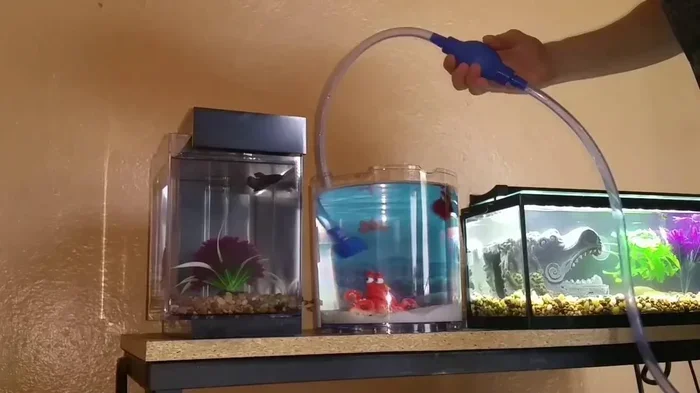
Place your bucket lower than the tank. Insert the siphon into the gravel. Start the flow by sucking gently on the tube or using a priming bulb. Move the vacuum across the substrate. This action lifts waste trapped between gravel pieces. Avoid digging too deep. You do not want to uproot plants or disturb the bottom too much.
Remove about thirty percent of the water. Watch your fish during the process. Most bettas stay calm as long as the water level drops slowly. If your fish seems stressed, pause and let it settle. You can finish the change in a minute or two.
Treat And Add New Water Correctly
Fill your clean bucket with fresh water. Match the temperature to your tank within one or two degrees. Sudden temperature swings shock fish. Add the correct dose of water conditioner. This step neutralizes harmful chemicals found in tap water. It also binds heavy metals that may be present.
Pour the treated water slowly into the tank. Aim for a gentle flow. Pour onto a clean plate or decoration to soften the impact. This method prevents disturbing the substrate. Your betta will appreciate the calm transition.
Common Mistakes When Changing Betta Fish Water
Even experienced owners make errors. Avoiding these pitfalls keeps your tank stable and your fish healthy.
Replacing Too Much Water At Once
Some people think a full change resets the tank completely. That approach backfires. Removing all the water eliminates beneficial bacteria and shocks your fish. It also resets the nitrogen cycle. You then face a long period of instability. Partial changes preserve the good bacteria while removing the bad compounds.
Skipping The Water Conditioner
Tap water often contains chlorine or chloramine. These chemicals kill bacteria and irritate fish gills. Some owners assume their water is safe without treatment. That assumption is risky. Always use a quality conditioner. It takes seconds and prevents serious damage.
Ignoring Temperature And pH Differences
New water that feels colder or warmer than the tank causes stress. Your betta may clamp its fins or hide afterward. pH shifts create similar problems. Test your tap water occasionally. Learn its general range. Then match it closely when you refill the tank. Small differences are fine. Large jumps are not.
Cleaning The Substrate Too Harshly
Gravel vacuuming removes waste, but aggressive digging stirs up debris and bacteria. This action can temporarily raise ammonia levels. Move the siphon gently. Focus on the top layer where waste collects. Leave deeper layers alone unless you are doing a thorough tank reset.
Forgetting To Clean The Filter Media
Dirty filter media restricts water flow. Reduced flow means less oxygen and weaker filtration. Rinse filter sponges or cartridges in old tank water during your change. Never use tap water on biological media. Chlorine kills the bacteria you want to keep. A gentle rinse restores flow without destroying your biological filtration.
Expert Tips For Maintaining Perfect Water Quality
Good habits make water care effortless. These tips help you stay ahead of problems and keep your betta in top condition.
Test Water Regularly Instead Of Guessing
Visual checks are not enough. Clear water can still contain dangerous compounds. Use a liquid test kit for accurate readings. Test for ammonia, nitrite, nitrate, and pH. Write down your results. Tracking trends helps you spot changes early. If ammonia rises, you know something is wrong. You can adjust feeding, cleaning, or filtration quickly.
Feed Less To Reduce Waste
Overfeeding creates extra waste. Uneaten food decays and releases ammonia. Feed only what your betta eats in a few minutes. One or two small meals per day is usually enough. You can also fast your fish one day per week. This practice reduces waste and supports digestion. Less waste means cleaner water and fewer changes needed.
Keep A Consistent Routine
Fish thrive on predictability. Perform water changes on the same day each week. Use the same percentage and method. Consistency keeps parameters stable. Your betta adapts to the routine and stays relaxed. Set a reminder on your phone if needed. A simple schedule prevents forgotten changes.
Use Live Plants To Support Water Quality
Plants absorb nitrate and provide shelter. They also compete with algae for nutrients. Easy options include java fern, anubias, and floating plants. These species tolerate betta tank conditions well. Plants do not replace water changes, but they help maintain cleaner water between changes.
Monitor Your Fish Behavior Closely
Your betta tells you how it feels. Bright colors, smooth swimming, and eager feeding signal good health. Hiding, clamped fins, gasping, or loss of appetite signal trouble. Watch for these signs after each water change. If problems appear, review your process. Check temperature, conditioner dosage, and test results. Small adjustments often solve the issue.
Quick Reference: Water Change Checklist
Use this simple checklist before every change. It keeps you organized and prevents missed steps.
- Test tank water for ammonia, nitrite, nitrate, and pH
- Prepare a clean bucket and siphon
- Remove 25 to 50 percent of the water gently
- Vacuum the substrate to lift waste
- Fill the bucket with fresh water
- Match temperature to the tank within 1 to 2 degrees
- Add the correct amount of water conditioner
- Pour treated water slowly into the tank
- Rinse filter media in old tank water if needed
- Record test results and note any changes
This routine takes only a few minutes. The payoff is a healthier tank and a happier fish.
Final Thoughts On How Often Do I Change My Betta Fish Water
A steady water change routine is the foundation of good betta care. You now know that a weekly partial change keeps toxins low and conditions stable. You also know that small mistakes can cause stress, so preparation matters. Treat your water, match temperature, vacuum gently, and test regularly. These habits protect your fish and make maintenance easy.
Remember that every tank is different. Your schedule may shift based on size, filtration, and feeding habits. Let test results guide your decisions. When in doubt, lean toward smaller, more frequent changes rather than large, infrequent ones. Your betta will respond with better color, stronger activity, and fewer health issues. A clean tank is a happy tank, and a happy betta is a joy to watch every day.
Frequently Asked Questions
How often should I change water in a betta fish bowl without a filter?
You should change 25 to 50 percent of the water every three to four days in a small unfiltered bowl. Small volumes build up ammonia quickly, so frequent partial changes keep the environment safe. Always treat new water with a conditioner and match the temperature closely.
Can I change all the water in my betta tank at once?
No, replacing all the water at once shocks your betta and removes beneficial bacteria that keep the tank stable. Partial changes of 25 to 50 percent are much safer and maintain the nitrogen cycle. Full changes are only necessary in emergencies when the tank is severely contaminated.
Do I need to use a water conditioner every time I change the water?
Yes, you should always use a water conditioner when adding fresh tap water to your betta tank. Conditioners neutralize chlorine, chloramine, and heavy metals that can harm fish and beneficial bacteria. This quick step prevents gill irritation and supports a healthy tank environment.
What percentage of water should I replace during a betta fish water change?
A replacement of 25 to 50 percent is ideal for most betta tanks with a filter. This range removes enough nitrate and waste while keeping temperature and pH stable. Smaller tanks or heavily stocked setups may need the higher end of that range.
How do I know if my betta fish water change schedule is working?
Test your water regularly for ammonia, nitrite, nitrate, and pH to see if your schedule is effective. Zero ammonia and nitrite with manageable nitrate levels usually mean your routine is on track. If parameters stay stable and your betta remains active and colorful, your schedule is working well.
Should I clean the gravel every time I change my betta fish water?
Yes, gently vacuuming the gravel during each water change removes waste, uneaten food, and decaying matter. This practice prevents ammonia spikes and keeps the substrate clean. Avoid digging too deeply, since you want to lift surface debris without disturbing the beneficial bacteria below.