How Much Water for 1 Betta Fish
How much water for 1 betta fish? The short answer is at least 5 gallons, but bigger is always better. A single betta needs room to swim, stable water parameters, and a proper setup to thrive. In this guide, you will learn the ideal tank size, why small bowls are harmful, and how to set up the perfect betta fish habitat step by step.
You love your betta fish. You want it to live a long, happy life. But one of the most important questions every betta owner faces is how much water for 1 betta fish. The answer might surprise you.
Many people think a tiny bowl is enough. After all, bettas are small fish, right? Wrong. In reality, a betta needs plenty of space, clean water, and the right setup to truly flourish. Giving your betta the proper water volume is one of the best things you can do for its betta fish health.
This guide covers everything you need to know about betta fish tank size, water setup, and maintenance. Whether you are a new betta owner or thinking about getting one, you will find practical advice you can use right away.
Key Takeaways
- Minimum 5 gallons: A single betta fish needs at least 5 gallons of water to stay healthy and active.
- Small bowls are harmful: Keeping a betta in a tiny bowl limits its lifespan and causes stress.
- Water quality matters: Regular water changes and proper conditioning keep your betta safe from toxins.
- Temperature stability is key: Betta fish need warm water between 76–82°F to thrive.
- Filtration and heating: A gentle filter and a tank heater make a big difference in your betta’s well-being.
- Bigger tanks are easier: Larger volumes of water stay stable longer, making tank maintenance simpler.
📑 Table of Contents
- Why Water Volume Matters for Your Betta Fish
- How Much Water Does 1 Betta Fish Actually Need
- Setting Up the Perfect Tank for Your Betta
- Water Changes and Tank Maintenance
- Common Mistakes Bettas Owners Make with Water
- Quick Tips for Keeping Your Betta’s Water Clean
- Final Thoughts on How Much Water for 1 Betta Fish
Why Water Volume Matters for Your Betta Fish
The amount of water you provide directly affects your betta’s quality of life. Water volume is not just about space. It impacts water parameters, toxin levels, temperature stability, and your fish’s stress levels.
In a small amount of water, ammonia and nitrates build up fast. Even with a filter, a tiny tank becomes toxic quickly. A larger volume of water dilutes waste and gives your betta a safer betta fish environment.
What Happens in Too Little Water
When the water volume is too small, several problems arise fast:
- Toxin buildup: Ammonia spikes can happen within hours in a small tank.
- Temperature swings: A small amount of water heats up or cools down too quickly.
- Stress and illness: Bettas in cramped spaces become stressed, which weakens their immune system.
- Limited swimming room: Bettas are active swimmers and need space to move around.
These issues shorten your betta’s betta fish lifespan significantly. Many bettas in tiny bowls only live for one or two years. With proper water volume, a betta can live five years or more.
How Much Water Does 1 Betta Fish Actually Need
So, what is the right answer to how much water for 1 betta fish? The minimum is 5 gallons. This is the widely accepted standard among experienced fish keepers and veterinarians alike.
A 5-gallon tank gives your betta enough room to swim, explore, and establish a comfortable territory. It also provides enough water volume to keep water parameters stable between cleanings.
Ideal Tank Size Breakdown
Here is a simple look at how tank size affects your betta:
- 1–2 gallons: Too small. Not recommended. Toxins build up fast and temperature fluctuates easily.
- 3–4 gallons: Marginal. Possible but very challenging to maintain stable conditions.
- 5 gallons: The minimum. A good starting point for a single betta fish.
- 10 gallons or more: Ideal. More stable water, more swimming room, and easier maintenance.
Many experts agree that a 10-gallon tank is the sweet spot for one betta. It gives you room for plants, hiding spots, and a proper filter without overwhelming the fish.
Setting Up the Perfect Tank for Your Betta
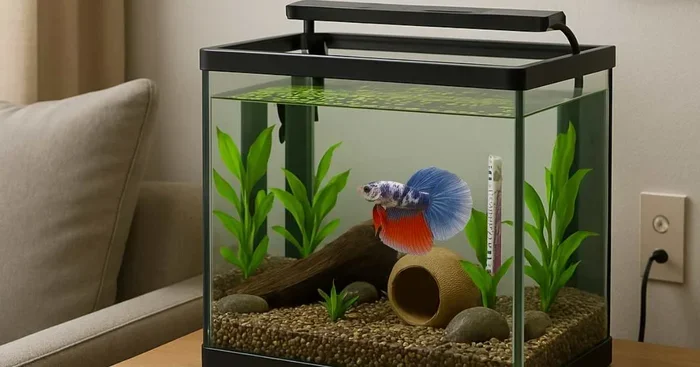
Now that you know the right amount of water, let us talk about how to set up the tank properly. A good fish tank setup goes beyond just filling a container with water.
Step 1: Choose the Right Tank
Start with a tank that holds at least 5 gallons. Glass tanks and acrylic tanks both work well. Make sure the tank has a lid because bettas are known to jump.
Place the tank on a sturdy surface away from direct sunlight and drafty areas. Direct sun can cause temperature swings, and drafts can chill the water.
Step 2: Add a Filter
A filtration system is essential for keeping the water clean. However, bettas prefer gentle flow. Strong filters can tire your betta out because they need to swim against the current all day.
Look for a sponge filter or a filter with an adjustable flow rate. This keeps the water clean without stressing your fish.
Step 3: Install a Heater
Bettas are tropical fish. They need warm water to stay healthy. A tank heater set between 76°F and 82°F is the ideal range.
Without proper water temperature control, your betta becomes sluggish and more prone to disease. A small heater designed for 5–10 gallon tanks works perfectly.
Step 4: Decorate and Add Plants
Betta fish love places to hide and explore. Add live or silk plants, caves, and gentle decorations. Avoid sharp plastic plants that can tear your betta’s delicate fins.
Live plants also help absorb nitrates and improve water quality naturally. They make the tank feel more like a natural betta habitat.
Step 5: Prepare the Water Properly
Before adding water to the tank, you need to treat it. Tap water contains chlorine and chloramine, which are harmful to fish. Always use a water conditioner or dechlorinator before adding water to your tank.
If you want to learn more about this process, check out our guide on how to prepare water for a betta fish for detailed, step-by-step instructions.
Let the water sit at room temperature before adding it to the tank. This helps avoid shocking your betta with sudden temperature changes.
Water Changes and Tank Maintenance
Even with a proper filter and heater, you still need to do regular water changes. No tank is completely self-sustaining. Waste, uneaten food, and other debris build up over time.
How Often Should You Change the Water?
For a 5-gallon tank, a 25–30% water change every week works well. For a 10-gallon tank, you can stretch to a 20–25% change weekly. The goal is to remove waste buildup without disrupting the beneficial bacteria in your tank.
If you want a deeper dive into scheduling, visit our article on how often to change water for betta fish. It covers frequency, percentages, and timing in detail.
How to Do a Water Change
Here is a simple routine for a weekly water change:
- Siphon out 25–30% of the tank water using a gravel vacuum.
- Remove any visible debris from the substrate.
- Prepare fresh water by treating it with a conditioner. Learn more about conditioning tap water for betta fish.
- Match the temperature of the new water to the tank water.
- Slowly add the fresh water to the tank.
Always use a water conditioner when adding new water. This neutralizes harmful chemicals and keeps your betta safe.
Common Mistakes Bettas Owners Make with Water
Many new betta owners make avoidable mistakes. Here are the most common ones and how to fix them.
Using a Bowl Instead of a Tank
This is the number one mistake. Bowls look cute, but they offer almost no room for proper filtration, heating, or water stability. A betta in a bowl is a betta that will likely live a shorter, less healthy life.
If you have been keeping your betta in a bowl, it is time to upgrade. Even moving to a 5-gallon tank makes a huge difference.
Skipping the Water Conditioner
Some owners think tap water is fine as-is. It is not. Chlorine and chloramine in tap water can damage your betta’s gills and skin. Always condition your water before adding it to the tank.
Overfeeding Your Betta
Overfeeding creates excess waste, which pollutes the water faster. Feed your betta 2–3 pellets twice a day. Remove any uneaten food after a few minutes.
For more on feeding amounts, check out our guide on how much food for a betta fish.
Ignoring Water Temperature
Cold water slows down a betta’s metabolism and makes it vulnerable to illness. Hot water holds less oxygen, which is also dangerous. Keep the temperature steady in the 76–82°F range.
If you need tips on maintaining the right temperature, read our guide on how to keep water warm for betta fish.
Quick Tips for Keeping Your Betta’s Water Clean
Here are some fast tips to keep things simple:
- Test your water parameters weekly with a simple aquarium test kit.
- Never empty the entire tank at once. This kills beneficial bacteria.
- Clean the glass with an algae scraper during weekly maintenance.
- Replace filter media gently in tank water, never in tap water.
- Keep the tank away from direct sunlight and heat sources.
- Observe your betta daily for signs of stress or illness.
These small habits add up. They keep your betta fish environment clean and your fish happy for years.
Final Thoughts on How Much Water for 1 Betta Fish
The answer to how much water for 1 betta fish is clear: give your betta at least 5 gallons, and more if you can. A proper tank setup with a filter, heater, and conditioned water gives your betta the best chance at a long, healthy life.
Remember, your betta is not just a decoration. It is a living creature that deserves a comfortable home. By choosing the right tank size and staying on top of tank maintenance, you are setting your betta up for success.
Start with the basics, keep a consistent routine, and enjoy watching your betta thrive. A happy betta makes the effort completely worth it.
Frequently Asked Questions
Can I keep 1 betta fish in a 3-gallon tank?
A 3-gallon tank is possible but not ideal. A 5-gallon tank is the recommended minimum. A 3-gallon tank requires more frequent water changes and close monitoring of water parameters. If you only have a 3-gallon tank, be extra diligent with your maintenance routine.
Do betta fish need a filter in their tank?
Yes, a filter helps keep the water clean by removing waste and toxins. However, choose a filter with gentle flow because bettas do not like strong currents. A sponge filter is an excellent choice for betta tanks.
How often should I test my betta’s water?
You should test your betta’s water at least once a week. A basic test kit checks ammonia, nitrite, nitrate, and pH levels. Regular testing helps you catch problems before they harm your fish.
Is bottled water safe for betta fish?
Some bottled waters are safe, but many contain minerals or additives that are not ideal for fish. Tap water treated with a conditioner is usually the best and most affordable option. Always check the label and research the water source before using it.
Can I use a bowl for my betta fish temporarily?
A bowl should never be a permanent home. If you need to use a bowl temporarily, keep it clean and change the water daily. Plan to move your betta to a proper 5-gallon tank as soon as possible for its long-term health.
What is the best water temperature for a betta fish?
The ideal water temperature for a betta fish is between 76°F and 82°F. Use a submersible heater to maintain this range. Sudden temperature changes can stress your betta, so always adjust the heater gradually.