How Long Can Betta Fish Live Without Food
Betta fish can technically survive without food for 1-2 weeks under ideal conditions, but this is not a safe or healthy practice. Their survival depends heavily on age, health, water quality, and temperature. Intentionally fasting your betta for more than 3-4 days can lead to severe stress, a weakened immune system, and organ damage. The cornerstone of betta care is a consistent, appropriate feeding schedule with high-quality food, not testing their starvation limits.
Key Takeaways
- Survival vs. Health: A betta might live 7-14 days without food, but this causes significant internal stress and health decline, not true well-being.
- Water Quality is Paramount: Clean, warm, stable water is more critical for short-term survival than food. Poor water quality will kill a fasting betta faster than starvation.
- Age and Health Matter: Young, growing bettas and older or already sick fish have far less metabolic reserve and will deteriorate much faster without nutrition.
- Metabolism is Temperature-Dependent: In colder water (below 75°F/24°C), a betta’s metabolism slows drastically, which can marginally extend survival time but is harmful overall.
- Never Use Fasting as a “Cure”: Skipping meals to clear constipation is a myth; it often worsens the issue. A brief 24-48 hour fast may be suggested by a vet for specific medical reasons only.
- Consistency is Key: The goal is a predictable, minimal-feeding routine (2-3 small meals daily) to prevent overfeeding, the primary cause of betta health problems.
- Vacation Planning is Essential: If you must be away, use an automatic feeder or have a trusted person feed correctly. Leaving a betta unfed for a week is an unnecessary risk.
📑 Table of Contents
- Understanding the Real Question: Survival vs. Thriving
- The Biological Breakdown: Factors That Dictate Survival Time
- The Severe Risks of Prolonged Fasting: It’s Not Just “Hungry”
- Proper Betta Feeding: The Antidote to This Discussion
- What to Do If You Must Be Away: Planning, Not Praying
- Emergency Situations: When Your Betta Stops Eating
- Conclusion: A Commitment to Consistent Care
Understanding the Real Question: Survival vs. Thriving
When betta owners ask, “How long can a betta fish live without food?” they are often coming from a place of worry. Maybe you’re planning a vacation, or you’ve noticed your fish is spitting out its pellets. The immediate concern is about survival—will my betta die if I miss a feeding? But the deeper, more important question we must answer is about thriving. A betta fish that is merely surviving is a stressed, compromised animal. Our goal as caregivers is to help our bettas thrive, displaying their brilliant colors, active personalities, and long lifespans. So, let’s first separate the raw biological fact from the responsible care guideline.
Scientifically, betta fish are labyrinth fish, meaning they have a specialized organ that allows them to breathe atmospheric air. This adaptation comes from their natural habitat in the shallow, warm, and often oxygen-poor waters of Southeast Asia. This ability gives them a slight edge in harsh conditions, but it does not make them invincible. Their wild ancestors experience periods of scarce food, but they also have vast, warm, and pristine water to move through. In the confined, artificial ecosystem of a home aquarium, all their needs are concentrated. The answer to “how long” is a range, not a guarantee, and that range is built on a foundation of extreme fragility.
The Biological Breakdown: Factors That Dictate Survival Time
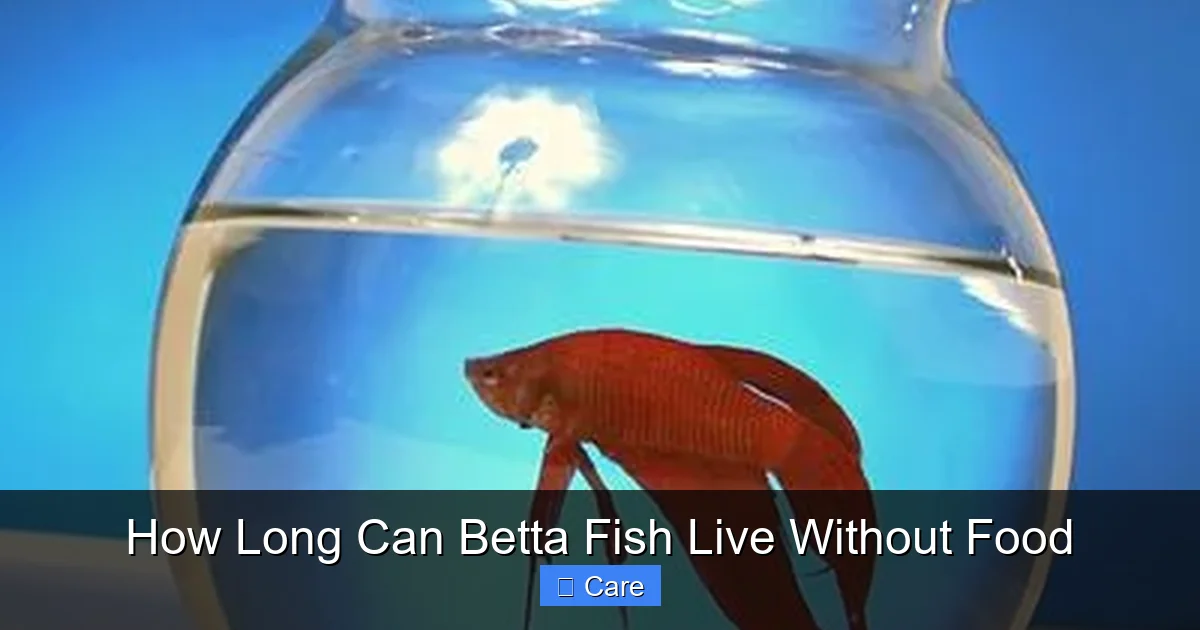
There is no single number that applies to every betta. A healthy adult betta in a pristine, heated 10-gallon tank with perfect water parameters has a different survival outlook than a young betta in a cold, dirty 1-gallon bowl. Let’s dissect the key variables that stretch or shrink that survival timeline.
Visual guide about How Long Can Betta Fish Live Without Food
Image source: infishtank.com
1. Age and Life Stage
A betta’s life stage is a primary determinant. A juvenile betta, still growing and developing, is like a human teenager—it has high metabolic demands and low energy reserves. Denying it food for even a few days can stunt its growth and permanently weaken its constitution. An adult betta in its prime (1-3 years old) has the largest energy stores and the most robust physiology. It has the best chance of enduring a short-term food shortage. A senior betta (4+ years) has a slowing metabolism, but its organs are also aging and less efficient. It has minimal reserves and is highly susceptible to rapid decline without consistent nutrition.
2. Overall Health and Internal Reserves
Think of a betta’s body like a car. A well-maintained car with a full tank can run on reserve for a while. A car with existing engine problems and an almost empty tank will break down immediately. A betta already fighting parasites, fin rot, or swim bladder disease is expending immense energy just to stay alive. It has no surplus energy to spare. Its immune system is already compromised. Without food, it has no resources to mount a defense, and the existing condition will spiral out of control rapidly, often within 48-72 hours. A perfectly healthy betta starts with a full “tank,” but that tank depletes quickly under stress.
3. Water Temperature and Quality
This is the most critical external factor, often more important than the lack of food itself. Bettas are tropical fish, requiring a consistent water temperature between 78°F and 80°F (25.5°C – 26.5°C). Their metabolism is directly tied to this temperature. In cold water (below 75°F), their metabolism slows to a crawl. This can *theoretically* extend the time they can survive without food because they are burning energy at a minimal rate. However, this is a state of severe stress. Their digestive system shuts down, their immune function plummets, and they become susceptible to opportunistic infections like Columnaris.
Water quality is non-negotiable. In a cycled, filtered tank with regular water changes, toxic ammonia and nitrite levels are near zero. In an uncycled bowl or a tank with decaying uneaten food, ammonia builds up rapidly. Ammonia burns the gills and skin, causing excruciating pain and death. A betta in poor water will die from poisoning long before it dies from starvation. The rule is: clean, warm water can buy a little time; dirty, cold water will end it quickly.
4. Tank Size and Environment
A betta in a spacious, enriched 10-gallon tank with plants, hiding spots, and gentle flow is under less stress. It can rest comfortably, and the larger water volume dilutes any waste products. This stable, low-stress environment conserves energy. A betta in a tiny, barren 0.5-gallon “betta cube” is constantly stressed. There’s no room to swim, water parameters swing wildly with a single breath, and there are no distractions. This chronic stress burns energy at a higher rate, accelerating the depletion of its reserves.
The Realistic Timeline Based on Conditions
Synthesizing these factors, we can create a very general, cautionary framework:
- Optimal Conditions (Adult, Healthy, 5+ gal, Heated, Filtered): May survive 10-14 days. This is the absolute ceiling, and significant health decline begins after day 5.
- Average Conditions (Adult, Healthy, 2.5-5 gal, Heated): Likely survival of 7-10 days. Noticeable lethargy and loss of color by day 4-5.
- Suboptimal Conditions (Young/Senior, Small Unheated Tank, Poor Water): Survival may drop to 3-5 days, with rapid deterioration and high mortality risk.
Important: These are survival estimates, not recommendations. Every day without food is a day of erosion for the fish’s health.
The Severe Risks of Prolonged Fasting: It’s Not Just “Hungry”
Let’s be explicitly clear about what happens inside a betta’s body when it doesn’t eat. The misconception is that they just get “hungry” and weak. The reality is a cascade of systemic failures.
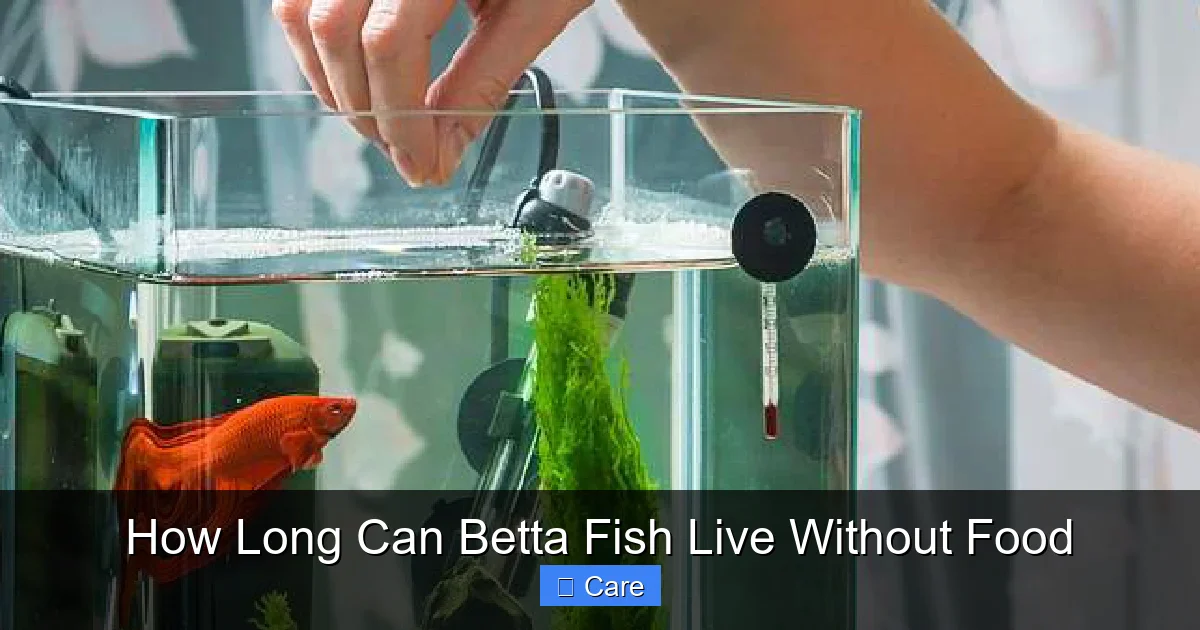
Visual guide about How Long Can Betta Fish Live Without Food
Image source: foodblogvalley.com
Organ atrophy and metabolic shutdown
The body does not store energy indefinitely. It first uses simple sugars, then glycogen from the liver, and finally begins breaking down muscle tissue and vital organ proteins for energy through a process called catabolism. This means the betta’s own muscles, including its heart muscle, and the tissues of its liver and kidneys are being consumed from the inside. This is not a sustainable process. It leads to muscle wasting, organ failure, and a permanent loss of function even if food is later reintroduced.
Immune System Collapse
Proteins and specific vitamins (like C and E) from food are essential for producing antibodies and immune cells. Without them, the betta’s immune system effectively goes on holiday. The slime coat, the first line of defense against pathogens, weakens and peels. The fish becomes a sitting duck for any bacteria or parasites present in the water, which it could normally fight off. A simple case of mild velvet or a bacterial infection can become fatal in a fasting fish.
Digestive System Disruption
The digestive tract is a complex system of muscles and enzymes. Without food, the muscles atrophy, and enzyme production stops. When you finally do offer food after a long fast, the betta’s system may not be able to process it properly. This can lead to severe constipation, bloating, and even internal damage as undigested food rots inside a sluggish gut. This is why a sudden, large meal after a fast is dangerous.
Behavioral and Physical Signs of Distress
You will see the effects. By day 4-5 of a fast, a betta will become lethargic, spending most of its time motionless at the bottom or top of the tank. Its vibrant colors will fade to a dull, stress-induced gray or brown. Its fins may clamp tightly against its body. It will show no interest in food when offered. These are not just signs of “being hungry”; they are signs of a body in crisis mode.
Proper Betta Feeding: The Antidote to This Discussion
The entire premise of “how long can they live without food” becomes irrelevant if we implement correct feeding practices. The goal is to feed so appropriately that the question never arises.
Visual guide about How Long Can Betta Fish Live Without Food
Image source: foodblogvalley.com
What, How Much, and How Often
What to Feed: A high-quality, varied diet is crucial. The staple should be a premium pellet or granule formulated specifically for bettas (they are carnivores). These are nutritionally complete. Supplement this 2-3 times a week with frozen or live foods like daphnia, brine shrimp, or bloodworms. These provide essential protein and act as a natural laxative. Avoid over-reliance on dried bloodworms or tubifex worms, which can cause digestive issues.
How Much: The cardinal rule: feed the size of its eye, twice a day. This is roughly 2-3 pellets per feeding for an adult betta. This tiny amount is all they need. Overfeeding is the single most common mistake betta owners make. Any uneaten food must be removed within 2-3 minutes with a net or siphon. That leftover food decays, polluting the water and causing the very health problems we’re trying to avoid.
How Often: For a healthy adult, feeding once or twice daily is perfect. Many experienced keepers even adopt a “feed one day, fast the next” schedule, which mimics a more natural foraging pattern and gives the digestive system a rest. This is not a prolonged fast; it’s a 24-hour break. For young bettas or those underweight, feed twice daily. Consistency is more important than frequency.
Establishing a Routine
Bettas are intelligent and learn routines. Feed at the same times each day. This reduces stress because they know when to expect food. Use feeding time as observation time. Is your betta active? Does it eat eagerly? Are its fins nice and open? This daily check-in is your most valuable health assessment tool. A betta that consistently refuses food for more than two days is a major red flag and requires investigation into water parameters and potential illness.
What to Do If You Must Be Away: Planning, Not Praying
Life happens. Weekends away, business trips, or emergencies occur. The solution is never to think, “Well, I read they can go two weeks, so I’ll just leave him.” That is a gamble with a living creature’s life. You must have a plan.
The Automatic Feeder
This is the gold standard for short trips (3-5 days). Invest in a reliable, battery-powered automatic fish feeder. Do not trust the cheap, plug-in kinds that can fail if the power goes out. Program it to dispense 1-2 pellets once or twice a day. Crucially, test it thoroughly for several days before you leave. Ensure it doesn’t dump its entire load at once, which would cause massive overfeeding and water crash. Place it securely so the betta can’t knock it over.
The Trusted Pet-Sitter
For longer absences, a human is best. Provide written, simple instructions: “Feed 2-3 pellets at 8 AM and 6 PM. Remove any uneaten food after 3 minutes. Do not overfeed.” Emphasize that overfeeding is worse than underfeeding. Have them check the filter and temperature. A quick daily video call to show the tank can give you peace of mind.
The “No-Fail” Method: The Large, Clean Tank
For a very short trip (2-3 days), a well-prepared tank can be safe. Perform a 50% water change the day before you leave. Ensure the heater is working properly and the tank is large enough (minimum 5 gallons). The large volume of clean water provides a buffer. However, this is a last-resort backup, not a primary strategy.
What NOT to Do
- Do not use “vacation feeders” or blocks of food. They dissolve slowly, polluting the water with ammonia as they break down, and the betta will gorge itself on the soft food, leading to severe constipation and death.
- Do not ask a neighbor to “feed whenever they remember.” Inconsistent, unmeasured feeding is a recipe for disaster.
- Do not fill the tank with extra food hoping it will last. It will kill the water quality and your fish.
Emergency Situations: When Your Betta Stops Eating
This is the other side of the coin. Your betta *is* alive, but it’s not eating. This is a symptom, not a disease. A healthy betta is a hungry betta. A loss of appetite is one of the first signs of almost every betta ailment.
First, Check the Obvious: Water and Environment
Before anything else, test your water. Use a liquid test kit. Ammonia or nitrite above 0 ppm, or nitrate above 20 ppm, is toxic and will destroy appetite. Perform an immediate 50% water change with properly conditioned water matching the tank temperature. Check your heater—is the water warm enough (78-80°F)? A cold betta is a lethargic, non-eating betta. Is the flow from the filter too strong? Bettas hate strong currents. Can you see any signs of disease—clamped fins, spots, fuzzy growth, torn fins?
Common Causes of Inappetence
If water is pristine, consider: Constipation: From overfeeding or a diet of only dried foods. Symptoms include a swollen, white belly and difficulty swimming. Treatment: fast for 3 days, then offer a small piece of cooked, skinned pea or a daphnia meal. Swim Bladder Disorder: Often related to constipation or genetics. The fish floats upside down or sinks. Treatment is similar to constipation. Illness: Velvet (gold dust), Ich (white spots), Columnaris (frayed fins, cotton-like growth), or internal parasites will all cause a refusal to eat. Treatment requires medication based on the specific diagnosis. Stress: From tank mates, recent changes, or being in a new environment. A new betta may not eat for a few days while it acclimates. Be patient and ensure the tank is perfect.
Rule of Thumb: If a betta refuses food for more than 4-5 days and you cannot identify a clear cause (like a recent move), you must begin a systematic health investigation. Start with the water, then observe for visible symptoms, and be prepared to treat for common ailments.
Conclusion: A Commitment to Consistent Care
So, how long can a betta fish live without food? The biological answer is a haunting 1-2 weeks. The ethical, caring answer is: They should never have to find out. The discussion about starvation limits is a useful academic exercise, but in practice, it’s a benchmark of failure in our care. It represents a breakdown in our responsibility to provide a stable, nurturing environment.
The beauty of a betta—its flowing fins, its curious intelligence, its explosive colors—is a direct reflection of the quality of its care. That care is built on the unglamorous, daily foundation of clean water, stable warmth, and measured, appropriate feeding. It is not built on the edge of survival. By understanding the severe internal damage caused by even short-term fasting, we reframe our perspective. Our goal is not to see how long our betta can endure, but to create conditions where the question is unthinkable. We commit to a feeding routine, we plan for our absences, and we become astute observers of our fish’s behavior and appetite. In doing so, we don’t just keep a betta alive; we honor the life we’ve taken responsibility for, and in return, we get to enjoy its magnificent presence for its full, potential lifespan of 3-5 years or more.
Frequently Asked Questions
Can I leave my betta unfed for a week if I have a large, filtered tank?
While a large, clean tank provides a better buffer than a small bowl, leaving any betta unfed for a full week is an unnecessary risk. Its immune system will weaken, and it will become stressed. You should always use an automatic feeder or a pet-sitter for absences longer than 2-3 days.
Is it good to fast my betta once a week to clear its system?
A planned 24-hour fast (one day without food) is common practice for many betta keepers and can be beneficial for digestion. However, intentionally fasting for multiple days to treat constipation is not recommended; it often worsens the issue. For constipation, a 3-day fast followed by a daphnia or pea treatment is a more effective protocol.
My betta is spitting out its food. Is it full, or is something wrong?
Bettas often spit out food as a natural behavior to break it into smaller pieces. However, if it consistently refuses all food, it’s a sign of a problem. First, check water parameters and temperature. Then, look for signs of illness or constipation. A loss of appetite for more than 2-3 days requires action.
What are the absolute first signs that my betta is starving?
The earliest signs are behavioral: increased lethargy, spending all day at the bottom or top of the tank, and a noticeable loss of vibrant color. Its body may look slightly thinner, particularly near the head. A healthy betta is active, curious, and its body is streamlined, not bony.
If I overfeed by accident, should I fast my betta to compensate?
No. The damage from overfeeding is done in the water (pollution) and potentially the gut (constipation). The immediate solution is to perform a 25-50% water change to remove excess food and waste. Do not withhold food for more than 24 hours as a “punishment.” Return to the normal, tiny feeding portion at the next scheduled time.
My betta is old and seems less hungry. Is this normal?
A slight decrease in appetite can be part of aging, but a significant or complete loss of appetite is not normal at any age. It is a serious symptom in a senior betta. You must be extra vigilant about water quality, ensure the food is soft and easily digestible (soaked pellets, frozen daphnia), and monitor for any other signs of disease or organ failure. Consult an aquatic veterinarian if possible.