How Can You Tell the Gender of a Betta Fish
Figuring out how can you tell the gender of a betta fish is easier than most people think. Male and female bettas have clear differences in body shape, fin length, and coloration. Learning to spot these signs helps you care for your fish better and avoid common housing mistakes that can stress your fish.
Key Takeaways
- Body shape differences: Males are slimmer while females have a rounder belly.
- Fin length tells a story: Males typically have longer, flowing fins than females.
- The egg spot is key: Females have a visible white spot near their underside.
- Behavior matters: Males build bubble nests and display more aggressive behaviors.
- Color intensity varies: Males often show brighter, more vivid colors than females.
- Stripes can help: Female bettas sometimes show vertical stripes during breeding readiness.
- Age plays a role: Gender differences become more obvious as bettas mature.
📑 Table of Contents
- Why Knowing Your Betta Fish Gender Matters
- Physical Differences Between Male and Female Betta Fish
- Behavioral Clues to Identify Gender
- The Egg Spot: Your Best Gender Indicator
- Common Mistakes When Identifying Betta Gender
- When to Consult an Expert
- How Age Affects Gender Identification
- Quick Tips for Identifying Betta Gender
- Final Thoughts on Identifying Betta Gender
Why Knowing Your Betta Fish Gender Matters
If you own a betta fish, you have probably wondered about its gender at some point. It is a very common question among fish keepers. Knowing how can you tell the gender of a betta fish is not just a fun fact. It actually affects how you care for your fish every single day.
The gender of your betta determines things like tank setup, tank mates, and even feeding habits. For example, male bettas are known to be aggressive. They need to be housed alone. Females can sometimes live together in groups. This is called a sorority setup. If you get the gender wrong, you could end up with a very stressed fish or even a dead one.
Understanding betta fish gender differences also helps if you want to breed them. Breeding bettas requires knowing the male from the female. It requires specific conditions and careful planning. Without this knowledge, breeding attempts often fail. Worse, they can harm your fish.
Whether you are a beginner or a seasoned hobbyist, learning to identify gender is a basic skill. It is one of the first things you should learn about betta care. The good news is that it is not as hard as it seems. With a little practice, you will spot the differences quickly.
Physical Differences Between Male and Female Betta Fish
The easiest way to determine the sex of a betta fish is by looking at its physical features. Both males and females are beautiful. But they have distinct differences that become clear once you know what to look for.
Body Shape and Size
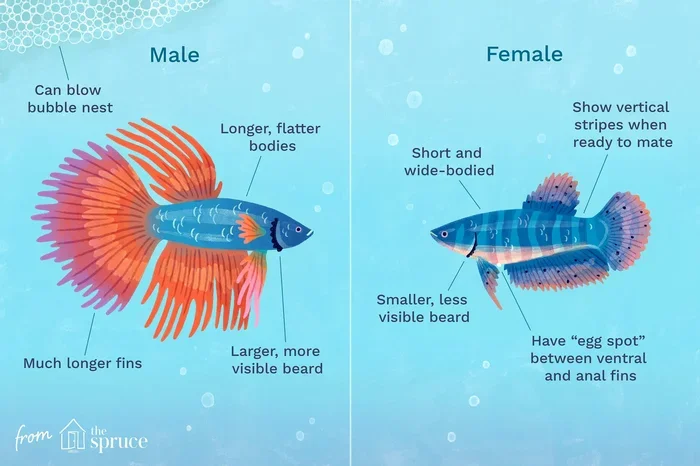
Male bettas tend to have a slim, streamlined body. They look sleek and elegant when they swim. Female bettas, on the other hand, have a rounder belly. Their body is wider and more compact. This is especially true when a female is carrying eggs. You might notice her belly looks larger and more pronounced.
In terms of overall size, both genders are similar. Adult bettas usually grow to about 2.5 to 3 inches long. But the shape is where the biggest difference lies. A male betta has a more angular look. A female betta has a softer, rounder appearance.
Fin Length and Flow
This is probably the most obvious difference. Male bettas have much longer fins than females. Their dorsal fin, tail fin, and anal fin all stretch out beautifully. Some males have fins that are twice the length of their body. This long finnage is a result of selective breeding over many years.
Female bettas have shorter, more compact fins. Their fins still flow nicely when they swim. But they do not have the dramatic, trailing look of a male. If you compare a male and female side by side, the fin difference is very easy to see.
Coloration Differences
Male bettas typically display brighter and more vivid colors. Their reds are deeper. Their blues are more intense. This is because males have been bred for show quality. Their coloration is meant to attract mates in the wild.
Females can still be very colorful. But their colors tend to be more muted. They may also appear slightly duller when they are not in breeding condition. Some owners notice that a female’s colors become more vibrant when she is ready to breed.
The Egg Spot Method
How do you tell the sex of a betta fish using the egg spot method? This is one of the most reliable techniques. Every female betta has a small white spot on her underside. This spot is called the ovipositor. It is where eggs come out during spawning.
Males do not have this visible spot. If you see a small white dot near the belly area, you are most likely looking at a female. It can be hard to spot on some fish. But with good lighting and a little patience, it is usually visible.
Sometimes, beginners confuse the egg spot with other markings. This is where care and observation come in. Look closely at the underside of your fish. The egg spot is usually small and round. It sits just in front of the anal fin.
Behavioral Clues to Identify Gender
Physical traits are not the only way to figure out your betta’s gender. Behavior tells a story too. Watching how your fish acts can give you strong clues about whether it is male or female.
Bubble Nest Building
Male bettas are famous for building bubble nests. These are clusters of tiny bubbles that float on the water surface. A male builds a bubble nest to prepare for mating. It is a sign that he is healthy and ready to breed.
Females do not build bubble nests. If you see a cluster of bubbles at the surface, you have a male. Some males build very elaborate nests. Others build small, simple ones. Both are normal. The behavior is driven by instinct and a comfortable environment.
Aggression and Flaring
Male bettas are known for being aggressive. They flare their gills and spread their fins to look bigger. They do this to scare off rivals or perceived threats. This behavior is much more common in males than in females.
Females can flare too. But they do it less often and less aggressively. A female might flare at another female in a sorority tank. But she usually does not go to the extremes that a male does. If your betta flares at its own reflection, there is a good chance it is a male.
Breeding Behavior and Vertical Stripes
When a female betta is ready to breed, she develops vertical stripes on her body. These are sometimes called breeding stripes. They run vertically along her sides and belly. This is a clear visual cue that the female is receptive to mating.
Males do not show vertical stripes. During breeding, the male wraps his body around the female to release and fertilize eggs. This process is fascinating to watch. But it only works if you can correctly identify both the male and the female.
If you want to learn more about how can you tell if your betta fish is pregnant, the breeding stripes and egg spot are your best indicators. A pregnant female will also have a white tube-like structure near her vent area.
The Egg Spot: Your Best Gender Indicator
The egg spot deserves its own section because it is so important. It is the single most reliable way to identify a female betta fish. Let us take a closer look at what it is and how to find it.
What Is an Egg Spot?
The egg spot is a tiny white or light-colored dot located on the underside of a female betta. It sits just below the anus and in front of the anal fin. This spot is actually the ovipositor tube. It is the organ through which the female releases eggs during spawning.
Not all females have a clearly visible egg spot. Some have one that is very hard to see. This is especially true in fish with lighter coloring. But in most cases, with a little patience and good lighting, you can spot it.
How to Spot It Correctly
To see the egg spot, try these tips:
- Use a bright light to illuminate the underside of your fish.
- Watch your betta from slightly above or at eye level.
- Be patient. The fish may need to be still for you to see it.
- Look for a small white dot near the belly area, just in front of the anal fin.
If you are still unsure, compare your fish to pictures online. Many betta forums and websites have clear images showing the egg spot location. You can also check the how to tell the gender of a betta fish guide on our site for visual references.
Common Mistakes When Identifying Betta Gender
Even experienced fish keepers sometimes make mistakes. Here are the most common errors people make when trying to figure out the gender of their betta.
Relying Only on Color
Color is not a reliable gender indicator on its own. Both males and females can be bright and colorful. Some females are just as vivid as males. Always look at multiple signs together. Do not make a judgment based on color alone.
Confusing Young Fish with Adults
Young betta fish do not show clear gender differences yet. The differences become more obvious as the fish matures. A juvenile betta under three months old may look the same regardless of gender. Wait until your fish is fully grown before trying to determine its sex.
Ignoring Behavioral Signs
Some people only look at physical traits. But behavior is just as important. A male betta that builds a bubble nest is clearly a male. A female with breeding stripes is clearly a female. Ignoring these clues can lead to wrong conclusions.
Assuming All Females Are Dull
This is a big misconception. Female bettas can be very colorful. Some females even have long fins. The trend of keeping female bettas in sorority tanks has led to breeding for brighter females. So do not assume a colorful fish must be male.
When to Consult an Expert
If you have tried everything and still cannot tell the gender of your betta, that is okay. There is no shame in asking for help. In fact, it shows you care about doing things right for your fish.
Visiting a Fish Vet
A fish veterinarian can look at your betta and give you a definitive answer. They have the training and tools to identify gender accurately. This is especially helpful if your fish is young or has unusual coloring that makes identification difficult.
Using Online Communities
Betta fish forums and online communities are full of experienced hobbyists. You can post a photo of your fish and ask for help identifying the gender. Most communities are very welcoming and happy to assist. Just make sure to describe what you have already observed.
You can also check out our article on how do you tell the sex of a betta fish for more detailed visual guides and expert tips.
How Age Affects Gender Identification
Age plays a big role in how easy it is to tell a betta’s gender. Young bettas under two months old look very similar. The differences start to show up around three to four months of age. By six months, most bettas display clear gender characteristics.
If you recently brought home a young betta, give it some time. Watch for changes in fin length, body shape, and behavior. Over the weeks, the gender will become more apparent. You can also refer to our guide on how to tell the age of a betta fish to better understand your fish’s development stage.
Quick Tips for Identifying Betta Gender
Here are some fast tips to keep in mind when you are trying to figure out your betta’s gender:
- Look at the fins first. Long, flowing fins usually mean a male.
- Check the belly shape. A rounder belly often indicates a female.
- Search for the egg spot. A small white dot on the underside means female.
- Watch for bubble nests. Only males build them.
- Look for breeding stripes. Vertical stripes on a female signal breeding readiness.
- Compare side by side. If possible, look at both a male and female together for reference.
- Be patient. Wait until your fish is at least three months old for clear signs.
Remember that every betta fish is unique. Some individuals may not show all the typical signs. This is perfectly normal. Use a combination of physical and behavioral clues for the most accurate identification.
Final Thoughts on Identifying Betta Gender
Learning how can you tell the gender of a betta fish is a rewarding skill for any fish owner. It helps you provide better care. It prevents housing mistakes. And it opens the door to understanding your fish’s natural behaviors on a deeper level.
Start with the physical signs. Look at body shape, fin length, and coloration. Then move on to behavioral clues. Watch for bubble nests, flaring, and breeding stripes. The egg spot method is your most reliable tool for confirming a female.
Do not get discouraged if it takes a little practice. Even the best fish keepers had to learn this at some point. The more time you spend observing your betta, the easier it becomes. You will start to notice patterns and differences that were invisible at first.
If you ever feel stuck, reach out to the betta community. There are many resources available. You can also explore our article on how can you tell if your betta fish is pregnant for additional insights into female betta behavior and physical signs.
Understanding your betta’s gender is one of the foundations of good fish care. It shows that you are a thoughtful and informed owner. Your fish will thank you for it with vibrant colors, healthy behavior, and a long, happy life.
Frequently Asked Questions
Can you tell a betta fish’s gender by its color?
Color alone is not a reliable way to tell gender. Both males and females can be bright and colorful. Always use a combination of physical and behavioral signs for accurate identification.
At what age can you tell the gender of a betta fish?
Most bettas show clear gender differences by three to four months of age. Before that, the fish are too young for reliable identification. Wait until your fish is fully developed.
Do female bettas build bubble nests?
No, bubble nest building is a male behavior. If you see bubbles clustered at the water surface, you are most likely looking at a male betta fish.
Can you tell if a betta fish is male or female by its fins?
Yes, fin length is one of the easiest indicators. Males have significantly longer and more flowing fins than females. Female fins are shorter and more compact.
What does a female betta fish look like when pregnant?
A pregnant female betta will have a rounder belly, a visible egg spot, and sometimes vertical breeding stripes. Her ovipositor tube may also be more prominent near the underside.
Is it hard to tell the gender of a young betta fish?
Yes, it can be quite difficult with young bettas under two months old. Gender differences become much clearer as the fish matures. Give your betta time to develop before trying to identify its gender.
=== CONCLUSION ===
Knowing how can you tell the gender of a betta fish is an essential part of being a responsible fish owner. The differences between male and female bettas are clear once you know what to look for. Body shape, fin length, coloration, and the egg spot all provide clues. Behavioral signs like bubble nest building and flaring add further confirmation.
Take your time when identifying your betta’s gender. Use multiple signs together for the most accurate result. And remember that practice makes perfect. The more you observe your fish, the more confident you will become.
If you ever need more guidance, check out our how to tell the gender of a betta fish guide for additional resources and visual references. Your fish will benefit from the extra care and attention that comes with understanding its gender.