Do Betta Fish Need Water Heater
Yes, most betta fish need a water heater to maintain a stable tropical temperature. These vibrant creatures thrive in warm water between 76-82°F, and a reliable heater helps prevent temperature shock and health problems.
So you just got a betta fish, or maybe you have had one for a while. Either way, you have probably wondered about one thing: do betta fish need a water heater. The short answer is yes, most of the time. But the full answer involves understanding what these beautiful fish need to live a long and happy life. Let us break it all down for you.
Betta fish are tropical fish. That means they come from warm, stagnant waters in Southeast Asia. They did not evolve to survive in cold or fluctuating temperatures. If you keep your betta in a room that gets chilly at night or during winter, your fish could get sick. A good betta fish water heater keeps the water at a steady, comfortable temperature. It is one of the most important pieces of equipment for any betta owner.
In this guide, we will cover everything you need to know about heating your betta fish tank. We will talk about ideal temperatures, the best heater types, common mistakes, and how to spot when your fish is feeling the chill. By the end, you will know exactly how to keep your betta comfortable all year long.
Key Takeaways
- Betta fish need warm water: Betta fish are tropical and need a consistent water temperature between 76-82°F to stay healthy.
- Cold water weakens your betta: Low temperatures can cause lethargy, disease, and a shorter lifespan for your fish.
- Several heater types exist: Submersible heaters, immersible heaters, and heating pads all work for different tank setups.
- Watch for cold-water signs: Clamped fins, sluggish movement, and loss of color signal your betta is too cold.
- Baby bettas need heat too: Young betta fish are even more sensitive to temperature changes than adults.
- Room temperature is not enough: Ambient room temperature alone rarely keeps betta water warm enough year-round.
- A thermostat is essential: Choose a heater with a built-in thermostat to avoid dangerous temperature swings.
📑 Table of Contents
- Why Do Betta Fish Need a Water Heater
- What Temperature Do Betta Fish Prefer
- Signs Your Betta Fish Is Too Cold
- Types of Water Heaters for Betta Fish Tanks
- How to Choose the Right Water Heater
- Common Mistakes When Heating Betta Fish Water
- Quick Tips for Keeping Your Betta Fish Warm
- Do Betta Fish Need Light at Night Too
- Conclusion
Why Do Betta Fish Need a Water Heater
The short answer is that betta fish need warmth to survive. But there is more to it than just that. Let us dig into the reasons why a heater is so important for your betta fish tank.
Betta Fish Are Tropical Creatures
Betta fish originate from the warm, tropical waters of Thailand, Malaysia, and other parts of Southeast Asia. These waters stay warm all year long. In the wild, bettas live in temperatures that rarely drop below 75°F. That is why they are classified as tropical fish.
When you keep a betta in a home aquarium, you are recreating that tropical environment. And just like in the wild, the water needs to stay warm. Without a heater, the water temperature follows your room temperature. And most homes are not kept at tropical levels all year. That is where the problem starts.
If you want to learn more about whether your specific setup needs a heater, check out our detailed guide on do betta fish need a heater. It covers all the different scenarios and tank types.
Temperature Shock Is Real
Temperature shock happens when the water gets too cold too fast, or too hot too fast. Bettas are not great at handling sudden changes. Even a drop of a few degrees can stress them out. Signs of temperature shock include swimming erratically, hiding, or floating near the surface.
A heater prevents temperature shock by keeping the water stable. Good heaters have thermostats that kick on and off to maintain a set temperature. This stability is key to your fish’s health.
What Temperature Do Betta Fish Prefer
Now that you know why bettas need heat, let us talk about the actual numbers. What temperature is best for your betta fish?
The Ideal Temperature Range
The perfect betta fish temperature range is between 76°F and 82°F. The sweet spot is around 78°F to 80°F. At this range, your betta will be active, colorful, and healthy. Their appetite stays strong, and their immune system works well.
If you want a deep dive into temperature preferences, our article on what water temperature do betta fish like breaks it all down with expert insight.
Here is a quick breakdown of what different temperatures mean for your betta:
- Below 72°F: Dangerously cold. Your betta will become sluggish and may develop diseases.
- 72°F to 75°F: Too cold for long-term health. Stress and discomfort will set in.
- 76°F to 80°F: The ideal range. Your betta will thrive here.
- 80°F to 84°F: Acceptable but on the warmer side. Fine for short periods.
- Above 85°F: Too hot. This can reduce oxygen levels in the water and harm your fish.
Can Betta Fish Survive Without a Heater?
Technically, bettas can survive without a heater if your home stays warm enough. But this is risky. Most homes drop below 72°F during the night or in winter. Even if daytime temperatures are fine, nighttime dips can hurt your fish over time.
Some owners keep their bettas in rooms with steady temperatures around 76°F. That can work. But you still need to monitor the water closely. A thermometer is a must in any betta tank, heated or not. Remember, just because the room feels warm to you does not mean the water is warm enough for your fish.
Signs Your Betta Fish Is Too Cold
Not sure if your betta is dealing with cold water? Fish do not tell you when they are uncomfortable. But they do show signs. Here is what to watch for.
Behavioral Signs
Cold bettas act differently. Here are some behavioral clues that your fish is too cold:
- Lethargy: Your betta stops swimming and just floats or rests at the bottom.
- Clamped fins: The fins stay close to the body instead of spreading out.
- Loss of appetite: Your fish ignores food or eats very little.
- Hiding more than usual: Your betta seeks shelter and avoids open areas.
- Rapid gill movement: This means your fish is struggling to get enough oxygen.
Cold water slows down your betta’s metabolism. That affects everything from movement to digestion. If you notice these signs, check the water temperature right away.
Physical Signs
Over time, cold water causes physical problems too. These include:
- Fading colors: Your betta loses its vibrant hues.
- White spots: These can signal ich, a common disease triggered by cold water.
- Fin rot: Cold, dirty water promotes bacterial and fungal infections.
- Bloating: Poor digestion from cold water can cause discomfort.
If you see any of these signs, act fast. Raise the temperature gradually. A sudden jump can cause more harm than good. Move the tank to a warmer room, add a heater, or adjust your existing one.
Types of Water Heaters for Betta Fish Tanks
Not all heaters are the same. Different tank sizes and setups need different types. Let us go over the most popular options for heating your betta fish habitat.
Submersible Heaters
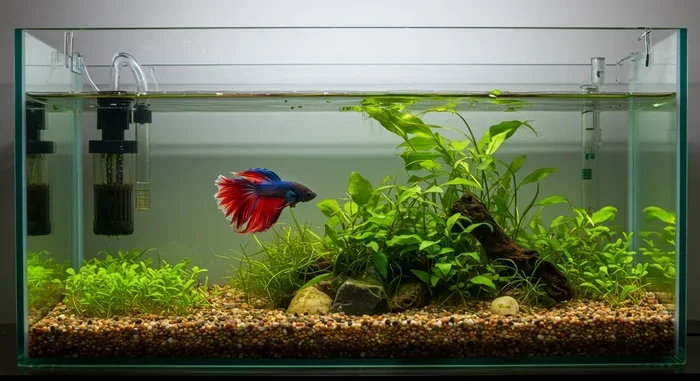
Submersible heaters go fully underwater. They are the most popular choice for betta tanks. These heaters sit at the bottom or stick to the side of the tank. They are small, efficient, and easy to use.
Most submersible heaters come with suction cups. This keeps them in place. They also have adjustable thermostats so you can set the exact temperature. For small betta tanks (2.5 to 5 gallons), a 25-watt submersible heater works well. For larger tanks, go with 50 watts or more.
To explore different heater options for your setup, read our guide on do betta fish need a heater in the tank. It covers submersible and other types in detail.
Immersible Heaters
Immersible heaters hang on the outside of the tank. They do not go fully underwater. Instead, they warm the water as it flows through the unit. These are less common for betta tanks but can work in certain situations.
The upside is that they are easy to install. The downside is that they can be less accurate. They may not heat small tanks evenly. For a betta fish, a submersible heater is usually the better option.
Heating Pads
Heating pads stick to the bottom of the tank or sit underneath it. They provide gentle, even heat. Some betta owners like them because they are discreet and low-profile.
Heating pads work well for smaller tanks. But they may not be powerful enough for larger setups. Also, they do not always come with thermostats. That means you need a separate thermometer to monitor the temperature. If you are raising young bettas, you might want to check our article on do baby betta fish need heaters for more specific guidance.
How to Choose the Right Water Heater
Picking the right heater is not just about picking the first one you see. There are a few things to consider before buying.
Tank Size Matters
The size of your tank determines how powerful your heater needs to be. Here is a simple guide:
- 1 to 3 gallons: A 15 to 25 watt heater is usually enough.
- 5 gallons: Go with a 25 to 50 watt heater.
- 10 gallons or more: You may need a 50 to 100 watt heater.
These are general rules. Room temperature and insulation also play a role. If your home is cold, go a little higher on wattage.
Thermostat and Safety Features
Always choose a heater with a built-in thermostat. This is the most important feature. A thermostat keeps the temperature steady. Without it, the heater could overheat or underperform.
Look for heaters with the following safety features:
- Auto shut-off: The heater turns off if the water level drops too low.
- Cool-touch exterior: The outside stays cool so your fish does not get burned.
- Adjustable settings: You can fine-tune the temperature in small increments.
- Durable construction: The heater should withstand regular use without cracking.
For more on choosing the right equipment for your betta’s water conditions, check out our article on what kind of water do betta fish need. It covers heaters, filters, and water treatment together.
Common Mistakes When Heating Betta Fish Water
Even experienced owners make mistakes with heaters. Here are the most common ones to avoid.
Overheating Your Tank
Too much heat is just as bad as too little. Water above 85°F can stress your betta. It also reduces the amount of dissolved oxygen in the water. Your fish may gasp at the surface because it cannot breathe properly.
To avoid overheating, always use a heater with a thermostat. Check the temperature daily with a reliable thermometer. Do not place the tank near a sunny window or a heat source like a radiator.
Ignoring Room Temperature
Some owners think the heater alone will handle everything. But room temperature matters. If your tank is in a drafty room or near an air vent, the heater will struggle to keep up. Move the tank to a stable location away from windows, doors, and vents.
Not Acclimating Your Betta to Heat
If you just added a heater, do not crank it up right away. Raise the temperature gradually over a few days. A sudden change can stress your betta. Add a cup of warm water to the tank slowly. Let your fish adjust at its own pace.
Forgetting to Monitor the Temperature
A heater does not mean set it and forget it. Things can go wrong. Power outages, equipment failure, and seasonal changes all affect temperature. Get a good thermometer and check it at least twice a day. Make it part of your daily routine.
Quick Tips for Keeping Your Betta Fish Warm
- Use a heater with a thermostat. This keeps the temperature stable without constant babysitting.
- Place the tank away from drafts. Windows, doors, and air conditioning vents can cool the water fast.
- Get a thermometer. A separate thermometer gives you a backup reading and peace of mind.
- Keep the room warm. A warm room helps your heater work less hard and keeps things steady.
- Watch for signs of cold water. Clamped fins and lethargy are early warnings. Act fast if you see them.
- Do partial water changes with warm water. Cold water changes can drop the temperature suddenly. Always match the new water to the tank temperature.
- Consider a lid or cover. A lid reduces heat loss from evaporation and keeps the tank stable overnight.
Do Betta Fish Need Light at Night Too
While we are talking about betta care, it is worth noting that betta fish do not need light at night. In fact, they need darkness to sleep. Keep the tank light on for 8 to 12 hours per day. Then let your betta rest in the dark. This schedule also supports a healthy day-night cycle that helps your fish feel secure and comfortable in its betta fish comfort zone.
Conclusion
So do betta fish need a water heater? The answer is clear: yes, almost always. Betta fish are tropical creatures that need warm, stable water to thrive. Keeping the temperature between 76°F and 82°F is the best way to protect your fish from disease, stress, and early death.
A good heater is a small investment that makes a huge difference. Choose the right type for your tank, set it to the correct temperature, and monitor it daily. Watch for signs of cold water and act quickly if you notice any problems. With the right setup, your betta fish will live a long, healthy, and colorful life.
Take the time to get your heating setup right. Your betta will thank you with vibrant colors, active swimming, and a happy personality. A warm tank means a happy betta. And a happy betta makes for a rewarding experience you will both enjoy.
Frequently Asked Questions
Do betta fish need a water heater in every tank?
Most betta fish tanks benefit from a heater, especially if your home drops below 72°F at any point. Even if your room feels warm, nighttime temperatures can dip. A heater keeps things stable and safe for your fish.
What happens if a betta fish gets too cold?
Cold water slows a betta’s metabolism. The fish becomes sluggish, stops eating, and may develop diseases like ich or fin rot. Prolonged cold exposure can be fatal if not corrected quickly.
Can I use a heating pad instead of a heater for my betta tank?
Heating pads can work for small tanks. They provide gentle heat but may not be as accurate as submersible heaters. If you use a pad, make sure to monitor the temperature closely with a thermometer.
How do I know if my betta fish water is too hot?
If the water goes above 85°F, your betta may gasp at the surface and become very inactive. High temperatures reduce oxygen levels in the water. Use a thermometer and adjust your heater settings immediately if the water gets too warm.
Do baby betta fish need heaters too?
Yes, baby betta fish are even more sensitive to temperature changes than adults. They need the same warm range of 76°F to 82°F. A heater is just as important for young bettas as it is for adults.
Is room temperature enough to keep a betta fish warm?
Room temperature alone is usually not enough. Most homes are kept at 68°F to 72°F, which is too cold for bettas. Even on warm days, temperatures can drop unexpectedly at night. A reliable heater is the safest way to keep your betta comfortable.