Do Betta Fish Need a Bubbler
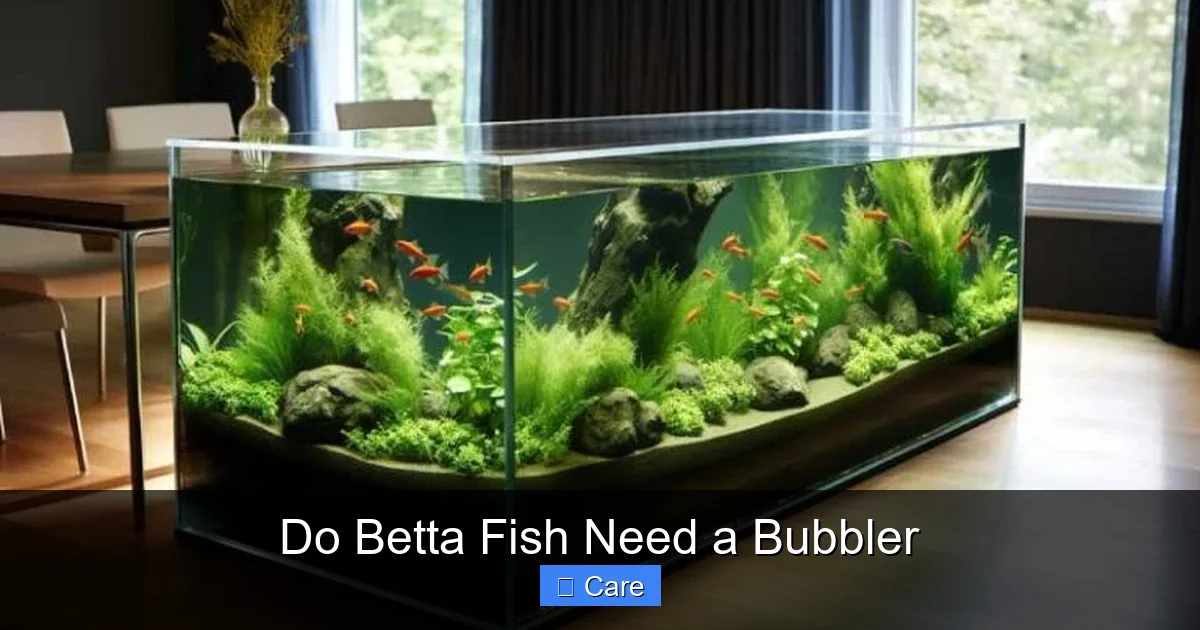
No, betta fish do not need a bubbler (air stone) in their tank for survival. Their specialized labyrinth organ allows them to breathe atmospheric air directly from the water’s surface. The critical requirement is unimpeded access to that surface air. While a bubbler can agitate the surface and increase gas exchange, it often creates a water flow too strong for a betta’s long fins, causing stress. Focus instead on a properly sized, filtered tank with calm surface access for your betta to thrive.
Key Takeaways
- Bettas have a labyrinth organ: This unique lung-like organ allows them to gulp air from the surface, making them less dependent on dissolved oxygen in the water column.
- Surface access is non-negotiable: The #1 rule is that your betta must be able to easily reach the water’s surface to breathe. No lids, no heavy surface plants blocking the area.
- Bubblers often cause harmful stress: The water movement from an air stone is typically too strong for a betta, tiring them out and potentially damaging their delicate fins.
- Proper filtration is key, not aeration: A gentle sponge filter or a hang-on-back filter with a baffle provides essential biological filtration and minimal surface agitation without stressing the fish.
- Tank size matters more than bubbles: A 5-gallon (or larger) heated and filtered tank is infinitely more important for water quality and stable oxygen levels than adding a bubbler to a tiny, unheated bowl.
- Live plants are a natural solution: Floating plants like water lettuce or frogbit oxygenate the water, provide cover, and calm the surface while giving your betta a resting spot near the air.
- Watch for signs of oxygen distress: Gasping at the surface constantly (not just occasionally), lethargy, and clamped fins indicate a serious problem with water quality or oxygen, not a lack of a bubbler.
📑 Table of Contents
- The Short Answer: No, Betta Fish Don’t Need a Bubbler
- The Amazing Betta Anatomy: The Labyrinth Organ Explained
- Why a Bubbler is Usually the Wrong Choice for a Betta
- The Real Essentials: What Your Betta Tank Actually Needs
- When *Might* You Consider a Bubbler for a Betta Tank?
- Natural Alternatives to a Bubbler for a Healthy Tank
- Common Mistakes & Myths About Betta Oxygenation
- Conclusion: Focus on the Fundamentals
The Short Answer: No, Betta Fish Don’t Need a Bubbler
If you’re a new betta fish owner or thinking about becoming one, you’ve likely seen those mesmerizing little tanks with air stones bubbling away. It’s a classic fish tank image. So, it’s a totally logical question: do betta fish need a bubbler? The straightforward, science-backed answer is no. A betta fish does not require an air pump and air stone to survive in its aquarium. In fact, for the vast majority of bettas, a traditional bubbler is more of a nuisance than a help.
This might feel counterintuitive. We’re so conditioned to think that all fish need bubbles. But bettas are extraordinary. They are members of the gourami family, possessing a fascinating evolutionary adaptation called the labyrinth organ. This organ is essentially a primitive lung that allows them to breathe atmospheric air. They are born air-breathers. Understanding this single fact is the key to unlocking everything about proper betta care and debunking the bubbler myth.
The Amazing Betta Anatomy: The Labyrinth Organ Explained
What Exactly is a Labyrinth Organ?
Deep within a betta’s head, behind the gills, lies a folded, vascularized structure that looks a bit like a maze—hence the name “labyrinth.” This organ is filled with thin membranes rich with blood vessels. When a betta rises to the surface and takes a gulp of air, that air travels into this organ. Oxygen diffuses directly from the air bubble into the bloodstream through these membranes. It’s a highly efficient backup respiratory system.
Visual guide about Do Betta Fish Need a Bubbler
Image source: aquariumsphere.com
Why Did This Adaptation Evolve?
Bettas (Betta splendens) hail from the shallow, warm, and often stagnant rice paddies, ditches, and slow-moving streams of Southeast Asia. These waters can become severely depleted of dissolved oxygen, especially in the hot sun. While other fish would suffocate, the betta simply swims to the surface, takes a breath, and goes about its day. This adaptation allowed them to survive in harsh conditions where few other fish could. It’s a survival trait, not a preference for poor water quality.
What This Means For Your Aquarium
In your clean, filtered, temperature-controlled home aquarium, the labyrinth organ is still fully functional. Your betta will routinely swim to the top, take a small sip of air, and sink back down. This behavior is perfectly normal and should not be confused with gasping for oxygen due to poor water conditions. The presence of this organ means bettas are far more tolerant of lower dissolved oxygen levels *in the water itself* than many other fish species. Their primary respiratory need is met by that surface air.
Why a Bubbler is Usually the Wrong Choice for a Betta
The Problem with Water Flow
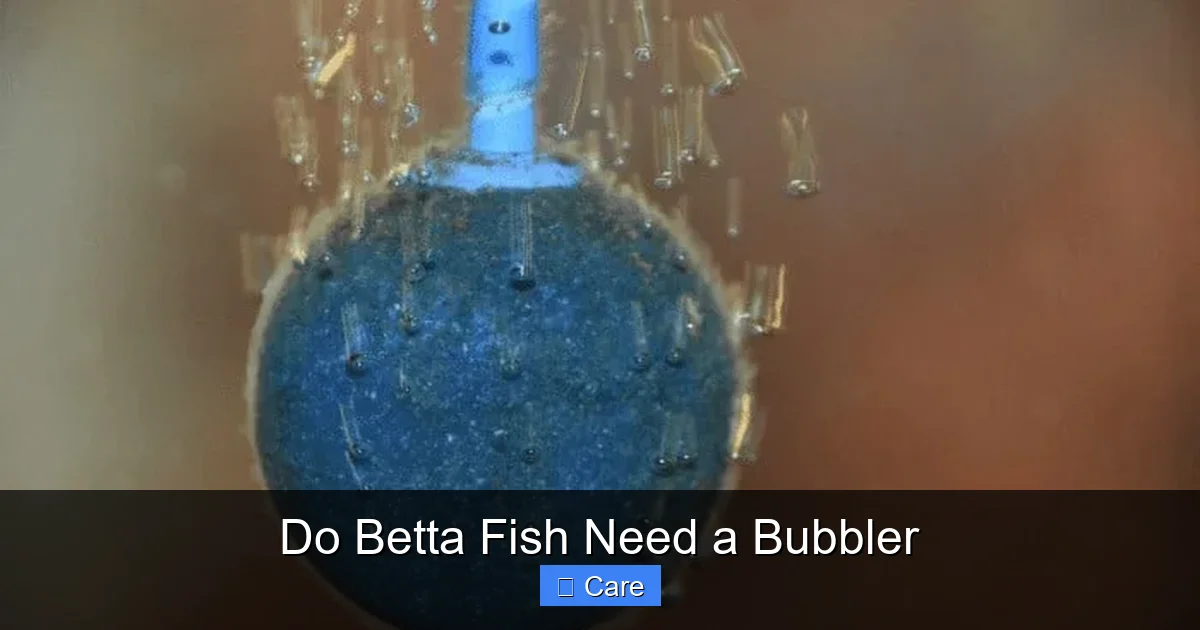
An air pump connected to an air stone creates a constant upward stream of bubbles. This process agitates the water’s surface, which does increase gas exchange (putting more oxygen *into* the water). However, it also creates a current. Betta fish have long, flowing fins—like silk robes compared to a athlete’s swimsuit. They are not built for powerful currents. In the wild, they navigate still, vegetated waters. A bubbler’s flow can be a significant source of chronic stress for a betta.
Visual guide about Do Betta Fish Need a Bubbler
Image source: fishkeepingguide.net
Signs of Stress from Too Much Flow
You might observe your betta struggling to swim against the current, being pushed into the side of the tank, or constantly hiding. They may clamp their fins tightly against their bodies (a classic stress sign), lose their vibrant colors, and become lethargic. Over time, this stress weakens their immune system, making them susceptible to diseases like fin rot or ich. For a betta, a calm, serene environment is paramount. A bubbler directly contradicts that need for tranquility.
The “Surface Access” Rule vs. Surface Agitation
Here’s the critical nuance: while strong agitation from a bubbler is bad, *some* gentle surface movement is beneficial. It prevents a stagnant, oily film from forming and aids gas exchange. The key is that this movement must not physically impede your betta from reaching the surface. A powerful bubbler creates a “no-swim zone” at the top. A better solution is a filter output that is directed gently down the tank wall or baffled to create minimal disturbance at the exact spot your betta goes to breathe.
The Real Essentials: What Your Betta Tank Actually Needs
Tank Size: The Foundation of Health
This is the single most important factor, far outweighing any debate about bubblers. A common myth is that bettas can live in small jars or vases. This is cruel and dangerous. The minimum recommended tank size for a single betta is 5 gallons. A larger volume of water (10+ gallons is even better) provides stable water parameters, dilutes toxins like ammonia, and gives your fish room to explore. In a large, clean tank, oxygen levels are naturally more stable. A bubbler in a 1-gallon bowl won’t fix the underlying problems of toxic ammonia spikes and temperature fluctuations.

Visual guide about Do Betta Fish Need a Bubbler
Image source: animalslog.com
Heater and Thermometer: Warmth is Critical
Bettas are tropical fish. They require a stable water temperature between 78°F and 80°F (25.5°C – 26.5°C). A small, adjustable aquarium heater is non-negotiable for a healthy betta. Cold water slows their metabolism, suppresses their immune system, and can lead to lethargy and disease. A reliable thermometer is essential to monitor the temperature.
Gentle Filtration: The Engine of a Clean Tank
Filtration does three vital jobs: mechanical (removes debris), chemical (removes toxins via carbon), and biological (cultivates beneficial bacteria that consume toxic fish waste). A hang-on-back (HOB) filter or a sponge filter is ideal. If using a HOB filter, you must baffle the output. This can be done by adding a sponge over the nozzle, directing the flow into a tank wall, or using a filter with an adjustable flow setting. The goal is a gentle ripple, not a torrent. Sponge filters are naturally gentle and provide excellent biological filtration, but they do create some bubbles. These bubbles are usually fine for bettas as the flow is diffuse and not concentrated.
Secure Lid with Air Space: Safety First
Betta fish are notorious jumpers. A secure lid is essential to prevent a tragic escape. However, the lid must leave a gap of air between the water surface and the lid itself. This gap is crucial for your betta to gulp air. Do not fill the tank to the very top; leave at least 1-2 inches of space. Also, ensure no part of the lid or equipment blocks this air space.
When *Might* You Consider a Bubbler for a Betta Tank?
While not a standard need, there are a few specific, advanced scenarios where very careful bubble introduction could be considered, but they are the exception, not the rule.
In a Heavily Stocked, Planted Community Tank
If you have a large, heavily planted community tank (20+ gallons) with multiple fish species, the bioload (amount of fish waste) can be high. In such a case, a very gentle air stone placed in a corner *away* from the betta’s primary resting and breathing zone might be used to supplement oxygen. However, a strong filter on a large tank should usually provide sufficient surface agitation.
For Temporary Use During Emergencies
If your filter fails, a battery-operated air pump can be a lifesaver, providing emergency aeration while you fix the main filtration. This is a short-term rescue tool, not a permanent setup solution.
To Power a Sponge Filter
This is the most common and appropriate use of an air pump with a betta. A sponge filter uses air bubbles to draw water through the sponge, providing excellent mechanical and biological filtration. The bubbles are released within the sponge column, creating less direct surface agitation than an open air stone. This is a great, betta-friendly filtration method.
The Golden Rule: If you add any form of aeration, you must closely observe your betta for at least 24 hours. If it is struggling, hiding, or clamping its fins, you must remove or modify the bubbler immediately.
Natural Alternatives to a Bubbler for a Healthy Tank
Floating Plants: The Ultimate Multi-Tool
Floating plants like Salvinia, Duckweed, Water Lettuce, or Frogbit are the best “equipment” you can add for a betta tank. Their roots dangle in the water, absorbing excess nutrients (which fights algae), and they create a beautiful, natural canopy. This canopy calms the water surface, reducing evaporation and providing security. Critically, they oxygenate the water through photosynthesis during the day. They also give your betta a perfect, natural resting spot just below the surface, from which it can easily take a gulp of air. This mimics its natural habitat perfectly.
Live Aquatic Plants (Submerged & Rooted)
Any live plant will contribute to oxygen production during the day. A well-planted tank is a more stable, healthier ecosystem. Plants use fish waste as fertilizer, competing with algae. They provide hiding spots and reduce stress. A tank with robust plant growth will naturally have better water quality and gas balance than a bare, artificial one.
Proper Water Movement from a Filter
As emphasized, a properly set-up filter is your primary tool. Ensure its output is gentle and directed in a way that creates a mild circulation throughout the tank without blasting your betta. A filter that creates a gentle ripple across the entire surface is ideal for gas exchange without creating a localized torrent.
Regular Water Changes
This is the unsung hero of aquarium care. Performing weekly water changes (25-50% of the tank volume) with dechlorinated water at the correct temperature removes dissolved organic wastes, replenishes trace minerals, and maintains pristine water quality. Clean water holds more oxygen and is less stressful for all fish.
Common Mistakes & Myths About Betta Oxygenation
Myth: “My Betta is Gasping, So It Needs a Bubbler.”
This is a dangerous misconception. Constant, frantic gasping at the surface is a red flag for poor water quality, usually extremely high ammonia or nitrite levels from an uncycled tank or inadequate filtration. It can also indicate a severely under-heated tank. The solution is to immediately test water parameters (ammonia, nitrite, nitrate, pH) with a liquid test kit, perform a large water change, and address the root cause of the pollution. Adding a bubbler does nothing to remove the toxic ammonia burning your betta’s gills.
Mistake: Using a Bubbler in a Small, Unfiltered Tank
This is a recipe for disaster. A 1-gallon vase with a bubbler is still a toxic, temperature-unstable prison. The bubbler masks the problem temporarily but does nothing to cycle the tank or maintain clean water. The betta will still suffer and die prematurely from ammonia poisoning or fungal infections. Prioritize a filtered, heated 5-gallon tank over any aeration device for a tiny container.
Mistake: Assuming All Fish Need the Same Setup
Many tropical community fish (like tetras or barbs) are obligate water-breathers with no labyrinth organ. They are far more sensitive to low dissolved oxygen and often benefit from surface agitation. Applying the same “bubbler for everyone” rule to a betta ignores its specialized biology. Your betta’s care must be tailored to *its* needs.
Mistake: Blocking the Surface
Some owners go overboard with floating plants or decor, creating a solid mat that completely covers the water. Your betta must have a clear, open patch of surface to breathe. Maintain a small “breathing hole” in your floating plant coverage.
Conclusion: Focus on the Fundamentals
So, do betta fish need a bubbler? The evidence is clear. No, they do not. Their remarkable labyrinth organ makes them independent of the dissolved oxygen levels that require aeration for other fish. The energy and stress saved by not having a bubbler are significant benefits for a creature that values calm above all else.
Your mission as a betta keeper is to provide the environment this incredible animal evolved to thrive in: a warm, clean, spacious tank with calm, unobstructed access to the surface air. Invest your resources and attention into the true fundamentals: a properly sized tank (5+ gallons), a reliable heater, a gentle but effective filter, and a regular maintenance schedule of water changes. Enhance this foundation with live plants, which provide natural oxygenation, filtration, and enrichment. By respecting the betta’s unique biology and focusing on these core needs, you will provide a far healthier, more stimulating, and longer life for your aquatic companion than any air stone ever could. Ditch the bubbler, embrace the fundamentals, and watch your betta flourish.
Frequently Asked Questions
Can I use a bubbler if my betta seems bored and needs stimulation?
Bubblers are not toys and do not provide mental stimulation for a betta. Boredom is best addressed with a larger, planted tank, safe decor like silk plants and caves, and occasional interactive feeding. A bubbler will likely cause stress, not enrichment.
What if my betta tank has no filter at all? Should I add a bubbler then?
No. The lack of a filter is the primary problem, not a lack of oxygen. A bubbler does not remove toxic ammonia and nitrite. You must install a gentle, baffled filter to establish a biological cycle. A bubbler in an unfiltered, uncycled tank is a temporary fix that does not solve the fatal water quality issues.
My tank has a strong filter output. Can a bubbler help counteract that flow?
No, this is the wrong approach. Adding another source of flow and agitation will only worsen the problem. You should baffle your existing filter to make its output gentle. Use a pre-filter sponge, direct the flow into the glass, or adjust the flow setting. The goal is one source of very gentle water movement.
How can I tell if my betta is truly suffering from low oxygen versus just breathing normally?
Normal behavior: Your betta occasionally (every few minutes) swims calmly to the surface, takes a single gulp of air, and returns to its activity. Distress behavior: Your betta is constantly at the surface, gasping rapidly with its mouth wide open, often combined with lethargy, clamped fins, and loss of appetite. This indicates an emergency, usually poor water quality or incorrect temperature.
I have a large 20-gallon planted community tank. Is a bubbler ever okay?
In a large, well-planted tank with a good filter, a bubbler is usually unnecessary. If you feel you need supplemental aeration, use a very small, adjustable air stone placed in a corner far from your betta’s favorite spots. Monitor your betta closely for any sign of stress. The filter’s surface agitation should be sufficient in a tank that size.
My betta loves playing in the bubbles from my sponge filter’s air line. Is that okay?
Yes, this is common and generally fine. The bubbles from a sponge filter are released within the sponge column and create a diffuse, gentle flow. If your betta chooses to swim through them and shows no signs of stress (clamped fins, hiding, fatigue), it is enjoying the mild activity. This is very different from the focused, powerful stream from a standalone air stone.