Can You Put Two Female Betta Fish Together

Yes, you can keep multiple female betta fish together, but it’s not as simple as just dropping them in any tank. This practice, called a sorority, requires a spacious, heavily planted tank of 20+ gallons and a meticulous introduction process. Success depends on selecting compatible personalities from a young age and providing an environment with abundant visual barriers to minimize territorial disputes. It is a high-maintenance setup with a significant risk of aggression, making it suitable only for dedicated, experienced aquarists who can monitor the fish daily.
So, you’ve got that stunning half-moon female betta with colors that shimmer like a jewel. She rules her 5-gallon tank with serene grace. But then you see another female at the store with a different pattern, and a thought creeps in: can you put two female betta fish together? The internet is a confusing place on this topic. Some sources say “never, they’ll kill each other!” Others boast about their thriving “sorority” of five or more. Who’s right? The truth, as is often the case, lies in the messy, fascinating middle. The short answer is: yes, you can, but it is a specialized, high-risk endeavor that defies the common rule of “one betta, one tank.” It is not for the faint of heart or the beginner hobbyist. This guide will dive deep into the biology, the precise tank requirements, the step-by-step introduction protocol, and the harsh realities of keeping female betta fish together. By the end, you’ll know exactly if you’re equipped to attempt this challenging but rewarding project.
Key Takeaways
- A sorority is possible but demanding: Keeping female bettas together requires a minimum 20-gallon long tank, heavy planting, and constant vigilance, not a standard 5-gallon setup.
- Compatibility is not guaranteed: Even with perfect conditions, some females are inherently aggressive and will not tolerate tankmates, requiring a backup “hospital” tank.
- Tank setup is the foundation of success: Dense vegetation, multiple hideouts, and broken lines of sight are non-negotiable to reduce visual contact and territorial claims.
- Introduction protocol is critical: The “divide and introduce” method using a tank divider or separate containers is essential to allow fish to acclimate without immediate physical conflict.
- This is for experienced hobbyists only: A betta sorority is an advanced project with a high failure rate; beginners should start with a single betta per tank.
- Constant observation is required: You must watch for flare displays, chasing, and fin nipping daily for the first few weeks and be prepared to separate fish at the first sign of serious aggression.
- All-female does not mean peaceful: Female bettas retain the same aggressive, territorial instincts as males; they are simply less prone to extreme, instant violence in the right environment.
📑 Table of Contents
- Understanding Female Betta Behavior: It’s Not Just a “Girl Betta”
- The Non-Negotiable Tank Setup: Your Foundation for Peace
- The Sorority Method: A Step-by-Step Introduction Protocol
- Selecting Your Sorority: The Art of the Pick
- Alternatives to the Sorority: Safer Community Options
- Common Mistakes and When to Call It Quits
- Conclusion: Is a Sorority Right for You?
Understanding Female Betta Behavior: It’s Not Just a “Girl Betta”
To even consider putting two female betta fish together, you must first understand what makes them tick. The common misconception is that females are somehow “nicer” or “more social” than males. This is a dangerous myth. Female bettas (Betta splendens) possess the same fierce, territorial instincts as their male counterparts. They are, by genetic design, solitary fighters. The key difference lies in their natural history and intensity.
The Wild Ancestor: A Lesson in Space
In the shallow rice paddies and slow-moving streams of Southeast Asia, wild bettas have an enormous territory. A single male might defend a small bubble nest site, but he has acres of water around him where he is the sole fish of his species. Females have their own overlapping but distinct ranges. The crucial point? Space is the ultimate peacekeeper. In the wild, if two females’ paths cross, they have the entire ecosystem to back away into. In a 5-gallon cube, there is no “away.” There is only “here.” This inherent need for a large, personally defined space is the primary reason a standard betta tank is a recipe for disaster when housing multiples.
Aggression Spectrum: From “Grumpy” to “Psycho”
Not all female bettas are created equal. Just like people, they have distinct personalities. You can loosely place them on an aggression spectrum:
- Low Aggression (The “Peacekeeper”): Rare. May tolerate a carefully managed sorority with excellent tank conditions but will still flare at reflections.
- Medium Aggression (The “Grumpy”): The most common type for a potential sorority member. Will flare, chase, and establish a pecking order but may not inflict mortal wounds once hierarchy is set.
- High Aggression (The “Psycho”):strong>: The fish that must be kept alone. Will attack any other betta on sight with the intent to kill, regardless of tank size or setup. These are the ones often sold as “single only.”
The goal of a sorority is to select 4-6 individuals from the low to medium end of this spectrum. But how do you know? You often don’t, until you try. This inherent uncertainty is risk #1.
The Non-Negotiable Tank Setup: Your Foundation for Peace
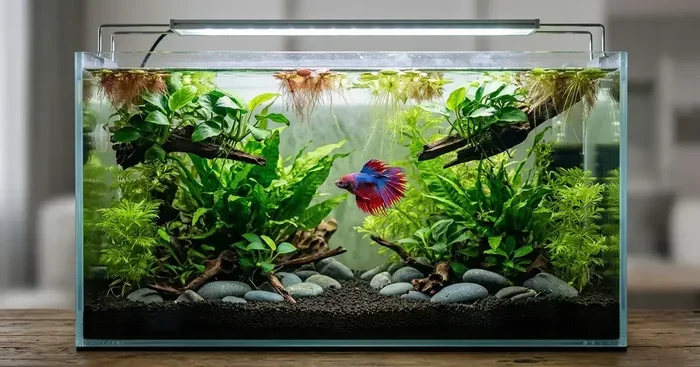
If you are asking can you put two female betta fish together, the answer hinges 90% on the tank you provide. A sorority tank is not a betta tank with a divider. It is a fully planted, densely populated community-style aquarium that happens to house bettas. Think “lush jungle,” not “minimalist studio.”
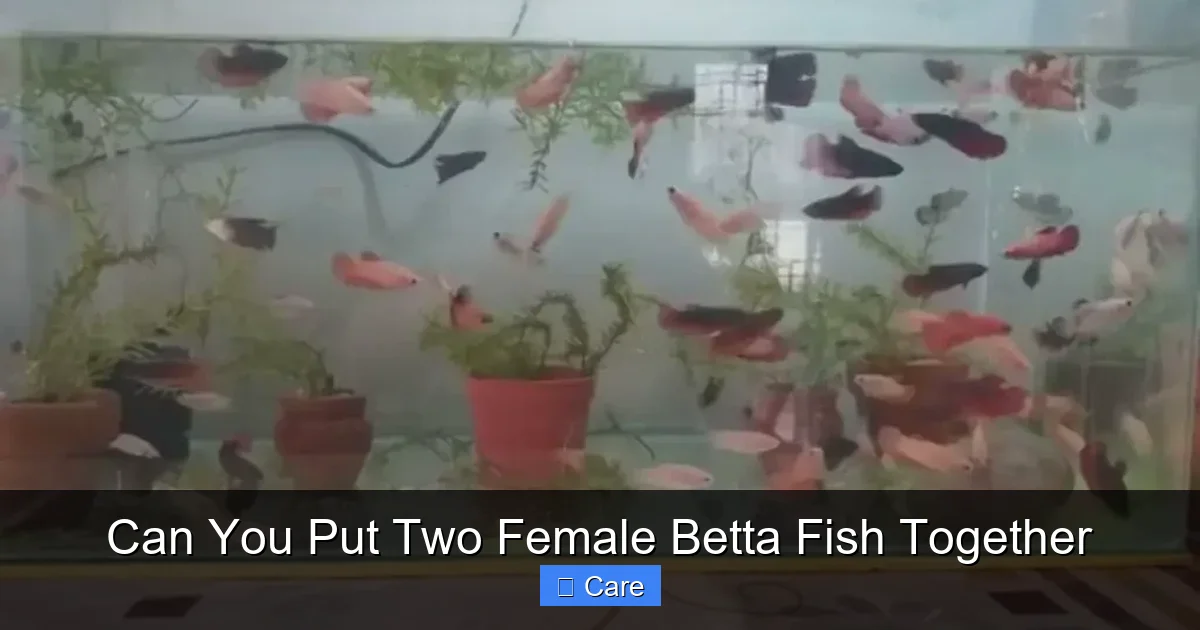
Visual guide about Can You Put Two Female Betta Fish Together
Image source: bettafishworld.com
Tank Size: The 20-Gallon Minimum Rule
Let’s be brutally clear: a 10-gallon tank is not suitable for a sorority. It is a stress-filled cage. The absolute minimum, and this is pushing it, is a 20-gallon long tank (30″ x 12″ footprint). Ideally, you are looking at 29+ gallons. Why? Horizontal swimming space is vastly more important than vertical height for these surface breathers. A 20-gallon long provides enough territory for 4-5 females to establish individual zones without constant, inescapable confrontation. Each fish needs at least 5-6 gallons of *uncontested* visual space to feel secure.
Aquascaping for Anarchy: Breaking the Line of Sight
This is the single most important factor in sorority success. You must eliminate direct, long sightlines. The tank must look like a maze.
- Dense Planting: Use live plants like Java fern, Anubias, Cryptocoryne, Vallisneria, and floating plants like Salvinia or Water Sprite. The goal is to have so many leaves that a betta cannot see from one end to the other. Fake plants work in a pinch, but live plants provide better water quality and more natural complexity.
- Hardscape is Key: Driftwood, large rocks, and clay pots (with holes plugged) create solid, immovable barriers. Position them to create “caves” and “corners.” Each betta should be able to claim a distinct hideout.
- Substrate Variation: A mix of sand and gravel isn’t just for looks. It creates micro-territories and foraging grounds.
Imagine a betta swimming. She should be able to dart behind a wood branch, under a leaf canopy, and into a pot, completely losing sight of her tankmates. If you can see the entire tank from one vantage point, it’s not planted enough.
Filtration and Water Quality: The Silent Stressor
With multiple large, messy fish producing waste, water quality can degrade rapidly. A strong, efficient filter is mandatory. A hang-on-back (HOB) or canister filter rated for at least 1.5x your tank volume is recommended. Use a pre-filter sponge on the intake to protect the bettas’ delicate fins. Perform weekly water changes of 25-50% and test water parameters (Ammonia, Nitrite, Nitrate) religiously. Poor water quality equals stressed fish, and stressed fish equal aggression.
The Sorority Method: A Step-by-Step Introduction Protocol
You have your 29-gallon jungle masterpiece. You’ve selected 4-5 seemingly peaceful females from a reputable breeder or store (more on selection later). Now, the most critical phase: introduction. Never, ever just dump them in together. The “divide and conquer” method is the only professional approach.

Visual guide about Can You Put Two Female Betta Fish Together
Image source: petshun.com
Phase 1: The Quarantine and Observation Period
Each new betta should be quarantined for at least 2-4 weeks in a separate, simple hospital tank (5-10 gallons). This serves two purposes: 1) to ensure they are disease-free and won’t infect your future sorority, and 2) to observe their baseline personality. Do they flare at their own reflection constantly? Are they hyperactive and chase everything? This is your first filter. The most aggressive flarers should be set aside as permanent singles.
Phase 2: The Visual Introduction (Tank Divider Method)
Once all fish are healthy, place them all at once into the final sorority tank, but separated by a solid, opaque divider. Use a tank divider or create separate compartments with acrylic and sealant. They will share the same water parameters (filter, heater), but cannot see or physically interact. Leave them like this for at least 48 hours, up to a week. This allows them to sense each other’s presence through chemical cues (pheromones) in the water without the trigger of a visual threat. They will often flare at the divider, which is normal. The key is that they cannot pursue.
Phase 3: The First Physical Meeting
After the divider period, it’s time. Do this in the morning so you have the full day to watch. Remove the divider completely. For the first few hours, there will be a flurry of flaring, chasing, and posturing. This is the pecking order establishment. It can look terrifying. Your job is to watch, not interfere… at first.
- Acceptable Behavior: Flaring (gills and fins puffed), chasing that ends when the chased fish finds a hideout, brief wrestling matches where they lock jaws and tumble but separate.
- Unacceptable Behavior (INTERVENE): relentless chasing with no escape, one fish being cornered and bitten repeatedly (fin nipping), fish hiding and not coming out for food, any fish with torn fins or injuries.
If unacceptable behavior occurs, you must be ready to separate the aggressor or victim immediately using a net and a backup hospital tank. This is why you always have a 10-gallon “time-out” tank on standby.
Phase 4: The Weeks of Vigilance
For the first 2-4 weeks, the hierarchy is fluid. A previously submissive fish may challenge, or a dominant one may relax. You must watch the tank for at least 30 minutes, twice a day, during feeding times. Look for:
- All fish eating confidently.
- Fish using all areas of the tank, not just one corner.
- Flaring being brief and ritualistic, not sustained.
- No visible fin damage.
If after a month the group is stable—eating, exploring, and only occasionally flaring—you may have a successful sorority. But the watch never fully ends.
Selecting Your Sorority: The Art of the Pick
Choosing the right females is an art, not a science. Here is your best strategy:
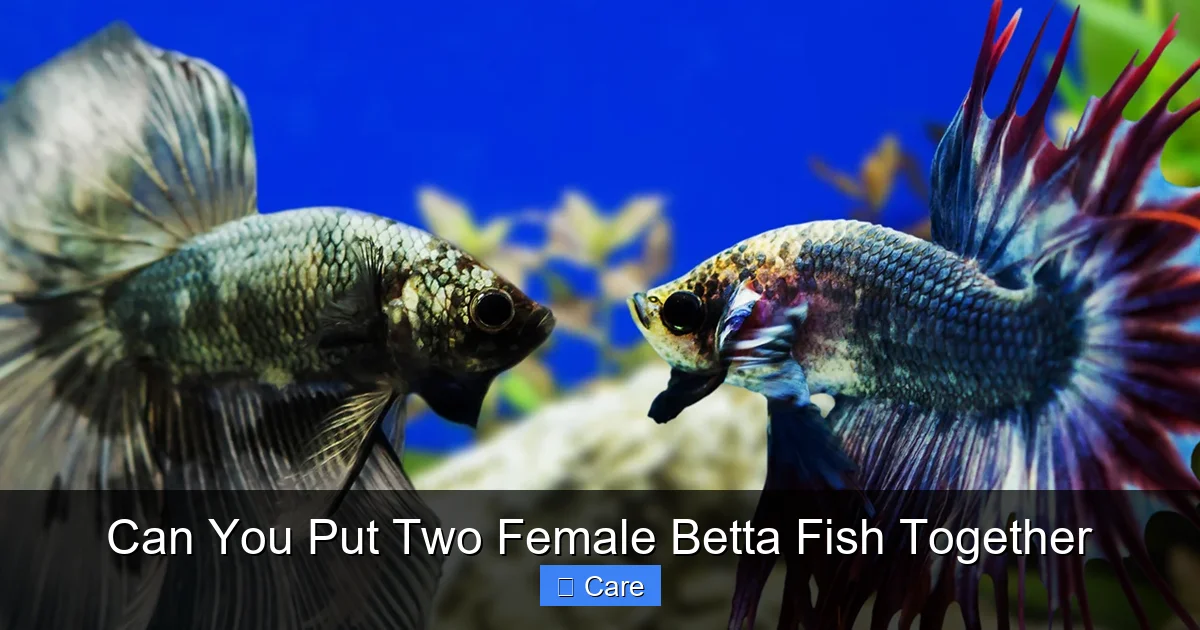
Visual guide about Can You Put Two Female Betta Fish Together
Image source: petmedaily.com
- Avoid Pet Store “Grab Bags”: Do not randomly pick 5 females from a community tank at a big-box store. These are often poorly bred, stressed, and of unknown aggression levels.
- Source Carefully: Buy from a reputable local breeder or a high-quality online seller who can discuss the parents’ temperaments. Some breeders specifically breed for milder temperaments for sorority potential.
- Look for “Placid” Demeanor: In the store, observe the fish. The one floating calmly at the top, not flaring at every movement, is a better candidate than the one constantly attacking the glass.
- Size and Age: Get fish of similar size and, ideally, from the same brood (siblings). Introduce them all at the same time. Never add a new betta to an established sorority—it will be seen as an intruder and killed.
- Fins are a Red Flag: Avoid females with extremely long, flowing fins (like half-moons) for a sorority. These are targets for nipping and are often bred for male aesthetics, making them more delicate. Shorter-finned “plakat” types are often hardier and better suited.
Alternatives to the Sorority: Safer Community Options
Given the complexity and risk, you might rightly ask: is there an easier way? For most hobbyists, the answer is yes. Consider these alternatives to a female betta sorority.
The “One and Done” Approach: The Single Betta Tank
The default, and by far the most successful, method is to give each betta her own beautifully planted 5-gallon (minimum) tank. This allows you to appreciate her individual personality without risk. You can keep multiple tanks and enjoy the variety. It is simpler, less stressful for you and the fish, and ultimately more humane for a species not naturally inclined to live in groups.
Betta-Safe Community Tanks (With Other Species)
You can keep a single female betta with other peaceful, fast-swimming, non-finned-nipping fish in a properly sized (20+ gallon) community tank. Excellent tankmates include:
- schooling fish: Ember tetras, harlequin rasboras, neon tetras (in a group of 8+).
- bottom dwellers: Kuhli loaches, bronze corydoras.
- other: Ghost shrimp, nerite snails, african dwarf frogs (with caution).
The betta becomes the “centerpiece” fish, not a group member. This is often a more stable and visually interesting setup than a risky sorority.
Dummy Fish and Mirror Therapy
If your betta seems bored or lonely (a debated concept), provide enrichment. A plastic betta toy (like a floating log or leaf) can give her something to “guard.” A mirror held to the glass for a few minutes a day allows her to flare and exercise her natural behavior without another fish being present. This is mental stimulation, not companionship.
Common Mistakes and When to Call It Quits
Even with the best plan, things go wrong. Here are the fatal errors and the signs that your sorority attempt must end.
The Fatal Errors
- Tank Too Small: The #1 mistake. A 10-gallon sorority is a death sentence. Period.
- Insufficient Plants/Hides: Open, barren tanks create tension. Every fish needs at least 2-3 guaranteed hiding spots.
- Wrong Introduction: Throwing them all in at once without a divider or introducing them one-by-one into an established group.
- Ignoring the Pecking Order: A clear hierarchy (one fish is slightly more dominant) is normal. Constant, violent persecution is not. Don’t mistake normal chasing for a crisis, but know the difference.
- Mixing Aggression Levels: Putting a known “psycho” with placid fish is cruel and foolish.
Signs It’s Time to Separate
You must be prepared to fail. A successful sorority is the exception, not the rule. If you see any of these, re-home the aggressor or victim immediately:
- One fish is consistently hiding and not eating.
- Visible fin rot or torn fins on one or more fish (often from nipping).
- One fish is being chased to the point of exhaustion, crashing into decorations.
- Any fish becomes lethargic, pale, or clamped.
Have a plan: a spare 5-10 gallon tank with a filter and heater is a necessity before you even start a sorority. It is your “break glass in case of emergency” tank. Do not start without it.
Conclusion: Is a Sorority Right for You?
So, can you put two female betta fish together? The technical answer is yes, under a very specific and demanding set of circumstances: a 20+ gallon heavily planted tank, a careful “divide and introduce” protocol, and a selection of fish with compatible, relatively mild temperaments. It is a project for the advanced aquarist who views their tank as a dynamic ecosystem to be managed, not just a pretty decoration.
For the vast majority of betta keepers, the answer should be no. The risks of injury, chronic stress, and failure are high. A single betta in a well-maintained, enriched tank, or a single betta in a peaceful community, is a far more reliable and ethical path. The reward of seeing a group of these magnificent fish coexist is immense, but it is a reward earned through significant effort, expense, and emotional investment. Be honest with your skill level and available time. If you have any doubt, choose the single tank. Your future fish will thank you for it.
Frequently Asked Questions
How many female bettas can be kept together in a sorority?
In a properly sized and planted 20+ gallon tank, a group of 4-6 females is the ideal range. This number allows for a stable pecking order to form without one fish being overly targeted. Groups of 2-3 are much more unstable and prone to bullying, as there is no “buffer” fish.
What is the absolute minimum tank size for a female betta sorority?
The absolute, rock-bottom minimum is a 20-gallon long tank (30″ x 12″ footprint). Anything smaller, such as a 10-gallon, is considered inhumane and will almost certainly result in severe injury or death due to the inability to establish separate territories.
Can I put a female betta with other fish species instead of other bettas?
Yes, this is often a more successful and recommended approach. A single, peaceful female betta can thrive in a 20+ gallon community tank with small, fast, non-aggressive schooling fish like ember tetras or harlequin rasboras, and peaceful bottom dwellers like corydoras. Never house a betta with fish that have long, flowing fins (like guppies).
What should I do the moment I see my female bettas fighting?
At the first sign of relentless chasing, cornering, or fin nipping, you must intervene immediately. Have a separate “hospital” or “time-out” tank ready. Use a net to carefully remove the aggressor or the victim (the one being injured) and place it in the separate tank. Do not wait to see if they “work it out.” Permanent injury or death can happen in minutes.
Is it true that female bettas are less aggressive than males?
This is a common myth. Female bettas are not inherently less aggressive. They retain the same territorial instincts as males. The difference is that in a properly sized, complex environment, females *can* sometimes tolerate each other, whereas two males will almost always fight to the death regardless of tank size. Do not assume a female is “safe” for a small tank or with other fish without proper research.
What are the best plants and decorations for a betta sorority tank?
Prioritize dense, leafy plants that break up sightlines. Use tall background plants like Vallisneria or Amazon swords, mid-ground plants like Java fern and Anubias (attach to driftwood), and foreground carpets like Dwarf hairgrass. Floating plants like Salvinia are excellent for creating a canopy. Hardscape with large pieces of driftwood and smooth rocks to create caves and tunnels. The goal is a tank where a fish can disappear from view.