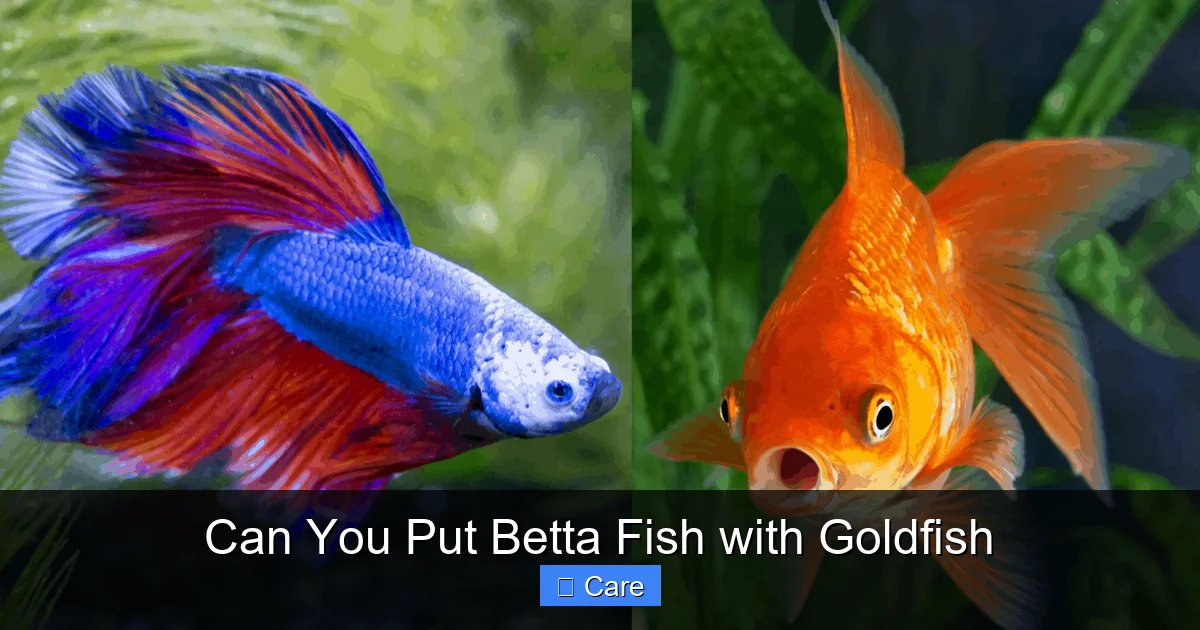
Can You Put Betta Fish with Goldfish

Betta fish and goldfish have very different needs, making them poor tank mates. While it’s tempting to combine them, differences in temperature, water quality, and temperament often lead to stress or injury. Read on to learn why they don’t mix well and what safer options exist.
Key Takeaways
- Understanding can you put betta fish with goldfish: Provides essential knowledge
📑 Table of Contents
Introduction
Ever stared at your betta’s vibrant fins and thought, “What if I add a goldfish for some company?” It’s a common day‑dream for beginners who want a lively aquarium without buying multiple tanks. The truth, however, is a bit more complicated. Betta fish (Betta splendens) and goldfish (Carassius auratus) come from very different environments, and their care requirements don’t line up nicely.
In this article we’ll break down the science behind their needs, explore why they usually don’t get along, and give you practical tips if you still want a mixed setup. By the end, you’ll know whether you can safely put betta fish with goldfish—or if it’s better to keep them apart.
1. Biology and Natural Habitat
Betta fish origins
Betas are native to the shallow, warm rice paddies of Southeast Asia. They thrive in still, warm water that’s often slightly acidic (pH 6.0‑7.5). In the wild they live in small, heavily vegetated pools where they can hide from predators.
Visual guide about Can You Put Betta Fish with Goldfish
Image source: bettasource.com
Goldfish origins
Goldfish, on the other hand, descend from cold‑water carp of East Asia. They are accustomed to cooler, well‑oxygenated ponds and streams where temperatures range from 60‑75°F. Their bodies are built to handle a lot of waste, but they produce a lot of it.
Why these differences matter
When you place a tropical betta in a cooler goldfish‑friendly tank, the betta’s metabolism slows, making it more vulnerable to disease. Conversely, a goldfish forced into warm water will become stressed, develop fin rot, and grow poorly.
2. Temperature Compatibility
Ideal temperature ranges
Betta fish feel comfortable at 76‑82°F (24‑28°C). Goldfish do best at 65‑72°F (18‑22°C). Trying to meet both in a single tank forces a compromise that is usually outside the safe zone for one or both species.

Visual guide about Can You Put Betta Fish with Goldfish
Image source: petshun.com
Practical example
Imagine you set the heater to 78°F for your betta. A goldfish kept at that temperature may experience a faster metabolism, leading to higher waste output and a shorter lifespan. If you lower the heater to 68°F for the goldfish, the betta may become lethargic and more prone to infection.
What to do
If you already have a betta, keep the tank at its preferred temperature and provide a separate, cooler tank for any goldfish you acquire. This dual‑tank approach is the simplest way to keep both species healthy.
3. Water Quality and Filtration
Waste production
Goldfish are notorious “bio‑load machines.” A single adult goldfish can produce as much waste as several small tropical fish combined. This raises ammonia and nitrite levels quickly, demanding robust filtration.

Visual guide about Can You Put Betta Fish with Goldfish
Image source: petshun.com
Betta’s sensitivity
Betta fish have delicate gills and are particularly sensitive to spikes in ammonia and nitrite. Even a small increase can cause “fin rot” or respiratory distress.
Filtration recommendations
- For goldfish‑only tanks: Use a canister filter rated for at least twice the tank volume, change water weekly, and perform regular gravel vacuuming.
- For betta‑only tanks: A low‑flow sponge filter or a small internal filter works well; avoid strong currents that stress bettas.
Can a single filter handle both?
Only if the tank is very large (100+ gallons) and you have a powerful, adjustable filter. Even then, you must monitor water parameters daily with a reliable test kit.
4. Temperament and Behavior
Betta aggression
Male bettas are famous for their flaring displays and territorial nature. They will often chase anything that resembles another male, including long‑finned goldfish.
Goldfish curiosity
Goldfish are active swimmers that love to explore. Their playful nature can lead them to nip at the delicate fins of a betta, especially if the goldfish is a “fancy” variety with longer fins.
Real‑world observations
Many hobbyists report that goldfish will bite at a betta’s fins, causing fraying and infection. In turn, the betta may continuously flare, stressing both fish and leading to a hostile environment.
Safer tank mates for bettas
If you want a community tank with a betta, look for small, non‑aggressive fish that share similar temperature needs, such as:
- Neon or ember tetras (small, schooling)
- Rasboras (harlequin or chili)
- Snails (Nerite or mystery)
- Cherry shrimp
For more ideas, see our guide on what can you put with betta fish.
5. Tank Size and Setup Considerations
Goldfish space requirements
A single goldfish needs at least 20‑30 gallons, with an additional 10 gallons for each extra goldfish. They also need a deep tank (at least 12‑16 inches) to accommodate their long bodies.
Betta space requirements
A betta can live comfortably in a 5‑gallon tank with a lid to prevent jumping. They enjoy plants and hiding spots but do not need a massive volume.
Why size matters for mixed tanks
Combining a goldfish that needs a large, heavily filtered tank with a betta that prefers a small, calm environment creates a compromise that usually fails. Overcrowding can also increase stress and disease risk.
Designing a split‑tank
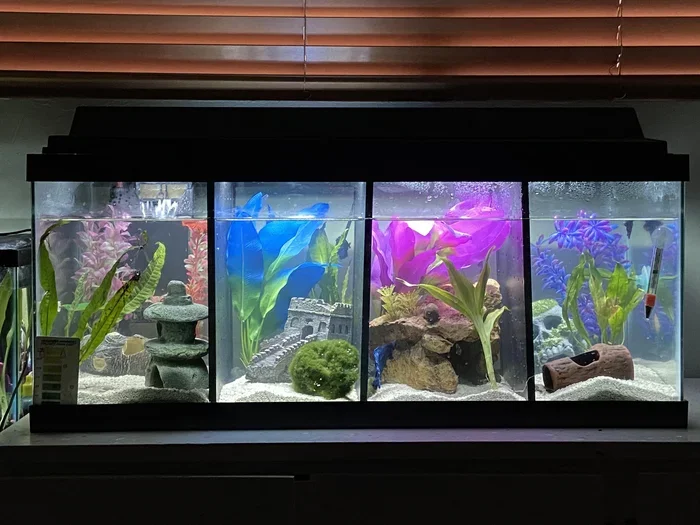
Some advanced hobbyists use a divider to create two distinct zones within a single large aquarium—one warm, one cool. This is complex, requires separate filtration loops, and still poses a risk of water mixing.
6. When (If Ever) You Might Try a Mixed Tank
Conditions that improve odds
- Large tank (100+ gallons) with separate temperature zones.
- Powerful, adjustable filtration system.
- Both fish are juveniles (less aggressive, lower waste).
- Goldfish are a short‑fin variety that won’t nibble fins.
- Constant monitoring of water parameters and fish behavior.
Step‑by‑step trial
- Set up a 100‑gallon tank with a temperature gradient (e.g., heater on one side, chillers on the other).
- Install two filters, each dedicated to its temperature zone.
- Acclimate the betta slowly to the warmer side using a drip method.
- Acclimate the goldfish to the cooler side similarly.
- Observe for 48 hours without any visual contact between the fish.
- If both appear healthy, gradually remove the divider while watching for aggression.
Know when to quit
If you see fin nipping, excessive flaring, or any sign of stress (loss of appetite, faded colors), separate the fish immediately. It’s better to have two happy tanks than one unhappy, sick community.
For more detailed guidance on community setups, check out Can You Put A Betta With Other Fish.
Conclusion
In most cases, the answer to “Can you put betta fish with goldfish?” is a clear no. Their temperature preferences, waste output, and temperaments are too mismatched for a safe, stress‑free aquarium. While a large, expertly managed split‑tank could theoretically work, it demands a level of equipment and vigilance that most hobbyists aren’t prepared for.
Instead, give each fish the environment it loves: a warm, calm tank for the betta, and a spacious, well‑filtered, cooler tank for the goldfish. If you crave a community feel, choose tank mates that share similar needs with your betta—tiny tetras, rasboras, snails, or shrimp are excellent choices.
Remember, happy fish are a sign of a happy keeper. Keep their worlds separate, and you’ll enjoy vibrant colors and lively behavior for years to come.
Frequently Asked Questions
Can bettas and goldfish live together long term?
Generally no. Their differing temperature and water quality needs make long‑term cohabitation unsafe for both species.
What temperature should I set for a mixed betta‑goldfish tank?
There is no ideal compromise; bettas need 76‑82°F while goldfish prefer 65‑72°F. Trying to meet both usually harms one or the other.
Are there any goldfish varieties that are less likely to nip betta fins?
Short‑fin “common” goldfish are less likely to nip, but they still produce too much waste and have temperature needs that clash with bettas.
Can I use a single filter for both a betta and a goldfish?
Only in a very large tank with a high‑capacity, adjustable filter and constant water testing. For most setups, separate filtration is required.
What are some safe tank mates for bettas?
Peaceful, similarly sized fish like neon tetras, rasboras, or invertebrates such as snails and cherry shrimp make good companions.
If I already have a betta and want a goldfish, should I give them a chance?
It’s best to keep them in separate tanks. Provide each with the proper temperature, filtration, and space to thrive.