Can I Keep a Blood Parrot with Betta Fish

Keeping a blood parrot cichlid with a betta fish is generally not recommended due to significant differences in size, aggression levels, and territorial behavior. While both are popular freshwater fish, their compatibility is poor, and cohabitation often leads to stress, injury, or death for the betta. This article breaks down exactly why this pairing fails and what you should do instead.
Key Takeaways
- Size mismatch: Blood parrots grow up to 8-10 inches, while bettas stay around 2-3 inches, creating a dangerous predator-prey dynamic.
- Aggression levels: Blood parrots can be semi-aggressive and territorial, especially during feeding, which clashes with a betta’s own territorial nature.
- Tank size requirements: A blood parrot needs at least 55 gallons, whereas a betta can thrive in 5-10 gallons, making shared housing impractical.
- Water parameter overlap: Both prefer warm water (76-82°F) and similar pH (6.5-7.5), so water chemistry alone isn’t the issue.
- Feeding conflicts: Blood parrots are messy, fast eaters that will outcompete a betta for food, leading to malnutrition.
- Stress and injury risk: The betta’s flowing fins may trigger nipping from the blood parrot, causing chronic stress and fin damage.
- Better alternatives exist: There are many safer tank mate options for both species that won’t put either fish at risk.
📑 Table of Contents
- Can I Keep a Blood Parrot with Betta Fish?
- Understanding the Blood Parrot Cichlid
- Understanding the Betta Fish
- Why Blood Parrots and Bettas Don’t Mix
- Tank Requirements Comparison
- What Happens If You Try to Keep Them Together
- Better Tank Mate Options for Your Betta
- Better Tank Mate Options for Your Blood Parrot
- Setting Up a Successful Community Tank
- Final Verdict: Can I Keep a Blood Parrot with Betta Fish?
Can I Keep a Blood Parrot with Betta Fish?
If you’ve ever stared at your beautiful betta fish swimming peacefully in its tank and thought, “This would look amazing with a blood parrot cichlid,” you’re not alone. Many aquarium hobbyists wonder about mixing these two popular freshwater species. After all, both are colorful, hardy, and widely available at pet stores. But before you rush out to buy a blood parrot to keep your betta company, there are some critical factors you need to understand.
The short answer is that keeping a blood parrot with a betta fish is a bad idea. These two species have very different needs, temperaments, and physical characteristics that make them poor tank mates. In this article, we’ll explore every angle of this question so you can make the best decision for your aquatic pets. Whether you’re a beginner or an experienced fish keeper, understanding can I keep a blood parrot with betta fish will help you avoid a costly and heartbreaking mistake.
We’ll cover everything from size differences and aggression levels to tank requirements and feeding habits. By the end, you’ll know exactly why this combination doesn’t work and what alternatives you can consider instead. Let’s dive in!
Understanding the Blood Parrot Cichlid
What Is a Blood Parrot Fish?
The blood parrot cichlid is a hybrid fish created by crossbreeding different species of cichlids, most likely from the Amphilophus citrinellus and Vieja melanura species. They were first developed in Taiwan in the late 1980s and quickly became one of the most popular freshwater aquarium fish worldwide. Their bright orange-red coloration, round body shape, and cute “beak-like” mouth make them instantly recognizable.
Despite their friendly appearance, blood parrots are not a natural species. They are man-made hybrids, which means they come with some unique physical traits. Their mouth is small and shaped like a beak, which can make eating a bit challenging. They also have a deformed spine in some cases, which affects their swimming ability. These quirks make them endearing to many hobbyists but also mean they have specific care requirements.
Size and Growth
One of the biggest factors in the can I keep a blood parrot with betta fish debate is size. Blood parrots grow significantly larger than bettas. A fully grown blood parrot can reach 8 to 10 inches in length. Some specimens even grow larger under optimal conditions. In contrast, a betta fish typically reaches only 2 to 3 inches in length, including the tail.
This massive size difference creates an inherent problem. In the aquarium world, a general rule is that if a fish can fit another fish in its mouth, it eventually will. While blood parrots aren’t typically predatory toward fish their own size, their large mouths and messy eating habits mean a small betta could easily become a target, especially during feeding time.
Temperament and Behavior
Blood parrots are often described as semi-aggressive. They can be peaceful for much of the time, but they become territorial, especially as they mature. During breeding periods or when establishing dominance, a blood parrot may chase, nip, or harass smaller tank mates. They also have a habit of rearranging their environment, digging in the substrate, and claiming specific areas of the tank as their own.
This territorial behavior is a major red flag when considering them as companions for a betta. Both species are territorial by nature, and putting two territorial fish together in a confined space is a recipe for conflict.
Understanding the Betta Fish
Betta Fish Basics
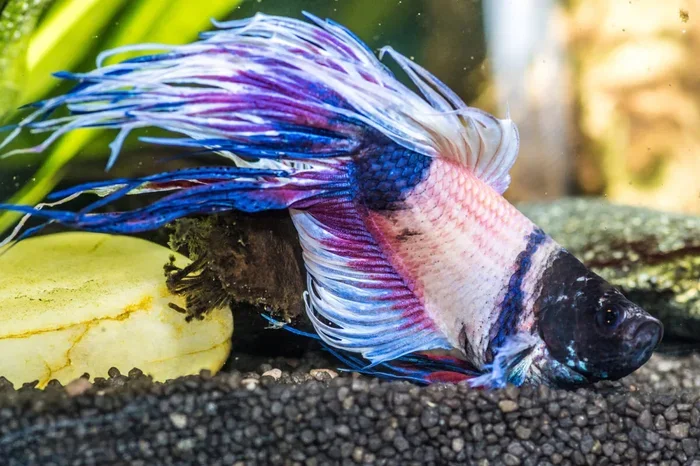
Betta fish, also known as Siamese fighting fish, are one of the most popular freshwater aquarium fish in the world. Native to the shallow waters of Thailand, Cambodia, and Vietnam, bettas are known for their stunning colors and elaborate finnage. They belong to the Osphronemidae family and are labyrinth fish, meaning they can breathe atmospheric air directly from the surface.
Bettas are relatively small, hardy fish that can tolerate a range of water conditions. However, they are also notoriously territorial, especially males. Male bettas will attack other male bettas on sight and may also harass fish with similar flowing fins or bright colors. This territorial instinct is deeply ingrained and cannot be trained out of them.
Betta Fish Temperament
When it comes to temperament, bettas are a mixed bag. Some are relatively docile and can coexist with certain tank mates, while others are aggressive toward anything that moves. Female bettas are generally less aggressive than males, but they can still be feisty. The key challenge with bettas is that their aggression is unpredictable. A betta that seems peaceful one day might attack a tank mate the next.
This unpredictability makes it risky to house them with any fish that could potentially harm them or be harmed by them. A blood parrot, with its larger size and semi-aggressive nature, falls squarely into the “risky” category.
Why Blood Parrots and Bettas Don’t Mix
The Size Disparity Problem
Let’s revisit the size issue because it cannot be overstated. A blood parrot at 8-10 inches is roughly four times the size of a betta at 2-3 inches. In nature, fish of vastly different sizes rarely coexist peacefully in the same micro-habitat. The larger fish either ignores the smaller one, competes with it for resources, or eats it.
In an aquarium, space is limited. A blood parrot needs a minimum of 55 gallons to thrive, and ideally more if kept with other fish. A betta can live happily in a 5 to 10-gallon tank. Even if you were to house them in a large 75-gallon tank, the size difference alone would create an imbalance. The blood parrot would dominate the space, leaving the betta with nowhere to hide or establish its own territory.
Territorial Conflicts
Both blood parrots and bettas are territorial fish. A blood parrot will claim a section of the tank as its own and defend it against intruders. A betta does the same thing. When two territorial fish are placed in the same environment, the result is almost always conflict.
The blood parrot, being much larger, would likely win any confrontation. But even if the blood parrot doesn’t actively attack the betta, the constant stress of being chased or harassed can weaken the betta’s immune system. Chronic stress in fish leads to a host of health problems, including fin rot, ich, and a shortened lifespan.
Feeding Challenges
Feeding time is where things can get really ugly. Blood parrots are enthusiastic, messy eaters. They gulp food aggressively and scatter it all over the tank. Their deformed mouths make them a bit clumsy, but they still manage to consume food quickly. A betta, on the other hand, is a slower, more deliberate eater.
In a shared tank, the blood parrot would eat most of the food before the betta gets a chance. Over time, the betta could become malnourished. You might try target feeding or spreading food across the tank, but the blood parrot’s appetite and speed make it nearly impossible to ensure the betta gets enough to eat.
Fin Nipping Risk
Bettas have long, flowing fins that are beautiful but also tempting targets for nipping. Blood parrots, while not notorious fin nippers like some tetra species, do occasionally nip at other fish, especially during territorial disputes or feeding time. A betta’s fins are like a red flag to a bull for many fish species.
Fin nipping causes physical damage and opens the door to bacterial and fungal infections. A betta with nipped fins is a stressed betta, and a stressed betta is a sick betta. This is one of the most common reasons why betta fish kept with incompatible tank mates end up with health problems.
Tank Requirements Comparison
Blood Parrot Tank Setup
If you’re serious about keeping a blood parrot, you need a properly sized tank. Here’s what they require:
- Minimum tank size: 55 gallons for one blood parrot; 75+ gallons if adding tank mates
- Water temperature: 76-82°F (24-28°C)
- pH level: 6.5-7.5
- Filtration: Strong filtration is essential because blood parrots produce a lot of waste
- Substrate: Fine sand or smooth gravel to prevent mouth injuries
- Decorations: Smooth rocks and driftwood; avoid sharp decorations that could harm their delicate mouths
- Water changes: 25-30% weekly due to high bioload
Betta Tank Setup
Bettas have very different requirements, which further illustrates why can I keep a blood parrot with betta fish is such a problematic question:
- Minimum tank size: 5 gallons; 10 gallons is ideal
- Water temperature: 76-82°F (24-28°C)
- pH level: 6.5-7.5
- Filtration: Gentle filtration; bettas prefer low water flow
- Substrate: Any type works fine
- Decorations: Live or silk plants; smooth caves for hiding
- Water changes: 25% weekly for a 5-gallon tank; less frequent for larger tanks
The Overlap and the Gaps
Interestingly, both fish prefer similar water temperatures and pH levels. This is probably why some hobbyists think they can be kept together. However, water parameters are just one piece of the puzzle. The massive difference in tank size requirements, filtration needs, and bioload production makes it impractical to house them together in a way that meets both species’ needs.
A 55-gallon tank might seem like a good compromise, but it’s actually too large for a betta to feel secure. Bettas prefer smaller, more confined spaces where they can easily patrol their territory. A huge tank with a large, active cichlid would be overwhelming and stressful for a betta.
If you’re exploring other combinations, you might also wonder can you keep betta fish with goldfish, which presents its own set of challenges due to temperature and water quality differences.
What Happens If You Try to Keep Them Together
Best-Case Scenario
In the best-case scenario, the blood parrot largely ignores the betta. The betta stays hidden most of the time, only coming out to eat when the blood parrot is distracted. The betta survives but lives a stressed, reclusive life. It never displays its full range of natural behaviors and may lose some of its vibrant coloration due to chronic stress.
This is not a good quality of life for any fish. A betta should be active, curious, and display its beautiful fins proudly. If it’s constantly hiding, something is wrong.
Worst-Case Scenario
In the worst-case scenario, the blood parrot sees the betta as a threat or prey. It attacks the betta, causing severe fin damage, physical injury, or death. Even if the blood parrot doesn’t kill the betta outright, the stress and injuries can lead to secondary infections that prove fatal within days or weeks.
Many hobbyists who have tried this combination report that their bettas became lethargic, stopped eating, and developed fin rot or other stress-related illnesses. Some bettas were killed outright by the blood parrot. These outcomes are heartbreaking and entirely preventable.
Real-World Experiences
Online aquarium forums are filled with stories from hobbyists who tried keeping blood parrots with bettas. The vast majority of these stories end badly. Some report that the blood parrot was peaceful for weeks or months before suddenly attacking the betta. Others describe constant harassment that slowly wore down the betta’s health.
A few hobbyists claim success, but these cases usually involve very large tanks (100+ gallons) with plenty of hiding spots and carefully managed feeding routines. Even then, the arrangement is fragile and requires constant monitoring. For the average fish keeper, the risks far outweigh any potential benefits.
Better Tank Mate Options for Your Betta
Safe Companions for Bettas
If you’re looking for tank mates for your betta, there are many safer options than a blood parrot. Here are some species that are known to coexist peacefully with bettas in appropriately sized tanks:
- Corydoras catfish: Peaceful bottom dwellers that stay out of the betta’s way. A group of 4-6 in a 10-gallon tank works well.
- Harlequin rasboras: Small, peaceful schooling fish that won’t trigger your betta’s aggression. Keep them in groups of 6 or more.
- Ember tetras:
- Nerite snails: Excellent algae eaters that bettas generally ignore. They’re a great addition to any betta tank.
- Amano shrimp: Larger shrimp that are too big for a betta to eat. They’re fantastic cleaners.
- Kuhli loaches: Eel-like bottom dwellers that are peaceful and entertaining. Keep them in groups of 3-5.
Before adding any tank mate, always research the specific requirements and compatibility. Our guide on which fish can I put with a betta provides a comprehensive list of suitable companions and tips for successful introductions.
What to Look for in a Betta Tank Mate
When choosing tank mates for your betta, consider these criteria:
- Size: Choose fish that are similar in size to your betta or slightly smaller. Avoid anything large enough to eat your betta.
- Temperament: Peaceful, non-aggressive species are best. Avoid fin nippers and territorial fish.
- Fin type: Avoid fish with long, flowing fins or bright colors that might trigger your betta’s aggression.
- Swimming level: Fish that occupy different areas of the tank (bottom dwellers, mid-water swimmers) are less likely to conflict with your betta.
- Schooling behavior: Schooling fish that stay in a group are less likely to be targeted by a betta.
Better Tank Mate Options for Your Blood Parrot
Safe Companions for Blood Parrots
If you already have a blood parrot and want to add tank mates, here are some good options:
- Silver dollar fish: Large, peaceful fish that can hold their own with a blood parrot.
- Oscar fish: Only in very large tanks (125+ gallons). Both are large and can be territorial, so careful monitoring is needed.
- Large tetras:
- Severum cichlids: Similar size and temperament to blood parrots. They can coexist in large tanks.
- Large plecos: Common plecos or sailfin plecos that help with algae control.
- Bala sharks: Active, large fish that do well in spacious tanks with blood parrots.
Fish to Avoid with Blood Parrots
Just as there are fish that shouldn’t be kept with bettas, there are species that don’t do well with blood parrots:
- Small tetras: Neon tetras and similar tiny fish will be eaten or harassed.
- Guppies: Their bright colors and flowing fins make them targets for nipping.
- Small rasboras: Too small to coexist safely with a large cichlid.
- Betta fish: As we’ve discussed, the size and temperament mismatch makes this a poor choice.
- African cichlids: Too aggressive and require different water parameters.
For more ideas on compatible species, check out our article on what fish can live with a betta, which covers a wide range of peaceful community fish options.
Setting Up a Successful Community Tank
Planning Is Everything
Whether you’re setting up a tank for a betta with tank mates or a blood parrot with companions, planning is the key to success. Here are the steps you should follow:
- Research each species thoroughly. Understand their adult size, temperament, dietary needs, and water parameter requirements.
- Choose an appropriately sized tank. When in doubt, go bigger. More space reduces territorial conflicts.
- Set up plenty of hiding spots. Plants, caves, driftwood, and rocks give fish places to retreat when they feel threatened.
- Establish a feeding strategy. Make sure all fish get enough food without competition becoming a problem.
- Quarantine new fish. Always quarantine new additions for 2-4 weeks before introducing them to your main tank.
- Monitor behavior closely. Watch for signs of aggression, stress, or illness, especially during the first few weeks.
Signs of Trouble
Even with the best planning, things can go wrong. Here are signs that your tank mates aren’t getting along:
- Constant hiding: If one fish is always hiding, it’s being bullied or stressed.
- Fin damage: Torn or nipped fins indicate aggression from tank mates.
- Loss of appetite: A stressed fish often stops eating.
- Color fading: Stress can cause fish to lose their vibrant colors.
- Rapid breathing: Gasping at the surface or breathing rapidly can indicate stress or poor water quality.
- Visible injuries: Scratches, bite marks, or missing scales are clear signs of aggression.
If you notice any of these signs, separate the fish immediately. It’s better to have two separate, healthy tanks than one community tank full of stressed, injured fish.
Final Verdict: Can I Keep a Blood Parrot with Betta Fish?
After examining all the factors, the answer is clear: no, you should not keep a blood parrot with a betta fish. The size difference is too great, the territorial tendencies of both species are too strong, and the risk of injury or death for the betta is too high.
While it’s technically possible to keep them together in a very large tank with careful management, the stress and risk make it an inadvisable choice. There are so many better options for both species that there’s no reason to attempt this combination.
If you love both blood parrots and bettas (and who doesn’t?), the best approach is to set up separate tanks for each. This way, both fish can thrive in environments tailored to their specific needs. Your betta will display its full beauty in a smaller, peaceful setup, and your blood parrot will have the space it needs in a larger, appropriately stocked tank.
Remember, responsible fish keeping means prioritizing the health and well-being of your pets over aesthetic preferences. A well-planned tank with compatible species will always be more rewarding than a mixed bag of fish that are constantly at odds with each other.
For more guidance on choosing the right companions for your aquatic pets, explore our comprehensive guides on can you keep other fish with a betta and related topics. Happy fish keeping!
Frequently Asked Questions
Can a blood parrot kill a betta fish?
Yes, a blood parrot can absolutely kill a betta fish. The significant size difference means the blood parrot could easily injure or kill a betta during territorial disputes or feeding time. Even if the blood parrot doesn’t kill the betta outright, the stress and injuries can lead to fatal secondary infections.
What is the minimum tank size for a blood parrot?
A single blood parrot requires a minimum of 55 gallons. If you plan to keep them with other fish, you’ll need at least 75 gallons or more. Blood parrots produce a lot of waste, so strong filtration and regular water changes are also essential for their health.
Do bettas need to be kept alone?
No, bettas don’t necessarily need to be kept alone. While male bettas cannot be housed together, they can coexist with certain peaceful tank mates in appropriately sized tanks. Bottom dwellers like corydoras catfish and small schooling fish like ember tetras are good options.
Are blood parrot cichlids aggressive?
Blood parrots are considered semi-aggressive. They can be peaceful much of the time but may become territorial, especially during feeding or breeding periods. Their aggression level varies by individual, but they are not recommended for tanks with very small or delicate fish.
What fish can live with both blood parrots and bettas?
Very few fish are suitable for both species due to their different size requirements and temperaments. Large, robust fish that can handle a blood parrot would likely be too big or aggressive for a betta. It’s best to keep these species in separate tanks with their own compatible companions.
How long do blood parrot cichlids live?
Blood parrot cichlids can live 10 to 15 years with proper care, and some have been reported to live even longer. This is a significant commitment, so make sure you’re prepared for long-term care before bringing one home. Their lifespan is similar to that of a well-cared-for betta, which typically lives 3 to 5 years.