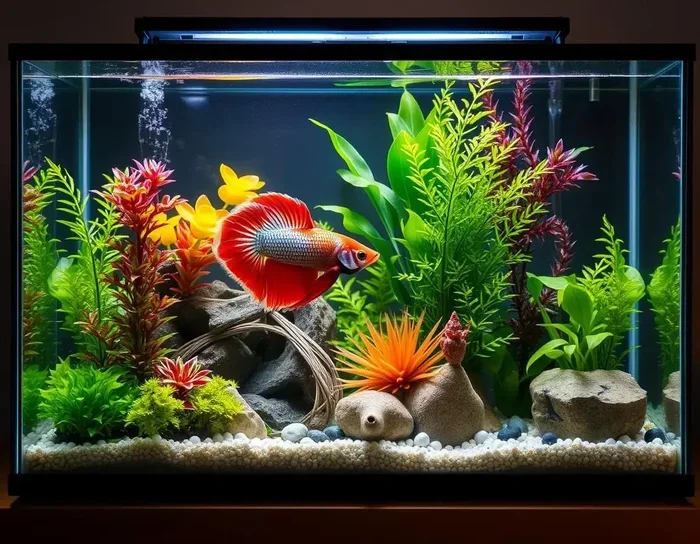
Can Bettas Live with Regular Fish
Can bettas live with regular fish? Yes, but only with careful planning. Bettas are territorial and sometimes aggressive, so not every fish makes a safe tank mate. Choosing peaceful, active, and non-nippy species while providing a properly sized tank can help your betta thrive in a community setup.
Key Takeaways
- Bettas can live with regular fish: but only with peaceful, fast-moving tank mates that do not have long, colorful fins.
- Tank size matters a lot: a minimum of 10 gallons is recommended for a betta community tank to reduce stress and aggression.
- Male vs. female bettas: females are often more tolerant of tank mates, while males are more territorial and aggressive.
- Avoid fin-nippers and similar-looking fish: species like tiger barbs, some tetras, and guppies can trigger fights.
- Provide hiding spots and plants: decorations and live plants help break lines of sight and reduce conflict.
- Monitor behavior closely: constant observation during the first days is essential to prevent injuries or stress.
- Non-fish mates can work too: snails and shrimp are often safer and easier companions for bettas.
📑 Table of Contents
- Can Bettas Live with Regular Fish? Understanding Your Betta’s Personality
- Why Bettas Behave Differently Around Other Fish
- Can Bettas Live with Regular Fish? The Short Answer
- Best Tank Mates for Bettas
- Fish to Avoid with Bettas
- How to Set Up a Tank Where Bettas Can Live with Regular Fish
- How to Introduce Regular Fish to a Betta Tank
- Can Male and Female Bettas Live with Other Fish Differently?
- Signs Your Betta Is Not Getting Along with Other Fish
- Can Bettas Live with Regular Fish in Small Tanks?
- Conclusion: Can Bettas Live with Regular Fish?
Can Bettas Live with Regular Fish? Understanding Your Betta’s Personality
If you’ve ever watched a betta flare up at its own reflection, you already know these fish have attitude. Their nickname, “Siamese fighting fish,” is not just for show. Bettas were originally bred for aggression, and that instinct still lives in the colorful pet you see in the store. So when you ask, “Can bettas live with regular fish?”, the answer is not a simple yes or no. It depends on your betta’s personality, the type of fish you want to add, and how you set up their shared home.
In this guide, we’ll walk through everything you need to know about keeping bettas with other fish. You’ll learn which species usually work, which ones to avoid, and how to set up a tank that keeps everyone calm and healthy. Think of it as a friendly game plan for building a peaceful underwater neighborhood.
Why Bettas Behave Differently Around Other Fish
To understand whether bettas can live with regular fish, it helps to know why they act the way they do. Bettas are naturally territorial. In the wild, they claim small spaces in shallow, slow-moving water and defend them from rivals. That instinct does not disappear in a home aquarium.
Territorial Instincts
Male bettas, in particular, will defend what they see as “their” space. If another fish swims too close, especially one with bright colors or long fins, your betta may see it as a threat. This can lead to flaring, chasing, and nipping. Some bettas will attack relentlessly, while others may only show mild curiosity.
Personality Varies from Fish to Fish
Not all bettas are the same. Some are surprisingly chill and ignore tank mates. Others are like tiny underwater guard dogs. You may not know your betta’s true personality until it shares space with others. That’s why slow introductions and careful observation are so important.
Stress and Environment
A cramped or bare tank makes aggression worse. When bettas feel exposed and cramped, they are more likely to lash out. A well-planted, properly sized tank with hiding spots can reduce stress and make peaceful coexistence much more likely.
Can Bettas Live with Regular Fish? The Short Answer
Yes, bettas can live with regular fish, but only if you choose the right tank mates and set up the tank correctly. The safest options are small, fast, peaceful fish that do not look like another betta. Think of species that are dull-colored compared to your betta, have short fins, and stay active without being nippy.
If you want to explore specific options in more detail, you can check out this guide on what other fish can bettas live with. It breaks down many common species and how well they usually do with bettas.
Best Tank Mates for Bettas
When choosing regular fish to live with a betta, focus on three main traits: peaceful temperament, small size, and low visual threat. Fish that look very different from your betta and do not compete for the same space are usually the safest choices.
Small, Peaceful Schooling Fish
Some of the most popular tank mates are small schooling fish that stay out of the betta’s way. These include:
- Ember tetras: Tiny, orange, and fast. They usually ignore bettas and do well in groups of six or more.
- Harlequin rasboras: Peaceful, active, and a bit larger than tetras. They swim in the middle of the tank and rarely bother bettas.
- Corydoras catfish: Bottom-dwellers that stay low and clean up leftover food. They are calm and armored, making them hard for bettas to injure.
These fish do best in a tank of at least 10 gallons, with a school of at least six of their own kind. A proper school helps them feel secure and keeps them from focusing on the betta.
Bottom-Dwellers and Clean-Up Crew
Fish that live and feed at the bottom of the tank are often a smart choice. They share less space with your betta and are less likely to trigger aggression. Corydoras, small loaches, and some types of small catfish can work well if they are peaceful and not nippy.
For more ideas on which species tend to work, you can read this article on which fish can live with bettas. It covers a range of options and explains why some are safer than others.
Snails and Shrimp: Non-Fish Friends
If you want to play it extra safe, consider non-fish tank mates. Snails and shrimp are often easier to keep with bettas than other fish. They help clean the tank and usually stay out of the way.
Good options include:
- Nerite snails: Hard-shelled and excellent algae eaters.
- Mystery snails: Larger and less likely to be attacked.
- Cherry shrimp: Small, colorful, and fast. Some bettas may hunt them, so provide plenty of plants and hiding spots.
Fish to Avoid with Bettas
While some regular fish can live with bettas, others are almost guaranteed to cause trouble. Avoiding these species will save you a lot of stress and protect your betta from injury.
Fin-Nippers
Some fish love to nip at long, flowing fins. To them, a betta’s tail looks like a toy or a threat. Common fin-nippers include:
- Tiger barbs: Active and notorious for nipping.
- Some serpae tetras: Can be nippy, especially in small groups.
- Certain danios: Very active and may harass slower bettas.
Even if these fish are small, their behavior can stress your betta and lead to torn fins and infections.
Fish That Look Like Bettas
Bettas often attack fish that look like rivals. That means other fish with bright colors and long fins can be risky. Guppies, for example, are colorful and have flowing tails. Many bettas see them as another betta and attack them.
Male guppies are usually the biggest problem. Female guppies are duller and sometimes safer, but there is still a risk. If you want to try guppies, watch closely and be ready to separate them.
Aggressive or Territorial Fish
Any fish that is aggressive, very territorial, or much larger than your betta is a poor choice. This includes some cichlis, larger gouramis, and other fighting fish. They may attack your betta or compete for the same hiding spots and territory.
How to Set Up a Tank Where Bettas Can Live with Regular Fish
Even the best tank mates can fail if the tank is not set up correctly. A good environment reduces stress and gives every fish a place to feel safe.
Tank Size and Shape
A small bowl is not suitable for a community tank. For a betta with other fish, aim for at least 10 gallons. A 20-gallon long tank is even better because it gives more horizontal swimming space and room for territories.
Long, wide tanks are better than tall ones. Bettas swim near the top, while many other fish prefer the middle and bottom. This vertical separation helps reduce conflict.
Plants, Caves, and Hiding Spots
Decor is not just for looks. It is essential for peace. Use live or silk plants, caves, driftwood, and rocks to break up sight lines. When fish cannot see each other all the time, they are less likely to fight.
Avoid sharp plastic plants that can tear your betta’s fins. Soft, live plants like java fern, anubias, and floating plants are great choices. They also help improve water quality.
Water Conditions and Filtration
Bettas and most peaceful tropical fish like similar water conditions:
- Temperature: around 76–80°F (24–27°C)
- pH: about 6.5–7.5
- Low to moderate flow: bettas prefer calm water, so use a gentle filter.
Perform regular water changes and cycle the tank fully before adding any fish. Poor water quality increases stress and aggression.
How to Introduce Regular Fish to a Betta Tank
Even with perfect tank mates, a bad introduction can ruin your chances for a peaceful tank. Slow and careful is the way to go.
Quarantine New Fish First
Before adding any new fish, quarantine them in a separate tank for a couple of weeks. This helps prevent diseases from entering your main tank and gives you time to observe their behavior.
Add the Betta Last, If Possible
One effective method is to add the other fish first and let them settle in. Then add the betta last. This way, the tank does not feel like “his” space that others are invading. It can reduce territorial aggression.
Use a Temporary Divider or Box
For the first few days, you can use a tank divider or a clear box so the fish can see each other without physical contact. Watch how your betta reacts. If he is constantly flaring, attacking the glass, or extremely stressed, he may not be ready for tank mates.
Can Male and Female Bettas Live with Other Fish Differently?
Male and female bettas often behave differently around other fish. Understanding this can help you choose the right setup.
Male Bettas
Males are usually more territorial and aggressive. They are more likely to attack fish that look like rivals or invade their space. If you want to keep a male betta with other fish, choose very peaceful, fast, dull-colored species and provide a larger tank.
You can learn more in this detailed guide on can male bettas live with other fish. It explains their behavior and what to expect.
Female Bettas
Females are often slightly more tolerant of tank mates, but they can still be feisty. In some cases, females can even be kept together in groups called sororities, though that is a more advanced setup. For a community tank, females may accept peaceful regular fish more easily than males.
If you are considering a female betta, this article on can female bettas live with other fish can help you decide if it is a good fit.
Signs Your Betta Is Not Getting Along with Other Fish
Even with careful planning, things can go wrong. Watch for these warning signs so you can act fast:
- Constant flaring and chasing: Some curiosity is normal at first, but non-stop aggression is not.
- Torn or frayed fins: This can be from attacks or stress.
- Hiding all the time: If your new fish never come out, they may be terrified.
- Loss of appetite: Stress can make fish stop eating.
- Clamped fins: Fins held close to the body often signal stress or illness.
If you see these signs, be ready to separate the fish. A backup tank or a temporary container can be a lifesaver.
Can Bettas Live with Regular Fish in Small Tanks?
Many people try to keep bettas and other fish in tiny tanks or bowls. This almost always leads to problems. Small spaces increase stress, aggression, and poor water quality.
In a small tank:
- Fish cannot escape each other.
- There is no room for territories.
- Toxins build up quickly.
If you want a betta with regular fish, plan for at least a 10-gallon tank. If your current tank is smaller, it is safer to keep your betta alone or with very small, non-fish mates like snails.
Conclusion: Can Bettas Live with Regular Fish?
So, can bettas live with regular fish? Yes, they can, but only with the right choices and setup. Bettas are territorial and sometimes aggressive, so they are not a perfect match for every species. You need peaceful, fast-moving fish that do not look like another betta and do not nip fins.
A properly sized tank of at least 10 gallons, plenty of plants and hiding spots, and careful introductions are key. Always watch your fish closely during the first days and weeks. If your betta shows constant aggression, it may be best to keep him alone or with non-fish mates like snails and shrimp.
With patience and planning, you can create a calm, beautiful community tank where your betta and regular fish live together in relative peace.
Frequently Asked Questions
Can bettas live with regular fish in a 5-gallon tank?
It is not recommended. A 5-gallon tank is too small for a betta and other fish. It increases stress, aggression, and poor water quality. For a community setup, aim for at least 10 gallons.
Are guppies good tank mates for bettas?
They can be risky. Male guppies are colorful and have long fins, which may trigger aggression from your betta. Some bettas ignore them, but many attack them. Close monitoring is essential.
Can bettas live with tetras?
Some tetras can work, such as ember tetras or harlequin rasboras. Avoid known fin-nippers and keep tetras in groups of six or more to reduce stress and conflict.
Do bettas attack all other fish?
No, not all. Some bettas are more peaceful and accept tank mates. Others are highly aggressive. Personality, tank size, and the type of fish you add all play a role.
Is it better to add the betta or other fish first?
Adding the other fish first and then the betta can sometimes help. It reduces the chance that the betta sees the entire tank as his territory from the start.
Can bettas live with snails or shrimp instead of fish?
Yes, they often can. Snails and shrimp are usually safer tank mates. They help clean the tank and stay out of the betta’s way, especially if you provide plants and hiding spots.